
The Dictatorship
Even Republicans oppose Trump’s latest budget stunt

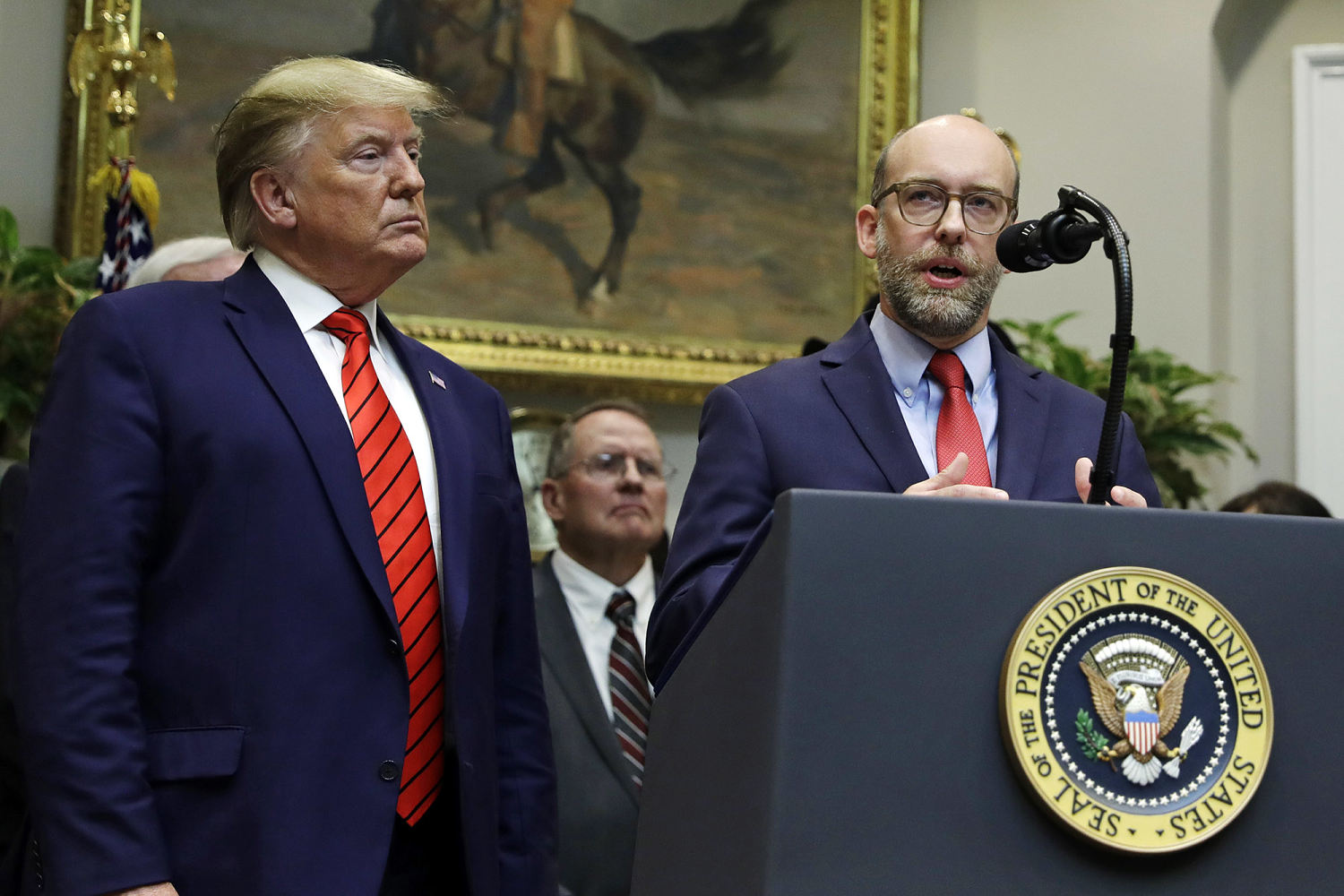
U.S. District Judge Amir Ali’s decision could not have been clearer: “There is not a plausible interpretation of the statutes,” he wrote“that would justify the billions of dollars they plan to withhold.” The word “they” referred to the State Department and, more importantly, President Donald Trump, who is trying yet another way to ignore budget laws. The administration’s latest tactic is what’s called a pocket rescission. Even Republicans have called this an “attempt to undermine the law,” as the White House impounds funds — ironically — by abusing a law called the Impoundment Control Act.
When Congress passes a law and it’s enacted, it’s then the president’s job to carry out that law. If the president doesn’t like the law, he can veto it or else ask Congress to amend or repeal it. Simple enough. What a president can’t do is sign something into law and then immediately ignore parts of it. But that’s exactly what Trump is doing.
Any effort to rescind appropriated funds without congressional approval is a clear violation of the law.”
Sen. Susan Collins, R-Maine
The president and his budget director, Russell Voughthave argued that spending laws are optional, and that the president always has the power to sign spending into law and then choose to not do it. Trump and Vought insist, for instance, that a law funding $47 billion of cutting-edge cancer and other biomedical research is optional — that the president can only spend half of the money, instead of vetoing it and demanding Congress send him a bill with only half as much money.
The act of not using all the money the legislative branch has passed — or pausing the money altogether — is called impoundment. Under the Impoundment Control Act (ICA), the president is allowed to ask Congress to rescind funds — to pare back unused money. Where otherwise allowed, the president may freeze funds for 45 days while Congress considers the president’s request.
The Trump White House incorrectly argues it has the right to pause any funds included in that rescissions request no matter what — even if pausing them for 45 days would lead to that money lapsing, being no longer usable since the time in which it was allowed to be used had run out. At the end of AugustTrump and his team decided to send up a new rescissions request with the stated intent of letting the funding lapse.
That’s called a pocket rescission and it’s what Trump just did with another $4.9 billion of foreign aid. Under Trump and Vought’s argument, even if Congress votes down the request, the executive branch can still pause the money for 45 days until it lapses.
This is illegal. In a 2018 reportthe Government Accountability Office concluded that “the statutory text and legislative history of the ICA, Supreme Court case law, and the overarching constitutional framework of legislative and executive powers provide no basis” for Trump and Vought’s interpretation. In case that wasn’t clear enough, a GAO blog post from August answered the question “Are pocket rescissions legal?” simply and without hesitation: “No.”
Even Republican lawmakers have criticized the administration’s move. “Any effort to rescind appropriated funds without congressional approval is a clear violation of the law,” Sen. Susan Collins, R-Maine, saidwhile Its. Lisa Murkowski, R-Alaska, Said“I strongly object to the Office of Management and Budget’s unlawful attempt to pursue a nearly $5 billion pocket rescission.”
On Wednesday, Judge Ali issued an injunction, requiring the White House to spend roughly $12 billion in congressionally appropriated foreign aid before the end of the month. Late Friday, the D.C. Circuit Court of Appeals denied the Justice Department’s request to stay the injunction. The case will eventually end up at the Supreme Court. There, the justices will finally rule on whether the president is an appropriations king — whether he can unilaterally ignore budget laws and arbitrarily cut spending programs without congressional approval. The White House’s argument is that there’s no law Congress can pass that actually guarantees funding, that it’s all optional, up to the whims of the president. If the Supreme Court were to green-light this, it would put at risk everything in the government that the American people rely on.
But in a very real sense, there’s no difference between a pocket rescission and any other impoundment. Whether a program is included in the formal rescissions request or is being quietly impounded, either way the money doesn’t get spent. The pocket rescission is just a beacon meant to draw our attention. Trump wants us to focus on the foreign aid impoundments — a shiny object he’s illegally deleting via a pocket rescission — so that we forget about the quiet impoundments of cancer research and preschool funding. Taken together, Trump is now attempting seemingly the most expansive, illegal set of budgetary actions of any president in U.S. history.
Bobby Kogan is the senior director of federal budget policy at the Center for American Progress.


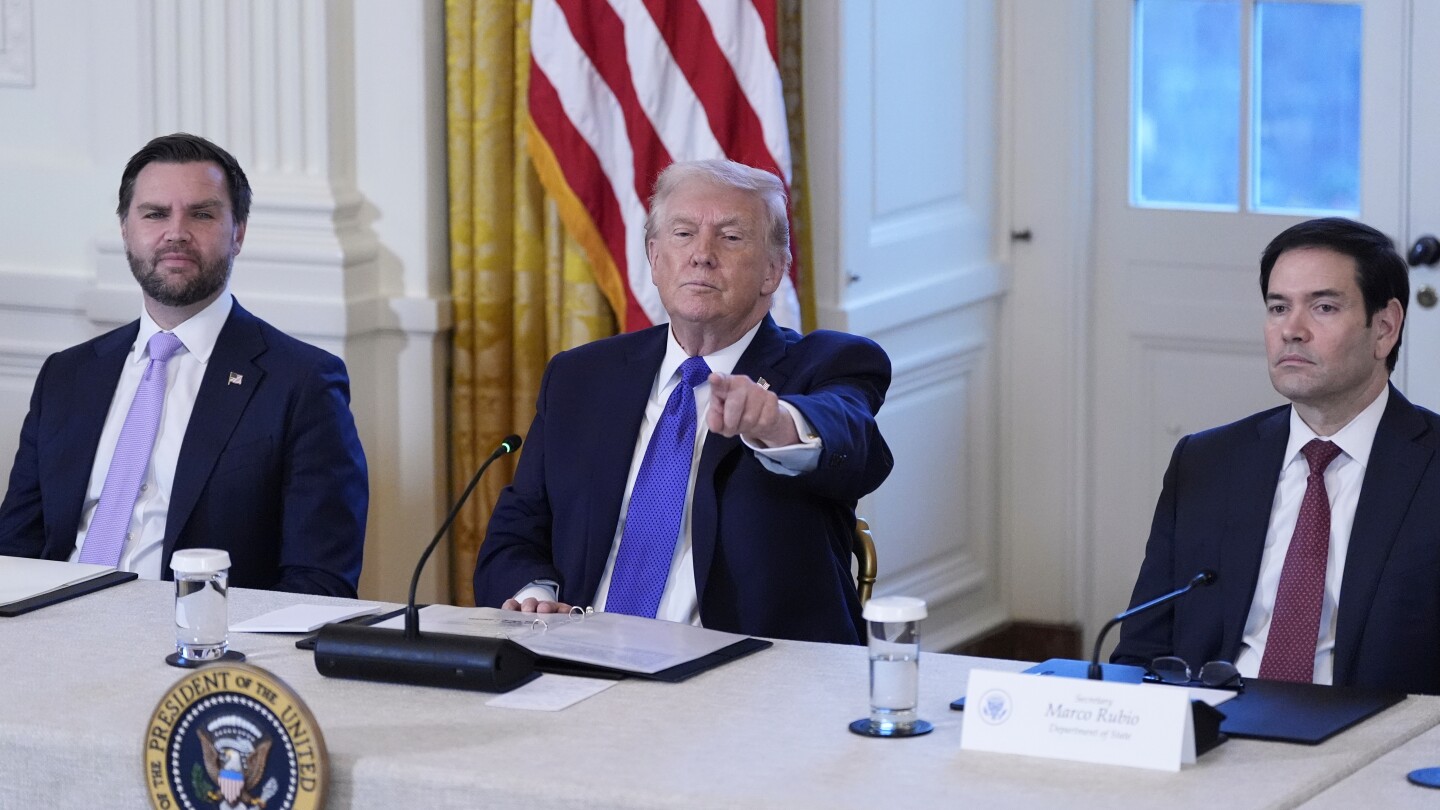

WEST PALM BEACH, Fla. (AP) — President Donald Trump’s new executive order on Venezuelan oil revenue is meant to ensure that the money remains protected from being used in judicial proceedings.
The executive order, made public on Saturday, says that if the funds were to be seized for such use, it could “undermine critical U.S. efforts to ensure economic and political stability in Venezuela.”
The order comes amid caution from top oil company executives that the tumult and instability in Venezuela could make the country less attractive for private investment and rebuilding.
“If we look at the commercial constructs and frameworks in place today in Venezuela, today it’s uninvestable,” said Darren Woods, CEO of ExxonMobil, the largest U.S. oil company, during a meeting convened by Trump with oil executives on Friday.
During the session, Trump tried to assuage the concerns of the oil companies and said the executives would be dealing directly with the U.S., rather than the Venezuelan government.
Venezuela has a history of state asset seizures, ongoing U.S. sanctions and decades of political uncertainty.
Getting U.S. oil companies to invest in Venezuela and help rebuild the country’s infrastructure is a top priority of the Trump administration after the dramatic capture of now-deposed leader Nicolás Maduro.
The White House is framing the effort to “run” Venezuela in economic terms, and Trump has seized tankers carrying Venezuelan oil, has said the U.S. is taking over the sales of 30 million to 50 million barrels of previously sanctioned Venezuelan crude, and plans to control sales worldwide indefinitely.
“I love the Venezuelan people, and am already making Venezuela rich and safe again,” Trump, who is currently in southern Florida, wrote on his social media site on Saturday. “Congratulations and thank you to all of those people who are making this possible!!!”
The order says the oil revenue is property of Venezuela that is being held by the United States for “governmental and diplomatic purposes” and not subject to private claims.
Its legal underpinnings are the National Emergencies Act and the International Emergency Economic Powers Act. Trump, in the order, says the possibility that the oil revenues could be caught up in judicial proceedings constitutes an “unusual and extraordinary threat” to the U.S.

NEW YORK (AP) — Reviving a campaign pledge, President Donald Trump wants a one-year, 10% cap on credit card interest rates, a move that could save Americans tens of billions of dollars but drew immediate opposition from an industry that has been in his corner.
Trump was not clear in his social media post Friday night whether a cap might take effect through executive action or legislation, though one Republican senator said he had spoken with the president and would work on a bill with his “full support.” Trump said he hoped it would be in place Jan. 20, one year after he took office.
Strong opposition is certain from Wall Street in addition to the credit card companies, which donated heavily to his 2024 campaign and have supported Trump’s second-term agenda. Banks are making the argument that such a plan would most hurt poor people, at a time of economic concern, by curtailing or eliminating credit lines, driving them to high-cost alternatives like payday loans or pawnshops.
“We will no longer let the American Public be ripped off by Credit Card Companies that are charging Interest Rates of 20 to 30%,” Trump wrote on his Truth Social platform.
Researchers who studied Trump’s campaign pledge after it was first announced found that Americans would save roughly $100 billion in interest a year if credit card rates were capped at 10%. The same researchers found that while the credit card industry would take a major hit, it would still be profitable, although credit card rewards and other perks might be scaled back.
About 195 million people in the United States had credit cards in 2024 and were assessed $160 billion in interest charges, the Consumer Financial Protection Bureau says. Americans are now carrying more credit card debt than ever, to the tune of about $1.23 trillion, according to figures from the New York Federal Reserve for the third quarter last year.
Further, Americans are paying, on average, between 19.65% and 21.5% in interest on credit cards according to the Federal Reserve and other industry tracking sources. That has come down in the past year as the central bank lowered benchmark rates, but is near the highs since federal regulators started tracking credit card rates in the mid-1990s. That’s significantly higher than a decade ago, when the average credit card interest rate was roughly 12%.
The Republican administration has proved particularly friendly until now to the credit card industry.
Capital One got little resistance from the White House when it finalized its purchase and merger with Discover Financial in early 2025, a deal that created the nation’s largest credit card company. The Consumer Financial Protection Bureau, which is largely tasked with going after credit card companies for alleged wrongdoing, has been largely nonfunctional since Trump took office.
In a joint statement, the banking industry was opposed to Trump’s proposal.
“If enacted, this cap would only drive consumers toward less regulated, more costly alternatives,” the American Bankers Association and allied groups said.
Bank lobbyists have long argued that lowering interest rates on their credit card products would require the banks to lend less to high-risk borrowers. When Congress enacted a cap on the fee that stores pay large banks when customers use a debit card, banks responded by removing all rewards and perks from those cards. Debit card rewards only recently have trickled back into consumers’ hands. For example, United Airlines now has a debit card that gives miles with purchases.
The U.S. already places interest rate caps on some financial products and for some demographics. The Military Lending Act makes it illegal to charge active-duty service members more than 36% for any financial product. The national regulator for credit unions has capped interest rates on credit union credit cards at 18%.
Credit card companies earn three streams of revenue from their products: fees charged to merchants, fees charged to customers and the interest charged on balances. The argument from some researchers and left-leaning policymakers is that the banks earn enough revenue from merchants to keep them profitable if interest rates were capped.
“A 10% credit card interest cap would save Americans $100 billion a year without causing massive account closures, as banks claim. That’s because the few large banks that dominate the credit card market are making absolutely massive profits on customers at all income levels,” said Brian Shearer, director of competition and regulatory policy at the Vanderbilt Policy Accelerator, who wrote the research on the industry’s impact of Trump’s proposal last year.
There are some historic examples that interest rate caps do cut off the less creditworthy to financial products because banks are not able to price risk correctly. Arkansas has a strictly enforced interest rate cap of 17% and evidence points to the poor and less creditworthy being cut out of consumer credit markets in the state. Shearer’s research showed that an interest rate cap of 10% would likely result in banks lending less to those with credit scores below 600.
The White House did not respond to questions about how the president seeks to cap the rate or whether he has spoken with credit card companies about the idea.
Sen. Roger Marshall, R-Kan., who said he talked with Trump on Friday night, said the effort is meant to “lower costs for American families and to reign in greedy credit card companies who have been ripping off hardworking Americans for too long.”
Legislation in both the House and the Senate would do what Trump is seeking.
Sens. Bernie Sanders, I-Vt., and Josh Hawley, R-Mo., released a plan in February that would immediately cap interest rates at 10% for five years, hoping to use Trump’s campaign promise to build momentum for their measure.
Hours before Trump’s post, Sanders said that the president, rather than working to cap interest rates, had taken steps to deregulate big banks that allowed them to charge much higher credit card fees.
Reps. Alexandria Ocasio-Cortez, D-N.Y., and Anna Paulina Luna, R-Fla., have proposed similar legislation. Ocasio-Cortez is a frequent political target of Trump, while Luna is a close ally of the president.
___
Seung Min Kim reported from West Palm Beach, Fla.

Dr. Molly O’Shea has noticed growing skepticism about vaccines at both of her Michigan pediatric offices and says this week’s unprecedented and confusing changes to federal vaccine guidance will only make things worse.
One of her offices is in a Democratic area, where more of the parents she sees are opting for alternative schedules that spread out shots. The other is in a Republican area, where some parents have stopped immunizing their children altogether.
She and other doctors fear the new recommendations and the terminology around them will stoke vaccine hesitancy even more, pose challenges for pediatricians and parents that make it harder for kids to get shots, and ultimately lead to more illness and death.
The biggest change was to stop blanket recommendations for protection against six diseases and recommend those vaccines only for at-risk children or through something called “shared clinical decision-making” with a health care provider.
The phrase, experts say, is confusing and dangerous: “It sends a message to a parent that actually there’s only a rarefied group of people who really need the vaccine,” O’Shea said. “It’s creating an environment that puts a sense of uncertainty about the value and necessity or importance of the vaccines in that category.”
Health Secretary Robert F. Kennedy Jr.who helped lead the anti-vaccine movement for years, said in announcing the changes that they better align the U.S. with peer nations “while strengthening transparency and informed consent.”
But doctors say they are sowing doubt — the vaccines have been extensively studied and proven to be safe and effective at shielding kids from nasty diseases — at a time when childhood vaccination rates are already falling and some of those infectious diseases are spreading.
On Friday, the American Academy of Pediatrics and more than 200 medical, public health and patient advocacy groups sent a letter to Congress about the new childhood immunization schedule.
“We urge you to investigate why the schedule was changed, why credible scientific evidence was ignored, and why the committee charged with advising the HHS Secretary on immunizations did not discuss the schedule changes as a part of their public meeting process,” they wrote.
Many don’t know what ’shared decision-making’ means
O’Shea said she and other pediatricians discuss vaccines with parents at every visit where they are given. But that’s not necessarily “shared clinical decision-making,” which has a particular definition.
On its website, the Advisory Committee on Immunization Practices says: “Unlike routine, catch-up, and risk-based recommendations, shared clinical decision-making vaccinations are not recommended for everyone in a particular age group or everyone in an identifiable risk group. Rather, shared clinical decision-making recommendations are individually based and informed by a decision process between the health care provider and the patient or parent/guardian.”
In this context, health care providers include primary care physicians, specialists, physician assistants, nurse practitioners, registered nurses and pharmacists.
A pair of surveys conducted last year by the Annenberg Public Policy Center at the University of Pennsylvania suggested that many people don’t fully understand the concept, which came up last year when the federal government changed recommendations around COVID-19 vaccinations.
Only about 2 in 10 U.S. adults knew that one meaning behind shared decision-making is that “taking the vaccine may not be a good idea for everyone but would benefit some.” And only about one-third realized pharmacists count as health care providers to talk with during the process, even though they frequently administer vaccines.
As of this week, vaccines that protect against hepatitis A, hepatitis B, rotavirus, RSV, flu and meningococcal disease are no longer universally recommended for kids. RSV, hepatitis A, hepatitis B and meningococcal vaccines are recommended for certain high-risk populations; flu, rotavirus, hepatitis A, hepatitis B and meningococcal vaccines are recommended through shared decision-making — as is the COVID-19 vaccine, although that change was made last year.
Shortly after the federal announcement Monday, Dr. Steven Abelowitz heard from half a dozen parents. “It’s causing concern for us, but more importantly, concern for parents with kids, especially young kids, and confusion,” said Abelowitz, founder of Ocean Pediatrics in Orange County, California.
Though federal recommendations are not mandates — states have the authority to require vaccinations for schoolchildren — they can affect how easy it is for kids to get shots if doctors choose to follow them.
Under the new guidelines, O’Shea said, parents seeking shots in the shared decision-making category might no longer bring their kids in for a quick, vaccine-only appointment with staff. They’d sit down with a health care provider and discuss the vaccine. And it could be tougher to have a flu clinic, where parents drive up and kids get shots without seeing a doctor.
Staying the course as challenges mount
Still, doctors say they won’t let the changes stop them from helping children get the vaccines they need. Leading medical groups are sticking with prior vaccine recommendations. Many parents are, too.
Megan Landry, whose 4-year-old son Zackary is one of O’Shea’s patients, is among them.
“It’s my responsibility as a parent to protect my child’s health and well-being,” she said. “Vaccines are a really effective and well-studied way to do that.”
She plans to keep having the same conversations she’s always had with O’Shea before getting vaccines for Zackary.
“Relying on evidence and trusted medical guidance really helps me to make those decisions,” she said. “And for me, it’s not just a personal choice for my own son but a way to contribute to the health of everybody.”
But for other families, confidence about vaccines is waning as trust in science erodes. O’Shea lamented that parents are getting the message that they can’t trust medical experts.
“If I take my car to the mechanic, I don’t go do my own research ahead of time,” she said. “I go to a person I trust and I trust them to tell me what’s going on.”
Abelowitz, the California doctor, likened the latest federal move to pouring gasoline on a fire of mistrust that was already burning.
“We’re worried the fire’s out of control,” he said. “Already we’ve seen that with measles and pertussis, there are increased hospitalizations and even increasing deaths. So the way that I look at it — and my colleagues look at it — we’re basically regressing decades.”
___
The Associated Press Health and Science Department receives support from the Howard Hughes Medical Institute’s Department of Science Education and the Robert Wood Johnson Foundation. The AP is solely responsible for all content.
- Trump signs executive order to protect Venezuelan oil revenue
- Trump pushes a 1-year, 10% cap on credit card interest rates. Banks balk

- Trump ‘inclined’ to keep ExxonMobil out of Venezuela after CEO response at White House meeting
- Changes to the US vaccine recommendations are sowing confusion and could harm kids

- The diseases RFK Jr. says children don’t need to be routinely vaccinated for
- Rep. Salazar touts Venezuela’s Machado before her visit
- Trump to be briefed on range of options in Iran
- Insurer CEOs testifying before House health subcommittee Jan. 22
- How John Thune is trying to save the Senate for Republicans

- House passes three-bill spending package with weeks left to avoid a shutdown
-

 The Dictatorship11 months ago
Luigi Mangione acknowledges public support in first official statement since arrest
-

 The Dictatorship4 months ago
Mike Johnson sums up the GOP’s arrogant position on military occupation with two words
-

 Politics11 months ago
Blue Light News’s Editorial Director Ryan Hutchins speaks at Blue Light News’s 2025 Governors Summit
-

 Politics11 months ago
Former ‘Squad’ members launching ‘Bowman and Bush’ YouTube show
-

 Politics11 months ago
Former Kentucky AG Daniel Cameron launches Senate bid
-

 The Dictatorship11 months ago
Pete Hegseth’s tenure at the Pentagon goes from bad to worse
-
Uncategorized1 year ago
Bob Good to step down as Freedom Caucus chair this week
-

 Politics9 months ago
Democrat challenging Joni Ernst: I want to ‘tear down’ party, ‘build it back up’