
Congress
Democrats ready to reject latest GOP shutdown offer

Senate Majority Leader John Thune is dangling another carrot for Democrats. They still aren’t ready to bite.
In his latest pressure tactic, the South Dakota Republican is teeing up yet another vote to reopen the government Friday, the 38th day of the record-setting shutdown. But this time, he is pledging to swap out the House-passed stopgap bill for a new funding patch, likely into January, along with full-year funding for veterans programs, food aid and more.
“It’s what they asked for,” Thune said Thursday night.
But Democrats, stiffened by their party’s big election wins Tuesday that have papered over rising internal divisions, are expected to block a procedural vote yet again, according to two people granted anonymity to describe caucus dynamics, as well as interviews with several potential Democratic swing votes.
They are intent on forcing President Donald Trump and fellow Republicans to cough up a better deal and finally engage on their central demand — an extension of expiring health insurance subsidies that aren’t definitively addressed in the latest GOP offer.
“Leader Thune isn’t doing himself any favors by not coming to the table,” said Sen. Jacky Rosen (D-Nev.), who has been viewed as a possible swing vote but said she would vote no Friday.
Several other Democrats professed unity coming out of a long lunch meeting Thursday — one of several they’ve held this week as they’ve wrangled over an endgame to the long shutdown.
Sen. Dick Durbin (D-Ill.), the No. 2 party leader, said Thursday that Democrats “are as unified as we have ever been,” while adding that “people understand the gravity of the shutdown.”
But those proclamations belied the behind-the-scenes tensions between a group of Democratic senators who believe the time has come to reopen the government and the caucus’ progressive bloc, which is aghast at the idea of surrendering without a health care deal, especially after Tuesday’s elections.
“They’ve got to stand up, and they’ve got to fight,” Sen. Bernie Sanders (I-Vt.) said of his fellow caucus members in a brief interview Thursday night. “They have the American people at their back. And Republicans are going to have to come to the table and recognize they just cannot double premiums for millions of Americans in this country.”
Other corners of the caucus, however, believe Sanders and his allies — who have not participated in the bipartisan talks — are simply wanting to brawl with Republicans without having a realistic plan to bring the longest shutdown on record to an end.
The progressives “have yet to articulate any sense whatsoever of how they think this ends or any proposal to get Republicans to the table other than waiting longer and longer,” said a Senate Democratic aide who was granted anonymity to comment candidly about caucus dynamics. “And in the meantime it’s the families who can afford it the least that are increasingly getting walloped by the shutdown.”
“We are not going to get a better offer,” another Democratic aide involved in the bipartisan talks added.
That’s the case the Senate Democrats who have been negotiating have been trying to make privately to their colleagues, and they believed they were gaining traction earlier this week. But the sweeping election gains Tuesday fired up other Democrats and left many wondering if Republicans would offer new concessions.
Progress has been made in recent days toward finalizing a three-bill package that would fund some federal agencies through September, one that would be attached to a stopgap bill to reopen the rest of the government for just a few months. Republicans are also discussing whether a final deal can involve rehiring thousands of federal workers who were laid off during the shutdown — a new element first reported by POLITICO Thursday.
But according to a person granted anonymity to describe the sensitive talks, there has been no new GOP offer on health care. Republicans are willing to commit to a future vote to extend the Affordable Care Act subsidies by an agreed-upon date but they have not moved off their position that the government must reopen first. Nor has there been any progress in getting Trump or Speaker Mike Johnson to guarantee a path forward for any Senate-forged compromise.
“I’ve made this very clear to them that I can’t guarantee them an outcome — I can guarantee them a process,” Thune said Thursday. “We’ve had that conversation multiple times already.”
As senators left the Capitol around dinnertime Thursday, they still didn’t know what exactly Thune would be asking them to vote on Friday. To allow more time for talks to progress, the Senate won’t come into session until noon Friday, and a time hasn’t yet been scheduled for the promised vote.
If it fails as currently expected, it’s unclear what Thune might do next. Sen. John Barrasso of Wyoming, the No. 2 GOP leader, said Thursday the Senate would stay in session over the weekend, but senators could head home — potentially for a scheduled weeklong Veterans Day recess — if there’s no hope of a breakthrough.
The uncertainty had weary senators questioning whether the end is truly in sight.
“We’ve been talking for days, but there’s no product,” said Delaware Sen. Chris Coons, who is among the Democrats considered most likely to support a bipartisan compromise. “I’m hopeful we can find a way through this over the weekend.”
Sen. Mike Rounds (R-S.D.), who has been closely engaged in the bipartisan talks, said Thursday night there is “no organized effort at this point that is bearing fruit.”
“There are attempts to find a way to bring people forward, but I’m discouraged,” he added. “I’m hoping that overnight things might change a little bit, but I’m not optimistic.”
Jennifer Scholtes, Mia McCarthy, Katherine Tully-McManus, Meredith Lee Hill and Nicholas Wu contributed to this report.


The shutdown of the Department of Homeland Security is at risk of shattering the record for the longest-ever funding lapse for any federal agency if President Donald Trump and congressional Democrats can’t strike a deal this week.
Lawmakers are scheduled to take a two-week recess for Passover and Easter starting Friday. While the Senate is considering staying in session if the shutdown is not resolved, House GOP leaders do not plan to cut their break short in hopes of reaching an accord, according to three people granted anonymity to discuss private planning.
“It’s going to be very, very hard to explain if we leave town this next week without having funded” DHS, Senate Majority Leader John Thune told reporters over the weekend.
Trump threw a curveball into the rekindled talks Sunday night when he declared on Truth Social he would not back any deal unless it includes the GOP’s partisan elections bill, the SAVE America Act. Senators, Trump said, should “lump everything together as one, and VOTE!!!”
“Kill the Filibuster, and stay in D.C. for Easter, if necessary,” he wrote.
The House and Senate are not scheduled to return to business until the week of April 13, when the DHS shutdown would hit Day 60 — significantly exceeding the 43-day record set last fall for the longest federal funding lapse in U.S. history.
The threat of a two-month shutdown — and evidence of lengthening TSA lines at U.S. airports as security officers refuse to work without pay — has spurred an uptick in what had been completely stalled negotiations.
A bipartisan group of lawmakers met twice in the Capitol late last week with Trump’s border czar, Tom Homan. Negotiators continued to talk over the weekend, after the White House laid out an expanded offer Friday that included changes to DHS immigration enforcement tactics — the crux of the shutdown fight.
“We’ll see if they can land something,” Thune said in an interview Sunday before Trump delivered his ultimatum. “The clock’s ticking. If we’re going to get this done, we’ve got to get moving pretty quickly here.”
With the urgency to clinch a bipartisan agreement increasing, the White House has sought to engage some of the Democrats who helped negotiate a solution to the broader government funding lapse that ended in November. That includes New Hampshire Sens. Maggie Hassan and Jeanne Shaheen, along with Sens. Catherine Cortez Masto of Nevada and Angus King of Maine, an independent who caucuses with Democrats.
Those senators were among the bipartisan group of lawmakers who met in person with Homan last week, along with Sen. Patty Murray of Washington, the Senate’s top Democratic appropriator.
“I can tell you that Democrats are really united, and we are talking to the White House and telling them what our demands are,” Murray told reporters Sunday afternoon. “I don’t know how you define progress. That is really up to the White House, whether they’re willing to move forward on this or not.”
Republican negotiators voiced frustration over the weekend that Democrats hadn’t responded to the updated offer the Trump administration delivered Friday night.
“I would have hoped we could continue to build on the momentum, positive momentum, that I felt like we had at the meeting Friday,” Sen. Katie Britt (R-Ala.), chair of the DHS funding panel, said in an interview Sunday. “I’m clearly disappointed.”
Britt noted that the meetings with Homan last week marked the first in-person DHS negotiations between Democratic lawmakers, their Republican counterparts and a delegate from the White House since the talks began almost two months ago.
“The American people need us to get in the room,” Britt said. “And we have to be expeditious about this.”
Democrats on both sides of the Capitol have pressed Republicans multiple times to take up their bills that would fund all of DHS except Immigration and Customs Enforcement, Customs and Border Protection and the secretary’s office.
Minority Leader Chuck Schumer said Saturday on the Senate floor that negotiators are having “productive conversations,” but Congress should fund TSA in the meantime
“Let’s keep negotiating the outstanding issues with ICE while sending paychecks to TSA workers now,” he added.
But Republicans continue to object to votes on those proposals, saying the entire department needs to be funded. The House has twice passed DHS funding legislation, but Senate Democrats have repeatedly voted against advancing an all-DHS funding bill — most recently on Friday.
Increasingly, Republicans are highlighting the irony that the funding lapse barely affects the agencies Democrats are trying to reign in, since ICE and CBP received about $140 billion from the tax and spending law Republicans enacted along party lines last summer.
“They’re trying to please their base,” Nebraska Sen. Deb Fischer, a Republican appropriator, said about Democrats in an interview. “But I would hope their base is smart enough to know that ICE and Border Patrol are already funded.”
Instead, the shutdown is causing the most disruption at agencies like TSA, where more than 300 airport security screeners have quit since funding lapsed more than five weeks ago. As the workforce goes without pay, TSA callouts also tipped over 10 percent multiple days last week, leading to long lines and travel disruptions at airports across the country.
Starting Monday, the Trump administration plans to detail ICE agents to U.S. airports to do jobs like guarding exits, allowing TSA agents to focus on screening passengers and baggage.
“We ought to fund TSA now,” said Sen. Raphael Warnock (D-Ga.), who requested a vote last week on legislation to fund all of DHS except the immigration enforcement agencies. “But I don’t know why the Republicans insist on holding federal workers hostage, holding TSA workers hostage, so that they can have an unaccountable paramilitary force on our streets.”
Senate Republican leaders are still waiting to make the call on whether to delay or cancel the chamber’s two-week recess. They’re typically reluctant to send lawmakers home during a crisis that requires legislative action.
In contrast, under Speaker Mike Johnson, House Republican leaders have repeatedly resisted pressure to reconvene the House to consider critical legislation while lawmakers are back home during a congressional recess. They argue it’s up to Senate Democrats to cut a DHS deal with the White House.
“We’ll see,” Thune told reporters on Sunday about canceling recess. “We’ll kind of see how the rest of the week plays out.”
Meredith Lee Hill contributed to this report.
President Donald Trump on Saturday threatened to send federal immigration agents to airports across the country on Monday if Democrats don’t agree to end the Department of Homeland Security shutdown, now approaching five weeks.
“If the Radical Left Democrats don’t immediately sign an agreement to let our Country, in particular, our Airports, be FREE and SAFE again, I will move our brilliant and patriotic ICE Agents to the Airports where they will do Security like no one has ever seen before, including the immediate arrest of all Illegal Immigrants who have come into our Country,” he wrote.
“Illegal Immigrants who have come into our Country, with heavy emphasis on those from Somalia” would be targeted with an especially firm hand, the president wrote on Truth Social.
Shortly thereafter, Trump followed up to say he plans to send ICE to airports in just days.
“I look forward to moving ICE in on Monday, and have already told them to, ‘GET READY.’ NO MORE WAITING, NO MORE GAMES!” he wrote in a separate Truth Social post on Saturday.
It’s his latest bid to push Democrats, who have refused to greenlight DHS funding without changes to how it carries out immigration enforcement, pointing to deadly incidents as Immigration and Customs Enforcement agents descended en masse on major American cities. Increased callouts among TSA agents and airport staffers are expected to roil airports in the coming weeks, with major interruptions to airport procedure likely to follow.
Both sides have seemingly made progress in recent days toward ending the shutdown. The White House made several concessions on immigration enforcement policies in a proposal shared with Senate Democrats on Friday. But the ICE agent masking ban Democrats are seeking in exchange for their support on a funding package remains a bridge too far, Republicans argue.
Trump’s latest threat isn’t likely to make the prospects of a truce any more viable, especially given his focus on Minnesota, where tensions flared after federal immigration agents killed two protesters during a major surge of personnel in January.
In a post on X following Trump’s threat, Rep. Lauren Boebert said, “The airport in Minnesota is about to be a ghost town.”
The president’s threat Saturday lands squarely in the middle of a confirmation fight over his pick to run DHS, Sen. Markwayne Mullin (R-Okla.), a process that has quickly become a proxy battle over the future of ICE itself.
At his hearing this week, Mullin tried to strike a more measured tone than in some of his past remarks, pledging to rein in some enforcement tactics and lower the agency’s public profile. But he repeatedly defended ICE agents amid mounting scrutiny, including backing officers involved in high-profile civilian deaths and arguing Democrats are tying the agency’s hands.
Republicans — including Mullin — have instead pushed to expand ICE’s resources and authority, framing the standoff as a fight over public safety.
The backdrop is the messy ouster of Kristi Noem, whose tenure was defined by aggressive deportation policies, costly PR campaigns and a series of controversies that ultimately led Trump to push her out after a bruising round of congressional hearings.
The enforcement-heavy approach Trump threatened Saturday sets up a preview for what Mullin will perhaps be asked to defend — and potentially formalize — as the next head of DHS.
ICE and the Transportation Security Administration did not immediately respond to requests for comment from Blue Light News.
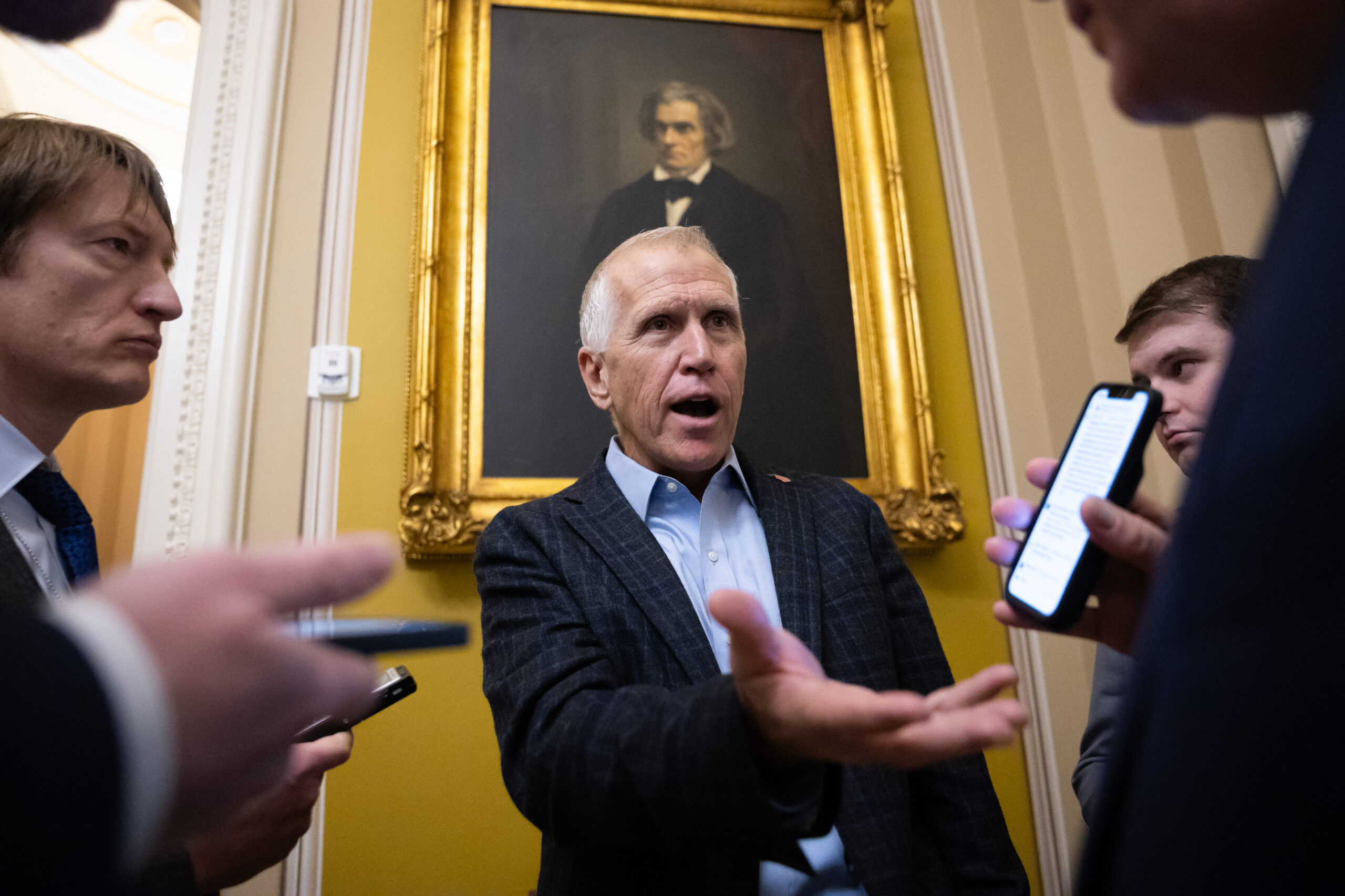
Among online activists and in some corners of the Republican Party, Mike Lee is being heralded as a MAGA champion willing to pressure his own party to embrace hardball tactics or risk political suicide.
But inside the Senate, the Utahn’s scorched-earth, hyper-online methods are sparking a wave of mostly private animosity from GOP colleagues who believe his plan to push through legislation overhauling how federal elections are conducted is ill-conceived and potentially harmful to the party’s chances in the midterms.
They believe he doesn’t have a realistic path to passing the SAVE America Act, and they view him as seeking personal attention at the cost of sparking an ongoing intraparty feud, according to five Republicans granted anonymity to speak candidly about their colleague.
“That seems to be a self-serving attempt at elevating yourself at the expense of your Republican colleagues, and I don’t have any patience for that sort of stuff,” Sen. Thom Tillis (R-N.C.) said in an interview about Lee’s social media strategy. Tillis, a retiring lawmaker who is not one of the five who spoke privately, lamented a lack of “strategic clarity” from Lee on the endgame for the elections debate.
Lee, however, shows no hint of self-doubt in news conferences and floor speeches — and, more importantly, late-night X streams and a constant stream of social-media posts — that the SAVE America Act is anything less than a make-or-break moment for American democracy.
“It would be a suicidal move for us as Senate Republicans, for Republicans in general, if we don’t put everything we’ve got into this,” Lee said at a news conference this week. ”We need to debate this as long as it takes to get it done.”
Lee’s office did not respond to a request for an interview with the senator or a detailed message seeking comment about the criticism he’s facing from colleagues.
‘He’s hurting us’
The inside-outside split that has emerged in recent weeks is the culmination of a long political evolution for Lee’s persona. He was once viewed as a bookish conservative with a libertarian bent but has now emerged as the Senate GOP’s most inveterate social-media poster — and a darling of the online right.
But it’s his strategy around the elections bill, which President Donald Trump has called his “No. 1 priority,” that has soured some of his relationships inside the Senate. Some Republican colleagues compared him to Sen. Rand Paul — the Kentucky gadfly who also has a history of sparking frustration within the Senate GOP ranks.
Republicans have circulated Lee’s online posts, including one saying that if a senator doesn’t support his tactics to pass the elections bill “you might need to replace them.” That kind of talk has some suggesting that Lee, who was part of a bipartisan coalition that helped pass a criminal justice bill during Trump’s first term, will have a hard time getting legislation passed in the future.
Frustrations have grown to the point that some GOP senators are privately wondering if they could remove him as chair of the Energy and Natural Resources Committee, according to two Republicans. Several other colleagues dismissed the talk as blowing off steam.
“He’s hurting us,” one of the two Republicans said.
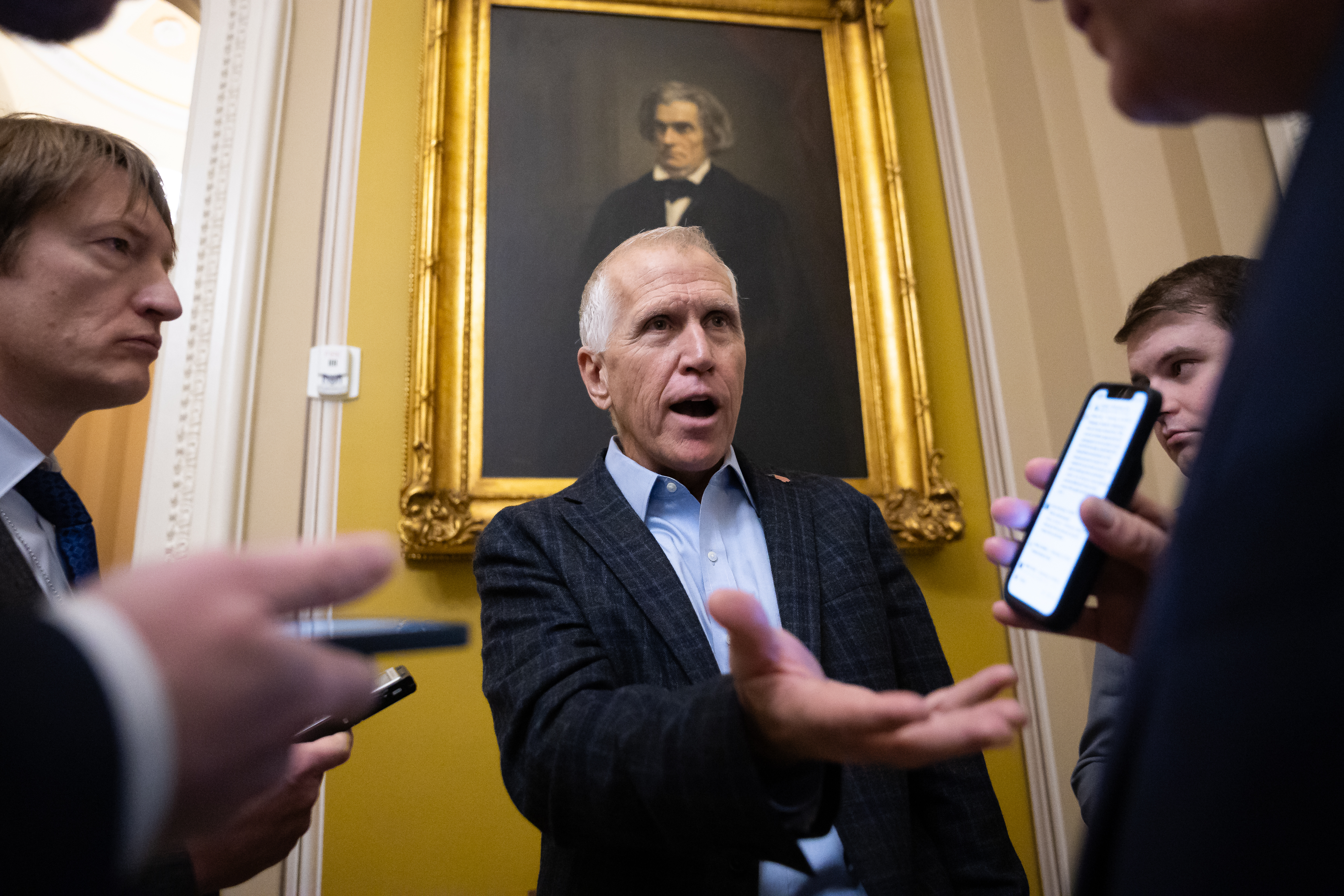
Lee appeared to distance himself from the social media tactics when a Blue Light News reporter asked him during a news conference this week about concerns from his Republican colleagues and whether any had approached him directly.
“Every time I talk to activists, people who support this, I’m like a broken record telling them, you catch more flies with honey than with vinegar, and I recommend encouragement and focusing on the positive elements of the bill,” Lee said. “They do what they do. It is what it is.”
Tillis brushed off Lee’s answer: “You’re telling people to be nice when you post a statement that says you should challenge them in primaries? How does that work?”
With a swath of GOP senators dead-set against bypassing the 60-vote filibuster threshold, Lee has argued that forcing Democrats into a “talking filibuster” will ultimately force them to negotiate and capitulate. That doesn’t make sense to many of his colleagues, who don’t see the Democrats ever providing enough votes to pass the bill.
And they fear Lee is selling a fantasy to his online followers, who believe failure should be at least partially pinned on the weakness of Republicans, not the opposition of Democrats.
“It’s the clicks,” one Republican senator said in an interview when asked what Lee wants to accomplish. “He goes too far. … He has almost no self-awareness.”
‘Maximum success in the Senate’
But Lee’s supporters believe his push has gotten at least some results. Senate Majority Leader John Thune agreed to call up the bill and start debate without a clear end date — something that is next to unheard-of in the modern Senate. And GOP ears perked up this week when Minority Leader Chuck Schumer told reporters that Democrats weren’t opposed to photo ID requirements.
Rachel Bovard, a former Lee staffer who is now a vice president at the Conservative Partnership Institute, said her former boss is seeking to “represent a part of the base that feels unheard.”
“It’s encouraging I think for a lot of people to see that a single United States senator can still speak for them, the Senate still speaks for them,” she said.
Lee himself credited pressure from his army of online supporters for Thune’s decision to keep the Senate working through this weekend. He has credited the majority leader so far for implementing a version of the talking filibuster.
“Bullcrap if anyone says X isn’t real,” he said during a late-night stream hosted on the social-media platform this week.
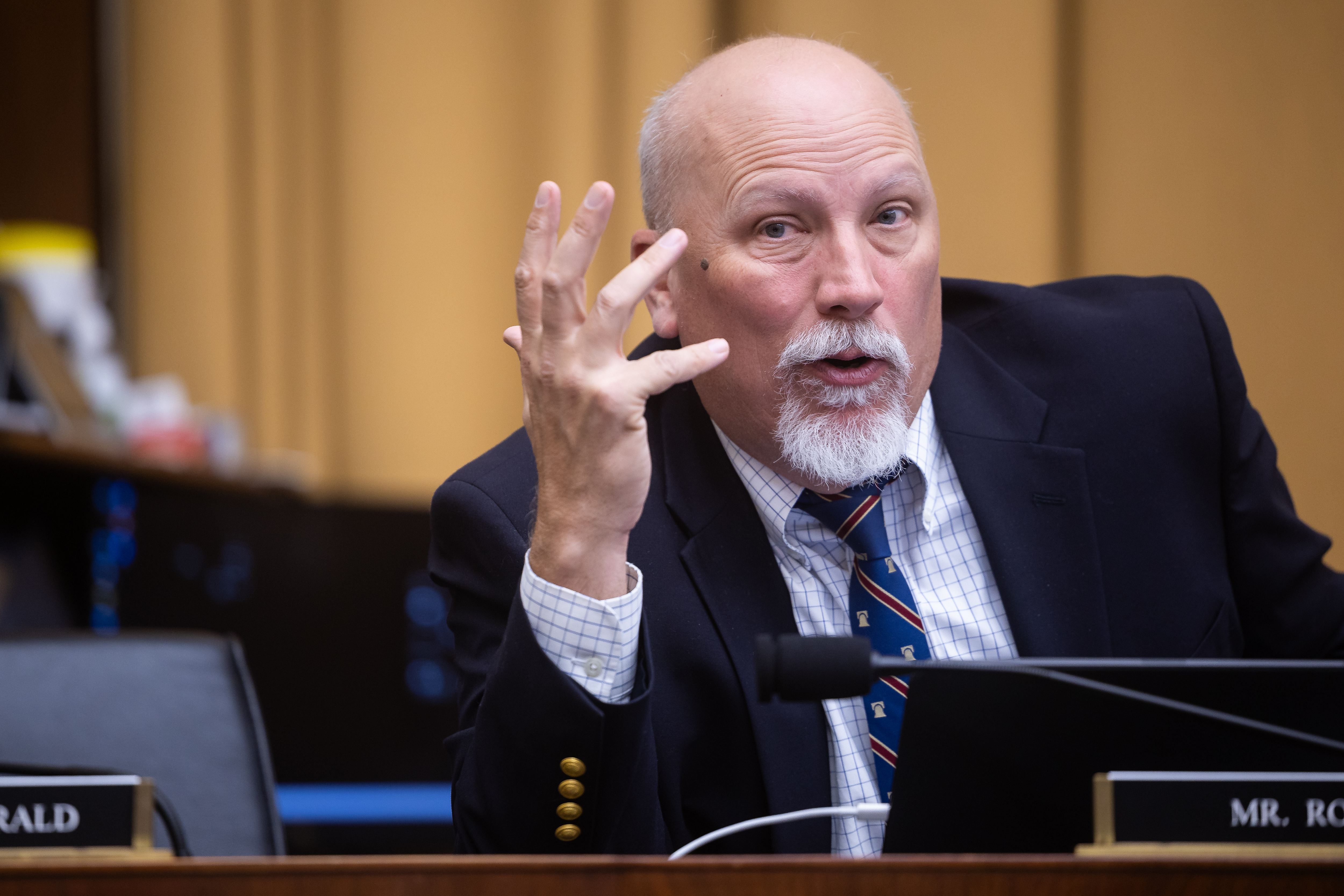
Rep. Chip Roy (R-Texas), who authored the SAVE America Act in the House, said he and Lee worked together to set the bill up for “maximum success in the Senate procedurally — and now Mike is single-handedly trying to make the U.S. Senate actually work and debate.”
“To those Senators saying Mike Lee is doing this for attention — it’s utter bullshit and they should have the cajones to call the President and tell him that,” he added in a text message. “But it’s the Senate, so.”
Several Senate Republicans have praised Lee online and as they’ve appeared alongside him at news conferences this week. But many other Republican colleagues have kept their distance, not understanding how he intends to bring the fight to a close. A sixth GOP senator granted anonymity was not personally critical of Lee but described the process he unleashed as a “very chaotic situation.”
“He gets stuck on things,” the senator said, describing Lee as an adamant believer in the policy he is pushing.
As Thune outlined his plans for the bill during a closed-door Senate GOP lunch last week — which were widely understood to involve eventually subjecting it to a 60-vote hurdle — Lee was largely silent, according to three people with knowledge of the meeting.
Leadership ambitions?
Thune and Lee have kept in close touch behind the scenes as the Senate has taken up the bill.
“I think the key is to keep people’s expectations realistic and not overpromise. And that’s what I’m trying to do,” Thune said in an interview about how he felt Lee was handling the debate. He declined to comment on whether Lee was doing that.
While Lee has repeatedly asserted this week that he and his allies are winning, he also acknowledged that it would not be “good for the movement” if he started “planning for failure now.”
“If we do our job, and … Republican senators do their jobs, we will win,” he added.
Some of those Republican senators have spent time recently wondering about Lee’s motivations.
Four of the GOP senators said they believed Lee has higher ambitions. He once flirted with a leadership bid, something some colleagues believe he still aspires to, while others pointed to a potential Cabinet spot as his ultimate goal. Some of Lee’s most fervent online supporters have floated a run for Senate majority leader, with one raising the Supreme Court as a landing spot during a recent online meetup.
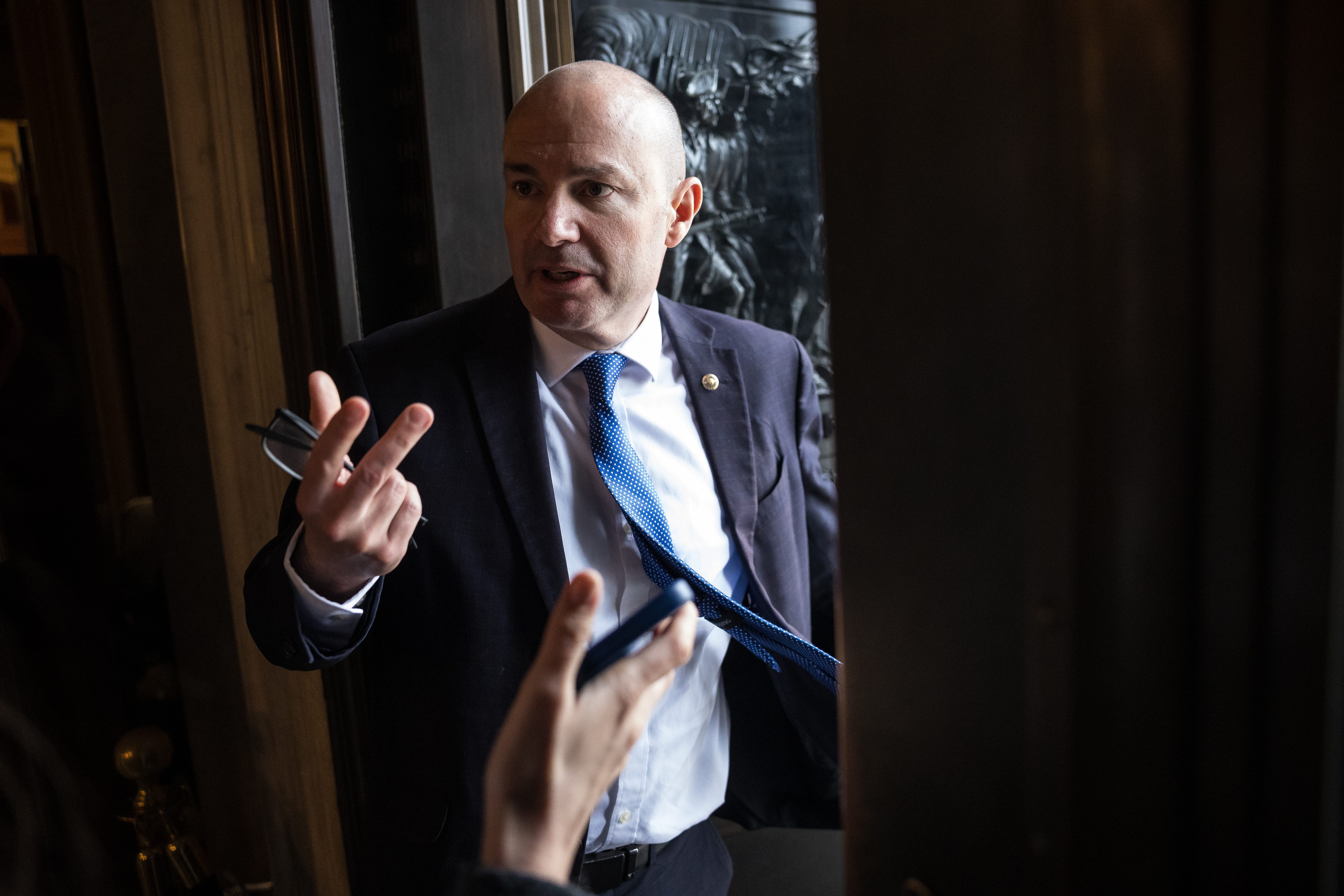
“I think he’s frankly very frustrated that he’s not more than he is, that he feels like he’s passed over,” the first GOP senator said. Another added, “I think he looks in the mirror and thinks he’s leadership.”
While Lee has retweeted negative commentary about Thune from other users on social media, he has also encouraged his online followers to presume Thune is well-intentioned and told them that Thune was “handling this very well right now.”
Bovard was among several Republicans who dismissed the idea that Lee is using the elections fight as a political springboard.
“It’s kind of hilarious, because the Senate is so dead … and it’s so broken that if any senator leans into something and actually cares about something, the assumption is [it’s] because they’re running” for another office, Bovard said, adding that being the majority leader “seems like kind of a miserable job.”
Three Republicans said the point is moot. Given the way he’s operated inside the GOP conference, they predicted, Lee cannot win a leadership race. But during an X stream shortly after midnight Friday supporters told Lee that majority leader is exactly the job they wanted him to have.
“Look,” he said, “let’s just get the bill passed.”
- Capitol agenda: Markwayne Mullin’s rockier-than-expected road
- ‘When will it end?’ The ‘elevator pitch’ oil executives and diplomats are making to the White House in Houston
- Pressure builds on Congress as DHS shutdown threatens to drag into April
- Bernie Sanders to force disapproval votes over U.S. arms sales to Israel
- Capitol agenda: Markwayne Mullin’s rockier-than-expected road
- Bernie Sanders to force disapproval votes over U.S. arms sales to Israel
- Sexual assault allegations roil bills honoring César Chávez

- Bernie Sanders to force disapproval votes over U.S. arms sales to Israel
- Bessent responds to Trump’s post about Mueller’s death
- Manchin urges Democrats to ‘stand up’ to Senate GOP amid push to nix filibuster

-

 The Dictatorship1 year ago
Luigi Mangione acknowledges public support in first official statement since arrest
-

 Politics1 year ago
Former ‘Squad’ members launching ‘Bowman and Bush’ YouTube show
-

 Politics1 year ago
Blue Light News’s Editorial Director Ryan Hutchins speaks at Blue Light News’s 2025 Governors Summit
-

 Politics1 year ago
Former Kentucky AG Daniel Cameron launches Senate bid
-

 The Dictatorship6 months ago
Mike Johnson sums up the GOP’s arrogant position on military occupation with two words
-

 The Dictatorship1 year ago
Pete Hegseth’s tenure at the Pentagon goes from bad to worse
-
Uncategorized1 year ago
Bob Good to step down as Freedom Caucus chair this week
-
 Politics11 months ago
Democrat challenging Joni Ernst: I want to ‘tear down’ party, ‘build it back up’