
The Dictatorship
Democrats have the evidence to call for Trump’s impeachment. But that’s not what they should pursue.

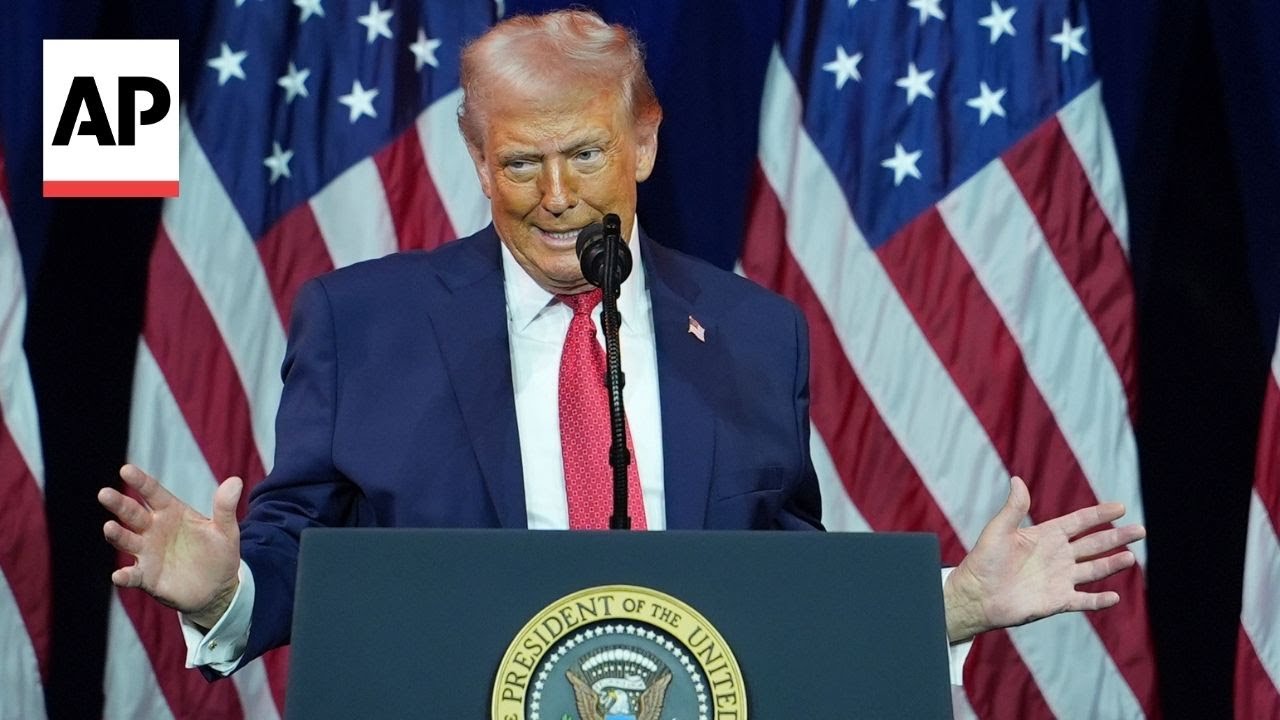
ByAustin Sarat
Progressive Democrats turned up the heat last week in their effort to convince party leaders to start impeachment proceedings against President Donald Trump. Among other things, they cite as impeachable offenses the president’s unprovoked attack on Venezuelaand his use of the Justice Department to target his political opponents.
ABC News quotes Kat Abughazaleh, who is running for Congress in Illinoiscalling for Democratic leaders to “‘grow a f—ing spine.” Abughazaleh, who says political leaders have helped convince Americans that we “shouldn’t take measures toward a future that we want to live in,” calls impeachment “just another tool in the accountability machine.”
President Trump has committed impeachable offenses, but that does not mean that impeachment is the best remedy.
President Trump has committed impeachable offenses, but that does not mean impeachment is the best remedy. It would be, at best, a distraction from Trump’s real vulnerabilities, and even if it succeeded in elevating JD Vance to the highest office in the land, it would not spare the nation from the plague of cruelty and corruption we have experienced since Jan. 20, 2025. That is, it would not save American democracy.
Even though this isn’t the time to actively pursue impeachment, that doesn’t mean Democrats should be silent or fail to talk about why impeachment is warranted. Failing to do so normalizes the president’s abuses of authority and, as they accumulate, habituates people to them.
But, contrary to what Abughazaleh is doing, Democrats definitely shouldn’t make impeachment a part of their platform. The best chance Democrats have to check the president’s lawlessness, corruption and abuses of power is to win control of the House of Representatives and/or the Senate later this year. To do so, they must convince voters that they care more about their own conditions than about holding Trump accountable.

The president and his allies are already using the threat of impeachment to rally the troops. On Jan. 6, President Trump told an audience at a House Republican policy retreat that “if we don’t win the midterms … they’ll find a reason to impeach me. I’ll get impeached.”
In July, NBC News quoted a senior Republican strategist actively involved in congressional races, who said impeachment “will be the subtext of everything we do, whether it’s said overtly or not.” John McLaughlin, a Trump pollster, told NBC News that Republicans had a lot of work to do getting “happy and complacent” Trump voters fired up and that if Republicans lose in the midterms, “Democrats will begin persecuting President Trump again. They would go for impeachment.”
Democrats should not take the bait. In this case, as in others, leaders and citizens must temper a commitment to democratic principles with prudence.
That’s not an excuse for inaction. Prudence doesn’t mean acquiescence in the face of assaults on our constitutional order. But it does mean choosing the best course of action given current circumstances. This is never more important than when anti-democratic forces seek to provoke a response that will give them an excuse to double down on their anti-democratic actions.
Democrats should not take the bait.
“Today, many Democrats have understandably questioned whether impeachment is possible again under the current political reality,” Rep. Maxine Waters, D-Calif., observed this month, as she argued that “Democrats cannot remain silent or passive in the face of actions this extreme from this Administration.”
On Jan. 11, Sen. Chris Murphy, D-Conn., provided an example of what it means to speak out when he accused Trump of committing far more impeachable acts in his second term than in his first. Even so, Murphy recognized that any effort to impeach the president should wait until after the 2026 election.
Some of his colleagues in Congress clearly disagree. In April, Rep. Shri Thanedar, D-Mich., introduced seven articles of impeachmentagainst Trump. He argued that the president should be removed for ignoring “the Constitution, Congress, and the courts.”
Thanedar”https://x.com/repshrithanedar/status/1916920864521519363″>offered a persuasive bill of particulars, ranging from obstruction of justice to taking away Congress’ power of the purse. He said impeachment is necessary to remind the American people that obeying the Constitution is “not optional.”
Nonetheless, his impeachment resolution attracted only one co-sponsor.
In December, that co-sponsor, Rep. Al Green, D-Texas, introduced his own impeachment resolution, labeling Trump “an abuser of Presidential power who, if left in office, will continue to promote the incitement of violence, engender invidious hate, undermine our democracy, and dissolve our Republic.”
Green noted, among other things, that “President Trump called for the execution of six Democratic lawmakers, all of whom are currently serving in the U.S. Senate or U.S. House of Representatives and who previously served in the U.S. Military or in U.S. Intelligence communities,” who had made a video reminding members of the military of their duty to disobey illegal orders.
This is not the time for Democrats to go tilting at windmills.
But when Green tried to force a vote on his impeachment resolution, almost two dozen of his Democratic colleagues voted against it, with another 47 voting present.
Even if an effort to launch an impeachment inquiry were to pass, the Republican-controlled House Judiciary Committee would be in charge of leading it. That’s one reason going forward with a serious impeachment effort now would be futile as well as make it harder for Democrats to work to ensure free and fair elections in November.
This is not the time for Democrats to go tilting at windmills. This is a time for what Alexander Hamilton called “sound discernment.”
Sound discernment suggests this is not the time for impeachment, even if it is merited.
Instead, Democrats should heed Hamilton’s admonition that it is often preferable to “incur the negative inconveniences of delay” than experience “the positive mischiefs of injudicious expedients.”

Austin Sarat
Austin Sarat is the William Nelson Cromwell Professor of Jurisprudence and Political Science at Amherst College. The views expressed here do not represent Amherst College.


The Dictatorship
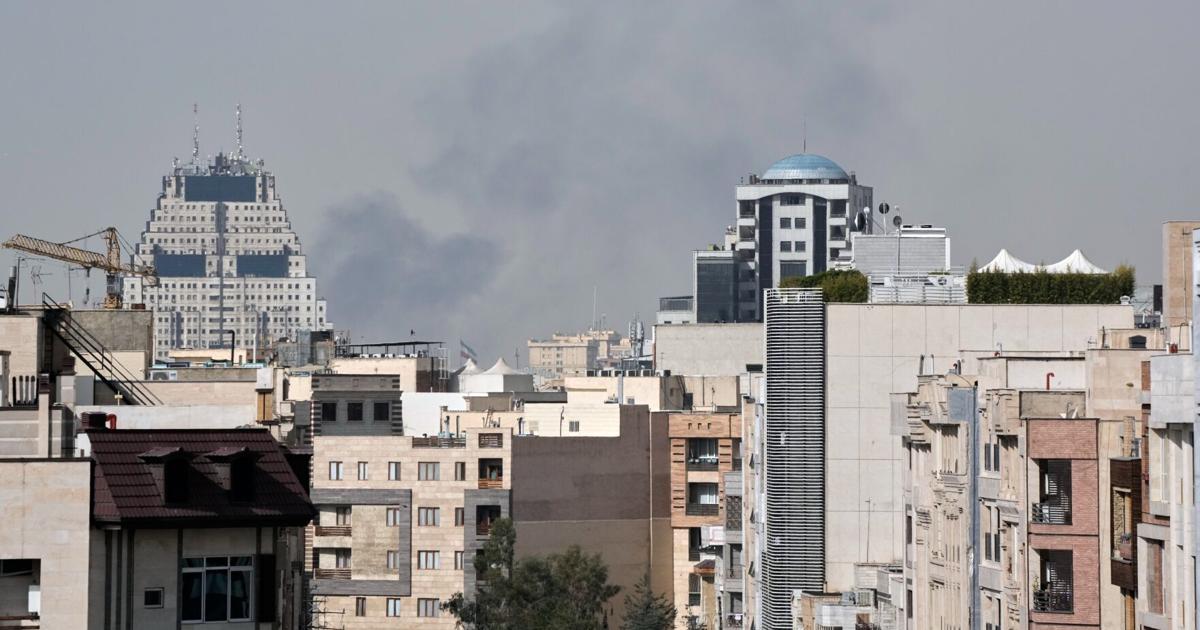
The Latest: US and Israel attack Iran as Trump says US begins ‘major combat operations’
Rice secures 80-74 win over Temple
Anthony’s 16 help Iona beat Manhattan 69-65
Folefac scores 23 as Siena beats Rider 76-61
SnoCountry Mountain Reports
Gulf States Sportswatch Daily Listings
Quinnipiac wins 67-63 against Canisius
President Donald Trump called the celebrations in the streets of Iran “fantastic” following the killing of the country’s supreme leaderAyatollah Ali Khamenei, during a brief phone call with MS NOW on Saturday night.
Trump told MS NOW that he’s seen the celebrations in Iran and in parts of America, after joint U.S.-Israel airstrikes killed Khamenei.
“I think it’s fantastic,” the president said of the celebrations. “I’ve seen them in Los Angeles, also — celebrations.”
“I’ve seen them in Los Angeles, celebrations, celebrations,” Trump said, accentuating the point.
The interview took place roughly 11 hours before the Pentagon announced the first U.S.military casualties of the war. U.S. Central Command said three American service members were killed in action, and five others had been seriously wounded.
Revelry broke out in Iran, the United States and across the globe on Saturday, with Iranians cheering the death of Khamenei, who led Iran with an iron fist for more than 30 years, cracking down on dissent at home and maintaining a hostile posture with the U.S. and Israel.
Asked how he was feeling after the strike on Khamenei, whose death was confirmed just a few hours earlier, Trump said it was a positive development for the United States.
“I think it was a great thing for our country,” he said.
The call — which lasted less than a minute — came after a marathon day, which began in the wee hours of the morning with strikes on Iran and continued with retaliatory ballistic missiles from Tehran targeting Israel and countries in the Middle East region that host U.S. military bases.
The day ended with few answers from the White House to increasing questions about the long-term future of Iran, how long the U.S. will continue operations there, and the metastasizing ramifications it could have on the world stage. In fact, the president has done little to convince the public to back his Iran operation, nor to explain why the country is at war without the authorization of Congress.
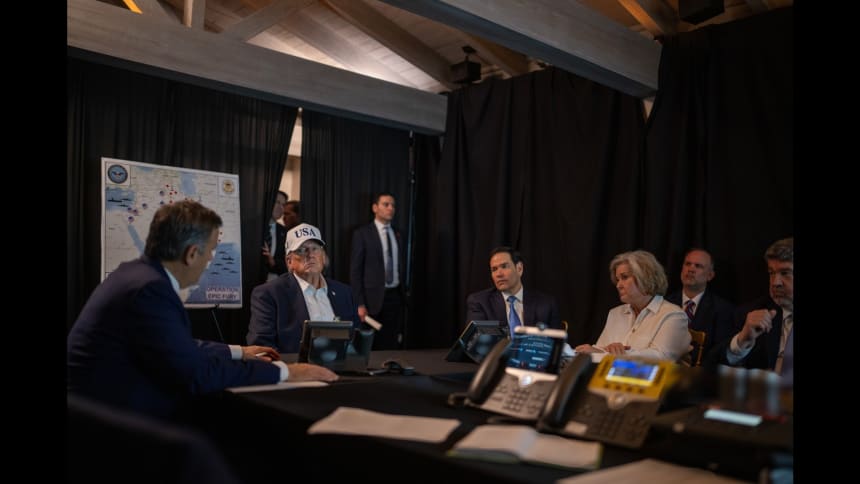
On perhaps the most consequential day of his second term, Trump did not give a formal address to the public, nor did he hold a press conference. Instead, he stayed out of public view at Mar-a-Lago, his private club and residence in Palm Beach, Florida, where he attended a $1 million-per-plate fundraising dinner on Saturday evening.
But throughout the day, Trump took calls from reporters at various new outlets, including from MS NOW at around 11 p.m. ET.
The strikes, known formally as “Operation Epic Fury,” came after months of talks over Iran’s nuclear program, and warnings from Trump that he would strike Tehran if they did not agree to his often shifting conditions.
At 2:30 a.m. ET on Saturday, Trump posted a video to social media announcing the operation, which he said was designed to “defend the American people by eliminating imminent threats from the Iranian regime, a vicious group of very hard, terrible people.”
“The lives of courageous American heroes may be lost and we may have casualties. That often happens in war,” Trump said when he announced the strikes on Iran.
Mychael Schnell is a reporter for MS NOW.
Laura Barrón-López covers the White House for MS NOW.
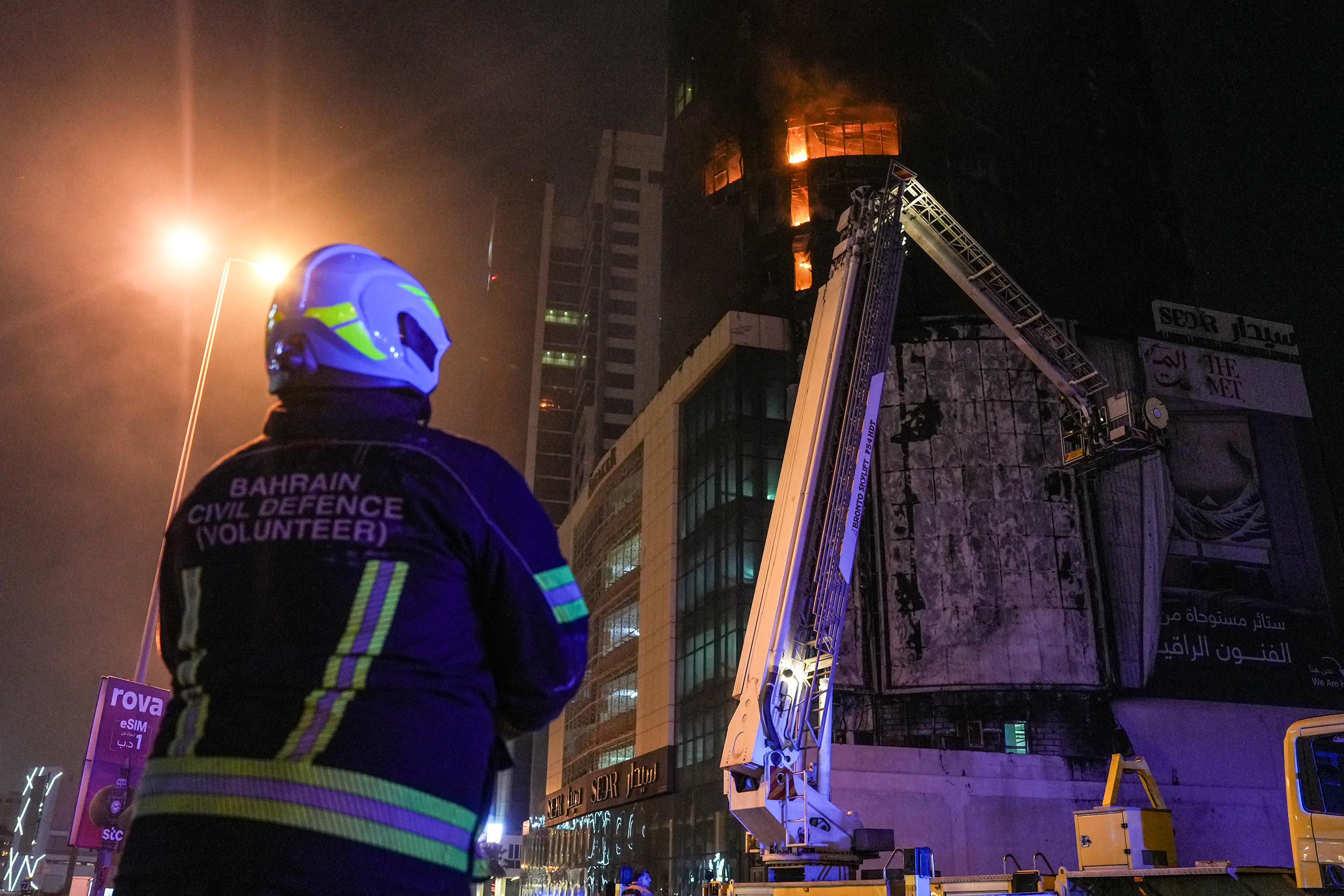
Three U.S. service members were killed and five seriously wounded as the United States and Israel launched attacks on Iran, U.S. Central Command said Sunday morning.
The three service members — the first Americans to die in the conflict — were killed in Kuwait, a U.S. official said.
Several others sustained minor injuries from shrapnel and concussions but will return to duty, the Pentagon said. The identities of the dead and wounded have not been made public.
“The situation is fluid, so out of respect for the families, we will withhold additional information, including the identities of our fallen warriors, until 24 hours after next of kin have been notified,” Central Command said in a statement.
The U.S. and Israel launched sweeping airstrikes on Iranon Saturday, killing Ayatollah Ali Khameneithe country’s supreme leader for nearly four decades. Iran has vowed retaliation and hit several U.S. military bases across the region.
According to U.S. Central Command, Iran has also attacked more than a dozen locations, including airports in Dubai, Kuwait and Iraq, and residential neighborhoods in Israel, Bahrain and Qatar.
Israel Defence Forces said Sunday that Iran fired missiles toward the neighborhood of Beit Shemesh, killing civilians. The missile hit a synagogue, killing at least nine people, according to the Associated Press.
AP reported that authorities said at least 22 people were killed and 120 others wounded when demonstrators tried to attack the U.S. Consulate in Karachi in Pakistan.
The violence came after the United States and Israel attacked Irankilling its Supreme Leader Ayatollah Ali Khamenei. Police and officials at a hospital in Karachi said that at least 50 people were also wounded in the clashes and some of them were in critical condition.
On Sunday, Israel Defence Forces said on X, “It’s official: All senior terrorist leaders of Iran’s Axis of Terror have been eliminated.”
President Donald Trump told CNBC’s Joe Kernen on Sunday that the operation in Iran is “moving along very well, very well — ahead of schedule.”
In a phone call with MS NOW late Saturday, Trump called the celebrations in the streets of Iran “fantastic” following the killing of Khamenei.
Confirming Khamenei’s death, Prime Minister Benjamin Netanyahu said Sunday: “We have eliminated the tyrant Khamenei and dozens of senior figures of the oppressive regime. Our forces are now striking at the heart of Tehran with increasing intensity, set to escalate further in the coming days.”
The exchange of hostilities comes after weeks of fragile negotiations between the U.S. and Iran over Iran’s nuclear operations.
Esmail Baghaei, a spokesperson for Iran’s foreign ministry, called the joint U.S-Israeli attack an “unprovoked, unwarranted act of aggression” in an interview with MS NOW’s Ali Velshi on Sunday. He said Iran’s nuclear program has been used a pretext for the attack.
“We have every right to defend our people because we have come under this egregious act of aggression,” Baghaei said.
Trump announced the attack early Saturday during a short video posted on his Truth Social account. He called for an end to the Iranian regime and urged Iranians to “take back the country.”
Negotiators and mediators from Oman were supposed to meet in Vienna on Monday to discuss the technical aspect of a potential nuclear deal.
Rep. Eric Swawell, D-Calif., told MS NOW’s Alex Witt on Sunday afternoon that the president’s military operation in Iran was illegal, echoing what many lawmakers have said in citing that under the U.S. Constitution only Congress can declare war.
“This is a values argument. We don’t just lob missiles into other countries when we are not provoked, attacked and have no plan for what comes next,” he said.
“We have been shown zero evidence that anything changed in Iran from last year when the president did not come to Congress and took a strike on Iran,” Swalwell said.
In June the U.S. struck three Iranian nuclear sites. Trump said the facilities had been “completely and totally obliterated.” But experts and U.S. officials said the sites were damaged but not destroyed.
Erum Salam is breaking news reporter for MS NOW, with a focus on how global events and foreign policy shape U.S. politics. She previously was a breaking news reporter for The Guardian and is a graduate of Texas A&M University and the Columbia University Graduate School of Journalism. Follow her on X, Bluesky and Instagram.
Akayla Gardner is a White House correspondent for MS NOW.
- Talarico defeats Crockett in Texas Senate Democratic primary
- Scandal-plagued Rep. Tony Gonzales forced to runoff
- Rep. Dan Crenshaw ousted by primary challenger to his right
- Trump met with Coinbase CEO before bashing banks over crypto bill
- Cornyn, Paxton head to runoff in Texas Senate GOP race
- Rep. Chip Roy headed to runoff in Texas AG race
- Democrats reject ‘ridiculous’ GOP demand to fund DHS after Iran attack

- Josh Hawley says he’ll oppose Iran war powers resolution
- House Ethics panel probing Nancy Mace over alleged improper reimbursements
- Iranian ‘regime will be defeated,’ White House tells Hill Republicans
-

 The Dictatorship1 year ago
Luigi Mangione acknowledges public support in first official statement since arrest
-

 Politics1 year ago
Former ‘Squad’ members launching ‘Bowman and Bush’ YouTube show
-

 Politics1 year ago
Blue Light News’s Editorial Director Ryan Hutchins speaks at Blue Light News’s 2025 Governors Summit
-

 The Dictatorship6 months ago
Mike Johnson sums up the GOP’s arrogant position on military occupation with two words
-

 Politics1 year ago
Former Kentucky AG Daniel Cameron launches Senate bid
-

 The Dictatorship1 year ago
Pete Hegseth’s tenure at the Pentagon goes from bad to worse
-
Uncategorized1 year ago
Bob Good to step down as Freedom Caucus chair this week
-

 Politics11 months ago
Democrat challenging Joni Ernst: I want to ‘tear down’ party, ‘build it back up’