
Congress
Congress is absent as Trump threatens Iranians ‘will die’

As President Donald Trump threatened death to the “whole civilization” of Iran in a social media post early Tuesday, Rep. Eli Crane was outraged.
“No sane person can think this is okay,” the Arizona Republican wrote on X, an hour after Trump’s message.
But Crane wasn’t talking about the possible eradication of an entire people by a U.S. president. He was talking about a report that women from Turkey flew to Long Island to give birth and sign up for Medicaid.
Crane was among dozens of lawmakers, Republican and Democrat, who published business-as-usual social media updates throughout the day Tuesday. Without acknowledging Trump’s stunning ultimatum, they shared partisan talking points, highlighted constituent meetings or celebrated local sports teams.
Because neither chamber has convened for a full session since March 27, Trump has been free to further push the bounds of GOP loyalty without fear of concentrated pushback — or at least the risk of Republican lawmakers getting asked uncomfortable questions in the Capitol halls.
While many have become practiced at deflecting queries about Trump’s jaw-dropping utterances, most appeared to conclude that the wisest reaction to the presidential threat to eradicate 90 million Iranians was to ignore it altogether.
Instead, it was just another Tuesday as Sen. Jerry Moran (R-Kansas) celebrated the Artemis II mission and a home-state visit from NASA’s administrator, Rep, Mario Diaz-Balart (R-Fla.) touted a $5 million federal law enforcement grant, Rep. Mike Lawler (R-N.Y.) posted about his day at the annual White House Easter egg roll, and Sen. Chuck Grassley (R-Iowa) took note of the frosty April weather back home.
A spokesperson for Speaker Mike Johnson declined to comment — though the Louisiana Republican posted about an Uber Eats driver whose “accountant was shocked by how much more money he is keeping thanks to No Tax on Tips.”
The speaker has given no indication he plans to call members back early from recess, which is due to end April 14.
A spokesperson for Senate Majority Whip John Barrasso also declined to comment, and spokespeople for Senate Majority Leader John Thune, House Majority Leader Steve Scalise and House Majority Whip Tom Emmer did not respond to requests for comment.
While many Democrats kept posting as though it was just another Tuesday — Rep. Debbie Wasserman Schultz paid tribute to “the amazing women of Red Hat Society of South Florida” and Rep. Frank Pallone posted in praise of the Jersey Shore — top party leaders erupted in outrage.
“This is an extremely sick person,” Senate Minority Leader Chuck Schumer quickly posted, while House Democratic leaders called in a joint statement for the House to return “immediately and vote to end this reckless war of choice in the Middle East before Donald Trump plunges our country into World War III.”
“It’s time for House Republicans to put patriotic duty over party loyalty and join Democrats in stopping this madness,” they continued.
In a separate joint statement with Schumer, the ranking members of the Senate Armed Services and Foreign Relations committees called Trump’s threats a “war crime.”
“We speak today with one voice and one purpose: to condemn President Trump’s threat to extinguish an entire civilization,” they added.
Some rank-and-file congressional Democrats went even further, with Rep. Lateefah Simon of California announcing articles of impeachment against Trump.
Democratic Reps. Sarah McBride of Delaware and Rashida Tlaib of Michigan — as well as former Republican Rep. Marjorie Taylor Greene, once one of Trump’s staunchest allies — were among those calling for the president to be deemed unfit for office and temporarily removed from his post under the 25th Amendment.
One House Republican aired misgivings about Trump’s ultimatum Tuesday afternoon.
“I do not support the destruction of a ‘whole civilization,’” Rep. Nathaniel Moran (R-Texas) wrote on X. “That is not who we are, and it is not consistent with the principles that have long guided America.”
But most Republicans are instead betting — or fervently hoping — that there will be some breakthrough before Trump’s 8 p.m. deadline, offering an off-ramp short of military annihilation. The threat several Democrats called “unhinged,” these Republicans believe, is just another unorthodox bargaining method.
“It is him negotiating Trump style,” Rep. Don Bacon (R-Neb.) said in a text. “It is reckless words. But, I do want to see the regime buckle and make a true peace. I want to see the Persian civilization flourish but it cannot under the Ayatollahs’ yoke.”
Speaking Tuesday morning, Trump gave no indication he would be backing down. Fox News host Bret Baier, quoting a private conversation with Trump, said, “8 p.m. is happening.”
“If we get to that point,” Trump told Baier. “There is going to be an attack like they have not seen.”
At least one Republican said he is interpreting Trump literally.
“Thank God we have a commander-in-chief that is not full of empty rhetoric because we’ve delayed this inevitability for 50 years,” Rep. Jodey Arrington of Texas said on Fox News Tuesday morning.
The No. 3 Senate Republican, Tom Cotton of Arkansas, mentioned Iran in an X post celebrating the rescue of a downed Air Force officer but did not mention Trump’s dire threat.
“This weekend, the United States military once again showed the world what it is capable of,” Cotton said. “I commend our brave troops for completing this dangerous and heroic rescue mission.”
But a Senate GOP account run by Cotton’s team responded more directly: “Iran would be wise to take President Trump at his word.”
“They can choose the easy way or the hard way,” the account said.
Jordain Carney, Cheyanne Daniels and Mia McCarthy contributed to this report.


Bill Gates is scheduled to appear before the House Oversight Committee in the coming weeks, as the committee continues its investigation into convicted sex offender Jeffrey Epstein.
Gates will sit for a transcribed interview June 10, according to a person familiar with the matter granted anonymity to discuss the committee’s deliberations. His interview comes after the committee issued a March 3 letter requesting his testimony.
A spokesperson for Gates’ foundation did not immediately respond to a request for comment.
The Microsoft founder has been under heavy scrutiny for his relationship with the disgraced financier. Documents released in December depicted Gates with Epstein, and Gates has previously said he had several dinners with Epstein, though he added he was under the impression Epstein would use his wealthy connections to fundraise for global health causes.
When that didn’t happen, Gates told PBS NewsHour in 2021, he cut off the dinners and called the meetings “a mistake.”
Gates’ sitdown will round out a series of interviews before the committee.
Ted Waitt, the founder of Gateway who was romantically linked to Epstein associate Ghislaine Maxwell for years, will sit for a transcribed interview April 30, the person said; Commerce Secretary Howard Lutnick is also set to appear before the committee May 6.
Tova Noel, the prison guard who said she was the last to see Epstein alive, will be interviewed on May 18. And Lesley Groff, Epstein’s longtime assistant, will sit for an interview June 9.
A spokesperson at Waitt’s foundation did not immediately respond to a request for comment, nor did lawyers who have represented Groff. Noel could not immediately be reached.
The transcribed interviews, while more informal than a deposition, will take place behind closed doors.
The committee has already interviewed former Attorney General Bill Barr, former Labor Secretary Alex Acosta and Maxwell, who remains incarcerated.
Former President Bill Clinton and former Secretary of State Hillary Clinton have also been questioned on their relationship with Epstein.

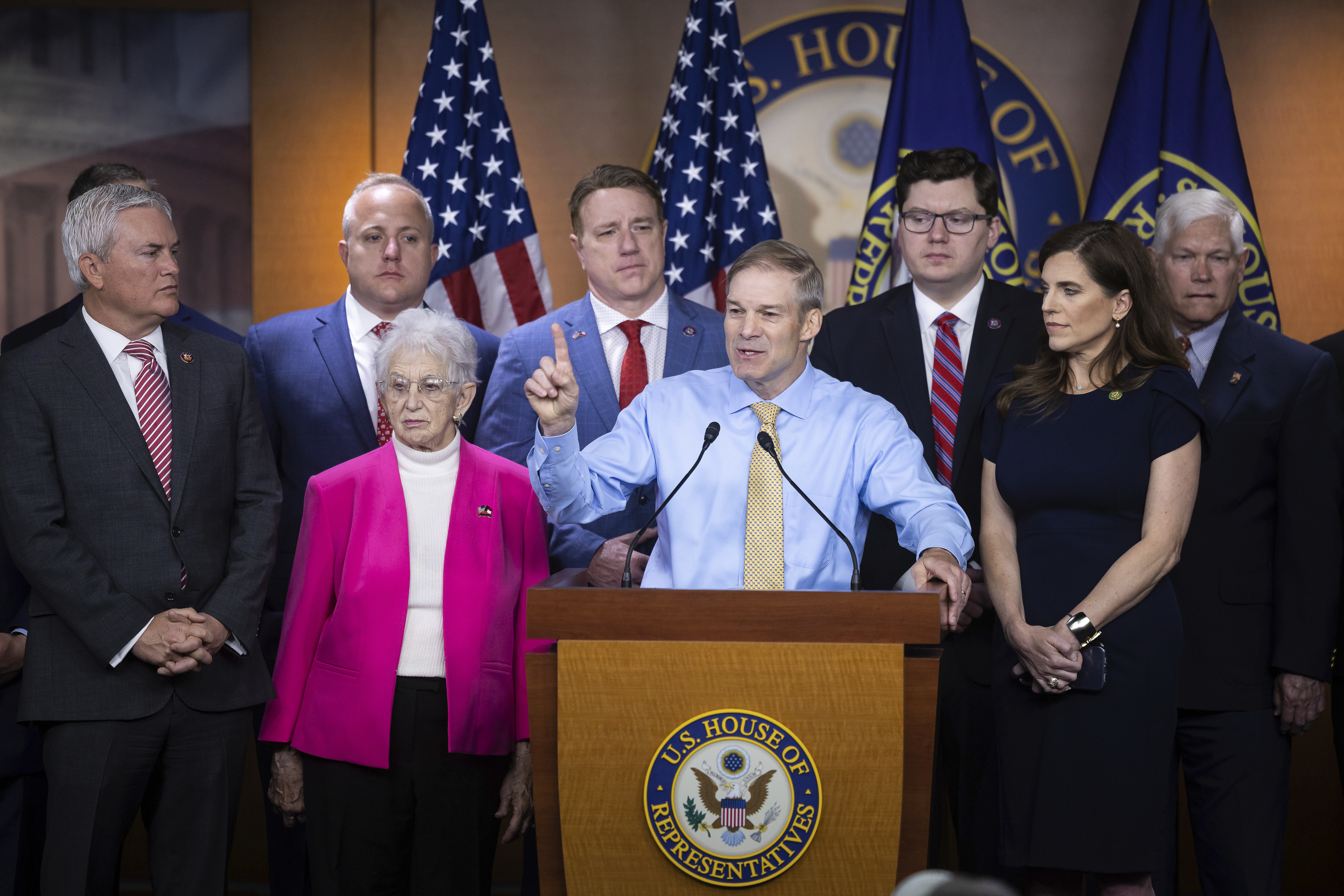
Jim Jordan has spent much of the past year out of the House GOP spotlight. Don’t expect that to last.
The Ohio Republican rose to prominence as a headline-grabbing conservative firebrand, then saw that reputation work against him when he made a failed bid for the speakership in 2023. Since then he has been supporting President Donald Trump as chair of the House Judiciary Committee and otherwise staying out of Speaker Mike Johnson’s way.
But now as frustrations with Johnson’s leadership rise inside the House GOP, and expectations grow that the Republican majority’s days might be numbered, speculation is brewing that the 62-year-old former wrestling star is preparing another push for the top leadership ranks.
“I’ve seen a concerted effort now for him to work with everybody and to travel the country,” said Rep. Jeff Van Drew (R-N.J.), a fellow Judiciary member. Should Jordan make another run, he said, “I think his base of appeal will be stronger and bigger.”
The open chatter that has erupted around Jordan and other possible contenders for the top House GOP spot — including current No. 2 leader Steve Scalise and No. 3 leader Tom Emmer — has been conspicuous, especially considering there is no vacancy to fill. Johnson insists he will retain the House majority in the November midterms and continue as speaker.
But other House Republicans believe that is growing more unlikely given the political headwinds they face and the general belief Johnson would step down from leadership rather than continue as minority leader. So they have been taking notice of the quiet moves already being made by possible candidates to build support among the rank-and-file.
And while Jordan has remained on the sidelines of recent high-profile intra-GOP feuds, he’s spent plenty of time helping vulnerable members on the campaign trail and, more recently, helping Trump wrangle potential conservative defectors on a key upcoming spy-powers vote.
Asked about mounting another run should Johnson step down after November, Jordan declined to rule it out in an interview.
“I am totally focused on keeping the majority, which I think we’re going to do,” he said.

The last time Jordan took a shot at the speakership was after then-Speaker Kevin McCarthy was forced out of the position in 2023. Jordan won a plurality of votes on several secret internal ballots but failed to reach the necessary 218 votes. Dozens of more moderate members opposed his bid, most believing he was simply too combative to govern effectively.
But things could be different in November. For one, in a race for minority leader, Jordan would only need to win over a majority of House Republicans — not a majority of the entire chamber.
And while someone with a reputation as a “legislative terrorist” — as former Speaker John Boehner once called Jordan — might not make for a great speaker in the eyes of some members, leading a House minority can require a more confrontational approach.
One Republican lawmaker granted anonymity to speak candidly noted that a bad midterm showing could actually work to Jordan’s advantage by culling some of his moderate opposition.
“His base is in rock-hard GOP districts,” the member said. “The worse the night the fewer the number of ‘never Jordans’ who come to vote.”
But that member was among several who recognized that Jordan has also taken pains in the two-and-a-half years since he lost to build support in new corners of the House GOP: “He is working every day to lay the groundwork.”
Republicans have asked Jordan to come to their districts and help with both big- and small-dollar donations, one person familiar with the outreach said. Jordan in the interview noted he was about to head to California to campaign with Rep. Vince Fong — a protege of McCarthy’s who is hardly considered a conservative rabble-rouser.
“He’s definitely broadened his circle and his approach and his appeal,” said a swing-district GOP lawmaker, who like the others was granted anonymity to comment on a leadership race that has yet to actually materialize.
Should Johnson step down, the member said, Jordan could be an acceptable successor: “I’m not against it.”
Among Jordan’s admirers is McCarthy himself, who soundly beat Jordan in the last House GOP election for a minority leader in 2018. The two men then formed an alliance that persisted even after a small group of conservative hard-liners tried to block McCarthy from the speakership. When the group rallied behind Jordan as an alternative, Jordan rejected the idea and instead gave a nominating speech for McCarthy.
In an interview, the former speaker called Jordan one of the party’s “best chairmen” and said he “would have done an excellent job” with the gavel had he been elected in 2023.
“Some people would go and quit if they didn’t win,” McCarthy said. “I watched him go help and elect people who were not good to him, who he had every reason to try to go and defeat then but he didn’t.”
Jordan denied he’s made any change in strategy. “I’ve always helped our colleagues,” he said, when asked if he’d stepped up his campaign trail work in anticipation of a leadership run.
What’s harder to deny is that Jordan has taken a much lower-key approach to internal House politics since Trump — a longtime ally — returned to the White House last year. That change has been on display during the recent fight over Department of Homeland Security funding.
After the Senate passed a bill last month that left out key immigration enforcement agencies, Jordan did not immediately join Johnson and other House leaders in trashing the bill, instead noting the upsides of the plan: Democrats didn’t succeed in hamstringing enforcement tactics, and Republicans would have their own opportunity to pass a party-line bill delivering the funding.
It ended up being a canny approach after Johnson backed down last week and agreed to advance the Senate-passed measure as the only workable alternative. In a nod to the conservative uproar, Jordan conceded the two-track approach set a bad precedent in a Wednesday radio interview. But his comments were only lightly critical at a moment when many members were furious that Johnson had made a U-turn on the bill.
“So the House said no to it,” he said. “All us Republicans voted against what the Senate had sent.”
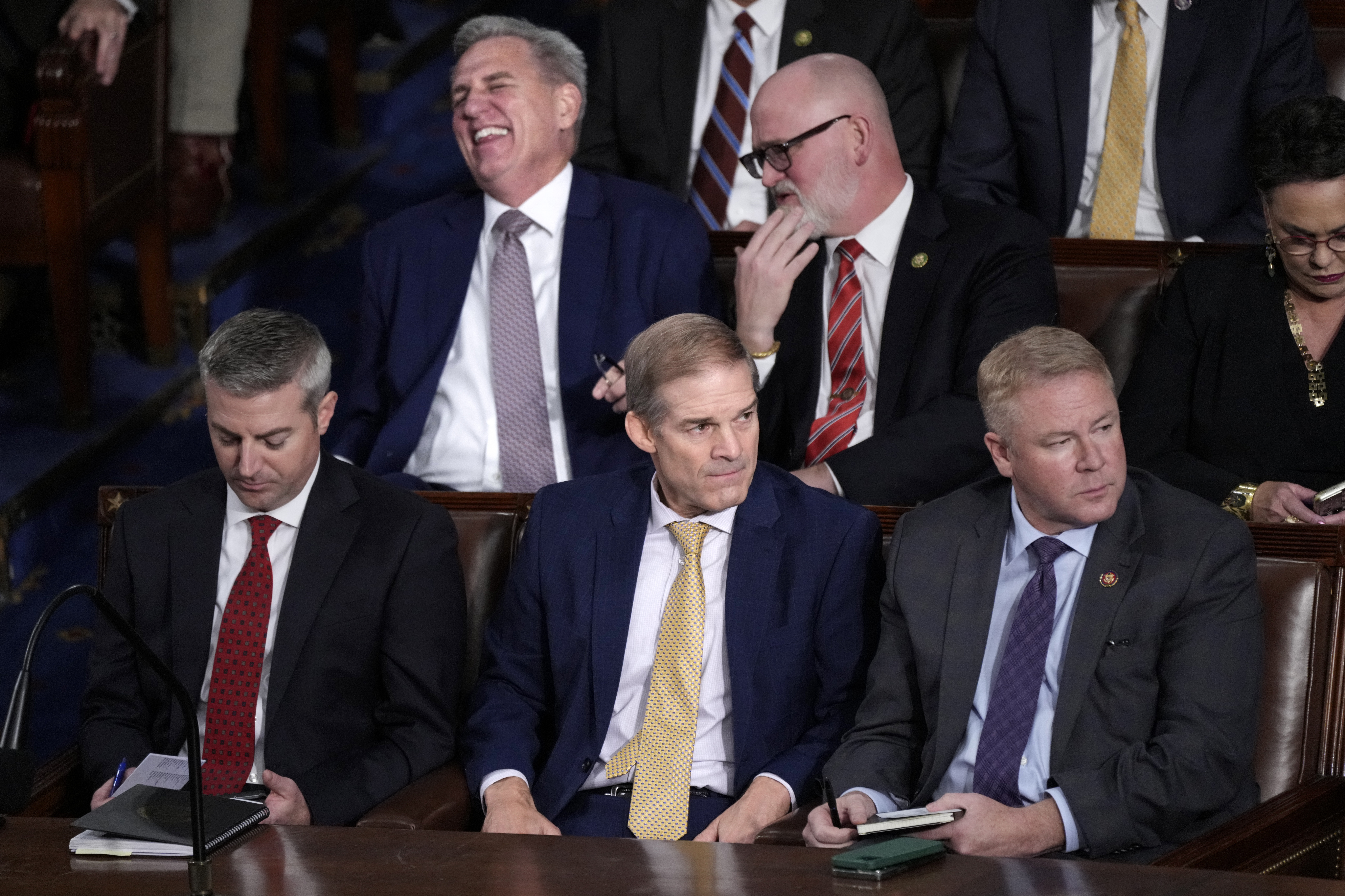
Jordan is playing an even more crucial role to ease through the quick reauthorization of a key surveillance program ahead of an April 20 deadline at the behest of the White House. That’s a flip from two years ago, when Jordan opposed renewing the program and eyed a push for “real reform” to protect Americans from warrantless spying in 2026.
Inside a closed-door House GOP meeting last month, Jordan stood alongside top Republican leaders and briefed members on why they should support a straight extension. That created friction with some of his traditional hard-liner allies, some of whom stood up and pointed out Jordan’s 180, according to two members granted anonymity to discuss the private meeting.
“The old Jim Jordan wouldn’t have done this,” one of the members said. “It’s clear that he sold out in order to keep chairmanship or to move up in leadership.”
Jordan said in an interview he has not changed his position because the program, known as Section 702, is “fundamentally different because of the reforms we all worked on and got in place” in prior renewals.
“So for a short-term extension, while we’re in the middle of a military conflict in Iran, that the commander in chief thinks makes sense for the short term, I think that’s fine,” he said.
Jordan’s spy-powers stance has surprised even Democrats, including Rep. Jamie Raskin of Maryland, the top Judiciary Democrat. Raskin opposes renewing the 702 program without new guardrails, but he credited his counterpart as an “able and effective political actor” inside the GOP who has his pulse on the party agenda.
“I don’t know whether he has traveled more towards the center of the Republican conference or the Republican conference has traveled more towards Jim Jordan,” Raskin said. “But in any event, it feels like he’s pretty close to the center of gravity right now.”
Meredith Lee Hill contributed to this report.
In the wonky world of federal budgeting is the most tired cliche of all: The president proposes, and Congress disposes.
In other words, any White House budget request is nothing more than a political draft that’s ultimately going to be significantly altered — or torn to shreds — by lawmakers who hold the constitutional power of the purse.
But this administration’s moves to wrest spending authority away from Congress have turned that dynamic on its head. A year of funding clawbacks, shutdowns and Supreme Court challenges has changed the way many in Washington are looking at President Donald Trump’s budget plan released Friday. Ultimately, even if Congress refuses to approve Trump’s latest funding wishes, the administration may implement many of them anyway.
Plus, it’s not just Congress and the White House involved in the budget conversation right now — everyone is still waiting to see if the Supreme Court weighs in on the legality of the so-called pocket rescissions that Trump employed last year to circumvent Congress and unilaterally cancel nearly $5 billion in foreign aid spending.
“It’s hard enough to get 12 appropriations bills done and even harder when you’re not sure if the deal that you strike is even a deal,” said Joe Carlile, an associate director at OMB during the Biden administration and longtime House Appropriations aide who now runs Bluestem Consulting.
The pocket rescissions gambit refers to occasions where an administration sends Congress a list of previously-approved funding to eliminate with less than 45 days to go until the end of the current fiscal year, then “pockets” — or withholds — that funding until a new fiscal year begins, at which point it is considered expired.
Though the Supreme Court, in a preliminary decision last fall, allowed the Office of Management and Budget to proceed with canceling the foreign aid funding, justices haven’t yet weighed in on the larger pocket rescissions question. That could only empower Office of Management and Budget Director Russ Vought, certainly the most powerful OMB director in recent memory, in his approach and the expansiveness of his mandate.
“Under President Trump’s bold leadership, every tool in the executive fiscal toolbox has been utilized to achieve real savings,” Vought wrote in an introduction to the administration’s newest fiscal framework.
“A historic paradigm shift in the budget process is occurring and is producing real results for the American public,” he added.
These days, Vought’s aggressive use of his budget tools looms over every budget debate and document, including the one released Friday. Vought’s proposal asks Congress to approve a massive $1.5 trillion defense request as well as a $73 billion cut to domestic programs, including many that lawmakers refused to cut last year.
“Given the Administration’s focus on nondefense discretionary spending reductions, most budget analysts assume that this would be the target of rescissions if they were unsuccessful in the appropriation process,” said G. William Hoagland, a senior vice president of the Bipartisan Policy Center who spent decades on Capitol Hill as a senior Republican budget aide. “It does change the way we look at the request.”
In another power move Friday, the Trump administration is asking Congress to ram through $350 billion in defense spending to assist Iran conflict through the party-line budget reconciliation process as an end-run on the Senate filibuster. That recommendation would upend one of the last bipartisan traditions on Capitol Hill: funding the government through the dozen annual government funding bills.
The proposal has Democrats and Washington lobbyists now closely watching the budget proposal and OMB’s current spending moves for signs of what the White House may try to muscle through, rescind or delay next — and how they should approach Appropriations Committee markups later this year in the House and Senate.
Meanwhile, less than a year after Elon Musk and DOGE rampaged through the federal bureaucracy, the government — just five months past its last major shutdown — remains in the grip of a partial closure, with a deal to fully open the Department of Homeland Security still on the table.
Congressional appropriators have sought to assert their independence in previous budget battles. Still, their power has been declining for the better part of three decades now — and the way Washington budgets seems increasingly disrupted.
“While the Administration proposes a budget, Congress holds the power of the purse,” Senate Appropriations Chair Susan Collins (R-Maine) said in a statement Friday.
True, but who “disposes” is as unclear as ever.
- Congress is absent as Trump threatens Iranians ‘will die’
- Why Hungary’s energy policy is less MAGA than JD Vance might think
- Airstrikes on Iran kill more than 25 as Trump’s deadline to open Strait of Hormuz looms

- Bill Gates to testify before House Oversight in Epstein probe
- ‘Vile on every level’: Tucker Carlson rips Donald Trump over Easter Sunday ‘f-word’ post
- Education Department rescinds previous Title IX agreements with schools over gender identity

- Trump suggests US could charge toll for Strait of Hormuz passage

- Trump brushes off questions about potential war crimes in Iran

- Trump doubles down on Tuesday night deadline for Iran to meet US demands

- Trump details rescue operation of missing F-15 airman in Iran: How it unfolded

-

 The Dictatorship1 year ago
Luigi Mangione acknowledges public support in first official statement since arrest
-

 Politics1 year ago
Former ‘Squad’ members launching ‘Bowman and Bush’ YouTube show
-

 Politics1 year ago
Former Kentucky AG Daniel Cameron launches Senate bid
-

 The Dictatorship1 year ago
Pete Hegseth’s tenure at the Pentagon goes from bad to worse
-

 Politics1 year ago
Blue Light News’s Editorial Director Ryan Hutchins speaks at Blue Light News’s 2025 Governors Summit
-

 The Dictatorship7 months ago
Mike Johnson sums up the GOP’s arrogant position on military occupation with two words
-
Uncategorized1 year ago
Bob Good to step down as Freedom Caucus chair this week
-

 Politics12 months ago
Democrat challenging Joni Ernst: I want to ‘tear down’ party, ‘build it back up’