
Politics
Chris Sununu still believes the GOP is bigger than Donald Trump

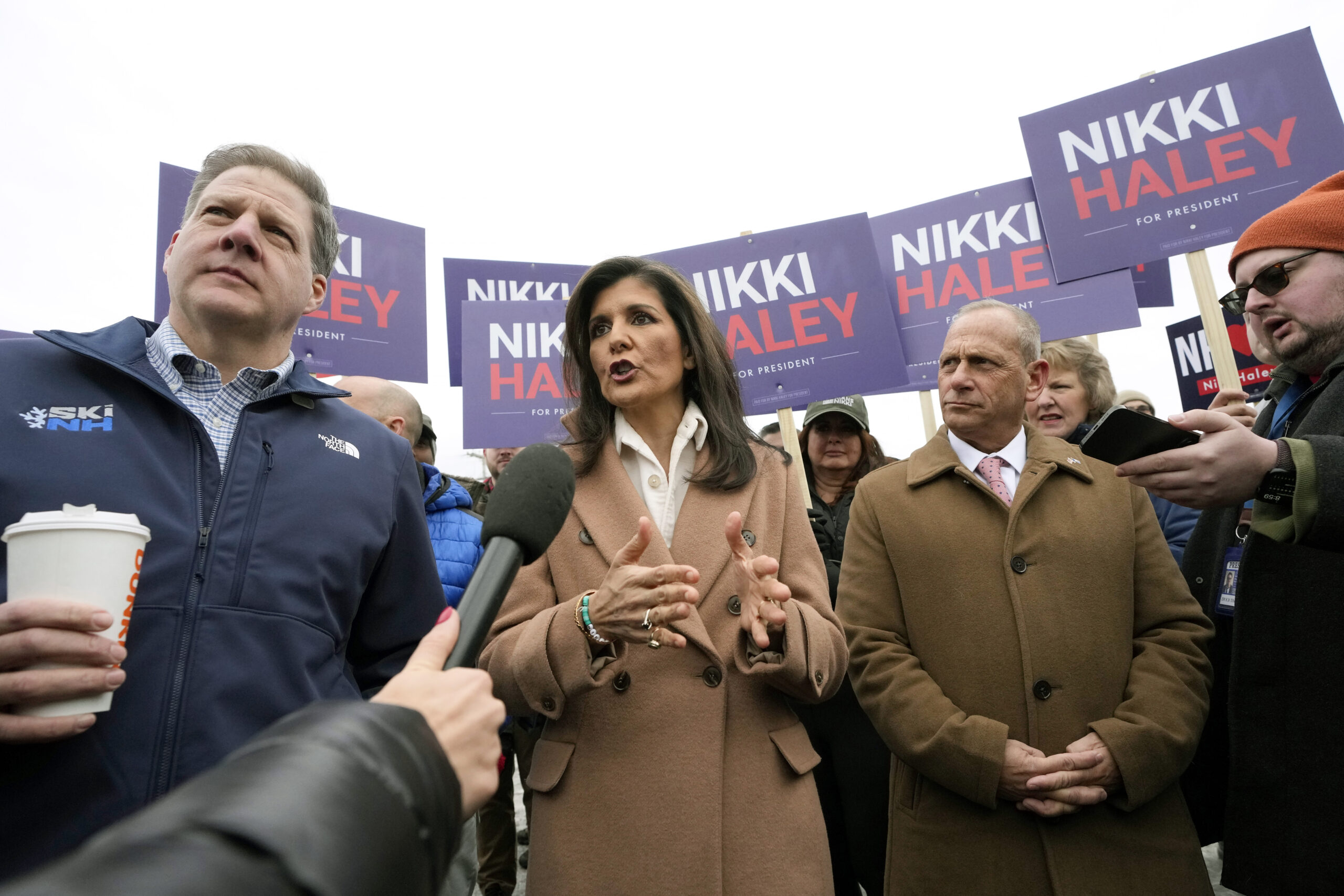
Donald Trump remade the GOP in his image. Chris Sununu doesn’t think it’ll stick.
That’s because the outgoing Republican governor of New Hampshire, who routinely oscillates between supporting Trump and criticizing him, believes his party is bigger than both its enduring standard bearer and the political movement he created.
“Trump is extremely unique. There’s no ‘Trump lite’ or ‘Trump 2.0’ that can replace or replicate what he’s brought to the table, for better or for worse,” Sununu said in an interview.
And the GOP, he insists, is still a “big tent,” ticking off varied constituencies like the Log Cabin Republicans, fiscal hawks, libertarian-leaners and social conservatives.
Sununu needs this to be true, at least if he wants a future in politics beyond punditry. The scion of a New Hampshire political dynasty whose old-school brand of Republicanism has been supplanted by hard-liners and flamethrowers in the Trump era, Sununu has been thrice reelected and consistently ranked as one of the nation’s most popular governors — even as he sometimes defies his party’s Trumpian bent.
Yet Sununu, who declined to seek a fifth term, has a mixed track record of translating his success in navigating a MAGA-fied GOP to other like-minded politicians. This year alone, he helped elect former Sen. Kelly Ayotte as his successor, but failed to get former U.N. Ambassador Nikki Haley across the finish line in the Granite State’s GOP presidential primary. And he has no obvious constituency outside of New England should he seek higher office himself.
Sununu, 50, who passed on a Senate run in 2022 and a presidential bid in 2024, insists he’s not looking at either office for at least the next few years. Instead, he says he’s content to return to the private sector and, as he often notes, “make some money.”
As he prepares to hand over the office he’s held for eight years, Sununu spoke at length with Blue Light News about his efforts to reduce opioid overdose deaths, how he plans to stay involved in politics, why he’s still largely against legalizing recreational marijuana and how Trump doesn’t have the GOP in as much of a vise grip as it seems.
This conversation has been edited and condensed for length and clarity.
What would you say is your biggest policy achievement as governor?
When I first ran for governor, the two big issues facing the state were obviously the opioid epidemic and the mental health crisis. And we just jumped right in. We really focused on rural access to care and reinvented recovery-friendly workplace programs. It was really about opening up access.
Trump has talked a lot about trying to stop the flow of fentanyl, an opioid, over the southern border. Do you think the policies he’s proposing can help do that?
The No. 1 problem with the fentanyl crisis is the open border. Closing up the border definitely makes it harder for that stuff to come in.
How do you want to see Trump and Republicans in Congress tackle the border? There was a plan on the table last year…
That plan was terrible. The key to all of this is closing the border, but making the ports of entry much more robust to handle the number of people who may want to come across in a legal and authorized and processed way. And, most importantly, the “Remain in Mexico” policy has to be reinstated. Aside from closing the illegal crossings at the border, you need to have immigration reform that deals with creating a more modernized pathway for folks to become citizens the right way.
Trump’s plans for larger-scale deportations, do you think that’s the right way to go?
Specifically for criminals, yes. These are the first folks that should absolutely be deported. Beyond that Congress and the president can kind of tackle the next phase, but I think it does have to be broken in phases.
Back to New Hampshire for a minute. I want to talk about cannabis. You’ve largely been a skeptic of legalizing recreational marijuana, which failed again this year in the state Legislature. Why should New Hampshire miss out on tax revenues from this when all the surrounding states provide access to it?
You should never legalize drugs for the money. That’s awful. If you’re legalizing marijuana because you need more money, then you have a horribly malfunctioning state. So there’s an ethics and a health issue here. I can tell you virtually every one of the governors [in the surrounding New England states] has indicated to me various problems with the legalization of marijuana, whether it’s the exacerbated mental health issues, whether it’s the black market that it fundamentally creates, whether it’s the advertising problems, the proximity to schools that creates a lot of problems for parents. There’s so many reasons not to do it. If you were going to do it here, [you would need to do so in a] responsible and controlled way that keeps it away from kids and allows the state to control the marketing messaging. I was semi-open to it if it could be controlled in the right way.
Before the election, we spoke about abortion and how Democrats were running hard on the issue in New Hampshire. You said the issue was losing salience and that voters were more concerned with the economy. The Republican won the governor’s race, so what is your assessment now?
In 2022, Roe v. Wade had just happened; it was much more of an unknown issue. This time around, two more years have passed. People in New Hampshire — no one’s denied an abortion, no one’s denied their rights [the state restricts abortions after 24 weeks of pregnancy, with exceptions]. So the fearmongering hasn’t borne true. There are some individual states and places that are more restrictive or less restrictive, but that’s up to voters [in those states] to decide. It’ll still be an issue, but it’s just not going to be the political backbreaker issue that the Democrats want it to be.
Do you think that there’s still room within the Republican Party for criticism of Trump when warranted?
Of course there is. Did [former Rep.] Matt Gaetz just get pushed right out of his nomination to be the U.S. attorney general? Yes. Look, it’s never easy criticizing the president and the standard bearer of your party, and there’s always that kind of political honeymoon period that happens when you first get elected. But there are already signs of folks that are willing to push back and criticize and say no when they feel like they have to say no. And that should give the American people a big sigh of relief that it’s not the evil dictatorship that the liberal media was telling us it was going to be.
Trump is term limited. So that opens up the question of what happens in 2028. Do you think Vice President-elect and Ohio Sen. JD Vance has a lock on the nomination in ‘28? Or do you think there will be a real, contested primary?
There’ll definitely be a real, contested primary. I think JD is great, by the way. He’s shown himself to have overcome a lot of the early criticisms that he [faced]. He’s competent. He’s incredibly smart on his feet. He knows the issues. He’s very cordial. He gets along with the other side — that was shown through the vice presidential debate, and I think that gave strength to the entire ticket. So there’s no doubt he’s in a great position if he wanted to run in ‘28. But no one’s going to just hand it to him. You’ve got to bring him through his paces. I imagine if he wanted to be a front-runner, he would be. But no, you’re gonna have a lot of folks from all walks of life running.
You know I’m going to ask if you’re thinking about it.
No. Not for ’28, I’m definitely not thinking about it.
So are you ruling out a presidential run in 2028?
I don’t rule anything out, but there’s no story there. It’s literally zero on my list in terms of thinking about anything. I can’t see myself running in 2028. That would be, holy cow, that would be a real change of my plans. I don’t see any path to that actually happening. I’m excited to go back to the private sector.
So what are your plans? What’s next for you?
I’m going to enter the private sector and make some money, do some business-type stuff, but I’ll also be in the media a bit. I have some ideas to keep myself kind of scratching the political itch through various venues in the media and content creation around smart political content.
You’ve been making a push to support Elon Musk and Vivek Ramaswamy’s plans for the “Department of Government Efficiency.” Tell me how that can work.
You can really look to the states to get ideas. Musk has to use — even though he’s an outsider, he has political capital — he needs to use it and make sure he’s not just putting a list of good ideas in front of Congress, a Republican Congress that is typically tepid about actually doing anything substantive. Congress just can’t help themselves about overspending, Republicans included. So he and Trump could use their combined political capital to ensure that whatever they do is lasting. It would be a huge legacy initiative for them. You gotta really push Congress to dig in for a balanced budget of some sort. Ultimately, they’re going to have to start talking about entitlement reforms or Social Security reforms that just have to come because we have the bills coming due.
Trump wants to end daylight saving time. You said in a recent op-ed that you support that. But the current push in Congress is to make daylight saving time permanent. What’s your thinking on that?
I don’t care whether you make it permanent or you get rid of it, but let’s stop changing the clock, right? That’s my point. I don’t care. Pick an hour. You get the exact same thing, whether you make it permanent or get rid [it]. The whole point is, let’s stop changing the clock.


The Trump administration identified five policy points it is willing to codify…
Read More
Threats from some hard-right House Republicans to block any Senate bill until the SAVE America Act passes appear to be falling flat. A bill from Sen. Joni Ernst (R-Iowa) to reauthorize small business grant programs passed 345-41 Tuesday, a day after another Senate bill, aimed at recovering Nazi-looted art…
Read More
The bill is at the center of an intense GOP fight over the “talking filibuster.”…
Read More
- Elizabeth Warren backs Mallory McMorrow in Michigan Senate primary
- Capitol agenda: Tulsi Gabbard takes the hot seat
- The Latest: Trump seeks help opening the Strait of Hormuz as Iran war chokes oil shipping

- The Senate’s marathon elections debate is dividing Republicans, not Democrats
- White House releases DHS funding offer

- Senate bills survive
- Senate launches debate on SAVE America Act with endgame uncertain

- Republicans hope Mullin will turn the page at DHS from Noem. Democrats aren’t buying it.

- Comer subpoenas Attorney General Pam Bondi over Epstein files

- AIPAC faces calls to reassess strategy after split results in Illinois
-

 The Dictatorship1 year ago
Luigi Mangione acknowledges public support in first official statement since arrest
-

 Politics1 year ago
Former ‘Squad’ members launching ‘Bowman and Bush’ YouTube show
-

 Politics1 year ago
Blue Light News’s Editorial Director Ryan Hutchins speaks at Blue Light News’s 2025 Governors Summit
-

 Politics1 year ago
Former Kentucky AG Daniel Cameron launches Senate bid
-

 The Dictatorship6 months ago
Mike Johnson sums up the GOP’s arrogant position on military occupation with two words
-

 The Dictatorship1 year ago
Pete Hegseth’s tenure at the Pentagon goes from bad to worse
-

 Politics11 months ago
Democrat challenging Joni Ernst: I want to ‘tear down’ party, ‘build it back up’
-
Uncategorized1 year ago
Bob Good to step down as Freedom Caucus chair this week