
Congress
Capitol agenda: Crypto chaos hits the Senate

The GOP’s tax cut megabill isn’t the only one of President Donald Trump’s priorities in jeopardy on Capitol Hill. Republicans have an unexpected crypto problem, too.
Crypto turmoil is unfolding in the Senate after nine key Democrats led by Sen. Ruben Gallego said this weekend that they would oppose GOP-led legislation that would carve out new rules for so-called stablecoins.
The Democrats’ surprise shift is an urgent problem for Senate Republicans, who are trying to expedite a floor vote on the bill by late May and give Trump a big, beautiful crypto bill to sign soon.
Why does it matter? The crypto fight is one of the first major tests of Republicans’ ability to work across the aisle in the second Trump era. Unlike budget reconciliation, GOP senators need Democrats to overcome a Senate filibuster.
It’s also a big test for Democrats, who have long been deeply divided over the risks and rewards of cryptocurrency trading. Sen. Elizabeth Warren is trying to stop her colleagues from following the lead of Sen. Kirsten Gillibrand, the stablecoin bill’s lead Democratic co-sponsor.
It comes after the crypto industry grew its influence by dumping tens of millions of dollars into congressional races last year.
What went wrong? The nine Senate Democrats — including four who backed an earlier version of the bill in committee in March — blasted changes that Republicans made in the last several days and said the latest proposal would allow stablecoins to pose too many risks to the financial system. Among the Democrats who signed on: Sens. Mark Warner, Lisa Blunt Rochester and Andy Kim.
Several Democratic senators raised concerns at a closed-door caucus meeting last Thursday about advancing an industry-backed crypto bill as the Trump family tries to build its own crypto empire. Senate Minority Leader Chuck Schumer urged Democrats not to commit to supporting the stablecoin bill, saying they should use their leverage to force additional changes to the legislation.
What’s next? GOP aides involved in talks say they were stunned by the Democrats’ statement Saturday but remain hopeful that there is still a path forward. And if the stablecoin legislation clears the Senate in the coming weeks, it would need to be reconciled with a separate but similar bill that is awaiting a floor vote in the House.
Internal GOP tensions could also emerge if House Republicans try to take a bigger swing at crypto by packaging the stablecoin effort with a broader regulatory revamp that would overhaul how the SEC and CFTC police crypto trading. Senate leaders including Banking Chair Tim Scott want to notch a win by first passing the stablecoin bill — long seen as the “low-hanging fruit” of crypto policy — and taking up the broader revamp later.
What else we’re watching:
— Big, beautiful bill problems: Speaker Mike Johnson has major policy clashes to resolve this week before House Republicans can move ahead with key committee votes on Trump’s big domestic policy bill, including on Medicaid, food aid and tax. The pressure is on with Senate Republicans watching and poised to scale things back.
— Thune’s EV decision: Senate Majority Leader John Thune needs to make a call on whether to nix a waiver that lets California set stricter car emissions standards rules after the House voted to do so last week. The GAO found that the waiver doesn’t fall under the scope of the Congressional Review Act, and the Senate parliamentarian is backing up that decision. But some GOP senators see a potential path forward in targeting the GAO’s role instead.
— New drug cost bill: Sens. Josh Hawley and Peter Welch are teaming up on legislation that would bar drug companies in the U.S. from charging higher prices than the international average. The bill is different than the pharmaceutical industry crackdown that the Trump administration is proposing to help finance the GOP budget reconciliation bill, but underscores the bipartisan and populist interest in targeting the drug companies.
Jordain Carney, Meredith Lee Hill, Lisa Kashinsky, Ben Leonard and Mia McCarthy contributed to this report.


Senate Republicans want to use their party-line elections bill as a cudgel against Democrats. They need to stop sparring with each other first.
Republicans kicked off debate Tuesday on the SAVE America Act, a House-passed bill that would create new proof-of-citizenship and photo ID requirements in order for Americans to participate in federal elections. In a bid to pacify House and Senate conservatives, a fervent base flooding their social media mentions and even President Donald Trump — who views the legislation as his “No. 1 priority” — Senate Republicans are expected to spend days, if not weeks, discussing the legislation.
The chances the push will succeed in passing the bill, which Democrats uniformly oppose, are miniscule. And it’s not at all clear that spending two weeks on the bill will be enough to quell what has been an intense GOP-on-GOP pressure campaign that has sucked up much of the focus in the weeks leading up to Tuesday’s vote.
“We’ll find out, you know?” Senate Majority Leader John Thune said when asked if he knew if it would be enough to satisfy Trump, who has repeatedly urged Republicans to skirt the 60-vote filibuster to pass the bill. “What I promised from the very beginning is we’ll get it up and we will have a vote. I can’t guarantee the result.”
He added that Trump and others also “want us to nuke the legislative filibuster in order to do it, and that’s also something I’ve been very clear about — there just aren’t the votes.”
Spending more than a week of floor time on a bill that is all but guaranteed to fail isn’t typically how the Senate operates. Usually, to show legislation supported by their own party can’t clear the chamber’s supermajority threshold, Senate leaders quickly move to end debate and prove it can’t get 60 votes.
But Senate Republicans are under intense pressure to show that they are fighting Democrats for “election integrity” — an issue they believe polls well for them but appears to be causing little heartburn for Democrats so far. Some believe forcing a “talking filibuster” where opponents have to hold the floor indefinitely will force the opposition to cave.
Democratic senators shrugged off the strategy Tuesday, vowing that no matter how long Republicans drag out the debate, there is no way the election bill can garner 60 Senate votes.
“If MAGA Republicans want to bog down the Senate over a debate on voter suppression, Democrats are ready. We’re ready to be here all day, all night, as long as it takes,” Senate Minority Leader Chuck Schumer told reporters. “Senate Democrats will never let this rotten bill move through this body.”
Sen. Chris Murphy (D-Conn.) said in an interview that Democrats will “spend the next two weeks painting them as totally out of touch.”
The Senate is expected to stay in session late into the night and into the weekend as senators hammer each other over the bill. Thune has been careful not to outline a date certain for the end of the debate, and both parties expect the process to eat up much of the next week and a half.
Sen. Tim Kaine (D-Va.) predicted “late nights with us having folks on the floor as long as Republicans do … being ready for procedural motions that we’ll have to respond to in real time.”
Democrats have filed dozens of amendments to the bill, including requiring proof of citizenship to purchase an assault weapon, restoring lapsed Obamacare tax credits and tying the bill’s implementation date to the price of gas. But unlike a true “talking filibuster,” where they would be able to offer those amendments and force Republicans to take politically uncomfortable votes, Thune took steps Tuesday to keep tight control of the debate by calling up a series of Republican amendments.
Both parties have procedural curveballs they could throw. If no one is speaking, Republicans could try to move immediately to a final vote on the bill at a simple majority, while Democrats could try to adjourn or set the bill aside altogether. They are likely to pause the debate later this week by forcing a privileged vote on a resolution limiting Trump’s ability to take military action in Iran without congressional approval.
But those actions appear destined to fall short of the hardball tactics demanded by the party’s MAGA wing, including Sen. Mike Lee (R-Utah) — who is clamoring for the Senate to stay in session until Democrats capitulate. And even some of Lee’s allies are starting to acknowledge the bill is barreling toward a 60-vote hurdle that it can’t clear.
“If we do not act on an issue that commands this level of support … we should not be surprised when the American people lose confidence in our willingness to fight for them,” Lee told fellow Republicans from the Senate floor Tuesday night.
The initial hours of debate Tuesday were nothing out of the ordinary. Senators agreed unanimously to structure the debate, rotating which party had time to speak about the bill. There were long stretches of floor silence as the evening wore into night, and the chamber adjourned as it typically does at the end of the day. The Senate won’t come back into session until noon Wednesday.
Across the Capitol, the hardball tactics weren’t any more effective. Some House Republicans vowed to block any Senate bill to pressure their counterparts into passing the elections overhaul, but two Senate bills already cleared the chamber this week.
Senate Republicans, meanwhile, are struggling to resolve internal divisions. Some of those are tactical, but others are substantive. Sen. Lisa Murkowski of Alaska has declared her opposition to the bill as a federal overreach into traditionally state-run elections. And Trump’s push to largely ban mail-in voting is a fierce point of contention that came up during the GOP’s closed-door lunch Tuesday, according to three attendees granted anonymity to describe the private discussion.
Amid backlash from several GOP senators, Republicans reworked a mail voting amendment with the White House’s blessing to try to assuage concerned members. The change includes a state-defined “hardship” exemption from in-person voting, according to a copy of the updated proposal obtained by Blue Light News. The amendment is expected to get a vote as part of the Senate’s marathon debate, while internal discussions continue about two other Trump-requested additions: restricting trans women from competing in women’s sports and banning gender-affirming surgeries for minors.
That would still fall short of the talking filibuster demanded by Lee, an army of online supporters and Trump, who spoke with Lee Monday about the bill. The Utah Republican said Monday night, “If your senators don’t support using the talking filibuster to pass the SAVE America Act, you might need to replace them.”
Asked about Lee’s comments, Thune urged his party to redirect their fury.
“I prefer to have our fights with Democrats,” Thune said. “And I’m always someone who believes it’s far better for us to have a majority in the United States Senate.”
CHICAGO — Illinois state Rep. La Shawn Ford won a crowded and contentious Democratic primary Tuesday to succeed longtime Rep. Danny Davis, who backed him as his successor.
The primary battle drew national attention and a flood of outside spending as 13 candidates sought the Democratic nomination following Davis’ retirement announcement. The contest became increasingly hostile in its final weeks with the involvement of five outside political action committees, including a group affiliated with the American Israel Public Affairs Committee and the crypto-funded super PAC Fairshake.
The crypto group spent nearly $2.5 million against Ford, targeting him for backing state legislation that puts restrictions on the industry. Ford, who said the TV ads and mailers spread misinformation about him, sent Fairshake a cease and desist letter a week before the primary.
Davis knocked on doors, rallied supporters and circulated a “Dear Colleague” letter to members of the Congressional Black Caucus on behalf of Ford.
The historically Black seat in the state’s 7th district represents racially and economically diverse communities, from downtown Chicago to areas of the city’s South and West sides and then west to suburban communities.
Ford, a state legislator who ran for Chicago mayor in 2019, currently represents the city’s Austin neighborhood and nearby suburbs. On the campaign trail, he told voters he would continue Davis’ legacy and work to seek federal funding to boost health services and college test-prep programs in the district.
Other candidates in the race included City of Chicago Treasurer Melissa Conyears-Ervin — the AIPAC-aligned group’s preferred candidate — real estate executive Jason Friedman, emergency room physician Thomas Fisher, labor leader Anthony Driver Jr., former Cook County Commissioner Richard Boykin and progressive activist Kina Collins.
The White House on Tuesday released a letter detailing changes it is willing to make to the Department of Homeland Security as it looks to secure a deal with Democrats to end the nearly five-week long partial government shutdown.
The move is the Trump administration’s attempt to show it is making a good faith effort after Democrats derided their proposal as unserious and comes as staffing issues at the Transportation Security Administration grow more acute — leading to longer wait times at airports across the country.
The White House, in five points, said it was willing to codify a number of policy changes, including an expansion of the use of body cameras for federal immigration agents; the limit of enforcement in certain sensitive locations, including hospitals and schools; greater oversight of DHS detention facilities; the enforcement of visible officer identification and the adherence to existing law prohibiting the deportation or detention of U.S. citizens.
“We feel that this offer is serious — that it is a good faith attempt to continue to try to come to a reasonable and expeditious conclusion to the shutdown, which we are now seeing is becoming ever more disruptive on Americans’ travel plans, as well as the security mission at the department,” said a senior White House official granted anonymity to describe the private talks.
The White House offer includes some public safety exceptions for the policy changes. For sensitive locations, there is a carve-out for “national security, flight risks and public safety,” and undercover officers would not have to display identification. Undercover officers would also not be required to wear body cameras.
The proposal also doesn’t address two of Democrats main concerns: requiring officials to obtain a judicial warrant before entering private property and prohibiting federal agents from wearing masks. Administration officials have previously said the warrants are a redline.
“We’re trying to move a little bit, but they’ve got to get serious. They are not getting serious,” Senate Minority Leader Chuck Schumer said Tuesday. “The key issues of warrants when you bust in someone’s house. The key issue of identity, of police and no masks. They haven’t budged on that.”
Spokespeople for Schumer did not immediately respond to a request for comment on the White House letter.
It’s the first time in the monthslong negotiation that the White House has released details about its proposal. Republicans have been eager for the White House to share details of its offers to validate their view that the administration had moved toward Democrats on some issues.
The White House letter argued that the majority of Democrats’ demands would “make it impossible to fully protect American citizens from dangerous criminal aliens and expose law enforcement and their families to increasing threats of violence.”
The senior White House official said that at this time, there are no plans for President Donald Trump to meet with Schumer or Democrats to discuss the impasse. The president has tapped border czar Tom Homan — who co-signed the letter with James Braid, the White House director of the Office of Legislative Affairs — to take the lead on working on the policy changes to end the government shutdown.
“There are a lot of technical issues that have to be worked out” for a White House meeting to be a “productive exercise,” the senior official said. “Although, of course, the president is going to make that decision, and at any time, that could be something that does occur.”
- The Latest: Trump seeks help opening the Strait of Hormuz as Iran war chokes oil shipping

- The Senate’s marathon elections debate is dividing Republicans, not Democrats
- White House releases DHS funding offer
- Senate bills survive
- Senate launches debate on SAVE America Act with endgame uncertain

- Republicans hope Mullin will turn the page at DHS from Noem. Democrats aren’t buying it.

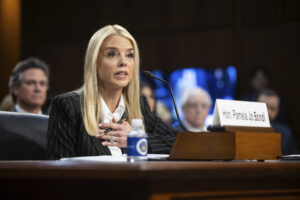
- Comer subpoenas Attorney General Pam Bondi over Epstein files
- AIPAC faces calls to reassess strategy after split results in Illinois
- BBC asks a court to dismiss Trump’s $10 billion lawsuit

- King of Illinois: Pritzker swings senate race as he targets Trump

-

 The Dictatorship1 year ago
Luigi Mangione acknowledges public support in first official statement since arrest
-

 Politics1 year ago
Former ‘Squad’ members launching ‘Bowman and Bush’ YouTube show
-

 Politics1 year ago
Blue Light News’s Editorial Director Ryan Hutchins speaks at Blue Light News’s 2025 Governors Summit
-

 Politics1 year ago
Former Kentucky AG Daniel Cameron launches Senate bid
-

 The Dictatorship6 months ago
Mike Johnson sums up the GOP’s arrogant position on military occupation with two words
-

 The Dictatorship1 year ago
Pete Hegseth’s tenure at the Pentagon goes from bad to worse
-

 Politics11 months ago
Democrat challenging Joni Ernst: I want to ‘tear down’ party, ‘build it back up’
-
Uncategorized1 year ago
Bob Good to step down as Freedom Caucus chair this week