
The Dictatorship
Boston Mayor Michelle Wu, target of the Trump administration, will face Josh Kraft in fall election

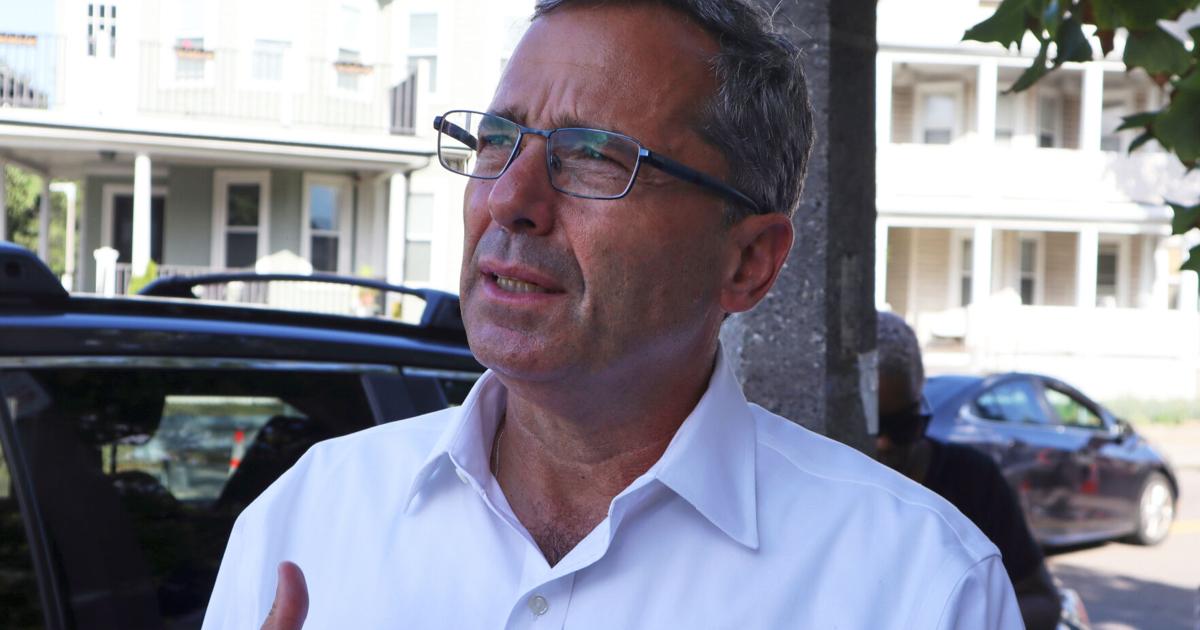
BOSTON (AP) — Boston Mayor Michelle Wua frequent target of the Trump administration, advanced in Tuesday’s preliminary election and will face Josh Kraft, the son of the Patriots owner, in November.
Wu, the city’s first Asian and female leader, has been bolstered in part by her defense of the city against attacks from the Trump administration. Members of the administration, often led by President Donald Trump’s border czar Tom Homan, have accused the city of not doing enough to crackdown on illegal immigration and threatened a surge in arrests. Boston is commonly known as a sanctuary city, and Wu has repeatedly said she wants it to be a welcoming place for immigrants.
Just last week, Trump’s U.S. Department of Justice filed a lawsuit against Wu, the city of Boston and its police department over its sanctuary city policies, claiming they’re interfering with immigration enforcement. In response, Wu accused Trump of “attacking cities to hide his administration’s failures.”
On Tuesday, the Department of Homeland Security put out a statement announcing the arrests of seven people as part of a crackdown in Massachusetts.
“Sanctuary policies like those pushed by Mayor Wu not only attract and harbor criminals but protect them at the peril of law-abiding American citizens,” Assistant Secretary Tricia McLaughlin said in a statement.
Speaking to her cheering supporters Tuesday night, Wu repeatedly took aim at Trump as well as Kraft and said the results showed that Boston “was not for sale” and that the mayor should answer to the “people of Boston, not a handful of billionaire donors.”
“The next eight weeks are about the remaining two names on the ballot. It’s a test of who we are. It’s a test of whether we believe in our city as a place of possibility and promise, whether Boston will keep going as a home for everyone,” she said. “It’s a test of whether Boston can still be that beacon of freedom, whether 250 years later, with tyranny again at our door, whether Boston still got it.”
Kraft, a fellow Democrat and a nonprofit leader, injected millions of his own personal money into his campaign and set records for spending in a Boston mayoral preliminary election. He has also been critical of Trump’s attacks and has pushed Wu particularly hard on housing, saying she hasn’t done enough to increase options and affordability in Boston.
Speaking to Ironworkers Local 7 in South Boston, Kraft said he was running because residents deserved to have a mayor “who listened to them” and would “deliver better streets, better schools, and a better future for them today.” He argued Wu was talking about Trump to distract from her record.
“I got into this fight because every day, I heard that too many people across Boston felt like that they don’t have a seat at the table,” he told supporters. “This campaign has never been about chasing headlines or currying favor with the political chattering class. It’s been about listening.”
Wu and Kraft bested two other candidates in the preliminary election: former school district committee member and veteran Robert Cappucci and community activist Domingos Darosa.
Wu highlights housing, crime and climate change
While visiting polls Tuesday, Wu said the Trump administration is targeting Boston because it “represents all that is good about our democracy.”
“We are proof of what’s possible when people come together, and we’re proof of everything that shows why they are wrong,” she said.
Wu, who often works with her infant daughter at her side, has also benefited from widespread support on the City Council and a string of endorsements from Democratic leaders. She also has used the pulpit of her position to highlight her successes around housing, combating climate change and reducing crime, rolling out a series of initiatives all summer.
David Woodruff, a retired research support specialist at the Massachusetts Institute of Technology, said he was supporting Wu because he wants “people who are progressive and are strengthening democracy” in office.
“I like the way she stands up to Trump, I like what she’s been doing on the national scene,” he said.
Kraft struggles to find message that resonates with voters
Kraft, who heads the Kraft Family Philanthropies and the New England Patriots Foundation, has targeted everything from bike paths to the cost of living in the city to his concerns about homelessness and drug addiction in one section of the city known as Mass and Cass.
Last week, Kraft and two top campaign advisers “mutually parted ways,” according to a statement from his campaign.
As of the end of August, Kraft had outspent Wu, $5.5 million to about $1.1 million, thanks in large part to more than $5 million in loans from the candidate to his campaign. Wu entered the final days of the campaign with much more cash in the bank, $2.4 million to about $1.3 million for Kraft.
Jeffrey Berry, a Boston political analyst and professor emeritus at Tufts University, said money is good for creating name recognition, but it’s not enough on its own to win an election. He said Wu has become a “symbol of democratic resistance to the president,” and that will be hard for Kraft to overcome in a city like Boston.
Kraft has switched between attacking Wu and portraying himself as someone who wants to bring positive change to the city.
In an interview with The Associated Press, Kraft said his conversations with voters indicate to him that Wu doesn’t have as strong a grip on the mayor’s seat as some might think.
“Everywhere we go, myself, our team, throughout the neighborhoods of this city — regardless of race, socioeconomics, ethnicity, language — we hear the same thing: People don’t feel listened to, people don’t feel connected to the mayor and the mayoral administration,” he said. “Some of the polls have a big margin, but let me tell you something: Polls don’t decide elections. People decide elections.”
Kraft supporter Remy Lawrence said she’s been impressed by his commitment to Boston’s young people. Kraft was CEO of the Boys & Girls Clubs of Boston and worked with the organization for decades. Lawrence said Kraft personally reached out to her after her 13-year-old son, Tyler, who participated in Kraft family youth programming, was murdered by a gunman in 2023 while walking near his grandparents’ home in the Mattapan neighborhood.
“I believe we need change in this city – I know we need change in this city,” she said. “We need a leader who is accessible, who’s accountable, who’s connected.”



This is an adapted excerpt from the March 30 episode of “The Rachel Maddow Show.”
On Monday morning, a 10-foot-tall golden toilet appeared at the National Mall in Washington, D.C., along with a plaque that reads “A throne fit for a king.”
“In a time of unprecedented division, escalating conflict and economic turmoil, President Trump focused on what really mattered: Remodeling the Lincoln Bathroom in the White House,” the plaque continued, adding that the giant toilet “stands as a tribute to an unwavering visionary who looked down, saw a problem, and painted it gold.”

This weekend, that gold-toilet president was also the target of one of the largest single-day nationwide demonstrations in American history. Organizers estimate that more than 8 million Americans joined the third day of No Kings protests against Donald Trump in 10 months.
One of the places where the local press reported a steep increase in participation compared with previous anti-Trump and No Kings protests was in Hagerstown, Marylandwhere an estimated 3,000 people took part in a demonstration at the public square.
In Hagerstown, the banner for the protest wasn’t just “No Kings,” it was “No Kings, No Camps.” Just outside that city, the administration has been trying to build one of its Trump prison campswhich would hold thousands of people without trial.
The grassroots group Maryland Coalition to Stop the Camps asked people to come from all over the state to Hagerstown to show opposition to the prison camp that Trump is trying to put there.
This piece of this story is worth watching right now, especially after Kristi Noem was ousted as homeland security secretary and a new guy, former Oklahoma Sen. Markwayne Mullinis taking over.
One of the things that has emerged about the warehouse purchases the administration has been making for its prison camps is that for some reason the government appears to have been eager to wildly overpay.
In Salt Lake City, the administration paid almost 50% more than the property appeared to be worth. It was assessed at $97 million, and the government paid more than $145 million. In Roxbury, New Jersey, one warehouse was assessed at $62 million, but the Trump administration came in and offered $129 million for it — more than double the cost. In Georgia, one of the properties valued last year at $26 million was purchased for $129 million.
On Friday, The Washington Post reported on an internal department memo that circulated last week, the day after Mullin was sworn in as the new head of Homeland Security. The memo reportedly said that the process of turning these warehouses into Trump prison camps was going to be slowed down and that the proposals for these facilities are going to be revised to start incorporating feedback from stakeholders — whatever that means — before they move ahead.
Simultaneously, CNN reported that there is a new inspector general investigation into alleged corruption at the department concerning the soliciting and handling of contracts, including the involvement of Noem and her top adviser, Corey Lewandowski.
There was already an audit that had been sparked in the department; now, on top of that, there’s a new and apparently urgent investigation, which reportedly included investigators searching the offices of one Homeland Security official who had been placed in a job at the agency by Noem and Lewandowski.
That investigation came after NBC News reported on March 19 that Lewandowski reportedly sought multimillion-dollar payments from companies contracting with Homeland Security, including companies that operate immigration prisons.
Lewandowski has denied the allegations. Democratic members of Congress have now opened their own investigation into what has been going on there.
Earlier this month in Social Circle, Georgia, town officials put a lock on the water meter at a warehouse that the Trump administration is trying to turn into a prison there. In Salt Lake City, officials voted to cap the amount of water that the federal government would be allowed to use at a warehouse it wants to convert to a prison, one that it appears the administration overpaid $48 million for.
Why’d they do that? Who made off with that money? Whose pockets just got stuffed with tens of millions of dollars in taxpayer money?
That stink is what you think it is: It smells like corruption. It’s the kind of behavior for which kings and dictators are famous.
But on Wednesday, the Trump administration will try to make its most radical move yet against immigrants. It will argue before the Supreme Court that when the Constitution says that anyone born in this country is an American, the Constitution didn’t really mean that.
Everyone calls this the birthright citizenship case, but no one who’s not a lawyer instinctively knows what that means. What it means is that anyone born in this country is an American by virtue of the fact that they were born here.
But now, the Trump administration is trying to change that. It wants to assess the allegiance and the loyalty of a person’s parents before it decides if that person — born here, in this country — can be considered American.
The last time we had massive domestic prison camps in this country, to hold people indefinitely and without trial, was in World War II, when the U.S. government locked up Japanese Americans for yearsregardless of their citizenship, on the theory that their race alone made them dangerous.
Japanese American groups and experts on their wartime incarceration have filed friend-of-the-court briefs in that case ahead of the oral arguments this week.
On Wednesday, the Trump administration will try to make its most radical move yet against immigrants.
Law professor Eric Muller of the University of North Carolina is a nationally recognized expert on what happened to Japanese Americans during the war. He’s written four books on the topic.
In his friend-of-the-court briefhe explained, sort of patiently, that even in World War II — when we were so panicked about the loyalties and the allegiances of whole huge swaths of people, so much so that we created effectively a concentration camp system to lock up an entire ethnic group for years on the basis of how scared we were about their supposed loyalties and allegiances — if the citizens of Japan who we had locked up had babies inside the camps, there was no controversy at all about the fact that those babies were definitely American.
Beyond that, when people had renounced their American citizenship, and we had them locked up in prison camps, if they had babies here, there was no question that their babies were Americans.
Even beyond that, the United States in World War II went so far as to grab a bunch of people who had no ties to America whatsoever, including people of Japanese descent from Peruand force them to come to this country to be put in prison so they could be used in prisoner swaps with Japan.
These were Peruvians of Japanese descent who were only in this country because they were forced against their will to be here, but still, when they had babies in American prison camps during the war, those babies were uncontroversially considered to be American citizens.
But under Trump, who has entrusted the wise and prudent stewardship of immigration matters to people like Noem, Lewandowski and now Mullin, the federal government is now going to tell the Supreme Court that the Constitution has been wrong all this time and that it is he, Trump, who, neutrally and with an even hand, will assess a person’s loyalties and allegiances before it’s decided if they are really an American.
The administration is dragging that stinking heap up to the door of the Supreme Court this very week, the same week that more than 8 million Americans from every single corner of the country came out full tilt and full blast to say No Kings.
No thrones. No golden toilets. No crowns. No camps.
That’s where we are. That’s where we stand. Game on.
Allison Detzel contributed.
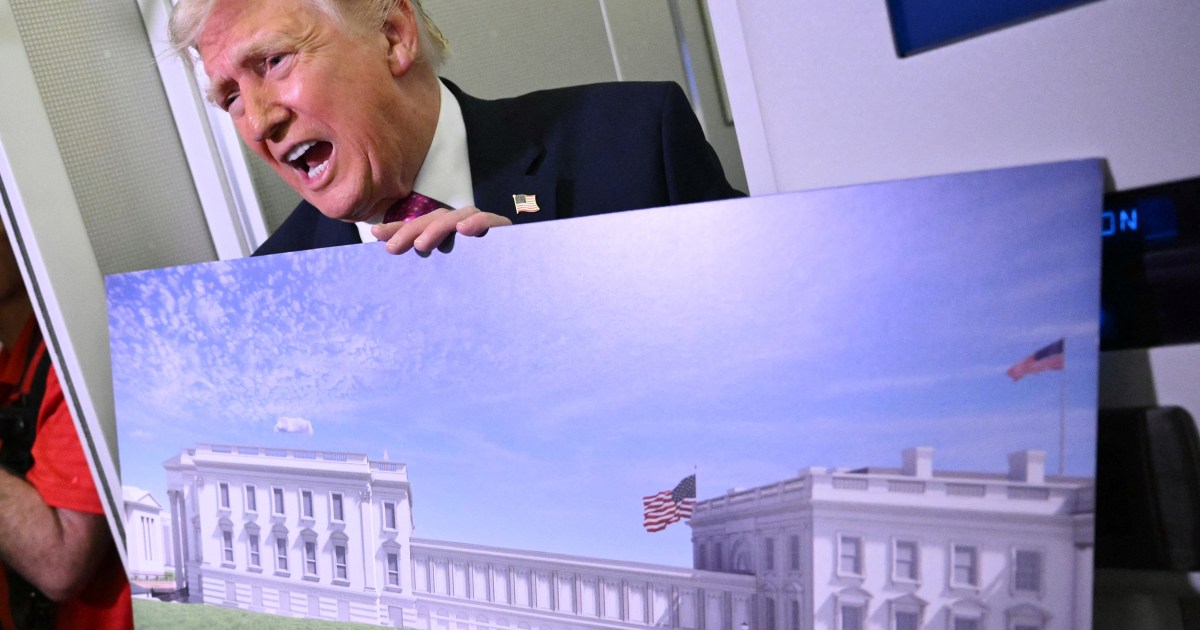
Donald Trump has made no secret of his concerns that a judge might stand in the way of one of the president’s top priorities: the White House ballroom construction project.
With this in mind, U.S. District Judge Richard Leon on Tuesday afternoon told Trump what he didn’t want to hear: As MS NOW confirmed, Leon has granted a preliminary injunction to the National Trust for Historic Preservation, temporarily blocking the administration from “taking any action in furtherance of the physical development of the proposed ballroom at the former site of the East Wing of the White House.”
Leon wrote in his order that the president of the United States is the “steward of the White House for future generations of First Families,” adding, “He is not, however, the owner!”
The nonprofit organization that brought the lawsuit insisted that the president exceeded his authority when he destroyed the East Wing and unilaterally launched the ballroom construction project without lawmakers’ approval.
There were earlier indications that Leon, a George W. Bush appointee, appeared sympathetic to the plaintiffs’ complaint, fueling anxiety in the Oval Office. Those hints proved true.
“[N]o statute comes close to giving the President the authority he claims to have,” the court order added.
The jurist concluded that no work can continue until the project receives “express authorization” from Congress. The order takes effect in 14 days, allowing time for an appeal.
Predictably, the president did not respond well to the developments. In fact, Trump published a lengthy tirade to his social media platform that complained, oddly enough, about all of the other hypothetical cases the National Trust for Historic Preservation could’ve filed, but didn’t. From the online rant:
… The National Trust for Historic Preservation, a Radical Left Group of Lunatics whose funding was stopped by Congress in 2005, is not suing the Federal Reserve for a Building which has been decimated and destroyed, inside and out, by an incompetent and possibly corrupt Fed Chairman. The once magnificent Building is BILLIONS over budget, may never be completed, and may never open. All of the beautiful walls inside have been ripped down, never to be built again, but the National ‘Trust’ for Historic Preservation never did anything about it! Or, have they sued on Governor Gavin Newscum’s ‘RAILROAD TO NOWHERE’ in California that is BILLIONS over Budget and, probably, will never open or be used.
Trump’s extensive whining aside, it was notable that at no point in the president’s online statement did he respond to the substance of the legal complaint or respond to the court order on the merits.
This is a developing story. Check back for updates.
Steve Benen is a producer for “The Rachel Maddow Show,” the editor of MaddowBlog and an MS NOW political contributor. He’s also the bestselling author of “Ministry of Truth: Democracy, Reality, and the Republicans’ War on the Recent Past.”

A federal judge on Tuesday ruled that President Donald Trump’s executive order ending federal funding for National Public Radio and Public Broadcasting Service is unconstitutional.
In a 62-page opinionU.S. District Judge Randolph Moss for the District of Columbia ruled that the executive order, issued in May 2025violated the First Amendment of the Constitution by perpetrating “viewpoint discrimination and retaliation of this type.” Moss, an Obama appointee, called the executive order “unlawful and unenforceable.”
Trump’s executive order accused the news outlets of being “biased,” with the White House alleging they “fueled partisanship and left-wing propaganda with taxpayer dollars.” Both NPR and PBS denied those allegations and vowed to fight the defunding.
NPR and PBS initially challenged the executive order in separate lawsuits before they were consolidated earlier this year into the one case Moss ruled on Tuesday.
In a statement provided to MS NOW, Theodore Boutrous, attorney for NPR, called the ruling “a significant victory for the First Amendment and for freedom of the press.”
A spokesperson for PBS said the organization is “thrilled” with the judge’s decision.
“At PBS, we will continue to do what we’ve always done: serve our mission to educate and inspire all Americans as the nation’s most trusted media institution,” the spokesperson said in a statement.
White House spokesperson Abigail Jackson called the ruling “ridiculous” and suggested the administration would appeal it. “NPR and PBS have no right to receive taxpayer funds, and Congress already voted to defund them,” she said in a statement to MS NOW. “The Trump administration looks forward to ultimate victory on the issue.”
According to the lawsuit, in 2025, federal funds made up more than $80 million, or about one-fifth, of PBS’ total budget. For NPR, the federal funds made up only 1% to 2% of the budget.
The judge’s ruling, while significant, comes too late to undo some of the effects the organizations have already suffered from the defunding. Last summer, at Trump’s urging, Congress voted to cancel already appropriated funding to the Corporation for Public Broadcasting, which distributed the federal funds to PBS and NPR. The CPB ultimately disbanded earlier this year.
Few local NPR and PBS stations shut their doors entirelybuoyed by emergency funding, but more than 100 were expected to have to shutter eventually.
Trump and his administration have filed several ongoing lawsuits against media outlets they allege are biased against him. Tuesday’s ruling comes not long after another win for the press this month against the Trump administration: A federal judge ruled on March 20 that a restrictive policy the administration implemented for reporters covering the Pentagon was unconstitutional.
Soorin Kim contributed reporting.
Julianne McShane is a breaking news reporter for MS NOW who also covers the politics of abortion and reproductive rights. You can send her tips from a non-work device on Signal at jmcshane.19 or follow her on X or Bluesky.
Lisa Rubin is MS NOW’s senior legal reporter and a former litigator.
- Trump said he expects US to leave Iran in ‘2 or 3 weeks’
- Why is Trump’s DHS wildly overpaying for ICE warehouse detention centers?
- Federal judge orders halt to construction on Trump’s White House ballroom

- Judge blocks Trump’s executive order that ended federal funding for NPR and PBS

- Hegseth’s unprecedented embrace of Christian nationalism sparks backlash
- The future of space business depends on a rocket that keeps blowing up
- No one wanted to redevelop this polluted property. Then came AI.
- The DHS shutdown might never end
- Trump says he has ‘no problem’ with Russian oil tanker bringing relief to Cuba

- Midnight train from GA: A view of America from the tracks as airports struggle

-

 The Dictatorship1 year ago
Luigi Mangione acknowledges public support in first official statement since arrest
-

 Politics1 year ago
Former ‘Squad’ members launching ‘Bowman and Bush’ YouTube show
-

 Politics1 year ago
Former Kentucky AG Daniel Cameron launches Senate bid
-

 Politics1 year ago
Blue Light News’s Editorial Director Ryan Hutchins speaks at Blue Light News’s 2025 Governors Summit
-

 The Dictatorship7 months ago
Mike Johnson sums up the GOP’s arrogant position on military occupation with two words
-

 The Dictatorship1 year ago
Pete Hegseth’s tenure at the Pentagon goes from bad to worse
-
Uncategorized1 year ago
Bob Good to step down as Freedom Caucus chair this week
-

 Politics11 months ago
Democrat challenging Joni Ernst: I want to ‘tear down’ party, ‘build it back up’