
Politics
Bolton blasts Biden for publicly opposing possible Israeli strikes on Iran

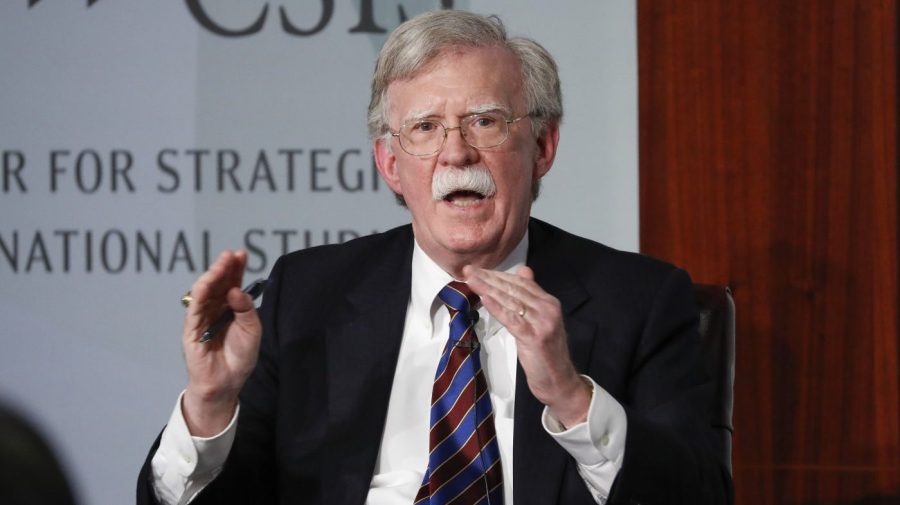
Former White House national security adviser John Bolton sharply criticized the Biden administration Sunday for speaking publicly against the possibility of Israel striking nuclear sites or oil fields in Iran. In an interview on NewsNation’s “Blue Light News,” host Chris Stirewalt asked Bolton about President Biden’s remarks Friday…
Read More


The American Israel Public Affairs Committee saw mixed results in the first major test of its political muscle in the midterms, drawing fresh recriminations from its foes — and some allies — for its interference in four competitive Illinois House primaries.
Two of AIPAC’s supported candidates won their races Tuesday night, with Cook County Commissioner Donna Miller denying former Rep. Jesse Jackson Jr. a comeback in the 2nd District and former Rep. Melissa Bean defeating a slew of progressive challengers in the 8th District.
But the group faced criticism from within the pro-Israel Democratic community and harsh words from its opponents after it failed to secure its preferred outcome in the two races where it spent the most money.
In the 9th District, the group spent $7 million, some of it aimed at attacking Evanston Mayor Daniel Biss, whose mother is Israeli, making an enemy of a likely soon-to-be U.S. representative who has been critical of Israel’s actions in Gaza but who had previously been willing to engage with the group. Biss won the crowded primary Tuesday night, after AIPAC pivoted from attacking him to instead concentrate its negative ads on progressive social media influencer and Palestinian American Kat Abughazaleh. And in the 7th District, an AIPAC-affiliated super PAC spent nearly $5 million backing Chicago Treasurer Melissa Conyears-Ervin, who lost to state Rep. La Shawn Ford.
The split scorecard comes a month after AIPAC angered its own centrist allies by going after another fairly pro-Israel candidate, former Rep. Tom Malinowski (D-N.J.) — a move that ended up handing the primary to a stronger critic of Israel, progressive Analilia Mejia.
“There was once again a vast amount of money spent and wasted trying to dust up a candidate who, by almost anybody’s reasonable analysis, Israel should be happy to have in Congress supporting a strong U.S.-Israel relationship,” one longtime AIPAC member, granted anonymity to speak candidly, said of the group’s spending against Biss.
AIPAC, the person added, “should take a look at the results in [the 9th District] and New Jersey and reconsider their strategy.”
AIPAC-aligned super PACs spent nearly$22 million in the Illinois primaries, more than one-fifth the total $100 million warchest it has in hand so far for the 2026 midterms, to win two of four open-seat races while losing the one that drove the most national attention.
At his victory party Tuesday night, Biss slammed the group for spending heavily “to buy this seat to support the idea that we can’t accept nuance” on the U.S.-Israel relationship.
“AIPAC found out the hard way — the 9th District is not for sale,” Biss told supporters.
AIPAC pushed back against the notion that the group struggled in Tuesday night’s elections.
“Illinois voters rejected half a dozen anti-Israel candidates across several heavily Democratic open-seat races,” Deryn Sousa, an AIPAC spokesperson, said in a statement Tuesday night. “These results further demonstrate that campaigns defined largely by opposition to AIPAC, our members, and the values we represent continue to fall short on election night.”
The controversial organization, already a foil for Democrats grappling with growing anti-Israel sentiment in their party, is facing fresh animosity and renewed scrutiny over its campaign spending as the U.S. and Israel wage a joint war on Iran that’s further soured Americans on their longtime ally.
Recent polling shows Americans — and Democrats, in particular — shifting further away from Israel. A NBC News poll released this week showed 57 percent of Democrats view Israel negatively, a dramatic shift from when just 35 percent held a negative view of the country after Hamas attacked it on Oct. 7, 2023. A Quinnipiac University survey showed 44 percent of voters think the U.S. is too supportive of Israel — the highest percentage since the pollsters started asking the question in 2017. Among Democrats, 62 percent think America is too supportive of Israel, compared with just 22 percent who think the support is about right and 8 percent who think it’s not supportive enough.
It’s clear the organization is aware of its standing in Democratic primaries — its ads focused on everything but Israel, accusing candidates of not being progressive enough on other issues. But AIPAC’s involvement became a major talking point for those it was attacking, especially in the 9th District.
The Illinois Democratic delegation likely won’t have a significant ideological shift on Israel from the races’ results. Bean will replace Rep. Raja Krishnamoorthi, another pro-Israel candidate, who lost his Senate primary contest to Illinois Lt. Gov. Juliana Stratton. Biss’s views on Israel aren’t far from those of outgoing Rep. Jan Schakowsky, who endorsed him and has sharply criticized AIPAC in the past. Rep. Danny Davis has supported Israel but denounced its Gaza intervention; Ford doesn’t appear to have said much publicly on the issue.
The biggest potential change is Miller replacing Rep. Robin Kelly, who has called the war in Gaza a “genocide.” She also didn’t advance through the Illinois Senate primary.
“We consider this a pro-Israel win. We are better off in the Chicago delegation than we were yesterday,” said Patrick Dorton, the spokesperson for the AIPAC super PAC United Democracy Project, pointing to the new incumbents in the Kelly, Schakowsky and Davis seats.
Dorton also argued that if the group’s pop-up super PAC “didn’t go negative with more than a million dollars in spending to defeat Abughazaleh, she may well have beat Biss.”
And AIPAC allies took a more generous read on their group’s performance.
“You win some, you lose some,” said AIPAC ally Rep. Brad Schneider (D-Ill.), who backed Fine, Miller and Bean in their races. Schneider added that if a group wins every race they’re involved in, “you probably haven’t pushed the boundaries as far as you can.”
Brian Romick, president of the Democratic Majority for Israel, which often overlaps in its preferred candidates with AIPAC, said Tuesday’s results showed that “Israel wasn’t a determinative factor in these primaries” and “none of the extremist anti-Israel candidates won.”
Opponents of AIPAC crowed that voters had spurned the groups’ hardline tactics, including AIPAC’s use of shell PACs to obscure the source of the outside spending. And they held up Biss’ victory in particular as reassurance for candidates wary AIPAC will wade into their primaries that the group can be defeated. Democratic candidates and strategists are bracing for the group to intervene in a range of upcoming House primaries, as well as the Michigan and Minnesota Senate primaries.
Tuesday’s results “should send a clear message to candidates across the country: you do not have to fear AIPAC’s spending or intimidation,” Jeremy Ben-Ami, the president of J Street, a rival organization that spent $350,000 backing Biss and worked to counter AIPAC in other Illinois House races, said in a statement.
Yet AIPAC is poised to remain formidable through the midterms. One pro-Israel Democratic donor adviser, granted anonymity to speak candidly, said even with AIPAC’s misfires, the money is likely to keep pouring in.
“Their donor talking points aren’t going to be, ‘we only got half.’ They’ll say, ‘we took out two of the worst people,’” said the donor adviser of Tuesday’s results. “They know how to sell it, and there’s no shortage of money.”
Shia Kapos contributed to this report.
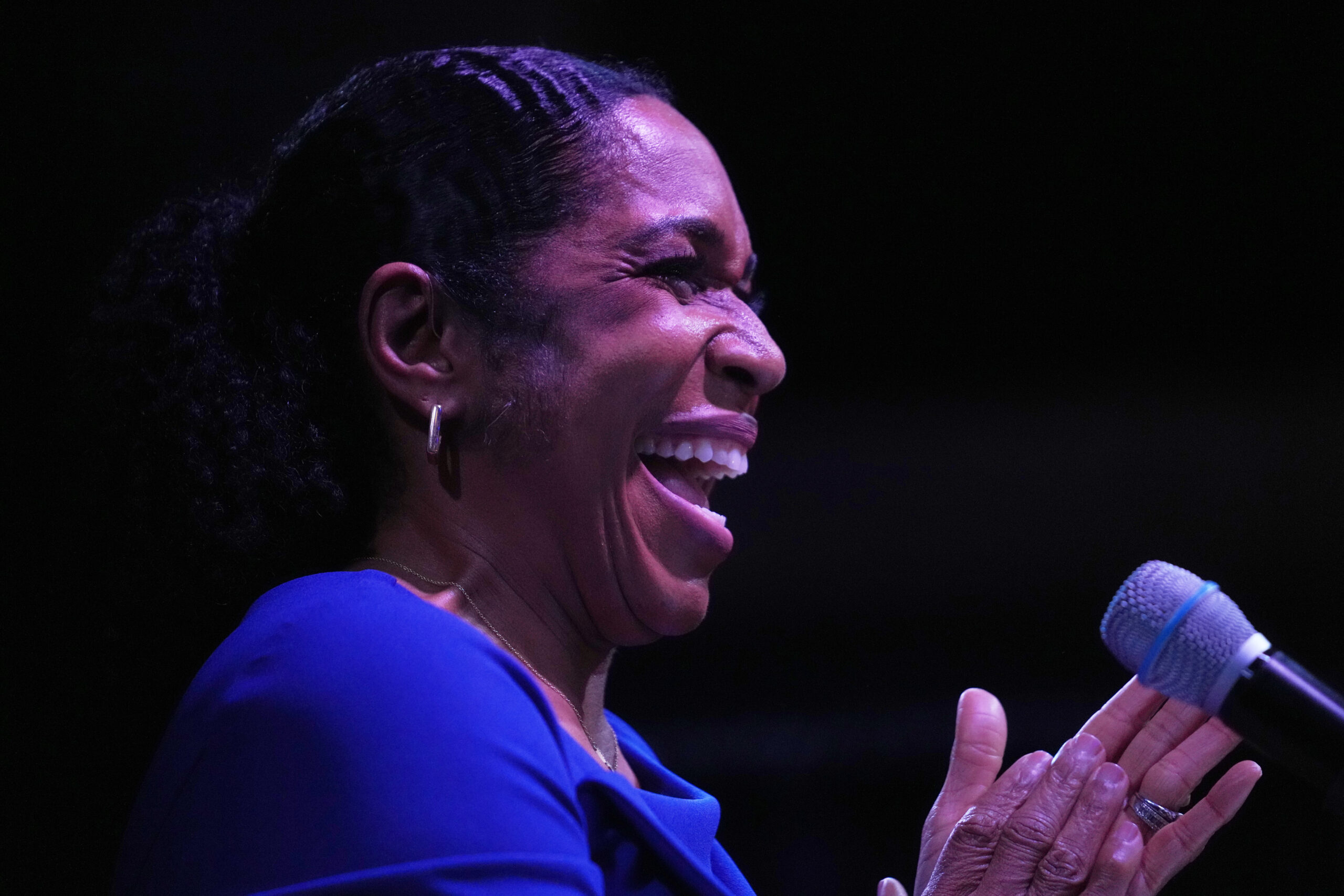
CHICAGO — Gov. JB Pritzker emerged as the kingmaker in deep-blue Illinois after pouring millions of dollars and staking his political reputation to deliver his hand-picked Senate candidate a primary victory on Tuesday.
The result strengthens Pritzker’s standing within his party at a critical moment, as he prepares for a November gubernatorial campaign for his third term and looks ahead to a potential presidential run in 2028.
“It’s going to reflect well on him,” retiring Rep. Jan Schakowsky said Tuesday night shortly after Lt. Gov. Juliana Stratton was declared the winner in the Democratic primary for Illinois Senate.
Robyn Gabel, the Illinois House Majority Leader, added: “I think it will show that he has coattails, and that he has a big following, and that people respect his opinions on who to vote for.”
Pritzker has built a reputation as an influential governor by leveraging institutional authority, strong party support, and his own vast financial resources to shape policy statewide, including addressing energy challenges, cost-of-living concerns and making infrastructure improvements. With Democrats holding control of the state legislature, he has also been able to further strengthen his dominance in Springfield.
And on the national stage, Pritzker has positioned himself among the chief antagonists of President Donald Trump, regularly attacking his immigration enforcement surges, among other issues.
Pritzker’s grip on the party was on full display in downtown Chicago, where he celebrated his uncontested gubernatorial primary victory by touting his accomplishments and attacking Trump as Illinois Democrats stood behind him.
“For working families, the Trump presidency has been an unmitigated disaster. Oil prices are up. Measles is back. Farms are folding. Tariffs have raised the price of groceries and cars, and Illinoisans have been sent abroad to fight another Middle East war,” Pritzker told dozens of cheering supporters. “In response, what is the Illinois Republican Party doing to help everyday people? Nothing.”
The crowd’s enthusiasm was aided by an open bar — a detail noted by some attendees after reports circulated from the watch party of Stratton’s well-funded opponent, Rep. Raja Krishnamoorthi, that his campaign was charging for drinks at the event.
Pritzker, who put millions of dollars into a super PAC supporting Stratton and campaigned regularly alongside his former running mate, brushed off concerns that a potential Stratton loss could tarnish his image. Another candidate he supported, Brad Schneider, won the Democratic nomination for Illinois’ 10th Congressional District.
“I’m not choosing candidates because I’ve taken a poll ahead of time and decided that I can only support a candidate that I know absolutely 100 percent is going to win otherwise,” Pritzker said at a candidate luncheon at Manny’s Deli on Chicago’s near South Side before polls closed. “Here’s what I know, when you’ve got somebody that is hyper-qualified for the job, that’s who I’m supporting.”

But later at Stratton’s watch party on Chicago’s West Side, Pritzker, who belongs to one of the nation’s wealthiest families, acknowledged the stake he held in Tuesday’s outcome.
“A lot of people have suggested this was personal to me,” he told hundreds of Stratton campaign staff and supporters, his voice noticeably strained late into the evening. “They were right. It was.”
The fractious Senate primary was defined by massive spending, racial dynamics and lingering intraparty rivalries. Krishnamoorthi had a $30 million war chest and significant outside support but couldn’t compete with Pritzker’s financial muscle and institutional backing of Stratton.
Rep. Robin Kelly, who came in third in the race, drew criticism from some for potentially splitting the Black vote. She, like Stratton, is Black and there were fears they’d cancel one another out, opening a path for Krishnamoorthi, who took advantage of that and even ran ads propping up Kelly to give himself an edge.
Rep. Yvette Clarke (D-N.Y.), the chair of the Congressional Black Caucus, which backed Kelly, issued a rebuke of Pritzker’s involvement in the race earlier this month, accusing the billionaire governor of trying to “tip the scales in Illinois” which she said was “beyond frustrating.”
Kelly reiterated that sentiment before polls closed Tuesday.
“He’s put his thumb on the race. Seventy-three percent of her donations came from one family,” Kelly said Tuesday afternoon, referring to Pritzker’s financial backing of Stratton.
The tensions between Pritzker and Kelly date back to a 2022 power struggle over control of the Illinois Democratic Party, when Kelly was pushed out amid concerns from Pritzker’s allies about her ability to fundraise while serving in Congress. While both sides have since publicly downplayed the feud, the Senate primary reopened old wounds with outside groups and Democratic factions lining up behind different candidates.
Another CBC member, Sen. Cory Booker of New Jersey, who previously ran for the White House, said on Capitol Hill prior to polls closing in Illinois that “it would be a damn shame if Robin Kelly” lost.
“Isn’t it a shame that I don’t have billions of dollars?” Booker said. “Look … the way the rules are right now, JB Pritzker as the governor of that state is free to support anybody he wants and he has a tremendous amount of resources. I hold no ill will there.”
Illinois state Rep. Kam Buckner, the speaker pro tempore and a member of the national Democratic Legislative Campaign Committee, defended Pritzker getting involved in the race.
“Political capital is a lot like financial capital, it does not grow because you admire it. It grows because you deploy it,” Buckner said in an interview. “He’s putting his political equity into circulation, which I think is the right thing for him to do.”
The Trump administration identified five policy points it is willing to codify…
Read More
- AIPAC faces calls to reassess strategy after split results in Illinois
- BBC asks a court to dismiss Trump’s $10 billion lawsuit

- King of Illinois: Pritzker swings senate race as he targets Trump
- White House releases DHS funding offer
- La Shawn Ford wins Dem primary to succeed Illinois Rep. Danny Davis
- Stratton wins Illinois primary, giving Dems another Black female senator
- AIPAC attacks fall flat as Democrat Daniel Biss wins Illinois House primary
- AIPAC, AI money propels Melissa Bean to comeback victory in Illinois
- White House releases DHS funding offer
- The DOJ’s ethics proposal would have a corrupt fox guarding the henhouse
-

 The Dictatorship1 year ago
Luigi Mangione acknowledges public support in first official statement since arrest
-

 Politics1 year ago
Former ‘Squad’ members launching ‘Bowman and Bush’ YouTube show
-

 Politics1 year ago
Blue Light News’s Editorial Director Ryan Hutchins speaks at Blue Light News’s 2025 Governors Summit
-

 Politics1 year ago
Former Kentucky AG Daniel Cameron launches Senate bid
-

 The Dictatorship6 months ago
Mike Johnson sums up the GOP’s arrogant position on military occupation with two words
-

 The Dictatorship1 year ago
Pete Hegseth’s tenure at the Pentagon goes from bad to worse
-

 Politics11 months ago
Democrat challenging Joni Ernst: I want to ‘tear down’ party, ‘build it back up’
-
Uncategorized1 year ago
Bob Good to step down as Freedom Caucus chair this week