
The Dictatorship
Bari Weiss’ town hall with Erika Kirk wasn’t journalism — it was public relations


Bari Weiss opened the CBS News town hall that aired Saturday — featuring Turning Point USA CEO Erika Kirk, widow of the assassinated MAGA activist and podcaster Charlie Kirk — by directly addressing the audience at home: “If you’re watching this or you’re sitting here in this room with me, you know what I know, which is that we live in a very divided country. A country where many people feel that they can’t speak across the political divide. … And one of the goals of the new CBS News is to change that.”
It was apparently with a “new CBS News” in mind that Weiss last week made “CBS Mornings” co-host Tony Dokoupil the next anchor of the “CBS Evening News,” the first major host elevation since Weiss was hired in the freshly created role of editor-in-chief by CBS’ new corporate parent Paramount Skydance. In a statement, Weiss said Dokoupil is the person to win back the public’s trust in the news media “because he believes in old school journalistic values: asking the hard questions, following the facts wherever they lead and holding power to account.”
By contrast, Weiss’ town hall with Kirk showed little of the “old school journalistic values” she so admires in Dokoupil.
There was no digging beneath the superficial edifice, just generic questions, frequently featuring strawmen bad guys in their premises.
The broadcast was entirely deferential and incurious. Charlie Kirk’s critics were painted in broad strokes as badly motivated. Kirk’s long track record of making statements such as “Islam is the sword the left is using to slit the throat of America” (which he posted the day before his killing) were ignored, while other harsh statements about marginalized groups were downplayed as “out of context,” and his peddling of conspiracy theories such as Trump’s “big lie” about voter fraud went unmentioned. The event revealed next to nothing about Erika Kirk that we didn’t know before. It wasn’t journalism, it was public relations.
Weiss — whose highly successful anti-“woke” and stridently pro-Benjamin Netanyahu site The Free Press was also acquired by Paramount Skydance for $150 million in October — was clearly impressed by Dokoupil’s aggressive questioning of author and journalist Ta-Nehisi Coates in October 2024 over Coates’ book “The Message,” which is highly critical of Israel. When CBS later said the interview didn’t meet its standards, The Free Press was all over the storywriting editorials and sharing leaked audio from CBS News staffers to paint Dokoupil as the victim of a woke witch hunt.
I felt the backlash against Dokoupil was overwrought and unnecessary. In his role as a television journalist, he asked a hugely celebrated author — oft-described as one of the most important intellectuals of his generation — pointed, but fair questions about his admittedly provocative book that painted Israel in an entirely unsympathetic light, and which contained zero mentions of words such as “Hamas” or “terrorism” or “Hezbollah.” One can be more sympathetic to Coates’ perspective or to Dokoupil’s skepticism, but it was a civil exchange of disagreement on live television, and Coates handled Dokoupil’s questions just fine.
But that’s not how Weiss handled her subject. There was no digging beneath the superficial edifice, just generic questions, frequently featuring strawmen bad guys in their premises.

When Weiss asked Kirk, “What do you say to the people who justified his death?” she failed to note that almost no one of prominence in politics or culture celebrated or justified Kirk’s killing — even those who correctly noted that Kirk himself had made light of political violence numerous times before. And after reading a few incendiary Charlie Kirk quotes described as “controversial,” which his widow said were taken out of context, Weiss followed up with, “Does it bother you that people are picking out those statements and drawing an entire picture of who he was?”
Weiss didn’t ask anything close to a challenging question of her subject, even when she was handed an easy opportunity by a college student in the audience who asked Kirk if, in the spirit of stopping political violence, would she “hold both parties to the same standard and expectation” and “condemn the violent rhetoric of Donald Trump, the most powerful and influential person on earth?”
Kirk dodged the question, eventually coming around to calling for parents to “step up” and not raise political assassins.
This would have been a perfect moment for Weiss to civilly push Kirk to answer the question asked of her. Instead, Weiss removed the specificity of the president of the United States and went back to generalities, asking, “Do you think our political leaders have a responsibility to turn the temperature down right now?”
Weiss didn’t ask anything close to a challenging question of her subject, even when she was handed an easy opportunity by a college student in the audience.
Kirk responded: “Well, I think everyone has a responsibility to do that and I’m doing my part. I’m not in control of other people.” That was good enough for Weiss, who said, “OK,” then pivoted to a commercial break.
Yes, Erika Kirk is a grieving widow, only three months removed from her husband’s horrific killing. But she is also a political activist and her husband’s successor as CEO of Turning Point USA, a pro-Trump organization with close ties to the administration, known for its take-no-prisoners style of activism and its “Professor Watchlist,” which the group says is intended “to expose and document college professors who discriminate against conservative students and advance leftist propaganda in the classroom.” And, to be very clear, Charlie Kirk’s comments often come off even worse when placed in greater context.
It was Weiss’ job as a journalist to interview Kirk with the same level of skepticism and good-faith probing that she seemed to see in Dokoupil’s interrogation of Coates. By failing to do so, Weiss gave a preview of what to expect at the “new CBS News”: Left-wing critics of Israel will be challenged vigorously in pursuit of “truth,” while right-wing activists will be treated with kid gloves in the name of “fairness.” If the town hall is any indication, Weiss’ lofty claims about a new age of “fearless” journalism come off as empty bromides.
Anthony L. Fisher is a senior editor and opinion columnist for MS NOW.


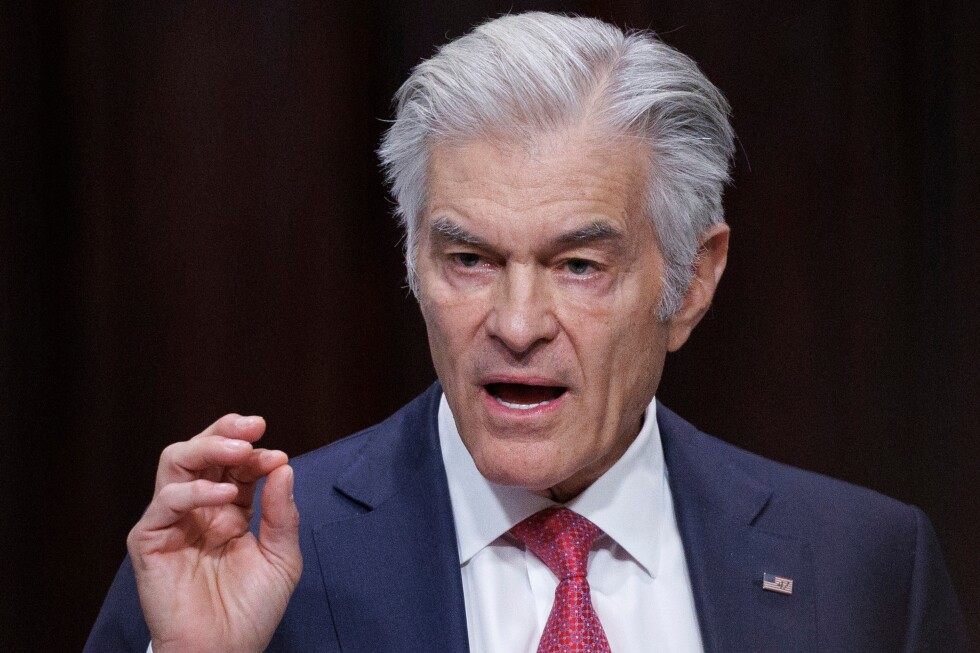
NEW YORK (AP) — President Donald Trump’s administration is expanding its crackdown on state Medicaid programs to New York, launching a fraud probe in the state a week after it said it was freezing nearly $260 million in Medicaid funding in Minnesota over similar accusations.
Centers for Medicare and Medicaid Services Administrator Dr. Mehmet Oz announced Tuesday that the Trump administration identified concerning trends in New York’s Medicaid program and demanded that state officials provide details about their handling of fraud, waste and abuse within 30 days or risk deferred payments.
“Heart surgeons are trained to look at the numbers,” Oz, a former celebrity heart surgeon, said in a video on Tuesday. “Right now, the numbers coming out of New York’s Medicaid program don’t add up.”
The new investigation is part of an administration-wide initiative to address fraud around the country, which federal officials say is needed to rein in runaway spending and protect taxpayers. With many midterm voters concerned about affordability, Trump has ramped up those efforts, announcing that Vice President JD Vance would help balance the nation’s budget by spearheading a national “war on fraud.”
Targeted Democratic state officials have decried the Republican administration’s moves as politically motivated and potentially disastrous for the millions of people who rely on the health care safety net for low-income Americans.
New York’s Democratic governor says the move is politically targeted
In a letter to New York Gov. Kathy Hochul, a Democrat, Oz wrote that the state’s spending levels combined with “serious concerns” about its oversight of certain Medicaid services demand “immediate investigation, corrective action and enhanced transparency.”
The letter flagged specific areas of concern, including a high proportion of New York’s Medicaid beneficiaries receiving personal care services related to daily living activities like bathing, grooming and meal preparation.
New York’s soaring Medicaid costs have long vexed the state’s governors and were a top priority of Gov. Andrew Cuomo, a Democrat who grappled for years with the program’s spiraling price tag as residents age and receive additional benefits. The state’s program, which cost $115.6 billion in the 2025 fiscal year, provides health care for about 1 in 3 New Yorkers and spends more per person for care than Medicaid programs in any other state.
Hochul has also tried to rein in costs through an overhaul of how a home health care program is administered.
Asked Wednesday by reporters about Oz’s letter, Hochul said the Trump administration is targeting a Democrat-led state for political reasons but added, “I will have to stand up and show them the truth and show them the facts, that they’re wrong. When there is fraud I will help them fight it.”
Hochul’s office said the fraud investigation was an attempt by the Trump administration to rip health care away from everyday New Yorkers. CMS said in an emailed statement that ensuring states comply with federal rules is “a core part of the agency’s federal oversight role.”
New York investigation follows CMS action in other blue states
The New York investigation comes less than a week after CMS halted Medicaid payments to Minnesota over fraud concerns. Oz said the money would be delivered only after Minnesota implements “a comprehensive corrective action plan.”
The administration had previously cited allegations of fraud involving day care centers run by Minneapolis-area Somali residents as a reason for a massive federal enforcement surge there. Minnesota Gov. Tim Walz, a Democrat, called the new funding freeze “targeted retribution.”
Minnesota on Monday sued the Trump administration over the deferred payments. The state is also appealing CMS withholding $2 billion in annual Medicaid funds announced in early January.
Earlier this year, Oz announced that CMS had sent letters to Democratic governors in Maine and California demanding more information or corrective action on alleged fraud in government health programs in those states.
In the days after receiving Oz’s letter last month, Maine Gov. Janet Mills said she wouldn’t be intimidated by the administration and called the request “a political attack.” The 30-day timeline he gave her to respond or risk losing Medicaid payments is set to expire this week. A spokesperson for Mills didn’t immediately respond to a request for comment.
Maine is facing a political attack from a president who uses allegations of fraud as a pretense to send ICE and other weaponized federal agents into states led by Democrats with devastating consequences.
The Trump administration has sought to withhold funding from Democratic-led states at least two other times in recent months citing fraud concerns. It happened with child care subsidies and other social services programs in Minnesota, New York and three other states and with the Supplemental Nutrition Assistance Program in 22 states that have declined to hand over data that the federal government says is needed to catch fraud.
In both those cases, judges have ruled that the money must continue to flow for now.
___
Associated Press writer Geoff Mulvihill in Philadelphia contributed to this report.
WASHINGTON (AP) — Senate Republicans voted down an effort Wednesday to halt President Donald Trump’s war against Irandemonstrating early support for a conflict that has rapidly spread across the Middle East with no clear U.S. exit strategy.
The legislation, known as a war powers resolutionfailed on a 47-53 vote tally. The vote fell mostly along party lines, though Republican Sen. Rand Paul of Kentucky voted in favor and Democratic Sen. John Fetterman of Pennsylvania voted against.
The war powers resolution gave lawmakers an opportunity to demand congressional approval before any further attacks are carried out. The vote forced them to take a stand on a war shaping the fate of U.S. military members, countless other lives and the future of the region.
Underscoring the gravity of the moment, Democratic senators filled the Senate chamber and sat at their desks as the voting got underway. Typically, senators step into the chamber to cast their vote, then leave.
House Minority Leader Hakeem Jeffries, D-N.Y., speaks to reporters during a news conference on Capitol Hill in Washington, Tuesday, March 3, 2026. (AP Photo/Manuel Balce Ceneta)
House Minority Leader Hakeem Jeffries, D-N.Y., speaks to reporters during a news conference on Capitol Hill in Washington, Tuesday, March 3, 2026. (AP Photo/Manuel Balce Ceneta)
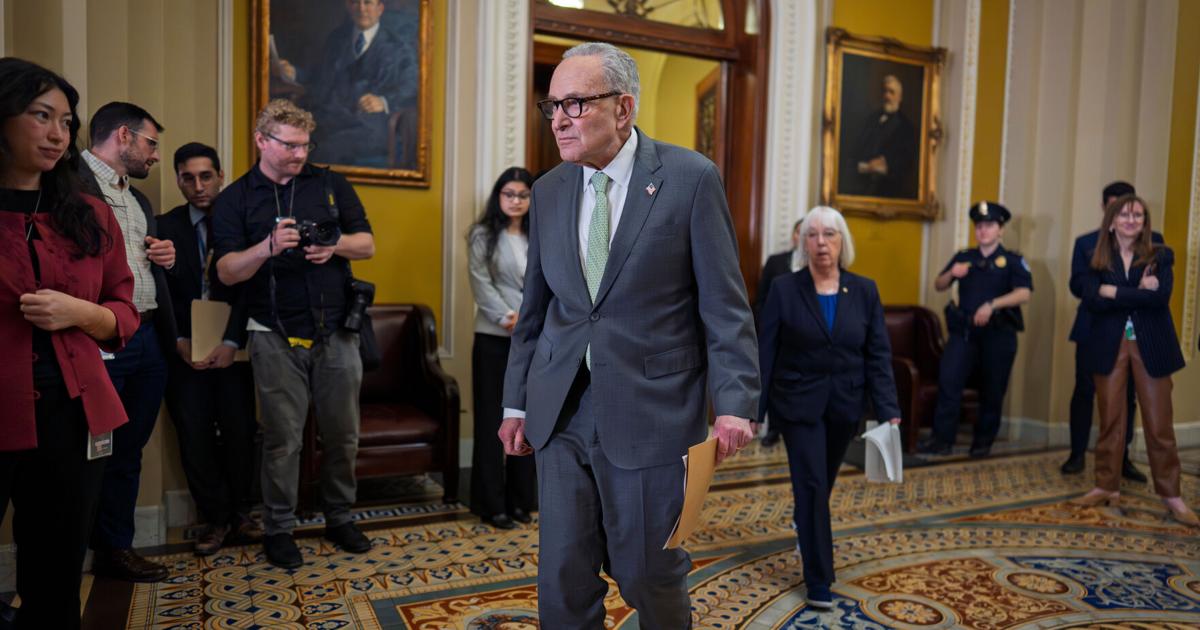
“Today every senator — every single one — will pick a side,” Senate Democratic Leader Chuck Schumer said before the vote. “Do you stand with the American people who are exhausted with forever wars in the Middle East or stand with Donald Trump and Pete Hegseth as they bumble us headfirst into another war?”
Sen. John Barrasso, second in Senate Republican leadership, said during the debate that GOP senators were sending a message that Democrats are wrong for forcing a vote on the war powers resolution.
“Democrats would rather obstruct Donald Trump than obliterate Iran’s national nuclear program,” he added.
Trump administration scrambles for congressional support
AP AUDIO: Congress is taking its first votes on the Iran war as debate rages about US goals
AP Washington correspondent Sagar Meghani reports on Congress weighing in amid the war against Iran.
After launching a surprise attack against Iran on Saturday, Trump has scrambled to win support for a conflict that Americans of all political persuasions were already wary of entering. Trump administration officials have been a frequent presence on Capitol Hill this week as they try to reassure lawmakers that they have the situation under control.
Defense Secretary Pete Hegseth said Wednesday that the war could extend eight weeks, a longer time frame than has previously been floated by the Trump administration. He also acknowledged that Iran is still able to carry out missile attacks even as the U.S. tries to control the country’s airspace.
U.S. service members “remain in harm’s way, and we must be clear-eyed that the risk is still high,” Gen. Dan Caine, chairman of the Joint Chiefs of Staff, said at the same press conference.
Six U.S. military members were killed over the weekend in a drone strike in Kuwait.
Republican Sen. Joni Ernst of Iowa acknowledged the human costs of the war in her floor speech. Two of the soldiers killed Sunday were from Iowa and a National Guard unit from her state was also attacked in Syria in December, resulting in the deaths of two other soldiers.
“But now is our opportunity to bring an end to the decades of chaos,” said Ernst, who herself served as an officer in the Iowa National Guard for two decades.
“The sooner the better,” she added.
Trump has also not ruled out deploying U.S. ground troops. He has said he is hoping to end the bombing campaign within a few weeks, but his goals for the war have shifted from regime change to stopping Iran from developing nuclear capabilities to crippling its navy and missile programs.
Senate Majority Leader John Thune, R-S.D., center, joined at left by Sen. John Barrasso, R-Wyo., the GOP whip, speaks to reporters at the Capitol in Washington, Tuesday, March 3, 2026. (AP Photo/J. Scott Applewhite)
Senate Majority Leader John Thune, R-S.D., center, joined at left by Sen. John Barrasso, R-Wyo., the GOP whip, speaks to reporters at the Capitol in Washington, Tuesday, March 3, 2026. (AP Photo/J. Scott Applewhite)
“We should be careful about opening a door into chaos in the Middle East when we cannot see the other side of it,” Democratic Sen. Chris Coons of Delaware said in a solemn floor speech after the vote concluded.
He said he was praying for “grace to find a path forward together where more do not needlessly join those who have already fallen in this new war in the Middle East.”
Lawmakers go on record
Defense Secretary Pete Hegseth arrives for a briefing for lawmakers on Iran at a secure room in the basement of the Capitol in Washington, Tuesday, March 3, 2026. (AP Photo/J. Scott Applewhite)
Defense Secretary Pete Hegseth arrives for a briefing for lawmakers on Iran at a secure room in the basement of the Capitol in Washington, Tuesday, March 3, 2026. (AP Photo/J. Scott Applewhite)
The votes in Congress this week represented potentially consequential markers of just where lawmakers stand on the war as they look ahead to midterm elections and the consequences of the conflict.
“Nobody gets to hide and give the president an easy pass or an end-run around the Constitution,” said Sen. Tim Kaine, the Virginia Democrat leading the war powers resolution.
Republican leaders have successfully, though narrowly, defeated a series of war powers resolutions pertaining to several other conflicts that Trump has entered or threatened to enter. This one, however, was different.
Unlike Trump’s military campaigns against alleged drug boats or even Venezuelan leader Nicolás Maduro, the attack on Iran represents an open-ended conflict that is already ricocheting across the region. Several senators who have voted for previous war powers resolutions noted that they opposed this one because it applied to a conflict that is already raging.
“Passing this resolution now would send the wrong message to Iran and to our troops,” said GOP Sen. Susan Collins of Maine. “At this juncture, providing unequivocal support to our service members is critically important, as is ongoing consultation by the administration with Congress.”
House vote looms
On the other side of the Capitol, an intense debate over the war unfolded before a vote Thursday. The House first debated a resolution presented by GOP leadership affirming that Iran is the world’s largest state sponsor of terrorism.
Rep. Brian Mast, the GOP chairman of the House Foreign Affairs Committee, publicly thanked Trump for taking action against Iran, saying the president is using his own constitutional authority to defend the U.S. against the “imminent threat” of Iran.
Mast, an Army veteran who worked as a bomb disposal expert in Afghanistan, said the Democratic resolution was effectively asking “that the president do nothing.”
Rep. Gregory Meeks, the top Democrat on the Foreign Affairs panel, said before the debate that the hardest votes he has taken in Congress have been to decide whether to send U.S. troops to war. “Our young men and women’s lives are on the line,” he said, his voice showing emotion as he emerged from a closed-door bri efing late Tuesday with Trump officials.
At a news conference Wednesday, several Democratic members who are also veterans of the Iraq and Afghanistan wars spoke about the heavy costs of those conflicts.
One of them was Rep. Jason Crow, D-Colo. “I learned when I was fighting in Iraq and Afghanistan, that when elites in Washington bang the war drums, pound their chest, talk about the costs of war and act tough, they’re not talking about them doing it, they’re not talking about their kids,” Crow said. “They’re talking about working class kids like us.”
WASHINGTON (AP) — Tensions flared as questions mounted at the U.S. Capitol on Tuesday over the Trump administration’s shifting rationale for war with Iran as lawmakers demand answers over the strategy, exit plan and costs to Americans in lives and dollars for what is quickly becoming a widening Middle East conflict.
Trump officials made their case at the Capitol during a second day of closed-door briefings, this time with all members of the House and Senate ahead of a looming war powers resolution vote intended to restrict Trump’s ability to continue the joint U.S.-Israel campaign against Iran.
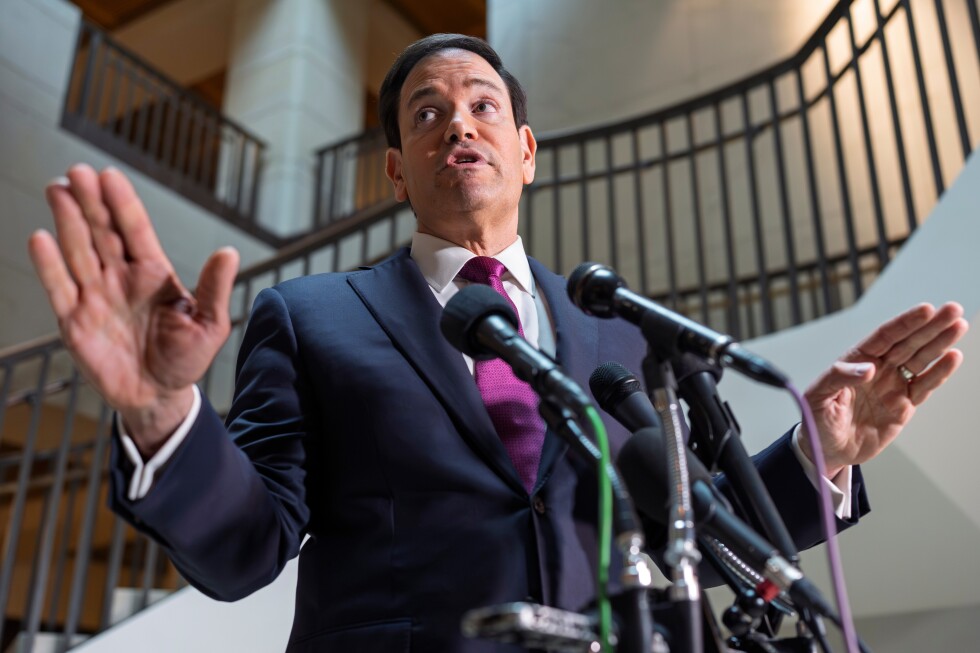
“The president determined we were not going to get hit first. It’s that simple,” Secretary of State Marco Rubio said in a testy exchange with reporters at the Capitol.
Rubio pushed back on his own suggestion a day earlier that Trump decided to strike Iran because Israel was ready to act first. Instead, he said Trump made the decision to attack this past weekend because it presented a unique opportunity with maximum chance for success.
“There is no way in the world that this terroristic regime was going to get nuclear weapons, not under Donald Trump’s watch,” he said.
The sudden pivot to a U.S. wartime footing has disrupted the political and policy agenda on Capitol Hill and raised uneasy questions about the risks ahead for a prolonged conflict and regime change after the killing of Iran’s Supreme Leader Ayatollah Ali Khamenei. At least six U.S. military service personnel have died so far.
The situation has intensified the push in Congress for the war powers resolution — among the most consequential votes a lawmaker can take, with the war well underway — as administration officials are telling lawmakers they will likely need supplemental funds to pay for the conflict. It comes at the start of a highly competitive midterm election season that will test Trump’s slim GOP control of Congress.
Senate Democratic Leader Chuck Schumer left the closed hearing, saying he was concerned about “mission creep” in a long war.
Defense Secretary Pete Hegseth arrives for a briefing for lawmakers on Iran at a secure room in the basement of the Capitol in Washington, Tuesday, March 3, 2026. (AP Photo/J. Scott Applewhite)
Defense Secretary Pete Hegseth arrives for a briefing for lawmakers on Iran at a secure room in the basement of the Capitol in Washington, Tuesday, March 3, 2026. (AP Photo/J. Scott Applewhite)
Senators demand answers, and some cheer Trump on
Senators spent the morning grilling Trump officials during an Armed Services Committee hearing over Rubio’s claim Monday that the president, believing that Israel was ready to act, decided it was better for the U.S. to launch a preemptive strike to prevent Iran’s potential retaliation on American military bases and interests abroad.
Sen. Angus King, the independent from Maine, said it’s “very disturbing” that Trump took the U.S. to war because Israel’s Prime Minister Benjamin Netanyahu wanted to bomb Iran. Past U.S. presidents, he said, “have consistently said, ‘No.’”
Defense official Elbridge Colby told senators the president directed the military campaign to destroy Iranian missiles and deny the country nuclear weapons.
Trump himself disputed the idea that Israel had forced his hand. In his own Oval Office remarks, he said, “I might might have forced their hand.”
Sen. Markwayne Mullin, a Trump ally from Oklahoma, said the president “did the world a favor.”
“How about we say, ‘Thank you, Mr. President, for finally getting rid of this nuisance,’” he said.
But Sen. Elizabeth Warren, D-Mass., demanded to know how this fits into Trump’s “America First” campaign promise not to commit U.S. troops to protracted military campaigns abroad.
Trump has suggested the war could drag on, and has not ruled out sending American troops into Iran.
“’America First’ and ‘peace through strength’ are served by rolling back — as the military campaign is designed to do — the threats posed,” Colby responded. “This is certainly not nation-building. This is not going to be endless.”
Senate Majority Leader John Thune, R-S.D., arrives for a briefing for Senators on Iran at a secure room in the basement of the Capitol in Washington, Tuesday, March 3, 2026. (AP Photo/J. Scott Applewhite)
Senate Intelligence Committee Sen. Mark Warner, D-Va., speaks to reporters following a House and Senate Intelligence Committees briefing about the war in Iran at the Capitol in Washington, Monday, March 2, 2026. (AP Photo/Manuel Balce Ceneta)
What’s next for the Iranian regime and its people
Questions are growing over who will lead Iran after the death of Khamenei, who has ruled the country for decades, and worries of a leadership vacuum that creates unrest.
Democrats warned against sending U.S. military troops into Iran after more than two decades of war in Iraq and Afghanistan in the aftermath of the Sept. 11, 2001, attacks.
“I am more fearful than ever we may be putting boots on the ground,” said Sen. Richard Blumenthal, D-Conn., after the closed briefing.
And while House Republicans applauded in support of the Trump administration’s operations, warning signs flared.
Rep. Chip Roy, R-Texas, said he supports the operation, for now. “My flag starts going up, the longer this goes, my flag starts going up, the more there’s boots on the ground,” he said.
Many lawmakers expressed concern over the number of Americans calling their offices seeking help evacuating from the region as the war spreads. “It’s getting worse, not better,” said Rep. Jason Crow, D-Colo., a former Army Ranger.
Trump, in calling for Iranians to seize this opportunity to take back their country, has acknowledged the uncertainty.
“Most of the people we had in mind are dead,” Trump said Tuesday. He also panned the idea of elevating Reza Pahlavi, the exiled crown prince of Iran’s last shah, to take over in Iran.
Republicans insist it’s not for the Americans to decide the future of Iran.
“That’s going to be largely up to the Iranian people,” said Senate Majority Leader John Thune, a Republican.
House Speaker Mike Johnson said flatly, “We have no ability to get into the nation-building business.”
President Donald Trump departs after a Medal of Honor ceremony in the East Room of the White House, Monday, March 2, 2026, in Washington. (AP Photo/Alex Brandon)
President Donald Trump departs after a Medal of Honor ceremony in the East Room of the White House, Monday, March 2, 2026, in Washington. (AP Photo/Alex Brandon)
War powers resolutions become a consequential vote
Both the House and Senate are preparing to vote on war powers resolutions that would restrain Trump’s ability to continue waging war on Iran without approval from Congress.
Under the U.S. Constitution, it’s up to Congress, not the president, to decide when the country goes to war. But lawmakers often shirk that duty, enabling the executive branch to amass more power to send the military into combat without congressional approval.
“Why are we spending billions of dollars to bomb Iran?” said House Democratic Leader Hakeem Jeffries, who said there would be strong support from Democrats for the resolution.
But Johnson has said it would be “frightening” and “dangerous” to tie the president’s hands at this time, when the U.S. is already engaged in combat.
Other lawmakers have suggested that if Congress does not vote to restrain Trump, it should next consider an Authorization of the Use of Military Force, which would require lawmakers to go on record with affirmative support for the Iran operation.
“The reason why there’s so much consternation on our side is because President Trump has not given us a clear reason why he is in Iran,” said Sen. Kirsten Gillibrand, D-N.Y. “If he wants to declare war on Iran, that is the job and responsibility of Congress under the Constitution.”
Former President George W. Bush sought, and received, authorization from Congress to launch the post-9/11 wars.
___
Associated Press writers Stephen Groves and Mary Clare Jalonick contributed to this report.
- Trump administration launches Medicaid fraud probe in New York

- ‘Dead in the water’: Anti-war GOP feel abandoned by Trump
- GOP fundraiser with Hegseth scrapped amid Iran War buildup
- Republican group attacks Thomas Massie for his opposition to Iran war
- Markwayne Mullin faces a straightforward path to confirmation as DHS secretary
- Congress declines to halt Iran war
- Warren Davidson is a rare hard-line Republican questioning the Middle East war
- ‘Good riddance’: Dems cheer Noem’s ouster — and call for more departures
- House committee advances kids’ online safety and privacy proposals
- Kristi Noem’s ouster isn’t moving Democrats off their Homeland Security funding demands
-

 The Dictatorship1 year ago
Luigi Mangione acknowledges public support in first official statement since arrest
-

 Politics1 year ago
Former ‘Squad’ members launching ‘Bowman and Bush’ YouTube show
-

 Politics1 year ago
Blue Light News’s Editorial Director Ryan Hutchins speaks at Blue Light News’s 2025 Governors Summit
-

 The Dictatorship6 months ago
Mike Johnson sums up the GOP’s arrogant position on military occupation with two words
-

 Politics1 year ago
Former Kentucky AG Daniel Cameron launches Senate bid
-

 The Dictatorship1 year ago
Pete Hegseth’s tenure at the Pentagon goes from bad to worse
-
Uncategorized1 year ago
Bob Good to step down as Freedom Caucus chair this week
-

 Politics11 months ago
Democrat challenging Joni Ernst: I want to ‘tear down’ party, ‘build it back up’