
The Dictatorship
At confirmation hearing, Linda McMahon refuses to say Black history courses will be allowed

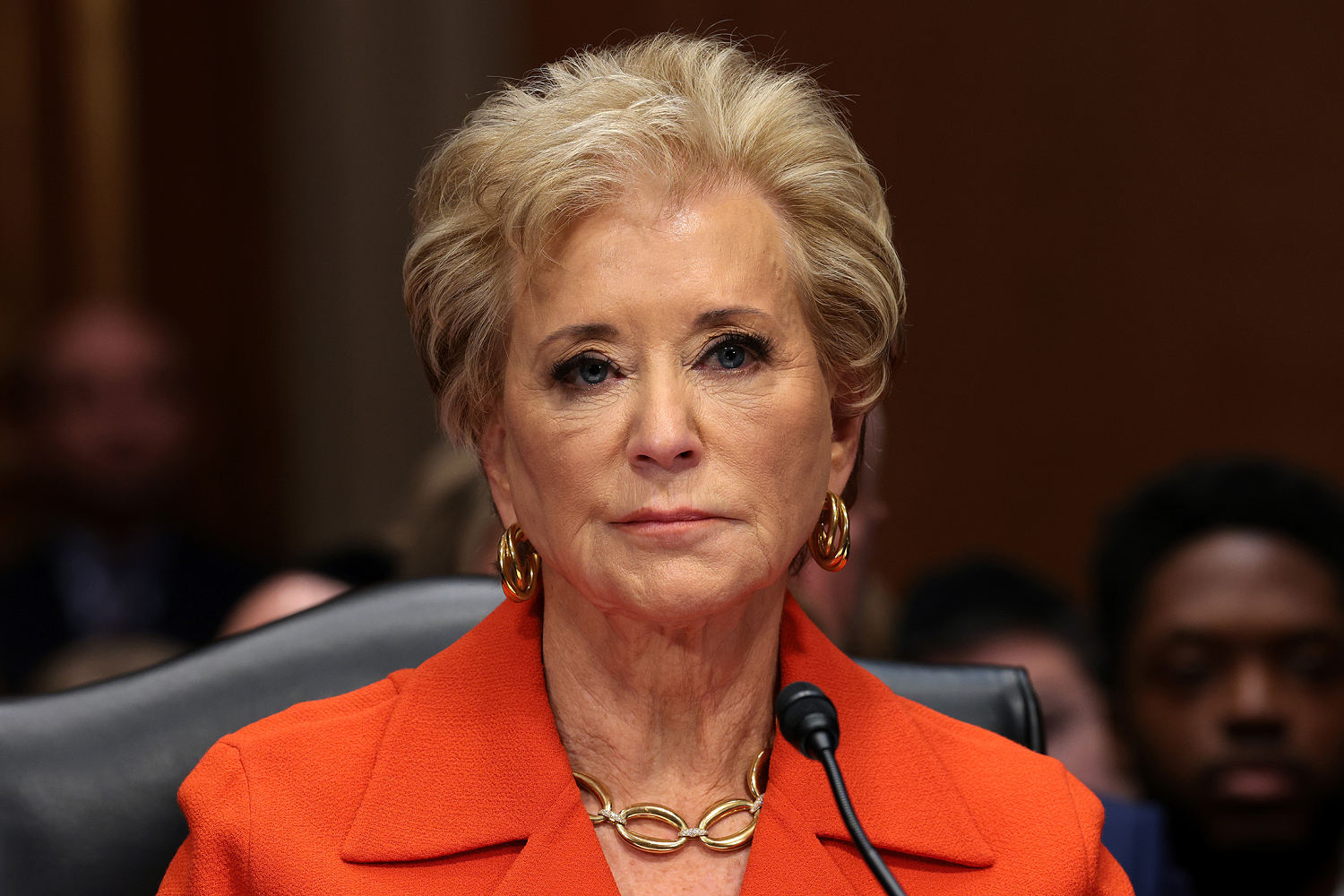
Linda McMahonthe former professional wrestling executive tapped by Donald Trump to lead — and potentially dismantle — the Education Department was unsure during her confirmation hearing when asked whether Black history courses could run afoul of the new administration.
At Thursday’s hearing, Democratic Sen. Chris Murphy of Connecticut told McMahon that many educators would be “scrambling” after her refusal to answer definitively whether a Black history course might be seen as being in violation of a Trump executive order targeting diversity. When the senator raised the question, McMahon replied that she’d “like to look into it further and get back to you on that.”
She essentially said the same thing when she was asked whether public schools could lose federal funding for offering a Black history course. And McMahon also falsely claimed that schools that offer special graduation ceremonies for various groups — such as for Black and Latino students — are engaging in segregation.
So there you have it. The nation’s likely next education secretary declined multiple opportunities to declare that Black history courses are permissible under Trump. This is only at issue because conservatives have targeted Black history courses and programming for marginalized groups in their war on “woke” and “DEI,” two terms I’ve yet to hear a single conservative define accurately — but which they use to frame white men as victimized.
McMahon’s answers suggest that, if confirmed, she’d likely have no qualms with aiding the administration’s bigoted attack on diversity, an assault that’s poised to warp the minds of American youth by obscuring — if not outlawing — stories about marginalized groups and their experiences throughout our nation’s history.
It seems the MAGA movement wants an education secretary committed to hammering home their vision of white men as the main protagonists in the American story. This is where I think McMahon, despite her glaring lack of qualifications for a traditional education secretary, is a perfect choice to lead the perverse propaganda agency that Trump seems to want the Education Department to become.
If you were hiring someone — as it appears Trump is — based on their ability to help promote the idea that white men are the heroic main characters in American history, and all other people are subjects and side characters (maybe even foils), you’d be hard-pressed to find someone with more cred than McMahon.
For years, she and her husband, Vince McMahon, led World Wrestling Entertainment, which trafficked in some of the most grotesquely racist and sexist stereotypes imaginable, amassing great profit and popularity. The son-in-law who sat behind her Thursday — wrestler-turned-WWE executive Paul Levesque — rose to fame while donning blackface to mock Dwayne “The Rock” Johnson, acting like a monkey to mock a Black wrestler, and portraying himself as an Asian doctor for comedic relief.
McMahon’s WWE made billions of dollars marketing superstars — frequently white men — who would conquer Black wrestlers portrayed as criminals; Mexican wrestlers portrayed as thieves and laborers; (purportedly) Arab wrestlers portrayed as terrorist sympathizers; gay characters portrayed as weak and effeminate; and women, including McMahon’s own daughter, portrayed as “sluts” and sex workers.
So McMahon may not know a ton about education. As for indoctrination, she seems pretty elite.

Ja’han Jones is The ReidOut Blog writer. He’s a futurist and multimedia producer focused on culture and politics. His previous projects include “Black Hair Defined” and the “Black Obituary Project.”


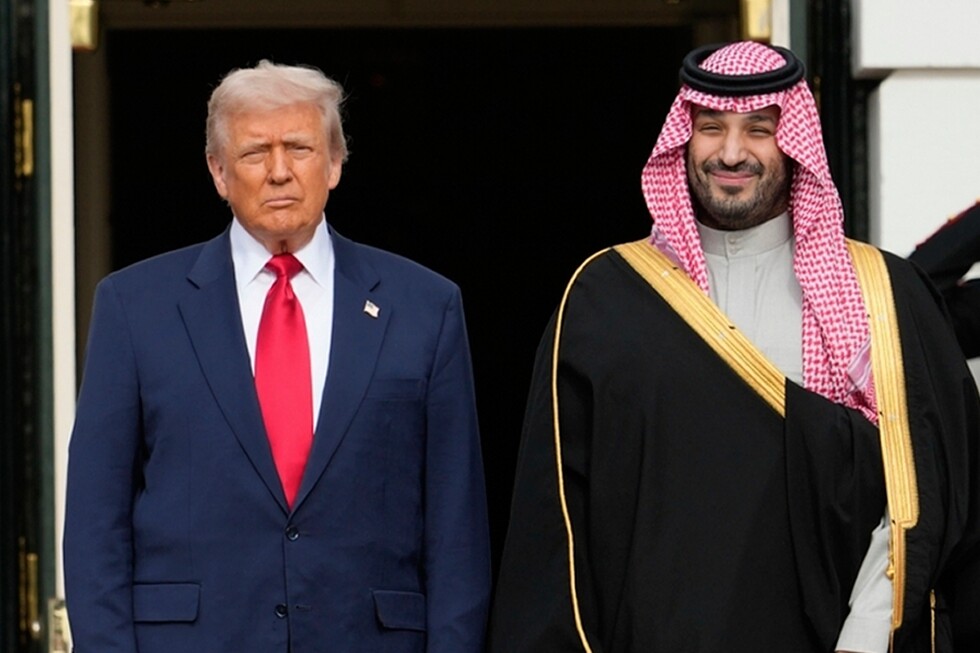
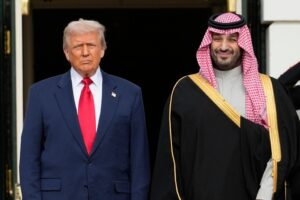
DUBAI, United Arab Emirates (AP) — Saudi Arabia could have some form of uranium enrichment within the kingdom under a proposed nuclear deal with the United States, congressional documents and an arms control group suggest, raising proliferation concerns as an atomic standoff between Iran and America continues.
U.S. Presidents Donald Trump and Joe Biden both tried to reach a nuclear deal with the kingdom to share American technology. Nonproliferation experts warn any spinning centrifuges within Saudi Arabia could open the door to a possible weapons program for the kingdom, something its assertive crown prince has suggested he could pursue if Tehran obtains an atomic bomb.
Already, Saudi Arabia and nuclear-armed Pakistan signed a mutual defense pact last year after Israel launched an attack on Qatar targeting Hamas officials. Pakistan’s defense minister then said his nation’s nuclear program “will be made available” to Saudi Arabia if needed, something seen as a warning for Israel, long believed to be the Middle East’s only nuclear-armed state.
“Nuclear cooperation can be a positive mechanism for upholding nonproliferation norms and increasing transparency, but the devil is in the details,” wrote Kelsey Davenport, the director for nonproliferation policy at the Washington-based Arms Control Association.
The documents raise “concerns that the Trump administration has not carefully considered the proliferation risks posed by its proposed nuclear cooperation agreement with Saudi Arabia or the precedent this agreement may set.”
Saudi Arabia did not respond to questions Friday from The Associated Press.
Congressional report outlines possible deal
The congressional document, also seen by the AP, shows the Trump administration aims to reach 20 nuclear business deals with nations around the world, including Saudi Arabia. The deal with Saudi Arabia could be worth billions of dollars, it adds.
The document contends that reaching a deal with the kingdom “will advance the national security interests of the United States, breaking with the failed policies of inaction and indecision that our competitors have capitalized on to disadvantage American industry and diminish the United States standing globally in this critical sector.” China, France, Russia and South Korea are among the leading nations that sell nuclear power plant technology abroad.
The draft deal would see America and Saudi Arabia enter safeguard agreements with the United Nations’ nuclear watchdog — the International Atomic Energy Agency or IAEA. That would include oversight of the “most proliferation-sensitive areas of potential nuclear cooperation,” it added. It listed enrichment, fuel fabrication and reprocessing as potential areas.
“This suggests that once the bilateral safeguards agreement is in place, it will open the door for Saudi Arabia to acquire uranium enrichment technology or capabilities — possibly even from the United States,” Davenport wrote. “Even with restrictions and limits, it seems likely that Saudi Arabia will have a path to some type of uranium enrichment or access to knowledge about enrichment.”
Saudi Arabia is a member state of the IAEA, a Vienna-based agency which promotes peaceful nuclear work but also inspects nations to ensure they don’t have clandestine atomic weapons programs.
The IAEA told the AP in a statement on Friday that it “maintains regular contact with both parties and is able to apply verification measures in connection with bilateral cooperation agreements.”
“If the parties will request the agency to apply verification measures in connection with their bilateral cooperation agreements, the agency will continue to consult with the parties concerned and address the request in accordance with its established procedures,” the IAEA added.
Enrichment isn’t an automatic path to a nuclear weapon — a nation also must master other steps including the use of synchronized high explosives, for instance. But it does open the door to weaponization, which has fueled the concerns of the West over Iran’s program.
The United Arab Emirates, a neighbor to Saudi Arabia, signed what is referred to as a “123 agreement” with the U.S. to build its Barakah nuclear power plant with South Korean assistance. But the UAE did so without seeking enrichment, something nonproliferation experts have held up as the “gold standard” for nations wanting atomic power.
Saudi-US proposal comes amid Iran tensions
The push for a Saudi-U.S. deal comes as Trump threatens military action against Iran if it doesn’t reach a deal over its nuclear program. The Trump military push follows nationwide protests in Iran that saw its theocratic government launch a bloody crackdown on dissent that killed thousands and saw tens of thousands more reportedly detained.
In Iran’s case, it long has insisted its nuclear enrichment program is peaceful. However, the West and the IAEA say Iran had an organized military nuclear program up until 2003. Tehran also had been enriching uranium up to 60% purity, a short, technical step from weapons-grade levels of 90% — making it the only country in the world to do so without a weapons program.
Iranian diplomats long have pointed to 86-year-old Supreme Leader Ayatollah Ali Khamenei’s comments as a binding fatwa, or religious edict, that Iran won’t build an atomic bomb. However, Iranian officials increasingly have made the threat they could seek the bomb as tensions have risen with the U.S.
Saudi Crown Prince Mohammed bin Salman, the kingdom’s day-to-day ruler, has said if Iran obtains the bomb, “we will have to get one.”
___
The Associated Press receives support for nuclear security coverage from the Carnegie Corporation of New York and Outrider Foundation. The AP is solely responsible for all content.
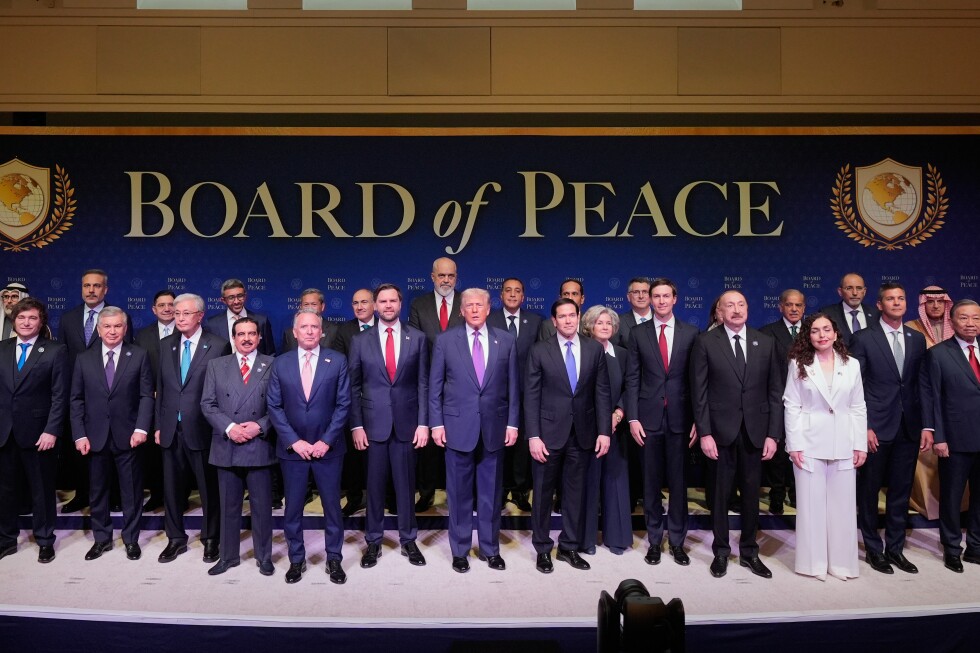
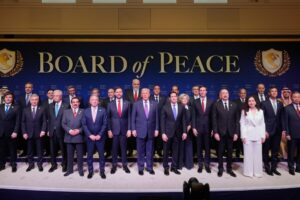
WASHINGTON (AP) — The White House announced a reciprocal trade agreement with Indonesia on Thursday while President Prabowo Subianto was in Washington to attend the first meeting of President Donald Trump’s Board of Peace.
Under the agreement, Southeast Asia’s largest economy will eliminate tariffs for 99% of American goods while the U.S. will maintain tariffs on most Indonesian goods at 19%, the White House said. That is the same rate the U.S. has set for Cambodia and Malaysia. Indonesia also agreed to address non-tariff barriers to U.S. goods and to remove restrictions on exports to the U.S. for critical minerals and other industrial commodities, the White House said.
Indonesian and U.S. companies also reached 11 deals this week worth $38.4 billion, including purchases of U.S. soybeans, corn, cotton and wheat, cooperation in critical minerals and oil field recovery, and joint ventures in computer chips.
“We have negotiated very intensively over the last few months, and I think we have reached solid understandings on many issues,” Prabowo told business executives Wednesday at the U.S. Chamber of Commerce.
A White House statement called it a “great deal” and said it “will help both countries to strengthen economic security, promote economic growth, and thereby continuously lead to global prosperity.”
The agreement was later signed by U.S. Trade Representative Jamieson Greer and his Indonesian counterpart, Airlangga Hartarto.
Hartarto told a news conference from Washington that both governments cast the agreement as marking the start of a “new golden age” in bilateral economic ties and Indonesia will introduce measures designed to keep trade flows secure and prevent misuse of sensitive goods.
Indonesia’s pledge for Gaza stabilization force
The agreement was announced the same day that Prabowo, leader of the world’s most populous Muslim country, reiterated his pledge at the Board of Peace meeting to send 8,000 troops or “more if necessary” for an international stabilization force in Gaza.
Indonesia was among the first to make a firm commitment to a critical element of Trump’s postwar Gaza reconstruction plan.
“President Prabowo of Indonesia, thank you very much,” Trump said at the Board of Peace meeting. “It’s a big country you have, and you do a great job.”
Prabowo praised Trump in return. “We are very optimistic with the leadership of President Trump, this vision of real peace will be achieved,” Prabowo said. “There will be problems, but we will prevail.”
Cambodia and Vietnam are the two other Southeast Asian countries that joined the board, which was originally envisioned as overseeing the Gaza ceasefire but has taken shape with wider ambitions to broker other global conflicts.
Their leaders also came to Washington for the inaugural meeting. Cambodia has already inked a trade deal with the U.S., while Vietnam has reached a framework agreement.
Critical minerals play into Indonesia deal
Indonesian companies agreed this week to buy 1 million tons of soybeans, 1.6 million tons of corn and 93,000 tons of cotton from the U.S. They also pledged to buy up to 5 million tons of U.S. wheat by 2030.
The countries agreed to cooperate on critical minerals, though details were not immediately available.
Washington is seeking Indonesia’s agreement to lift restrictions on critical mineral exports, which the Trump administration argues could safeguard U.S. manufacturers from supply‑chain disruptions. The administration has sought to defend against China’s stranglehold on the key elements needed for everything from fighter jets to smartphones.
At the Chamber of Commerce event, Prabowo said Indonesia can serve as a “bridge” and “honest broker” between great powers, apparently referring to the U.S.-China competition.
Vietnam’s leader makes first visit to the US since being reelected
At the Board of Peace meeting, Trump called Vietnam “incredible as a country and as a force” and told leader To Lam that it was “a really great honor to have you.”
Lam’s visit to the U.S. is his first since he was reelected as the head of Vietnam’s ruling Communist Party last month. Typically, China is an initial stop in a nod to the countries’ ideological ties and Beijing’s status as Vietnam’s largest trading partner. Lam did visit China in August 2024 before traveling to the U.S. during his first term.
Analysts say Lam’s visit to the U.S. before traveling to Beijing this time around is a notable shift in sequencing. Hanoi describes its foreign policy as independent and balanced among major powers.
Trade negotiations between Vietnam and the United States are ongoing following the Trump administration levying 20% tariffs on Vietnamese exports. The latest, sixth round of talks concluded in early February.
___
Karmini reported from Jakarta, Indonesia, and Ghosal from Hanoi, Vietnam.
___
This story has been corrected to reflect that the presidents announced the deal but did not sign it. It was later signed by their representatives.
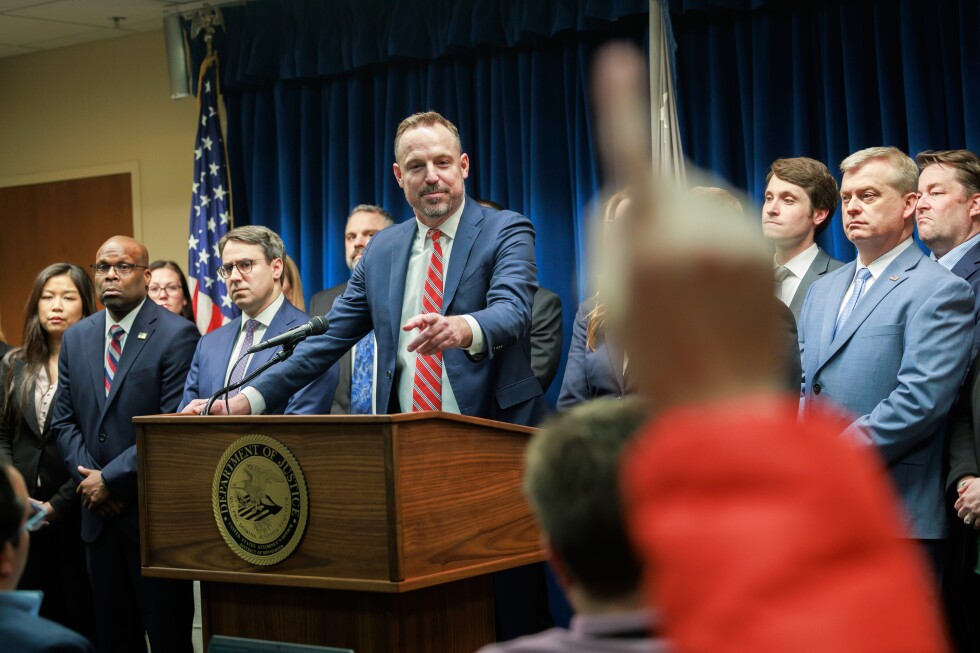
MINNEAPOLIS (AP) — The federal prosecutor’s office in Minnesota has been gutted by a wave of career officials resigning or retiring over objections to Trump administration directives. Because of the turmoil, 12-time convicted felon Cory Allen McKay caught a break.
With a three-decade record of violent crime that includes strangling a pregnant woman and firing a shotgun under a person’s chin, McKay was scheduled to stand trial next month on methamphetamine trafficking charges that could have locked him up for 25 years. Instead, he walked free after the prosecutor on his case retired.
The Trump administration says its aggressive immigration enforcement in Minnesota has improved public safety. Left in its wake, though, is a greatly weakened U.S. attorney’s office, where many prosecutors resented the way President Donald Trump’s political appointees at the Justice Department managed them.
Offices in other states, from New York to Virginia, have also been affected by resignations as prosecutors object to what they see as the politicization of decision-making under Trump. But Minnesota has been hit especially hard.
A growing number of defendants are beginning to escape accountability, as the remaining prosecutors are forced to dismiss some cases, kill others before charges are filed and seek plea agreements and delays.
Local officials worry the office will be unable, at least temporarily, to bring charges against some of the state’s most serious offenders.
“The result will be a diminished ability to target dangerous fraudsters, sexual predators, violent gangs and drug traffickers,” said John Marti, a Minneapolis lawyer who was a longtime fraud prosecutor in the office until 2015.
After asking for a delay to find someone to take McKay’s case, the office led by Trump appointee Daniel Rosen dropped it so abruptly McKay’s lawyer didn’t learn about the move until after her client had been released.
“This was completely surprising to me,” said McKay’s lawyer, Jean Brandl. While she hasn’t been able to reach him, “I can guarantee you he’s happy about it.”
An exodus of prosecutors
Over the past year, the number of assistant U.S. attorneys in Minnesota has fallen from more than 40 prosecutors before Trump retook office to fewer than two dozen. That’s according to a former federal prosecutor who wasn’t authorized to discuss personnel matters and spoke to The Associated Press on condition of anonymity.
The exodus began last year as several prosecutors “saw the writing on the wall” that their jobs — and the government’s definition of justice — were going to be different under the new administration, the former federal prosecutor said.
It accelerated after Trump appointees in the Justice Department intervened to block a joint state-federal investigation into the Jan. 7 fatal shooting of Renee Good by U.S. Immigration and Customs Enforcement officer Jonathan Ross. While Trump officials called Good a “domestic terrorist” and argued Ross fired in self-defense, some in the office viewed the killing as a potential murder.
Career prosecutors also objected to directives that they divert much of their resources to immigration cases, and they chafed at repeated violations of court orders by ICE that angered judges.
“They could not in good conscience participate in what they have seen,” according to a letter released last week by eight former permanent or acting U.S. attorneys in Minnesota.
On Wednesday, a federal judge in Minnesota took the rare step of finding a DOJ lawyer in contempt of court over the government’s failure to comply with an order to return identification documents to an immigrant who challenged his detention.
Among the many who left last month were the office’s former acting leader, Joe Thompsonand its criminal division chief Harry Jacobs. Thompson was a Justice Department veteran known for high-profile fraud investigations. He and Jacobs had helped uncover the $300 million Feeding Our Future scheme in which more than 75 defendants have been charged with defrauding a COVID-19-era child nutrition program.
Each time an experienced attorney leaves, leaders assess that prosecutor’s caseload and make decisions about how many of their cases can be reassigned to remaining staff and which will be dropped due to diminished resources.
Court records show the office has been operating in crisis mode, bringing in prosecutors from other states, asking judges to delay hearings, and trying to make some cases go away through dismissals and plea agreements. Defense lawyers are seeking to capitalize by demanding speedy trials for clients and filing other motions that require responses from prosecutors.
The Justice Department and the U.S. attorney’s office did not respond to requests for comment. The office’s former spokesperson, prosecutor Melinda Williams, was among those who left.
Drug trafficking cases dismissed
McKay, 47, isn’t the only drug trafficking defendant to benefit.
The office last month also dropped a case against a man who was arrested in September after investigators said they found him in possession of a stash of drugs set to be trafficked in the Twin Cities that included 7,600 fentanyl pills and 15 pounds of cocaine.
A third dismissed case involved a man who was charged with conspiracy to distribute methamphetamine after police in Rochester found three pounds of the drug in a search of his vehicle in January 2025.
“With everybody leaving there, it’s presenting some challenges for everyone around the state,” said Clay County Sheriff Mark Empting, who said McKay would present “a big public safety concern” if he returns to Moorhead.
10 pounds of highly pure meth
The case against McKay dated to 2024, when FedEx employees in Fargo, North Dakota, discovered a package containing nearly 10 pounds of highly pure meth arriving from California and addressed to McKay. Police estimated the street value at $80,000.
A detective posing as a FedEx employee delivered the package to McKay, who was arrested. Investigators say they searched cellphones, and found text messages linking McKay to other suspected drug traffickers in Minnesota, California, Chicago and Mexico.
McKay was jailed for nearly a year awaiting trial on state charges, before a federal grand jury returned an indictment in May 2025 charging him with two methamphetamine distribution charges. The indictment included a sentencing enhancement because he had more than two prior violent felonies.
Those include aggravated assault in 2013, domestic assault by strangulation in 2017 and assault causing substantial bodily harm in 2021. Prosecutors said he had at least a dozen felony convictions, dating to when he was 16 and fired a short-barreled shotgun under the chin of a victim.
An offender jailed, then set free
Longtime assistant U.S. Attorney Thomas Hollenhorst argued last summer that McKay was too dangerous to be released before trial, even to a substance abuse program, saying his history of violence would “put countless people at risk.”
A judge agreed, noting McKay had repeatedly failed to show up for court proceedings, given police false names and had his probation revoked for violations.
But last month, the U.S. attorney’s Office noted that Hollenhorst was “retiring unexpectedly” and asked for a delay. A judge moved the trial date from Feb. 12 to March 2. The office still dropped the case days later in a filing that offered no explanation. A judge ordered McKay’s immediate release. Hollenhorst declined comment.
On Jan. 31, McKay walked out of the Sherburne County Jail in Elk River, 30 miles outside Minneapolis. Attempts by AP to reach him were unsuccessful.
Brandl, McKay’s lawyer, said that while the outcome was a victory for her client, Hollenhorst’s retirement after 40 years with the Justice Department was “a huge loss.”
“He was a very good prosecutor,” she said. “He was reasonable and saw our clients as human beings, not just numbers.”
___
Foley reported from Iowa City, Iowa.
- Saudi Arabia may enrich uranium under proposed US deal
- US and Indonesia reach trade deal
- How defendant in Minnesota went free because of turmoil…
- RFK Jr.’s days of going wild on health may be over
- White House wants a reprieve in spy-powers fight that is splitting the GOP
- White House wants a reprieve in spy-powers fight that is splitting the GOP
- White House wants a reprieve in spy-powers fight that is splitting the GOP
- Big Tech should sell America on AI data centers, not the other way around

- Rand Paul lauds Supreme Court tariff decision: ‘In defense of our Republic’
- Moreno calls for GOP to codify scuttled Trump tariffs
-

 The Dictatorship1 year ago
Luigi Mangione acknowledges public support in first official statement since arrest
-

 Politics1 year ago
Former ‘Squad’ members launching ‘Bowman and Bush’ YouTube show
-

 The Dictatorship5 months ago
Mike Johnson sums up the GOP’s arrogant position on military occupation with two words
-

 Politics1 year ago
Blue Light News’s Editorial Director Ryan Hutchins speaks at Blue Light News’s 2025 Governors Summit
-

 Politics1 year ago
Former Kentucky AG Daniel Cameron launches Senate bid
-

 The Dictatorship1 year ago
Pete Hegseth’s tenure at the Pentagon goes from bad to worse
-
Uncategorized1 year ago
Bob Good to step down as Freedom Caucus chair this week
-

 Politics10 months ago
Democrat challenging Joni Ernst: I want to ‘tear down’ party, ‘build it back up’