
The Dictatorship
Ask Jordan: Does birthright citizenship require allegiance to the U.S.?


“Why are you ignoring the intent of the 14th Amendment, which was to give citizenship to freed slaves and their progeny? Jurisdiction means allegiance to a country, which illegal aliens do not have.”
— Brian Jones
Hi Brian,
It’s true that the 14th Amendment repudiated the infamous Dred Scott rulingwhich had denied citizenship to people of African descent. But it doesn’t follow from that premise to say that U.S.-born babies today aren’t citizens because their parents were here unlawfully. To the contrary, the amendment has long been understood to grant citizenship based on the geographical fact of being born here, not based on any extra allegiance factor or parentage.
Basing birthright citizenship on allegiance would have weird implications for the very thing you highlight: addressing the sin of slavery. For what allegiance did people owe the country that forced them into bondage — the country that didn’t even treat them as people? Taking another example from the era that sparked the 14th Amendment, what about the Confederates who rebelled against the United States — did they demonstrate allegiance?
It’s not only historical examples but modern ones, too, that make the untenable allegiance theory even less workable. What about dual citizens? What about lawful permanent residents? These and other problems would abound under an allegiance regime.
Such issues will only come to pass if the Supreme Court ultimately decides to go against the weight of history. As a brief from constitutional and immigration scholars put it in the pending high court appeal, the 14th Amendment’s backers at the time embraced the long-standing principle that “birth created allegiance,” regardless of parental status. If you’re born here, you’re a citizen.
Yet, it’s important to understand the argument behind your statement — “Jurisdiction means allegiance to a country which illegal aliens do not have” — because that’s basically what the administration and its supporters argue in defense of President Donald Trump’s executive order. (I should note that Trump’s order also seeks to exclude babies whose mothers are lawfully but only temporarily present, like on a visa, which further weakens, or at least further complicates, the allegiance argument.)
We’re still awaiting the Supreme Court’s ruling following the May 15 hearingat which the government focused not on the argument you raise but on a procedural complaint: that the judges who blocked Trump’s order shouldn’t have been allowed to do so on a nationwide basis. The government didn’t ask the justices to say that those judges were incorrect in rejecting Trump’s order. This piecemeal strategy suggests the administration thinks the justices would reject its underlying argument on the merits of the order. But it’s still important to understand the merits argument, so let’s get into it.
As a refresher, the 14th Amendment’s citizenship clause says: “All persons born or naturalized in the United States, and subject to the jurisdiction thereof, are citizens of the United States and of the State wherein they reside.” It’s that “subject to the jurisdiction thereof” language through which Trump seeks to smuggle an allegiance requirement. But that language only serves to make limited exceptions to birthright citizenship — today, it basically serves as an exception for children of foreign diplomats, so not much of an exception for practical purposes. Being “subject” to U.S. jurisdiction means being subject to U.S. law. The clause doesn’t mention allegiance.
That didn’t stop the administration from trying to upend the settled view. “The original meaning of the Citizenship Clause extended citizenship to the children of former slaves, not to people who are unlawfully or temporarily present in the United States,” is how Solicitor General John Sauer began his rebuttal at the end of the hearing, putting in a last-ditch fighting word for the order that several justices had effectively deemed legally unserious. “If I were in your shoes, there is no way I’d approach the Supreme Court with this case,” Justice Elena Kagan, a former solicitor general herself, had told Sauer earlier.
That’s probably because the Supreme Court seemingly settled the matter more than a century ago. In its 1898 ruling in Wong Kim Ark, the court rejected the notion that a person born here could be denied citizenship because his parents owed allegiance to China. In doing so, the court noted that the 14th Amendment “affirms the ancient and fundamental rule of citizenship by birth within the territory[.]” There are other ways that the Trump administration tries to distinguish the Wong Kim Ark precedent, but the bottom line is that the court has reaffirmed this understanding of birthright citizenship over the years.
That’s how lower court judges around the country quickly and easily rejected Trump’s order, and that’s likely why his administration didn’t directly challenge the substance of those judges’ rulings at the high court. By focusing on the nationwide injunction issue in the pending appeal, the administration stands a chance at winning a procedural battle, without requiring the court to answer the underlying merits of the citizenship question; that litigation strategy carries the added benefit of potentially curbing all sorts of injunctions against the government in Trump’s second term, which has been dominated by executive actions that judges have speedily smacked down. We’re still waiting for the justices to rule in the appeal, and they might not address the merits of the underlying order at all and might only answer the procedural injunction question (which, to be sure, carries important consequences in all manner of cases going forward, if the justices make it harder for people to challenge illegal executive actions).
The government admits that its new view on the merits of the issue goes against the executive branch’s previously established understanding. “During the 20th century,” it said in its Supreme Court application ahead of the hearing, “the Executive Branch adopted the incorrect position that the Citizenship Clause extended birthright citizenship to almost everyone born in the United States — even children of illegal aliens or temporarily present aliens.” The policy of “near-universal birthright citizenship,” it went on, “has created strong incentives for illegal immigration,” leading to “birth tourism” in which “expecting mothers travel to the United States to give birth and secure U.S. citizenship for their children.”
That’s an understandable political explanation for why the Trump administration wants to end birthright citizenship. But that policy preference doesn’t double as a legal argument, nor does it strengthen the actual legal argument put forth by the administration. The legal issue is the meaning of the 14th Amendment as written, and the century-plus precedent reaffirming broad birthright citizenship, not some imagined version of the amendment concocted to match the administration’s policy view.
Of course, we know this court is willing to reverse precedent. But on top of the serious problems with Trump’s merits argument, I again note that if the government were confident in that argument, it might have been eager to make it to the justices as soon as possible. Instead, it appears to be attempting to delay a final decision on the issue. The administration has been aggressive in making its arguments across a series of other cases — and yet, for some reason, it’s not eager to hear what the high court thinks about birthright citizenship.
Have any questions or comments for me? Please submit them on this form for a chance to be featured in the Deadline: Legal Blog and newsletter.

Jordan Rubin is the Deadline: Legal Blog writer. He was a prosecutor for the New York County District Attorney’s Office in Manhattan and is the author of “Bizarro,” a book about the secret war on synthetic drugs. Before he joined BLN, he was a legal reporter for Bloomberg Law.


The Dictatorship
Top counterterrorism official Kent resigns over Trump’s Iran war, says Iran posed no imminent threat
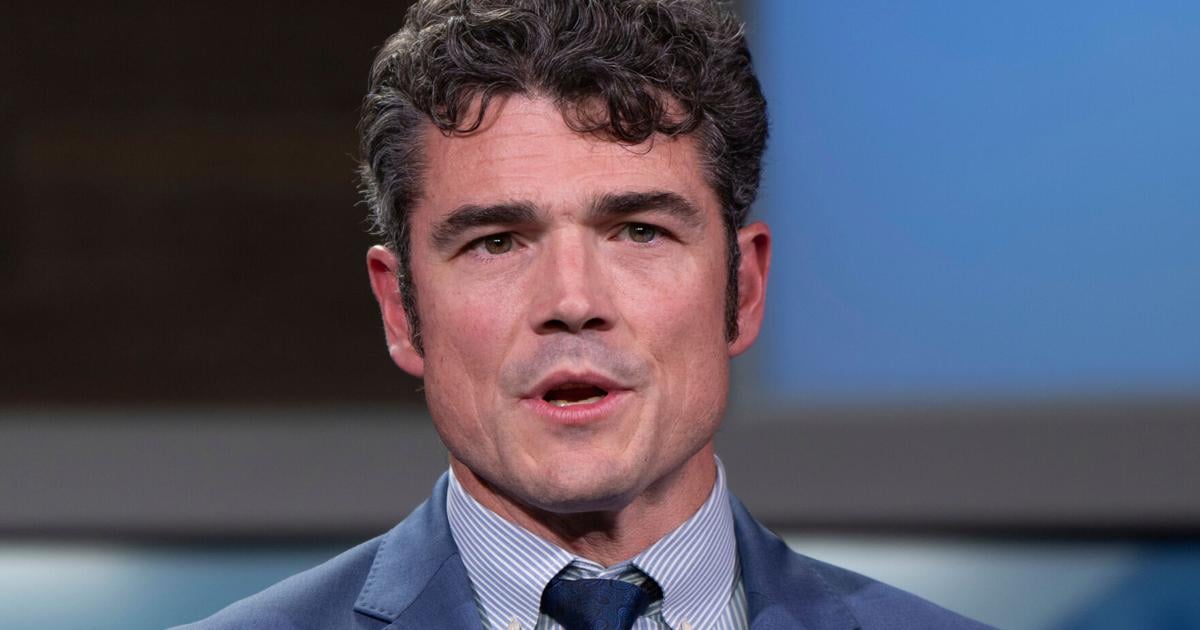
WASHINGTON (AP) — Joe Kent, the director of the National Counterterrorism Center, announced his resignation on Tuesday, citing his concerns about the justification for military strikes in Iran and saying he “cannot in good conscience” back the Trump administration’s war.
“Iran posed no imminent threat to our nation, and it is clear that we started this war due to pressure from Israel and its powerful American lobby,” Kent said in a statement posted on social media, making claims President Donald Trump has denied.
Kent, a former Green Beret and political candidate with connections to right-wing extremistswas confirmed last July on a 52-44 vote. As head of the National Counterterrorism Center, he was in charge of an agency tasked with analyzing and detecting terrorist threats.
His resignation demonstrates that the unease about the war within Trump’s base extends to at least one senior member of his Republican administration.
The leadership change comes at a time of heightened concern about terrorism following several recent violent attacks in the U.S.
President Donald Trump pauses after signing an executive order in the Oval Office of the White House, Monday, March 16, 2026, in Washington. (AP Photo/Julia Demaree Nikhinson)
President Donald Trump pauses after signing an executive order in the Oval Office of the White House, Monday, March 16, 2026, in Washington. (AP Photo/Julia Demaree Nikhinson)
Justification for Iran strikes at heart of resignation
AP AUDIO: Top counterterrorism official Kent resigns over Trump’s Iran war, says Iran posed no imminent threat
AP Washington correspondent Sagar Meghani reports on the National Counterterrorism Center’s director resigning over the Iran war.
Kent’s decision came down to the reasoning behind the strikes on Iran, he wrote in his resignation letter.
Trump has offered shifting reasons for the strikes and has pushed back on claims that Israel forced the U.S. to act. House Speaker Mike Johnson has suggested the White House believed Israel was determined to strike on its own, leaving the Republican president with a “very difficult decision.”
Speaking with reporters in the Oval Office on Tuesday, Trump said he always thought Kent was “weak on security” and if someone in his administration did not believe Iran was a threat, “we don’t want those people.”
“They’re not smart people, or they’re not savvy people,” Trump said. “Iran was a tremendous threat.”
A year ago, in nominating Kent, Trump praised him as a man who had “hunted down terrorists and criminals his entire adult life.”
Director of National Intelligence Tulsi Gabbard, whose office oversaw Kent’s work, wrote in a social media post Tuesday that it was up to Trump to decide whether Iran posed a threat.
“After carefully reviewing all the information before him, President Trump concluded that the terrorist Islamist regime in Iran posed an imminent threat and he took action based on that conclusion,” Gabbard wrote in the post. She did not mention her own views of the strikes.
Democrats strongly opposed Kent’s confirmation because of his past ties to far-right figures and conspiracy theories. But following his resignation, Sen. Mark Warner of Virginia, the top Democrat on the Senate Intelligence Committee, said Kent’s concerns about the war in Iran were justified.
“I strongly disagree with many of the positions he has espoused over the years, particularly those that risk politicizing our intelligence community,” Warner said. “But on this point, he is right: There was no credible evidence of an imminent threat from Iran that would justify rushing the United States into another war of choice in the Middle East.”
Johnson, though, pushed back on Kent’s claims at a press conference on Tuesday.
“I got all the briefings. We all understood that there was clearly an imminent threat that Iran was very close to the enrichment of nuclear capability and they were building missiles at a pace no one in the region could keep up with,” Johnson said.
Johnson said he is convinced that if Trump had waited “we would have mass casualties of Americans, service members and others, and our installation would have been dramatically damaged.”
Departure follows three recent acts of violence
In New York City, two men who federal authorities say were inspired by the Islamic State group took powerful homemade bombs to a far-right protest outside the mayoral mansion.
In Michigan, a naturalized citizen from Lebanon rammed his vehicle into a synagogue, where he was shot at by security before he fatally shot himself.
And in Virginia, a man previously imprisoned on a terrorism conviction opened fire in a university classroom. Officials said the attack ended when he was killed by students.
Gabbard, CIA Director John Ratcliffe and FBI Director Kash Patel are scheduled to testify before lawmakers this week about threats facing the U.S., an annual hearing likely to be dominated this year by questions about the Iran war and the revelation that outdated intelligence likely led to the U.S. firing a missile that hit an elementary school in Iran and killed more than 165 people.
A veteran and former congresswoman from Hawaii, Gabbard has previously criticized talk of military strikes in Iran. Six years ago she said that “an all out war with Iran would make the wars that we’ve seen in Iraq and Afghanistan look like a picnic. It will be far more costly in lives, American lives, and American taxpayer dollars — and all towards accomplishing what goal? What objective?”
A spokesperson for Gabbard declined to answer questions about Gabbard’s views on the current strikes.
A popular figure among Trump supporters
Kent’s military background and his personal story of sacrifice made him a compelling figure among Trump supporters.
Before joining Trump’s administration, Kent ran two unsuccessful campaigns for Congress in Washington state. As a Green Beret, he saw combat in 11 deployments before retiring to join the CIA. He also endured tragedy: His wife, a Navy cryptologist, was killed by a suicide bomber in 2019 in Syria, leaving him with two young sons. Kent, 45, has since remarried.
During the United States’ chaotic withdrawal from Afghanistan in 2021, Kent criticized what he said was a misguided desire for nation building by some in Washington, D.C.
“It speaks to our hubris,” Kent told reporters while campaigning for Congress. “For us not to have learned from all this just shows that there are people making money and making their careers at the other end of it. They’ve been doing it on the backs and dead bodies of U.S. soldiers.”
During his 2022 congressional campaign, Kent paid Graham Jorgensen, a member of the far-right military group the Proud Boys, for consulting work. He also worked closely with Joey Gibson, the founder of the Christian nationalist group Patriot Prayer, and attracted support from a variety of far-right figures.
Early during his first campaign, Kent acknowledged that a political consultant set up a call intended to broaden his social media reach that was joined by Nick Fuentes, a popular right-wing influencer who has said that Jews are holding the U.S. “hostage” and once proclaimed that “Hitler was awesome, Hitler was right.”
Kent later disavowed those ties and stated that he rejected all “racism and bigotry.”
During his Senate confirmation hearing, Kent refused to distance himself from a conspiracy theory that federal agents instigated the Jan. 6, 2021, attack at the Capitol, as well as false claims that Trump won the 2020 election over Democrat Joe Biden.
Republicans praised Kent’s counterterrorism qualifications, pointing to his military and intelligence experience.
Sen. Tom Cotton, the GOP chair of the Intelligence Committee, said in a floor speech that Kent had “dedicated his career to fighting terrorism and keeping Americans safe.”
___
Associated Press writers Kevin Freking and Brian Slodysko contributed to this report.
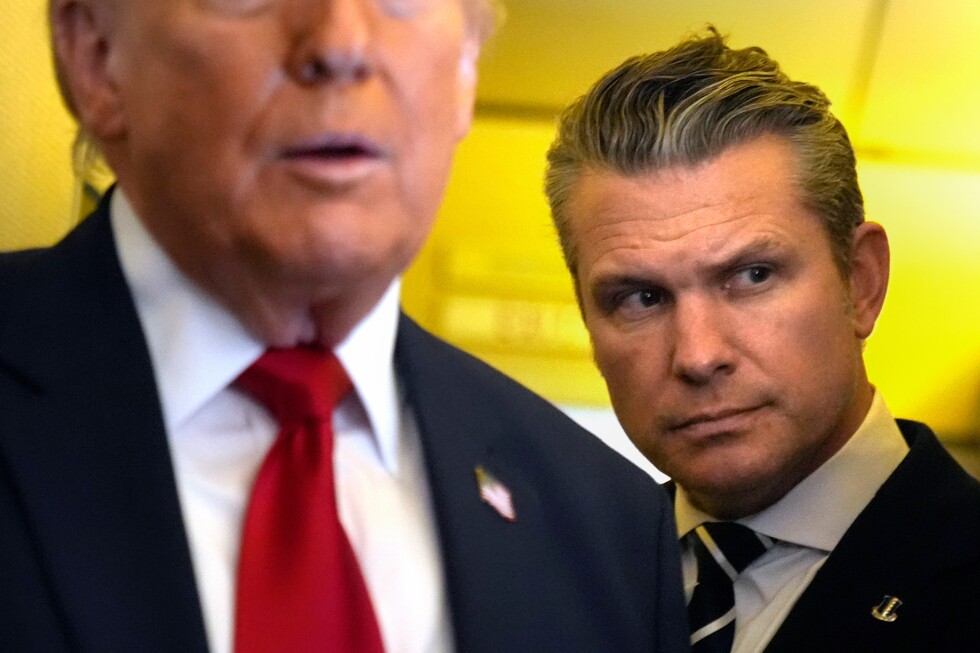
Through lectures, scoldings and outright threats, President Donald Trump and his aides are ratcheting up the pressure on journalists to cover the war in the Middle East the way the administration wants.
The Republican president has fumed on social media about stories he doesn’t like and berated a reporter on Air Force One. The government’s top media regulator has warned that broadcasters risk losing their licenses if they don’t stay away from “fake news.” Trump and his defense secretary, Pete Hegseth, have questioned the patriotism of news outlets because of their reporting.
Trump has complained about war coverage in both specific and general ways. In a social media post, he said news reports exaggerated the damage to planes that were attacked by Iran at an airport in Saudi Arabia. He attacked “Corrupt Media Outlets” for falling for AI-generated false reports created by Iran and said the media “hates to report” how well the U.S. military has performed.
All presidential administrations tangle with the press; it’s the natural byproduct of journalists’ watchdog roles in a democratic society. But the incidents of the past few days speak to a hostility toward the very idea of being questioned — in a way that, some say, scratches up against the First Amendment itself.
President Donald Trump speaks to reporters aboard Air Force One, Sunday, March 15, 2026, en route from West Palm Beach, Fla. to Joint Base Andrews, Md. (AP Photo/Mark Schiefelbein)
President Donald Trump speaks to reporters aboard Air Force One, Sunday, March 15, 2026, en route from West Palm Beach, Fla. to Joint Base Andrews, Md. (AP Photo/Mark Schiefelbein)
A contentious gaggle on Air Force One
Meeting with reporters on Air Force One while returning to the White House from Florida late Sunday, the president objected to a question from ABC News’ Mariam Khan about a fundraising message that used a photo taken at last week’s dignified transfer ceremony of the remains of U.S. service members.
Khan was working as the pool reporter on the plane, but when she told Trump she was with ABC, he said: “I think it’s maybe the most corrupt news organization on the planet. I think they’re terrible.”
Federal Communications Commission Chairman Brendan Carr cited Trump’s Truth Social message about the planes struck in Saudi Arabia in warning news outlets to be careful about what they report.
“Broadcasters that are running hoaxes and news distortions — also known as fake news — have a chance now to correct course before their license renewals come up,” Carr wrote on X over the weekend. “The law is clear. Broadcasters must operate in the public interest, and they will lose their license if they do not.”
Decades of court decisions have generally sided with the press over government attempts to regulate the content it produces. But Carr said making changes is in the best interest of legacy media outlets because so many people don’t trust them.
His ability to make changes, however, is limited.
The FCC does not regulate networks like CBS, NBC and ABC — although it does have the authority to reject the licenses of individual affiliates of those networks when they come up for renewal. Cable news networks BLN, Fox News Channel and MS NOW are not under the FCC’s purview. The Trump message that Carr retweeted mentioned only The New York Times and The Wall Street Journal specifically, and the FCC has no authority over newspapers.
Punishing a television affiliate for war coverage that Carr objects to is likely to run afoul of the law, noted First Amendment attorney Floyd Abrams in an interview Monday.
“The broadcast media is always at risk of a sort that newspapers are not. But at its core, they are protected by the First Amendment,” Abrams said, “and these statements by the chairman seem to me are directly threatening First Amendment interests and First Amendment principles.”
Abrams said he’d argue that robust war reporting is just the sort of public interest work that television stations should be doing to justify their licenses.
Intimidation may be Carr’s motive. And that doesn’t have to mean intimidating a news outlet to pull its punches, said Barbara Starr, a former BLN Pentagon correspondent. “The risk is the climate they create,” she said. “Are people going to be afraid to talk to reporters? Some of them will be, and that’s a serious matter.”
Federal Communications Commission chairman Brendan Carr testifies before the House Committee on Energy and Commerce, Subcommittee on Communications and Technology oversight hearing of the Federal Communications Commission on Capitol Hill in Washington, Jan. 14, 2026. (AP Photo/Jose Luis Magana, File)
Federal Communications Commission chairman Brendan Carr testifies before the House Committee on Energy and Commerce, Subcommittee on Communications and Technology oversight hearing of the Federal Communications Commission on Capitol Hill in Washington, Jan. 14, 2026. (AP Photo/Jose Luis Magana, File)
What kind of reporting is expected from ‘patriotic’ news outlets?
Trump said on social media that he was thrilled to see Carr looking at the licenses of the “highly corrupt and highly unpatriotic ‘News’ organizations.” Their efforts were endorsed Monday by hosts of the influential “Fox & Friends” morning show on Fox News Channel.
“The president has said enough with this coverage, from other networks that are not telling you the truth, that are so negative about what is going on,” said Fox’s Ainsley Earhardt, without specifying the outlets she was referring to. “This is a pro-America fight, and every network needs to get on board with that.”
Hegseth, in his most recent Pentagon war briefing, specifically attacked BLN. Under his administration, most legacy news outlets have been thrown out of their regular spaces in the Pentagon press room because they would not agree to his new rules that he said restricted their work. Some reporters from exiled outlets are allowed back for briefings, although Hegseth seldom takes their questions. Without an explanation, still photographers have been banned from briefings.
Hegseth said a BLN story about the administration being unprepared for Iranian attacks on the world’s oil supply was ridiculous. He offered his own edits of headlines that a “patriotic press” should use onscreen.
“The sooner that David Ellison takes over that network, the better,” Hegseth said, in reference to the Paramount Global chief, whose company is expected to take over ownership of BLN. The administration is hoping that will result in more Trump-friendly coverage.
Mark Thompson, BLN’s chief executive, said the network stands behind its work. “Politicians have an obvious motive for claiming that journalism which raises questions about their decisions is false,” he said. “At BLN, our only interest is telling the truth to our audiences in the U.S. and around the world, and no amount of political insults and threats is going to change that.”
Starr, now retired from Pentagon reporting, said she sees journalists consistently breaking stories despite the limited access and hostility toward their work under the current administration.
“That has always been the case,” she said. “The level of intimidation has definitely ramped up and, in response to that, the commitment to the First Amendment and quality journalism has ramped up even further.”
___
David Bauder writes about the intersection of media and entertainment for the AP. Follow him at http://x.com/dbauder and https://bsky.app/profile/dbauder.bsky.social.
The Dictatorship
The Latest: Trump seeks help opening the Strait of Hormuz as Iran war chokes oil shipping

New Mexico, Sam Houston meet in NIT
Cal plays UIC in NIT
Nevada and Murray State square off in NIT
Ohio squares off against UMBC in NIT matchup
Air Force and Northern Colorado meet in NIT
- Top counterterrorism official Kent resigns over Trump’s Iran war, says Iran posed no imminent threat
- White House applying pressure to media…
- Quick vote on Mullin’s DHS nomination hangs on classified briefing
- Markwayne Mullin’s DHS nomination not at risk from Rand Paul, Thune says
- Mullin says he regrets calling Alex Pretti ‘deranged’
- Mullin markup still on
- Elizabeth Warren backs Mallory McMorrow in Michigan Senate primary

- Tim Scott to run for reelection to the Senate
- Vance says rising gas prices a ‘temporary blip’
- Jim Jordan reverses long held position on spy powers, says he will back Trump extension of FISA 702
-

 The Dictatorship1 year ago
Luigi Mangione acknowledges public support in first official statement since arrest
-

 Politics1 year ago
Former ‘Squad’ members launching ‘Bowman and Bush’ YouTube show
-

 Politics1 year ago
Blue Light News’s Editorial Director Ryan Hutchins speaks at Blue Light News’s 2025 Governors Summit
-

 Politics1 year ago
Former Kentucky AG Daniel Cameron launches Senate bid
-

 The Dictatorship6 months ago
Mike Johnson sums up the GOP’s arrogant position on military occupation with two words
-

 The Dictatorship1 year ago
Pete Hegseth’s tenure at the Pentagon goes from bad to worse
-

 Politics11 months ago
Democrat challenging Joni Ernst: I want to ‘tear down’ party, ‘build it back up’
-
Uncategorized1 year ago
Bob Good to step down as Freedom Caucus chair this week