
The Dictatorship
After the Annunciation school shooting, the gun lobby is counting on our doing nothing


They showed up to Annunciation Catholic School on the far south side of Minneapolis on Wednesday wearing backpacks and new shoes their parents may have just purchased during back-to-school shopping. They filed into the adjacent yellow brick Catholic church for the annual start-of-the-school-year Mass with adults shushing their giggles and excitement. After all, Annunciation had just got a new principal and a new priestand the older children had been assigned their “buddies” from younger grades who would watch them and learn the scripture and rituals of the Catholic Mass.
A barrage of bullets exploded through the stained glass windows and shattered yet another American community.
And then, during a religious service that was supposed to usher in a school year defined by the phrase “a future filled with HOPE,” a barrage of bullets exploded through the stained glass windows and shattered yet another American community.
Two families that dropped their children off at school will never see them again. There is now an empty chair at each table. Two bedrooms frozen in time. Two futures snatched away by a shooter’s cowardly rage. Eighteen more people are physically injured. Some remain in critical condition. But “in critical condition” could just as well describe the whole Annunciation community, the city of Minneapolis and, really, America in its exhausted entirety.
Those babies — one 8 and the other 10 — gunned down in the pews at their Catholic school have forced us all to face a sickening lesson about the current state of our country. The people responsible for writing the laws that govern us have developed a tolerance for children being slaughtered in their schools.
Instead of saying, “No more of this,” our society has introduced more attempts to protect kids in places that should be inviolate. Metal detectors. Security guards. Active shooter drills. Thankfully Annunciation had adopted a protocol of locking the church doors before Mass began. Minneapolis Police Chief Brian O’Hara said locking the doors likely saved many lives.
We should never ever normalize a scene as horrific as this, but somewhere along the way, mass casualty events have become a grim fact of American Life. It’s hard to admit this, but the unbearable has become unacceptably routine. I hate writing that sentence. These facts should cause us sorrow and even shame. The death and despair. The wounds that last a lifetime. The assault on our sense of security. The targeting of CHILDREN. And the ready access to guns that are essentially weapons of war. All of this should be unacceptable. School shootings are still devastatingly shocking, but history shows that these atrocities do not guarantee change.
People committed to truly creating a safer America must figure out how to stand up to a gun lobby that is counting on a woefully predictable pattern. Shock. Grief. Outrage. Anguish.
Calls for thoughts and prayers. Vigils. Funerals. Editorials.
Pledges for action and change.
All of it falling short of achieving a goal we should have reached years ago — restricting easy access to assault weapons.
Another part of this predictable pattern is a debate over what led the shooter to this kind of unthinkable violence. The motives, lifestyle and so-called manifesto will be studied. Was the shooter a lonely outcast or angry and addled? But no matter the answers to those questions, there is a constant through line in these mass shootings at schools and movie theaters and concerts and clinics: access to war-fighting, high-velocity firearms that have no place among civilians.
I grew up on the south side of Minneapolis, and I attended a Catholic school just a few miles from Annunciation.
Since Republicans will be predictably silent, Democrats and those who can find their way to support reasonable gun safety measures need to figure out how to react to the constant ticktock of violence with a constant amplification of their demand for gun reform.
I grew on the south side of Minneapolis, and I attended a Catholic school just a few miles from Annunciation. I know that parish well. It’s part of a cluster of Catholic church/school campuses that dot the Twin Cities. Annunciation has always been a particularly active congregation, in part because of the stability in its surrounding upper middle-class community.
It’s a thriving hub that hosts fish fries, bingo nights, scout troops and basketball leagues. The buildings buzz all week, even in the summer months when kids learn how to ride bikes on the recess lot and seniors do laps to get their steps in. It’s where south siders buy Christmas trees and the church engages in a Mission Monday program where the first day of the week is dedicated to participating in programs like Meals on Wheels, making goodie bags for seniors living in elder care centers or turning old T-shirts into re-usable diapers for the sister parish Annunciation adopted in Haiti.
Catholic churches throughout the city have sometimes struggled in recent years to maintain active congregations and thriving schools. As the Twin Cities went through a series of changes with demographic shifts, rising poverty rates and conversely pockets where working families were priced out of neighborhoods, Catholic parishes were mandated by the diocese to be not just in the community but of the community. Annunciation, built in 1922 on the far stretch of the city near where the suburbs start, has thrived as a model of that creed.
But now it is the most recent marker in America’s daisy chain of school shootings. The Tudor building that was such a place of pride with its careful plantings and holiday decorations will forever be a monument to grief. No different than Sandy Hook, Columbine, Jonesboro, Uvalde, Parkland and so many more. Too many more.
I hope that Annunciation’s community-strong model will provide both steel and balm.
Eventually the students will return to school. Drivers along 54th Street will once again hear the squeals from the playground and the sound of children’s voices united in sing-song hymns floating through an open classroom window.
“Annunciation” refers to the moment the angel Gabriel told Mary she would conceive a son.
Shoppers visiting the Kowalski’s grocery store across the street or the Holiday gas station just down the road will forever feel a jolt of anguish. How could they not?
The Twin Cities is a place that was already reeling from another large casualty shooting earlier that weekthe shooting of lawmakers and their families in June, and May marked the fifth anniversary of police murdering George Floyd. And with this latest monstrous assault, it has joined the litany of communities forever marked by the pain of schoolchildren being deliberately murdered.
Those communities all figure out how to move forward, but they never really move on. And we should not either.
In religious teaching, “annunciation” refers to the moment the angel Gabriel told Mary she would conceive a son. What if we honored those children who lost their lives and all those families affected by this shooting with a full throttled denunciation of high-velocity assault weapons, followed by swift legislative action, punitive laws and stiff penalties.
The gun lobby is counting on all of us to go back to that predictable pattern after a school shooting in which outrage fails to usher in true change.
Maybe this time we can finally prove them wrong.

Michele Norris is a senior contributing editor for BLN and the author of “Our Hidden Conversations: What Americans Really Think About Race & Identity.”


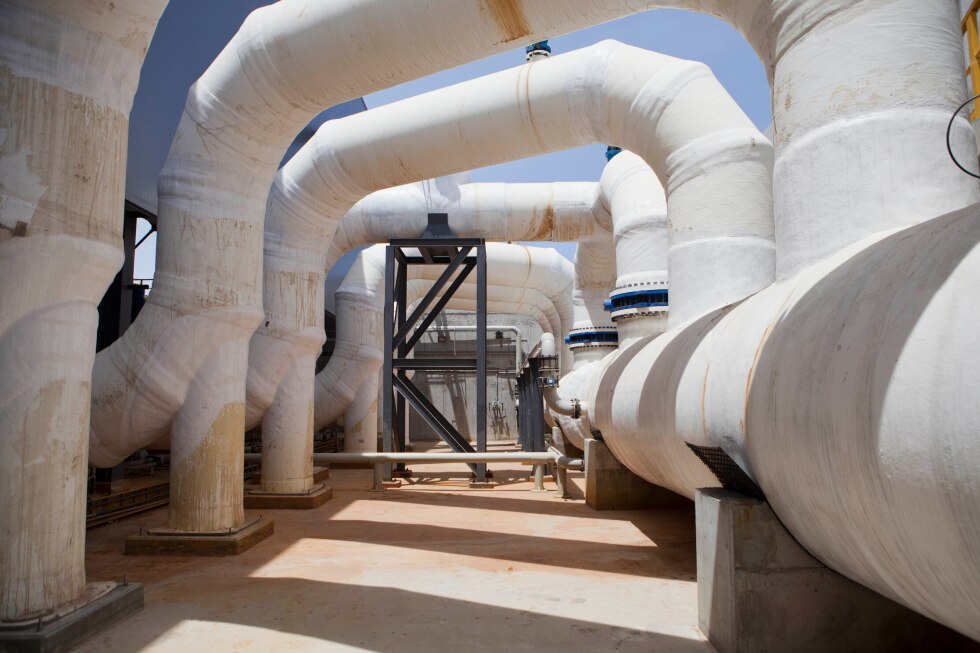
U.S. President Donald Trump on Monday threatened to target Iran’s energy infrastructure, including the country’s desalination plants. Such a move — and Iran’s possible targeting of the plants of its Gulf Arab neighbors — could have devastating impacts across the water-starved Middle East.
In a post on Truth Social, Trump said if a deal to end the war isn’t reached “shortly” and the Strait of Hormuzwhere much oil passes via tankers, is not immediately reopened, “we will conclude our lovely ‘stay’ in Iran by blowing up and completely obliterating all of their Electric Generating Plants, Oil Wells and Kharg Island (and possibly all desalinization plants!), which we have purposefully not yet ‘touched.’”
The biggest danger, analysts warn, may not be what Trump could do to Iran, but how Tehran could retaliate. Iran relies on desalination for a small share of its water supply while Gulf Arab states depend on it for the vast majority.
Hundreds of desalination plants sit along the Persian Gulf coast, putting individual systems that supply water to millions within range of Iranian missile or drone strikes. Without them, major cities — such as Dubai and Abu Dhabi in the United Arab Emirates or Doha, Qatar’s capital — could not sustain their current populations.
“Desalination facilities are oftentimes necessary for the survival of the civilian population and intentional destruction of those types of facilities is a war crime,” said Niku Jafarnia, a researcher at Human Rights Watch.
While less reliant on desalination, Iran’s water situation is dire
See how desalination works. (AP Animation: Panagiotis Mouzakis)
After a fifth year of extreme drought, some Iranian media reports say reservoirs supplying Tehran, the country’s capital, are below 10% capacity. Satellite pictures analyzed by The Associated Press also show reservoirs noticeably depleted. The country still draws most of its water from rivers, reservoirs and depleted underground aquifers.
Israeli airstrikes on March 7 on oil depots surrounding Tehran produced heavy smoke and acid rain. Experts warned the fallout could contaminate soil and parts of the city’s water supply.
“Attacking water facilities, even one, could end up being harmful to the population in such a severe water scarcity context,” Jafarnia said.
Before the war that Israel and the United States launched on Feb. 28, Iran had been racing to expand desalination along its southern coast and pump some of the water inland, but infrastructure constraints, energy costs and international sanctions have sharply limited scalability.
Across the Gulf, many desalination plants are tied to power stations
The Mina Al-Ahmadi oil refinery operates in Kuwait, March 20, 2026. (AP Photo, File)
The Mina Al-Ahmadi oil refinery operates in Kuwait, March 20, 2026. (AP Photo, File)
In Kuwait, about 90% of drinking water comes from desalination, along with roughly 86% in Oman and about 70% in Saudi Arabia. The technology removes salt from seawater — most commonly by pushing it through ultrafine membranes in a process known as reverse osmosis — to produce the freshwater that sustains cities, hotels, industry and some agriculture across one of the world’s driest regions.
Even where the plants are connected to national grids with backup supply routes, disruptions can cascade across interconnected systems, said David Michel, senior fellow for water security at the Center for Strategic and International Studies.
“It’s an asymmetrical tactic,” he said. “Iran doesn’t have the same capacity to strike back … But it does have this possibility to impose costs on the Gulf countries to push them to intervene or call for a cessation of hostilities.”
Desalination plants have multiple stages — intake systems, treatment facilities, energy supplies — and damage to any part of that chain can interrupt production, according to Ed Cullinane, Mideast editor at Global Water Intelligence, a publisher serving the water industry.
“None of these assets are any more protected than any of the municipal areas that are currently being hit by ballistic missiles or drones,” Cullinane said.
Two women from the Iranian Red Crescent Society stand as a thick plume of smoke from a U.S.-Israeli strike on an oil storage facility late Saturday rises into the sky in Tehran, Iran, Sunday, March 8, 2026. (AP Photo/Vahid Salemi, File)
Two women from the Iranian Red Crescent Society stand as a thick plume of smoke from a U.S.-Israeli strike on an oil storage facility late Saturday rises into the sky in Tehran, Iran, Sunday, March 8, 2026. (AP Photo/Vahid Salemi, File)
The Gulf produces about a third of the world’s crude exports and energy revenues underpin national economies. Fighting has already halted tanker traffic through key shipping routes and disrupted port activity, forcing some producers to curb exports as storage tanks fill.
“Everyone thinks of Saudi Arabia and their neighbors as petrostates. But I call them saltwater kingdoms. They’re human-made fossil-fueled water superpowers,” said Michael Christopher Low, director of the Middle East Center at the University of Utah. “It’s both a monumental achievement of the 20th century and a certain kind of vulnerability.”
Trump’s comments came as the conflict intensified, with Tehran striking a key water and electrical plant in Kuwait and an oil refinery in Israel coming under attack, while U.S. and Israeli forces launched a new wave of strikes on Iran.
US and Gulf governments have long recognized the risk
Smoke rises from an Israeli airstrike in Dahiyeh, Beirut’s southern suburbs, March 9, 2026. (AP Photo/Hassan Ammar, File)
Smoke rises from an Israeli airstrike in Dahiyeh, Beirut’s southern suburbs, March 9, 2026. (AP Photo/Hassan Ammar, File)
A 2010 CIA analysis warned that attacks on desalination facilities could trigger national crises in several Gulf states, and prolonged outages could last months if critical equipment were destroyed. More than 90% of the Gulf’s desalinated water comes from just 56 plants, the report stated, and “each of these critical plants is extremely vulnerable to sabotage or military action.”
Saudi Arabia and the UAE have invested in pipeline networks, storage reservoirs and other redundancies designed to cushion short-term disruptions. But smaller states such as Bahrain, Qatar and Kuwait have fewer backup supplies.
Desalination has expanded in part because climate change is intensifying drought across the region. The plants themselves are highly energy-intensive and emit massive amounts of carbon, while their coastal locations make them vulnerable to extreme weather and rising seas.
Past Mideast conflicts have seen attacks on desalination plants
Workers walk in an area at a degassing station in Zubair oil field, whose operations have being reduced due to the Mideast war triggered by the U.S. and Israeli attacks on Iran, near Basra, Iraq, March 28, 2026. (AP Photo/Leo Correa, File)
Workers walk in an area at a degassing station in Zubair oil field, whose operations have being reduced due to the Mideast war triggered by the U.S. and Israeli attacks on Iran, near Basra, Iraq, March 28, 2026. (AP Photo/Leo Correa, File)
During Iraq’s 1990-1991 invasion of Kuwait, retreating Iraqi forces sabotaged power stations and desalination facilities, said Low, from the University of Utah, while millions of barrels of crude oil were deliberately released into the Persian Gulf, which threatened seawater intake pipes used by desalination plants across the region.
Workers rushed to deploy protective booms around the intake valves of major facilities but the destruction left Kuwait largely without fresh water and dependent on emergency water imports. Full recovery took years.
In recent years, Yemen’s Iran-backed Houthi rebels have targeted Saudi desalination facilities as tensions escalated.
International humanitarian law, including provisions of the Geneva Conventions, prohibit targeting civilian infrastructure indispensable to the survival of the population, including drinking water facilities.
___
Follow Annika Hammerschlag on Instagram @ahammergram.
___
The Associated Press receives support from the Walton Family Foundation for coverage of water and environmental policy. The AP is solely responsible for all content. For all of AP’s environmental coverage, visit https://apnews.com/hub/climate-and-environment
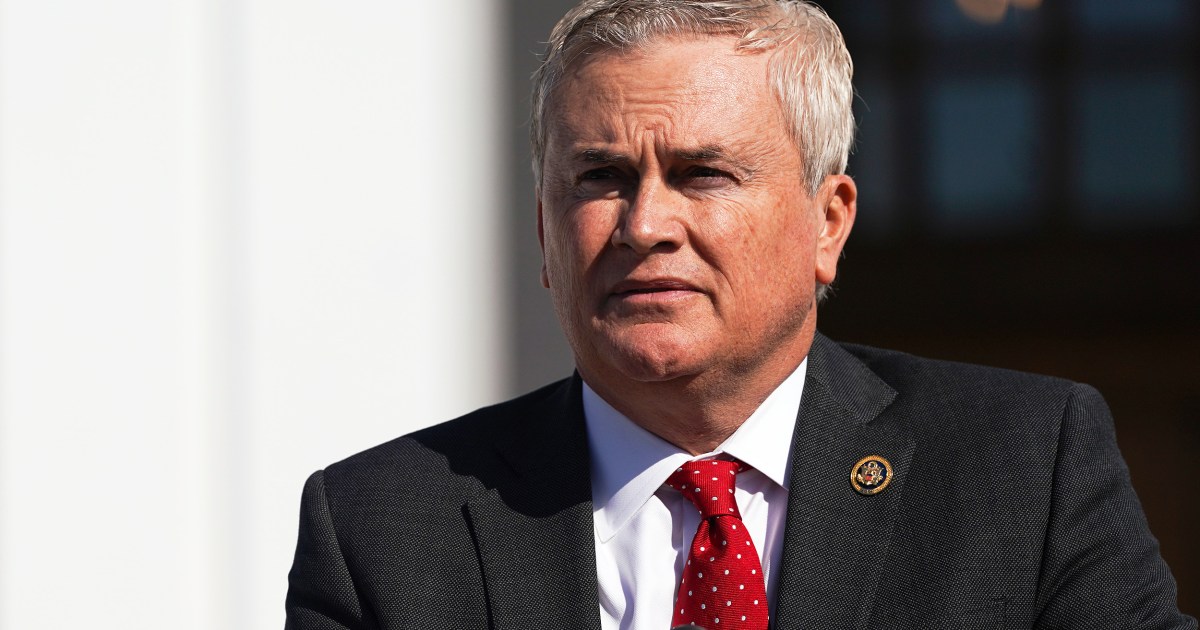
“Botched.” That was apparently House Oversight Committee Chair James Comer’s, R-Ky., assessment of the Justice Department’s handling, or mishandling, of the Epstein files under President Donald Trump. Comer made his critical comments to BLN on Monday night, awkwardly enough, during an attempt to defend the administration from criticism.
Comer also cast some blame on Jeffrey Epstein’s victims for delaying the release of files related to the late sex criminal, suggesting that class action lawsuits and victims’ demands for redactions have caused holdups, despite a federal law and congressional subpoena requiring the release of the vast majority of files related to Epstein.
This explanation doesn’t account for the department withholding documents detailing sexual assault allegations against Trump and other wealthy Epstein associates (all of whom have denied any wrongdoing). Comer’s excuse also doesn’t seem to explain a heavily redacted document that details a 2015 probe by the Drug Enforcement Administration into whether Epstein and others used drugs in connection with a prostitution ring. And of course, it doesn’t account for the inadequate redactions that exposed many victims’ names and personal details when some documents were initially released.
When BLN’s Jake Tapper noted the Trump administration has not released the files as mandated and has redacted names of individuals in Epstein’s inner circle, the chairman was seemingly forced to concede.
“Well, I think the Justice Department has botched this,” Comer said. “I don’t think anyone in America — Republican or, you know, avid Trump supporter — would defend the way that this has been rolled out.”
Some might say “botched” is too generous a characterization, given it suggests there was, at some point, a meaningful attempt to meet public expectations and comply with the law.
I can also think of more than a few Republicans who have defended and continue to defend the way the administration has handled the Epstein files, including TrumpAttorney General Pam Bondi and House Speaker Mike JohnsonR-La.
Comer himself has repeatedly thanked the administration for its “commitment to transparency.”
But Comer’s comment Monday was a prime example of the honesty that slips out of the chairman when he’s trying to defend Trump and his allies while discussing Epstein. Another example came in early March, when he said the DOJ in Trump’s first term moved to kill a 2019 state probe into Epstein’s New Mexico ranch.
“The federal government asked New Mexico to stop their investigation, I believe back in 2019, of that ranch,” Comer told Fox News. “So there’s just so many questions about how the government failed the victims and how government failed in trying to prosecute Epstein sooner. I mean, this whole thing doesn’t make sense.”
Ja’han Jones is an MS NOW opinion blogger. He previously wrote The ReidOut Blog.
Toward the end of Monday’s briefing, a reporter reminded White House press secretary Caroline Leavitt that Pope Leo XIVin remarks delivered on Palm Sunday, said God “does not listen to the prayers of those who wage war.” Citing a Bible passage, the pontiff added, “Even though you make many prayers, I will not listen: Your hands are full of blood.”
Asked for her reaction, Leavitt replied“I don’t think there’s anything wrong with our military leaders or with the president calling on the American people to pray for our service members and those who are serving our country overseas.”
Part of the problem, of course, is that no prominent political figures have argued there is something wrong with praying for service members. But the other element to this is some are going far further than simply calling on the public to pray for U.S. troops.
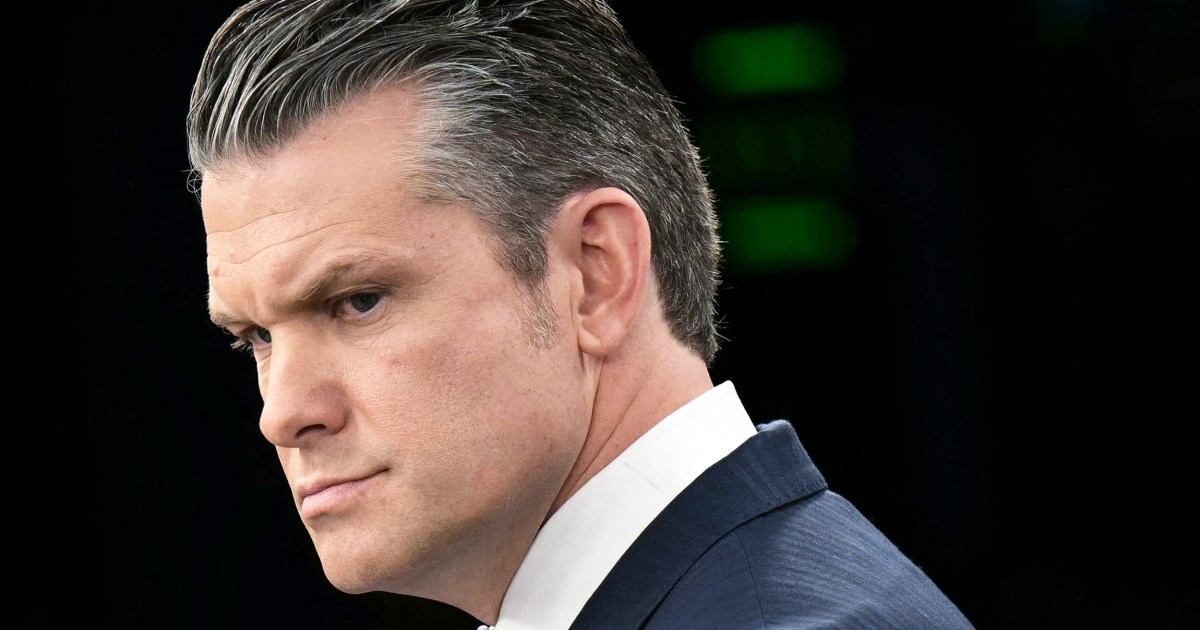
Take Defense Secretary Pete Hegseth, for example. The Washington Post reported earlier this week:
[L]ongtime norms are being upended by the proselytizing Christian campaign of Defense Secretary Pete Hegseth, say multiple former high-ranking military officials and experts on religion and law. Rather than boosting cohesion through a more universal spiritual uplift, they say, the new approach violates the Constitution and undermines the bonds of mutual respect between troops that are essential, especially in wartime.
The scope of the beleaguered Pentagon chief’s embrace of Christian nationalism is quite broad. In recent months, Hegseth has:
- led Christian prayer services in the Pentagon’s auditorium;
- invited radical Christian nationalist figures to speak at official prayer services;
- used social media to promote messages that suggest his faith should dominate over other religious traditions; and
- argued during an official press briefing that Americans should take a knee and pray “in the name of Jesus Christ,” at the same briefing in which he quoted Scripture.
At an event last week, Hegseth took matters to a new level when he prayed for U.S. troops to inflict “overwhelming violence of action against those who deserve no mercy. … We ask these things with bold confidence in the mighty and powerful name of Jesus Christ.”
In case this isn’t obvious, Hegseth is as free as every other American to worship, or not, as he pleases. His religiosity is his own business.
But as has become clear in recent weeks, the defense secretary isn’t just exercising his faith in line with his conscience, he’s also erasing the First Amendment’s church-state line and incorporating Christian nationalism into his wartime message in ways without precedent in the American tradition.
Retired Army Col. Larry Wilkerson, who served as chief of staff to Colin Powell during Powell’s tenures as chairman of the Joint Chiefs of Staff and secretary of state, told the Post, “The American military has had a remarkable ride of equanimity and fairness and justice and all manner of good adjectives with regard to religion. It’s done this in a way that’s really remarkable — until now.”
The New Republic’s Greg Sargent had a related report this week:
If Hegseth truly believes his war on Iran is unfolding in accordance with his conception of biblical law — the highest authority of all — then that explains why he treats all those niggling secular constraints as unbinding on him. Maximum violence and killing of the enemy — who cry out to God but, unlike Hegseth, don’t get an answer back from Him — are affirmatively good.
‘It’s not the way somebody who claims to be a person of God — a religious person — should think,’ [Democratic Sen. Mark Kelly of Arizona]who has flown many combat missions himself, told me. War, he added, ‘is a morally and ethically complicated thing for any person. Any serious warfighter struggles with it.’ If we don’t wrestle with this, Kelly said, we’ll ‘start to lose ourselves.’
Looking ahead, there are limited options to curtail the defense secretary’s public advocacy of Christian nationalism — Donald Trump could intervene, though that seems exceedingly unlikely — but Hegseth’s critics are not powerless. On the contrary, some of the Pentagon chief’s policies related to religious promotion have already sparked litigationwhich opens the door to possible court-imposed limits. Watch this space.
Steve Benen is a producer for “The Rachel Maddow Show,” the editor of MaddowBlog and an MS NOW political contributor. He’s also the bestselling author of “Ministry of Truth: Democracy, Reality, and the Republicans’ War on the Recent Past.”
- Trump’s MAGA allies have a new plan for mass deportations. It could splinter the coalition.
- Isaacman aims to reinvigorate NASA’s image, starting with the moon
- Dems hit the airwaves over Iran
- A slowdown in US visa processing is wreaking havoc on foreign doctors’ lives
- How prediction markets landed in Congress’ crosshairs
- The DHS shutdown might never end

- What Trump’s threat against Iran’s desalination plants means for Mideast

- Artemis is NASA’s return to the moon. Why astronauts won’t land there just yet

- Ingraham questions whether Trump understood Iran military operation’s ‘complexity’

- The Iran conflict is teaching the wrong lessons for the Pacific

-

 Politics1 year ago
Former ‘Squad’ members launching ‘Bowman and Bush’ YouTube show
-

 The Dictatorship1 year ago
Luigi Mangione acknowledges public support in first official statement since arrest
-

 Politics1 year ago
Former Kentucky AG Daniel Cameron launches Senate bid
-

 Politics1 year ago
Blue Light News’s Editorial Director Ryan Hutchins speaks at Blue Light News’s 2025 Governors Summit
-

 The Dictatorship7 months ago
Mike Johnson sums up the GOP’s arrogant position on military occupation with two words
-

 The Dictatorship1 year ago
Pete Hegseth’s tenure at the Pentagon goes from bad to worse
-
Uncategorized1 year ago
Bob Good to step down as Freedom Caucus chair this week
-

 Politics11 months ago
Democrat challenging Joni Ernst: I want to ‘tear down’ party, ‘build it back up’