
Politics
Trump takes the GOP hate for cities to a new extreme

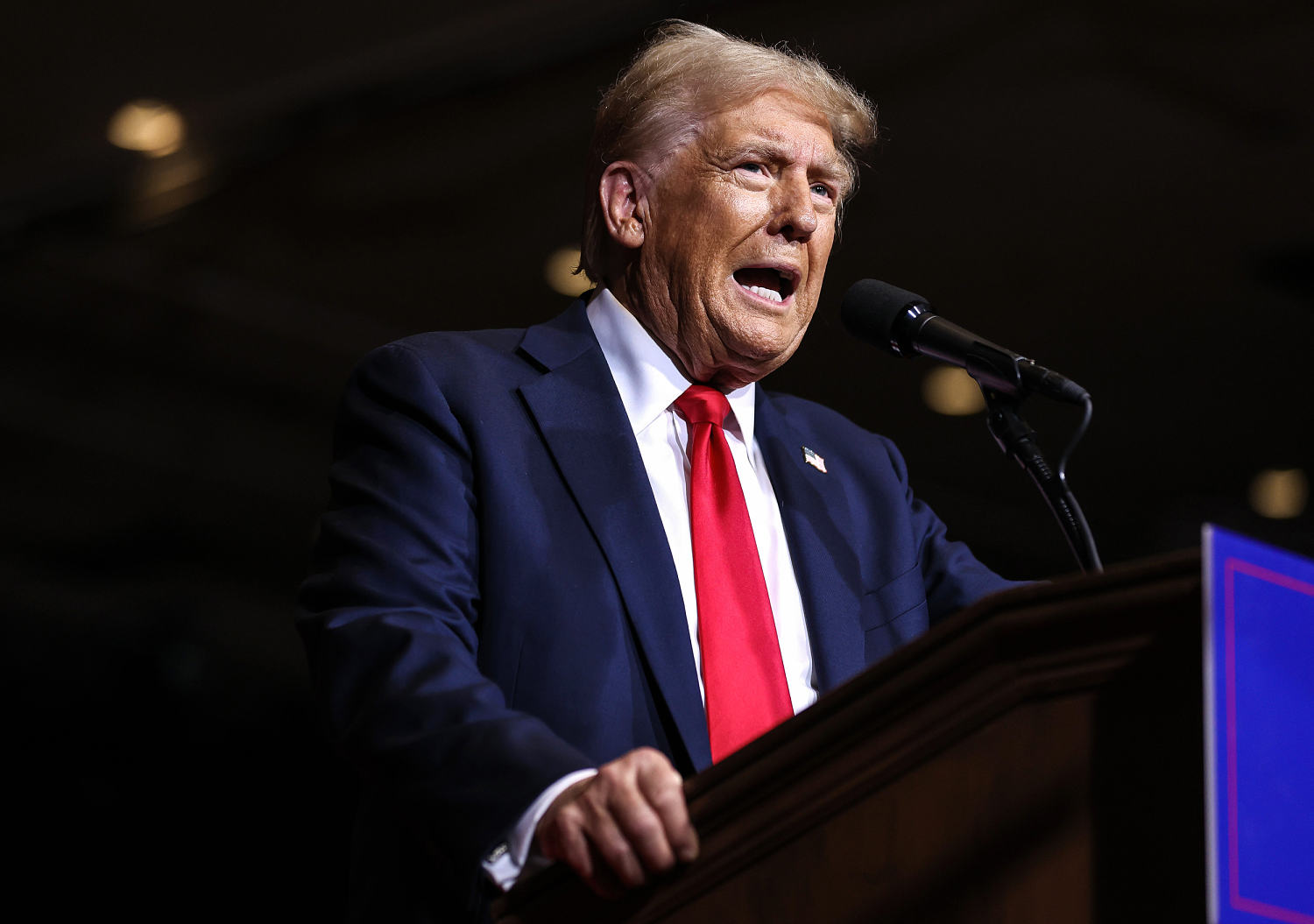
The rural-urban divide is one of the defining features of the American electorate: Democrats dominate in cities, while Republicans rule in rural areas. But as the presidential race has shown, the two parties are treating the voters in their opponents’ favored territory in very different ways.
Democrats are working to attract rural voters and promoting policy initiatives to improve life for rural Americans. Republicans are heaping contempt and calumny on cities and treating their residents as deluded.
Conservatives have long disdained urban areas and those who live in them. But as Election Day approaches, Donald Trump and JD Vance are deploying a particularly nasty anti-urban strategy, seemingly driven by the belief that if Americans who don’t live in cities — or ever go there — look upon them with disgust and fear, then they’ll vote Republican.
We’ve gotten used to Republicans describing our cities as repulsive and frightening for so long that it no longer strikes us as unusual.
In rural Pennsylvania last week, Vice President Kamala Harris’ running mate, Tim Walz, unveiled a policy plan to address some of the challenges faced by rural Americans. It includes an effort to hire 10,000 desperately needed health care professionals to work in rural areas. The day before, Vance traveled to Minneapolis, but not to offer the Trump-Vance plan for urban America. Instead, Vance insulted and demeaned the city, falsely claiming that Walz let it “burn to the ground” in 2020 during protests against police violence and that the city “has now become overrun with crime.” Vance warned that “the story of Minneapolis is coming to every community across the United States of America if we promote Kamala Harris to president of the United States.” Never mind that Minneapolis was named the happiest city in America this year, just one of its absurdly long list of accolades.
Vance’s strategy of insulting the city he was in mirrored Trump’s approach last week in Detroit, where the former president told an audience that “our whole country will end up being like Detroit” if Harris wins. In fact, Detroit is in the midst of a remarkable revival, with new economic development, plummeting crime rates and a population that is increasing for the first time in decades.
Imagine the thermonuclear freakout that would grip the entire political world if Harris or Walz went to, say, a rural Pennsylvania county, declared it a dystopia and its residents deranged, and warned darkly that the whole country would be gripped by that kind of rural horror if they didn’t win the election. They’d be pilloried for insulting the “heartland,” where “real Americans” supposedly live. Commentators of all ideological stripes would savage them for being so cruel to such a significant portion of the electorate. It would dominate coverage of the campaign for the rest of the election.
But we’ve gotten used to Republicans describing our cities as repulsive and frightening for so long that it no longer strikes us as unusual. When Trump says that in America’s cities, “you can’t walk across the street to get a loaf of bread. You get shot. You get mugged. You get raped,” it’s easy to dismiss the ham-handed hyperbole, but we know that millions of Americans believe it.
That’s because conservative media’s efforts to regularly portray cities as chaotic and more dangerous amplify a long anti-urban tradition in America that dates back to the nation’s founding. Thomas Jefferson believed the countryside was where all good things could be found, while cities were as disgusting as the people who lived there. “Those who labour in the earth are the chosen people of God, if ever he had a chosen people, whose breasts he has made his peculiar deposit for substantial and genuine virtue,” Jefferson wrote in 1785. “The mobs of great cities add just so much to the support of pure government, as sores do to the strength of the human body.”
In the picture Trump and Vance paint, every American city is in flames.
Conservatives have long portrayed cities as places of danger and corruption. Richard Nixon aired frightening ads focused on urban crime in his 1968 run for the White House. In 2016, Ted Cruz accused Trump of having “New York values” (he didn’t say exactly what those values were, but they had to be bad). Conservatives celebrated Jason Aldean’s song “Try That in a Small Town,” a warning to urbanites not to bring their crime and chaos to small towns.
As Republicans have secured their hold over rural areas in recent years, they have only increased the shade they throw at cities. Democrats, said Sen. Tom Cotton in 2022, “want to make you live in downtown areas, in high-rise buildings, and walk to work or take the subway.” (The horror!) “Serious question,” tweeted Vance the year before. “I have to go to New York soon and I’m trying to figure out where to stay. I have heard it’s disgusting and violent there. But is it like Walking Dead Season 1 or Season 4?”
For the record, New York is by some measures the safest big city in America. When he’s not in Washington, Vance lives in Cincinnati, a city of 300,000; he describes his posh neighborhood as “the perfect combo of proximity to the city and to nature.”
Yet in the picture Trump and Vance paint, every American city is in flames — and it’s no accident that they make constant reference to the protests against police brutality that swept the country in the wake of George Floyd’s murder in 2020. Though 98% of those protests saw no injuries and there was no property damage in 97%, Republicans would have you believe that entire cities burned to the ground, as Vance falsely claimed about Minneapolis. You don’t have to be steeped in scholarship on race to grasp the racial subtext to the GOP attack on urban America and the people who live there.
It might be easier to assume goodwill on Republicans’ part if, like Democrats, they actually seemed interested in finding more votes in cities. Instead, they sneer at urban areas and the Americans who live there, hoping to generate anti-urban disdain and fear that will win them votes elsewhere. Given that Republicans have lost the popular vote in seven of the last eight presidential elections, the evidence for this strategy’s success is thin at best. But whether it works this time or not, it’s one more iteration of Republicans’ larger strategy of winning through division. And it’s shameful.


President Donald Trump has invited a group of GOP lawmakers including Republicans in competitive races to dine with him Wednesday night at the White House as many in the party press the president to unleash his massive war chest ahead of the November elections, according to four people with direct knowledge of the matter.
The White House plans to hold the dinner in the Rose Garden, according to two of the people who know about the invitation. The people were granted anonymity to discuss private planning. Some House Republicans in tough races were sent invitations, including Reps. Derrick Van Orden (R-Wis.) and Tom Barrett (R-Mich.), who are planning to attend, along with a wider group of GOP lawmakers and senators.
“Of course,” Van Orden said when asked if he would go to the dinner.
The White House invited at least several dozen lawmakers, according to two people familiar with the invitation list. The dinner also comes ahead of next week’s GOP midterm convention in Dallas, though attendance from Republican lawmakers is expected to be mixed. Barrett, for example, said in an interview Tuesday he is not planning to attend the convention and will instead campaign and spend time with his family. A White House spokesperson did not immediately respond to a request for comment.
Trump’s political operation, MAGA Inc., has spent little of its $400 million war chest to help GOP lawmakers. But he recently helped boost Sen. Darline Graham over the line in her heated primary.
Senate Republicans are eager for him to start spending for Ken Paxton in Texas as he has thus far been outspent on the airwaves by Democrat James Talarico and his allies.
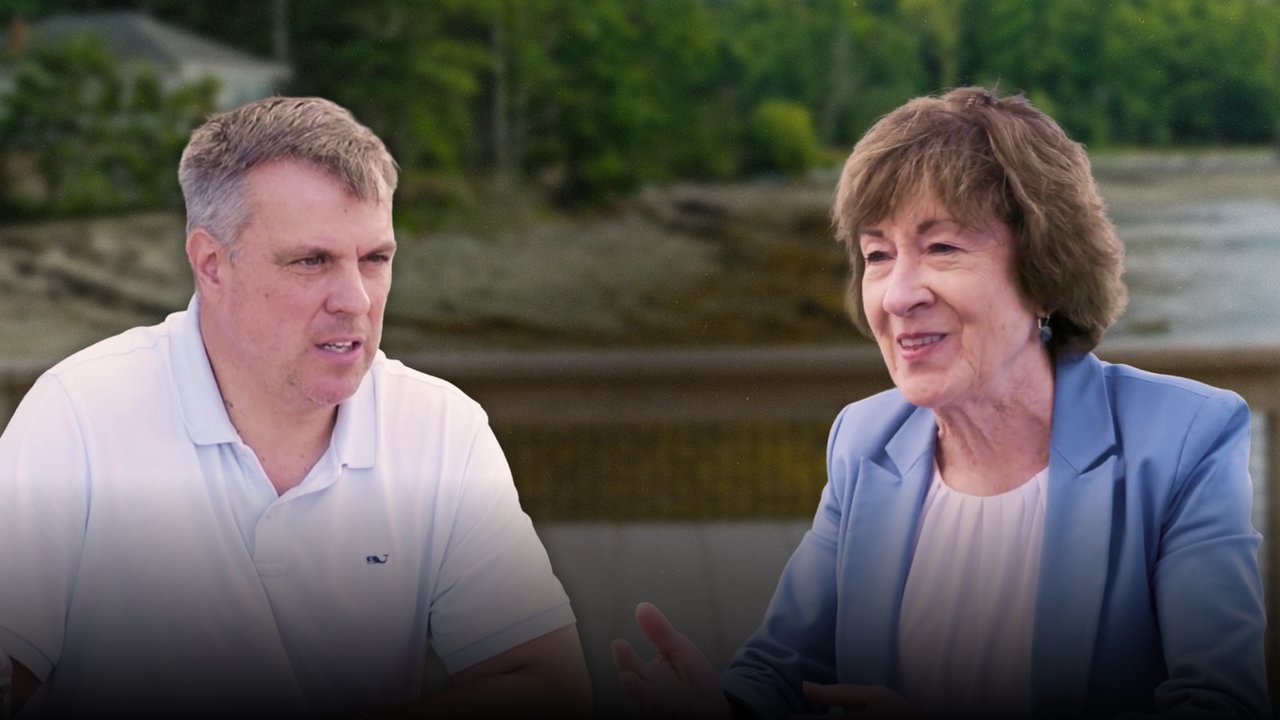
Susan Collins on Trump, tariffs and her fight for Maine
lead image
LAS VEGAS — Vice President JD Vance tried to make inroads with Jewish Republicans. Not everyone is sold.
Vance’s closed-door speech at the Republican Jewish Coalition’s annual leadership summit Monday night went a long way in alleviating top pro-Israel donors’ concerns about his support for the U.S.-Israeli relationship, and it cemented their view that Vance would be a preferable choice to whomever the Democratic Party nominee is in 2028.
But some attendees still have questions for Vance — particularly around his relationship with conservative pundit Tucker Carlson, who has long drawn ire from the Republican Jewish leaders for his criticism of Israel and outraged many when he hosted the antisemite Nick Fuentes for a lengthy podcast interview last year.
“He allayed a lot of concern, but he failed to address his relationship with Tucker Carlson, and that left a lot of people wondering why,” said Josh Katzen, a real estate developer and member of the RJC board, speaking in his personal capacity.
Vance, the current front-runner for the Republican nomination in 2028, has long faced skepticism from Jewish Republicans who question his commitment to the U.S.-Israeli relationship and his response to antisemitism within the GOP. In his speech Monday, he took both issues head-on, and largely appeased the skeptical crowd with his answers, declaring that “Jew-hatred is corrosive to the soul” and saying Republicans need to articulate to young Americans why an alliance with Israel is in the best interest of the U.S.
But his meandering response to a question about Carlson and other podcasters left some in attendance yearning for more.
“A few names: Tucker Carlson, Megyn Kelly, Joe Rogan, Nick Fuentes. They have platformed antisemites,” former Sen. Norm Coleman (R-Minn.), the RJC’s board chair, asked Vance. “How do you draw the line, in terms of … the platforms that you appear on?
“I recognize a lot of people in this room may disagree with things that Tucker Carlson or Megyn Kelly or Joe Rogan have said,” Vance said, before pivoting to discuss Rogan and Fuentes, saying those are “two very, very different categories of people” and suggesting people like Rogan should be reasoned with, even when there are disagreements.
The answer was not sufficient to some, who wonder about his longtime relationship with Carlson. Vance was a regular on Carlson’s Fox News show and creditedCarlson for helping carry him to victory in his 2022 U.S. Senate primary in Ohio. In 2024, Carlson pushed for Trump to pick Vance as his running mate.
“JD Vance allying himself with an individual who has called for Trump’s immediate removal from office will make it harder for many of us Jewish conservatives to consider his candidacy,” said Shabbos Kestenbaum, a pro-Israel campus activist who spoke at the Republican National Convention in 2024 and spoke at last year’s RJC conference. “We hope this issue is resolved quickly so we can focus on policy, not personality.”
Eric Levine, a major GOP donor and member of the RJC board, said Vance could’ve had “an incredible Sister Souljah moment” if he took on Carlson.
“In my view, on the issue of Jews and Israel, there is no difference between Hasan Piker, Zohran Mamdani, Abdul El-Sayed and the DSA writ large on the one hand and Tucker Carlson, Nick Fuentes, Marjorie Taylor Green and neo-Nazis on the other hand,” said Levine, speaking in his personal capacity. “That is why I wish the vice president had unambiguously separated himself and condemned Tucker by name.”
Conservative radio host Sid Rosenberg also wasn’t satisfied. Just hours after urging RJC attendees in a speech onstage to “give Vance a chance,” he was critical of how Vance handled that opportunity.
“He had a chance to hammer @TuckerCarlson and @megynkelly but instead spent all his time defending @joerogan over Nick Fuentes,” Rosenberg wrote on X. “Look, he’s still better than any Democrat candidate but I don’t think he wowed the STRONG Jews in the room tonight.”
Carlson, in a text message, said, “An organization that promotes and defends genocide is continuing to insist that they’re the real victims? I can’t imagine who buys this nonsense anymore.”
Human rights groups have accused Israel of genocide over its conduct in the war in Gaza, which the country’s leaders vehemently deny. Vance’s office did not respond to a request for comment for this story.
An individual close to Vance, granted anonymity to describe sentiment within the vice president’s orbit, said there was no illusion Vance would win over every person in attendance, “or that every single person would love every single answer.”
“The goal was to lower the temperature, extend an olive branch, and make clear that the vice president is an ally, not an enemy,” the person said, arguing that goal was “achieved.”
Sam Markstein, spokesperson for the RJC, emphasized that the organization is a coalition.
“There will always be many opinions within the organization,” Markstein said. “In an hour when too many public figures are walking away from the Jewish community and the U.S.-Israel relationship, the Republican Jewish Coalition will always stand with the leaders who show up. Vice President JD Vance shows up — and received multiple standing ovations with thunderous applause.”
Vance, who was elected to the Senate in 2022, faces a fundamental disadvantage among potential Republican 2028ers: He’s still a relative newcomer to the Republican political scene.
Others, like Secretary of State Marco Rubio and Sen. Ted Cruz (R-Texas), have developed relationships with pro-Israel Republicans in both the Jewish and evangelical Christian communities for years, going well back before their respective 2016 presidential runs. Rubio has pushed to revoke visas from individuals accused of promoting antisemitism or supporting terrorism. Cruz has publicly sparred with Carlson, criticizing him of antisemitism. A Cruz-aligned nonprofit recently launched to take on right-wing antisemitism.
Vance’s speech was his first at an RJC leadership summit, though he attended in 2022. It was the first time since 2019 a sitting president or vice president attended the conference, which draws some of the country’s most influential Republican donors.
Not being a favorite among RJC leaders wasn’t an impediment to Donald Trump’s political outsider 2016 presidential bid. During that campaign, he was accused of invoking antisemitic stereotypes during a speech to the RJC and in a social media post. But upon taking office, he formed a strong relationship with Israeli Prime Minister Benjamin Netanyahu, culminating in the Abraham Accords and moving the U.S. embassy from Tel Aviv to Jerusalem. Speakers at the RJC’s two-day summit this week frequently referred to Trump as the most pro-Israel president in U.S. history.
But Rubio and Cruz have been fixtures at past iterations of the RJC’s annual leadership summit, and they maintain strong ties with the group’s leadership. (None have announced whether they’ll seek the presidential nomination, though Rubio has stated he will not run if Vance does.)
Many attendees said Rubio is still the favorite amongst the crowd.
“Every time Marco Rubio’s name is mentioned in this conference, there’s a spontaneous round of applause,” said Katzen, the RJC board member. Indeed, when Rosenberg urged attendees to welcome Vance in a speech Monday, he mentioned the hypothetical, “If Marco Rubio was here tonight—” and was drowned out by applause.
Should Rubio not run for the nomination against Vance, other observers think Cruz will have the inside lane among the RJC crowd.
“Ted Cruz is loved here, and he deserves to be loved here,” said Levine, prior to Vance’s speech. “Look, if it’s Cruz and Vance, I expect that this crowd would be 90 percent Cruz.”
Ari Fleischer, an RJC board member and a former White House press secretary, said Vance made inroads — but building a relationship with the pro-Israel community takes time.
“It’s fair to say hearts and minds are changing, but I think it’s also fair to say that when you come before the Republican Jewish Coalition, it’s like when you come to New Hampshire to campaign,” Fleischer said. “After the third or fourth time, we let you know how you’re doing.”
- Tillis renews calls for Hegseth’s ouster
- No immediate plans to punish rogue House Democrats for bailing out GOP
- Thune: Data centers should be ‘self-sufficient’
- Mike Johnson says he has ‘no plans’ to campaign with Max Miller
- Introducing Rep. Aisha Wahab
- Trump invites battleground Republicans to Rose Garden dinner
- Capitol agenda: GOP does Dallas? Not so much
- Republicans struggle for footing on data center response ahead of midterms
- Susan Collins on Trump, tariffs and her fight for Maine

- Hospitals say coming Trump administration rules are worse than GOP’s Medicaid cuts
-

 Politics2 years ago
Former ‘Squad’ members launching ‘Bowman and Bush’ YouTube show
-
Uncategorized2 years ago
Bob Good to step down as Freedom Caucus chair this week
-

 Politics2 years ago
Former Kentucky AG Daniel Cameron launches Senate bid
-

 The Dictatorship2 years ago
Luigi Mangione acknowledges public support in first official statement since arrest
-

 The Josh Fourrier Show2 years ago
DOOMSDAY: Trump won, now what?
-

 Politics2 years ago
Blue Light News’s Editorial Director Ryan Hutchins speaks at Blue Light News’s 2025 Governors Summit
-

 The Dictatorship2 years ago
Pete Hegseth’s tenure at the Pentagon goes from bad to worse
-

 The Dictatorship12 months ago
Mike Johnson sums up the GOP’s arrogant position on military occupation with two words