
The Dictatorship
The Kilmar Abrego Garcia case remains in a legal limbo during weeklong pause


Welcome back, Deadline: Legal Newsletter readers. Is the Trump administration working to bring Kilmar Abrego Garcia back to the United States? It sounds like an odd question at first, given the government’s stubborn stance in this case and others. But there was a mysterious development raising the possibility. Plus, yet another judge ordered yet another person’s return from El Salvador, all while lawyers for scores of people held in that nation’s notorious terror prison press a new claim for “urgent” relief.
Ahead of the mystery moveU.S. District Judge Paula Xinis blasted the government’s “willful and bad faith refusal to comply with discovery obligations.” (Discovery is the information-gathering process during litigation.) In an order Tuesday, Xinis assailed the Trump administration’s “continued mischaracterization” of the Supreme Court’s demand to facilitate Abrego Garcia’s release and “to ensure that his case is handled as it would have been had he not been improperly sent to El Salvador.” She told officials to answer his lawyers’ questions by Wednesday evening.
But then a sealed motion appeared Wednesday on Xinis’ docket. It was from the government, seeking a weeklong pause in the discovery fight. A sealed response from Abrego Garcia’s lawyers followed, and Xinis granted the motion. Crucially, she noted the pause was “[w]ith the agreement of the parties.” The details of the filings weren’t public, so we don’t know what each side said. But why would Abrego Garcia and Xinis agree to any delay if it’s not to get him back? The docket has been silent since Wednesday.
Meanwhile, another judge ordered the return of another man from El Salvador. U.S. District Judge Stephanie Gallagher sided with a 20-year-old going by “Cristian” in court papers who, she said, was wrongly sent to that country before his asylum application was processed. “Thus, like Judge Xinis in the Abrego Garcia matter, this Court will order Defendants to facilitate Cristian’s return to the United States so that he can receive the process he was entitled to,” Gallagher wrote.
But what about all the others shipped to El Salvador and loaded into a notorious prison without due process? Lawyers are now seeking their return, too. The motion is pending before U.S. District Judge James Boasberg, who found probable cause last week to hold Trump officials in contempt, which the administration is currently trying to appeal.
Speaking of Trump v. The Judiciary on immigration, his administration just escalated the war by arresting a Wisconsin state court judge whom the federal government alleged obstructed an immigration arrest. “No one is above the law,” Donald Trump’s attorney general, Pam Bondi, said upon the arrest of Milwaukee Judge Hannah Dugan. A statement on Dugan’s behalf said she “has committed herself to the rule of law and the principles of due process for her entire career” and “looks forward to being exonerated.”
Elsewhere in Law & Orderthree more federal prosecutors from the Eric Adams boondoggle resigned rather than betray their oaths. Deputy Attorney General Todd Blanche wanted them to admit wrongdoing in refusing to dismiss the case for Trump’s political aims, but they declined to “confess wrongdoing when there was none.” And one of the president’s latest clemency grants for a loyal supporter is memorably captured in The Associated Press’ headline: Trump pardons Nevada politician who paid for cosmetic surgery with funds to honor a slain officer.
The Supreme Court enters its final full week of hearings Mondayafter considering a request this week from parents to keep their elementary school kids away from instruction involving LGBTQ-themed books. The high court majority sounded ready to side with the parents’ religious appeal, while another big argument is set for Wednesday over a bid for the nation’s first public religious charter school internationality fact life. That would typically be the final hearing of the term, but remember that the justices set a rare May 15 hearing on birthright citizenshiptoo.
As always, emergency appeals will keep the court busy on immigration and more, with the administration this week adding another urgent filing seeking to enforce its transgender military service ban. We could learn next week if the court wants to help Trump out on that one — so far in his second term, his record is mixed at the court. What’s certain is that the appeals will keep coming.
Have any questions or comments for me? Please submit them on this form for a chance to be featured in the Deadline: Legal blog and newsletter.

Jordan Rubin is the Deadline: Legal Blog writer. He was a prosecutor for the New York County District Attorney’s Office in Manhattan and is the author of “Bizarro,” a book about the secret war on synthetic drugs. Before he joined BLN, he was a legal reporter for Bloomberg Law.


The Dictatorship
US and Saudi Arabia sign new nuclear agreement that could pave way for kingdom to enrich uranium
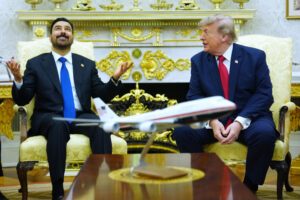
WASHINGTON (AP) — The U.S. and Saudi Arabia on Wednesday forged a new agreement that could potentially provide the kingdom with uranium enrichment capability for its civilian nuclear program.
U.S. Energy Secretary Chris Wright and Saudi Minister of Energy Abdulaziz bin Salman formally signed the nuclear cooperation agreement, known as a “123 agreement,” alongside what the Trump administration described as a “bilateral safeguards agreement.”
The U.S. administration released scant details of the deal, but the framework paves the way for the building of a uranium enrichment facility in Saudi Arabia after a joint U.S.-Saudi study, according to a person familiar with the matter who was not authorized to comment publicly and spoke on the condition of anonymity.
“These agreements reflect our two nations’ shared commitment to strengthening U.S.-Saudi commercial relations, delivering prosperity at home and security to our allies abroad,” Wright said in a statement. “Rest assured, these agreements uphold the highest standards of nuclear safety and nonproliferation, while relying on the world’s best nuclear technology and scientists, designed right here in the United States.”
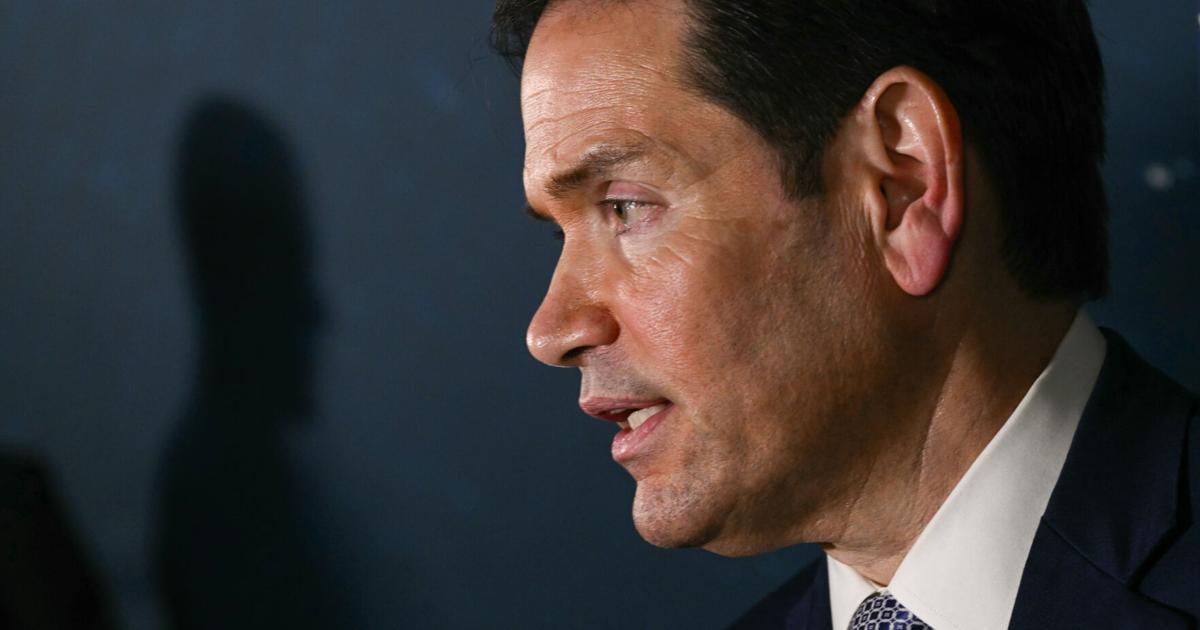
Earlier, Secretary of State Marco Rubio sought to head off emerging criticism of the decision under questioning by reporters about the risk that helping the Saudis fulfill their long-standing desire to enrich their own uranium could lead to new rounds of nuclear proliferation and competition in a volatile region.
“The U.S. is not going to reach any agreement with any country in the world that leads to the risk of proliferation,” said Rubio, who was traveling in the Philippines on Wednesday.
The agreement does not include the International Atomic Energy Agency ‘s Additional Protocol, which would allow for more monitoring, inspections and verification, according to a second person familiar with the decision.
The deal is expected to last 30 years and involve U.S. firms in developing the program. The Energy Department in a statement said it will be submitted for review to Congress, where it could face opposition.
The oil-rich kingdom’s Energy Ministry said the agreement bolsters “efforts to diversify energy sources, advance cutting-edge technologies, and expand opportunities for cooperation and investment in ways that serve the mutual interests of the two friendly countries.”
The announcement comes during the war against Iran launched by the U.S. and Israel, in part, to wipe out Tehran’s ability to develop a nuclear weapon. Iran has insisted its nuclear enrichment program is peaceful.
Ahead of the announcement, Alexander Bollfrass, a nuclear expert at the International Institute for Strategic Studies in London, called the deal “a revolutionary new approach” to nuclear nonproliferation policy.
“The revolutionary aspect of this agreement is that the United States is not asking Saudi Arabia to abide by the highest possible safeguards, internationally monitored safeguards that are standard and are available today, but instead is willing to at least theoretically transfer highly sensitive technology without the same level of oversight that one would expect,” Bollfrass said.
President Donald Trumpduring his first term, and former President Joe Biden tried to reach a nuclear deal with the kingdom to share American technology.
Enrichment could open the door to weaponization
Nonproliferation experts warn any spinning centrifuges within Saudi Arabia could open the door to a possible weapons program for the kingdom, something its assertive de facto leader, Crown Prince Mohammed bin Salmanhas suggested he could pursue if Tehran obtains an atomic bomb.
Wright traveled to Saudi Arabia last year shortly before Trump visited and discussed building out the kingdom’s commercial nuclear power industry with his Saudi counterpart. The U.S. Department of Energy has not responded to multiple requests for comment.
Already, Saudi Arabia and nuclear-armed Pakistan signed a mutual defense pact after Israel launched an attack on Qatar targeting Hamas officials. Pakistan’s defense minister then said his nation’s nuclear program “will be made available” to Saudi Arabia if needed, something seen as a warning for Israel, long believed to be the Middle East’s only nuclear-armed state.
Some lawmakers are hesitant about giving Saudis enrichment capability
Enrichment isn’t an automatic path to a nuclear weapon — a nation also must master other steps, including the use of synchronized high explosives, for instance. But it does open the door to weaponization, which has fueled the West’s concerns over Iran’s program.
The United Arab Emirates, a neighbor to Saudi Arabia, signed a 123 agreement with the U.S. to build its Barakah nuclear power plant with South Korean assistance. But the UAE did so without seeking enrichment, something nonproliferation experts have held up as the “gold standard” for nations wanting atomic power.
Rubio, as a Republican senator representing Florida, backed a bipartisan 2018 proposal that called for requiring Congress to approve any 123 agreement with Saudi Arabia. The bill was reintroduced by a group of Democratic lawmakers in March but has not passed into law.
Typically, 123 agreements — which authorize U.S. companies to sell nuclear technology abroad — go into effect unless veto-proof majorities of Congress pass joint resolutions of disapproval.
Rosemary Kelanic, the Middle East director at Defense Priorities, a Washington think tank, said that uranium enrichment capability could give Saudi Arabia “a potent source of leverage to extract future concessions from Washington, including new security guarantees, by threatening to weaponize its program unless the United States promises enhanced military protection.”
US firms could be winners in expected deal
Rep. Brad Sherman, a California Democrat, predicted the deal would benefit U.S. nuclear giant Westinghouse, which builds the large light-water reactors Saudi Arabia is seeking.
The Trump administration said last month it is providing $17.5 billion in loans to speed development of 10 new large nuclear reactors designed by Westinghouse to meet skyrocketing power demand from massive data centers. The new reactors could use the same design, Westinghouse’s AP1000, in the planned Saudi deal.
Sherman said the U.S. military is “bombing Iran because they insist upon enriching and reprocessing” nuclear material.
Now it appears that U.S. officials “are entering into an agreement with Saudi Arabia, giving them the green light to reprocess and to enrich, and the only difference I see here is that Westinghouse stands to make an awful lot of money on this deal, whereas the Iranians were not enriching American companies,” Sherman said at a House Foreign Affairs Committee hearing Wednesday.
___
Price reported from Manila, Philippines. Associated Press writers Danica Kirka in London and Will Weissert contributed to this report.
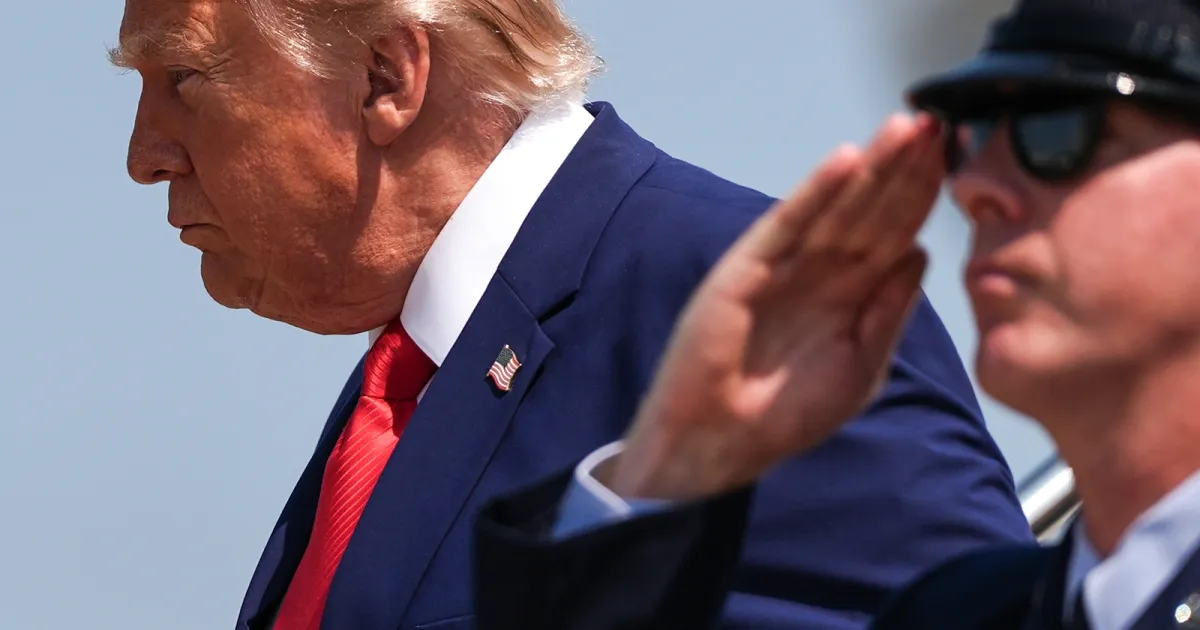
When it comes to U.S. service members who have made the ultimate sacrifice during the Iran war, Donald Trump has struggled to know what to say — and how to say it.
In early March, for example, the day after he launched combat operations, the president posted a prerecorded video to social media in which he tried to comment on the deaths of U.S. troops. “Sadly, there will likely be more,” Trump said. Appearing to break from the text on his teleprompter, he added“Before it ends, that’s the way it is.”
A few days later, Time magazine asked the president whether Americans should be worried about possible retaliatory attacks from Iran. “I guess,” Trump replied. By the end of the first week of the war, the president had attended the dignified transfer of six fallen U.S. service members as they were returned home, but he defied American tradition and wore a baseball cap as caskets were carried from the plane.
The image that came into focus was a leader who appeared to be approaching his responsibilities with an unmistakable mix of disrespect and a blasé attitude about developments that he should have taken with a sobriety that he just couldn’t muster.
This week, as the U.S. death toll reached 18, the Republican appeared to use his social media platform to suggest that the total number of fatalities wasn’t that bad because other modern wars were even deadlier. On Wednesday morning, he again traveled to Dover Air Force Base to attend another dignified transfer (he didn’t wear a hat this time), but before departing for the event, the president spent a couple of minutes speaking to the press.
“We’re going to Dover … to honor our heroes, and they are indeed great heroes, actually,” Trump said. Referring to the troops who were killed, he added, “They said, and all of them said very strongly, ‘We can’t let, we cannot let Iran have a nuclear weapon.’”
There’s obviously nothing wrong with honoring fallen troops, and if the president wanted to say that their sacrifice was not in vain, it wouldn’t have been controversial in the slightest.
But Trump went far further, claiming that the soldiers who were killed abroad had somehow expressed personal support for the war he launched and endorsed his dubious rationale for the conflict.
As a piece in The New Republic summarized“For Trump to claim that soldiers who are no longer alive were in full agreement with his war is astounding and insulting to their memories. Trump has no idea how the fallen soldiers felt about the war or if they agreed with it, and the opinions of U.S. troops are as diverse as those of any other group of Americans. The soldiers honored in Dover Wednesday were simply doing their duty and following orders.”
A New York Times report added that Trump “did not say how he knew the fallen soldiers’ views, but he decided to speak for them at a perilous political moment.”
It’s a simple rule: Presidents shouldn’t put words in the mouths of fallen soldiers, especially ones they did not know. It’s common sense and common decency that Trump continues to lack.
Steve Benen is a producer for “The Rachel Maddow Show,” the editor of MaddowBlog and an MS NOW political contributor. He’s also the bestselling author of “Ministry of Truth: Democracy, Reality, and the Republicans’ War on the Recent Past.”
President Donald Trump started the war with Iran with a promise to help free its people from an oppressive regime. Nearly five months later, U.S. forces appear to be bombing the civilian infrastructure those same people depend on.
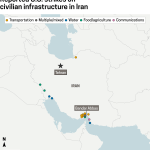
At least 21 strikes hit or damaged civilian infrastructure across Iran in July — including bridges, railways, telecommunication sites and water facilities — according to data compiled by Armed Conflict Location & Event Data, an independent conflict monitor, and shared with MS NOW. Each incident was documented by news agencies and human rights activists, including state-linked media outlets. Three water infrastructure sites were struck, including at least one desalination plant that supplies drinking water to thousands. Most of the destruction has occurred in southern Iran.

Map: Carson Elm-Picard / MS NOW; Source: Armed Conflict Location & Event Data; OpenStreetMap contributors
Zahriyannah Mohammadi Karakashian-Jones, an Iranian American, said her relatives in Bandar Abbas — a southern commercial and military hub by the Strait of Hormuz — can no longer evacuate their neighborhood if necessary by road after multiple strikes on nearby roads and bridges. She communicates with her family through messaging apps, but has not been able to reach them in the past four days.
“There’s essentially no evacuation route any longer,” she told MS NOW. “It makes me embarrassed to be an American. It makes me angry, especially when you consider that these acts of war are being carried out using my tax dollars.”
On Wednesday, Trump threatened to expand infrastructure attacks to Tehran.
“From this point forward, any time the Islamic Republic of Iran shoots at a ship in the Strait of Hormuz, whether it be by Missile, Rocket, Drone, or any other device or weapon, the United States will bomb and destroy ONE BRIDGE OR POWER PLANT, including those located next to, or in, the Capital City of Tehran,” he wrote on Truth Social.
Deliberate military action against civilian infrastructure is considered a war crime under international law. A U.S. official, who spoke on condition of anonymity to discuss military operations, denied that America’s military has intentionally targeted such sites.
“We are only hitting sites that have military capabilities, so no we are not committing any war crimes,” the official told MS NOW.
Secretary of State Marco Rubio, however, would not rule out the U.S. striking civilian infrastructure on Thursday, following the president’s renewed threats. “The president’s policy is a head for an eye. I mean, honestly, that’s what it’s going to be,” he told reporters. “They will pay a very heavy price for the things they’re doing. They’re already paying a very heavy price.”
Administration officials have defended the strikes by arguing that some structures have dual uses for both civilian and military purposes. The Geneva Conventions permit attacks on such “dual-use” sites only when they offer a “definite military advantage.” Iran has also hit civilian infrastructure in Gulf countries in counterstrikes, including residential buildings and a drinking-water plant in Kuwait last week.
Iranian state mediaciting local officialsaccused the U.S. of cutting off drinking water to 10,000 people across 20 villages in the Hormozgan province. General Dan Caine, chairman of the Joint Chiefs of Staff, in a Senate hearing on Tuesday said he was not aware of water desalination plants “being particular targets,” or reports that desalination plants had been attacked.
“We have a robust process which considers a target — that goes through a system that looks at a variety of considerations, to include what you’re alluding to, around both purely civilian or dual-use targets,” Caine said, adding that he has “trust and confidence” in Central Command’s assessments. “I’ve got a lot of lawyers.”
When asked whether the U.S. was responsible for strikes on bridges, electrical infrastructure or water facilities, the White House did not comment. The Pentagon referred to U.S. Central Command, which has directly disputed at least one attack in the strikes compiled by Armed Conflict Location & Event Data: the reported bombing of a wheat storage facility in Hoveyzeh.

Note: Reported events recorded July 9 – 18, 2026. Locations may be approximate.
Map: Carson Elm-Picard / MS NOW; Source: Armed Conflict Location & Event Data; OpenStreetMap contributors
Trump’s threat Wednesday is the latest in a monthslong pattern. In March, Trump warned that the U.S. would target electrical plants, bridges and desalination plants in Iran before agreeing to a temporary ceasefire, which both sides have now abandoned. In April, he threatened that “a whole civilization will die tonight” and that he would blast Iran “back to the Stone Ages.”In mid-May, Trump said there “won’t be anything left” if Iran does not agree to U.S. terms to end the war.
In his initial address after strikes on Feb. 28, Trump told the Iranian people that “America is backing you with overwhelming strength and devastating force. Now is the time to seize control of your destiny and to unleash the prosperous and glorious future that is close within your reach.”
But experts say the level of destruction faced by civilians in Iran as a result of U.S. strikes has undercut that goal. More than 3,600 Iranians — at least 1,700 of them civilians — were killed in the first several weeks of the war, according to Human Rights Activists in Iranincluding at least 300 children.
“They’ve dehumanized Iran and Iranians almost every step of the way that they’ve been in office,” said Ryan Costello, policy director at the National Iranian American Council. “Any claims that they’d be acting within the best interests of Iranians would be disingenuous at best.”
On the first day of the war, a strike on a girls’ school killed dozens of children and faculty members, and an early assessment concluded that the U.S. was likely responsible, MS NOW previously reported. Trump has told reporters that the internal investigation is ongoing.
“The fact that that happened on the first day, not on the 30th — in which, statistically, some mistake at some point was going to happen — it happened on the first day. That I think is something that already at that time left a terrible legacy,” said Trita Parsi, executive vice president at the Quincy Institute for Responsible Statecraft. “Both sides have done terrible things to each other, but seldom has so much negative been done in such a short period of time and so unnecessarily.”
Alex Vatanka, a senior fellow at the Middle East Institute, told MS NOW there was a major drop in Iranians’ support for U.S. military action as soon as civilian casualties began and it became apparent that there was “no American clear vision for post-Islamic Republic Iran.”
He expressed doubt that strikes on critical infrastructure would force Iran back to the negotiating table.
“What President Trump has misunderstood is this regime’s willingness to absorb a lot of pain,” Vatanka said. “They feel time is on their side, and that if they continue just responding to any American attacks, that eventually President Trump is going to stop risking escalation to a point of no return, and go back to the diplomatic track.”
Priya Sridhar contributed to this article.
This piece has been updated with additional comments from Secretary of State Marco Rubio on Thursday morning.
Akayla Gardner is a White House correspondent for MS NOW.
- Mike Johnson’s budget blueprint faces Senate GOP buzzsaw
- Trump backs Iraq’s prime minister. Some Republicans want to see results.
- Lisa Murkowski is undecided on Blanche’s confirmation. Her state is getting a windfall from DOJ.

- Senate Commerce pushes AI markup plan to August
- US and Saudi Arabia sign new nuclear agreement that could pave way for kingdom to enrich uranium
- ‘A circular firing squad’: Senate GOP pushes back on Trump’s tiff with Thune
- Trump backs Iraq’s prime minister. Some Republicans want to see results.
- Capitol agenda: House GOP budget faces Senate reality check
- Jes Staley tells House Oversight he spoke with JPMorgan CEO about Epstein’s crimes
- Capitol agenda: House GOP budget faces Senate reality check
-

 Politics1 year ago
Former ‘Squad’ members launching ‘Bowman and Bush’ YouTube show
-

 The Josh Fourrier Show2 years ago
DOOMSDAY: Trump won, now what?
-

 The Dictatorship1 year ago
Luigi Mangione acknowledges public support in first official statement since arrest
-
Uncategorized2 years ago
Bob Good to step down as Freedom Caucus chair this week
-

 Politics1 year ago
Former Kentucky AG Daniel Cameron launches Senate bid
-

 The Dictatorship1 year ago
Pete Hegseth’s tenure at the Pentagon goes from bad to worse
-

 Politics1 year ago
Blue Light News’s Editorial Director Ryan Hutchins speaks at Blue Light News’s 2025 Governors Summit
-

 The Dictatorship11 months ago
Mike Johnson sums up the GOP’s arrogant position on military occupation with two words