
The Dictatorship
Shedeur Sanders is a nepo baby. That’s his blessing and his curse.

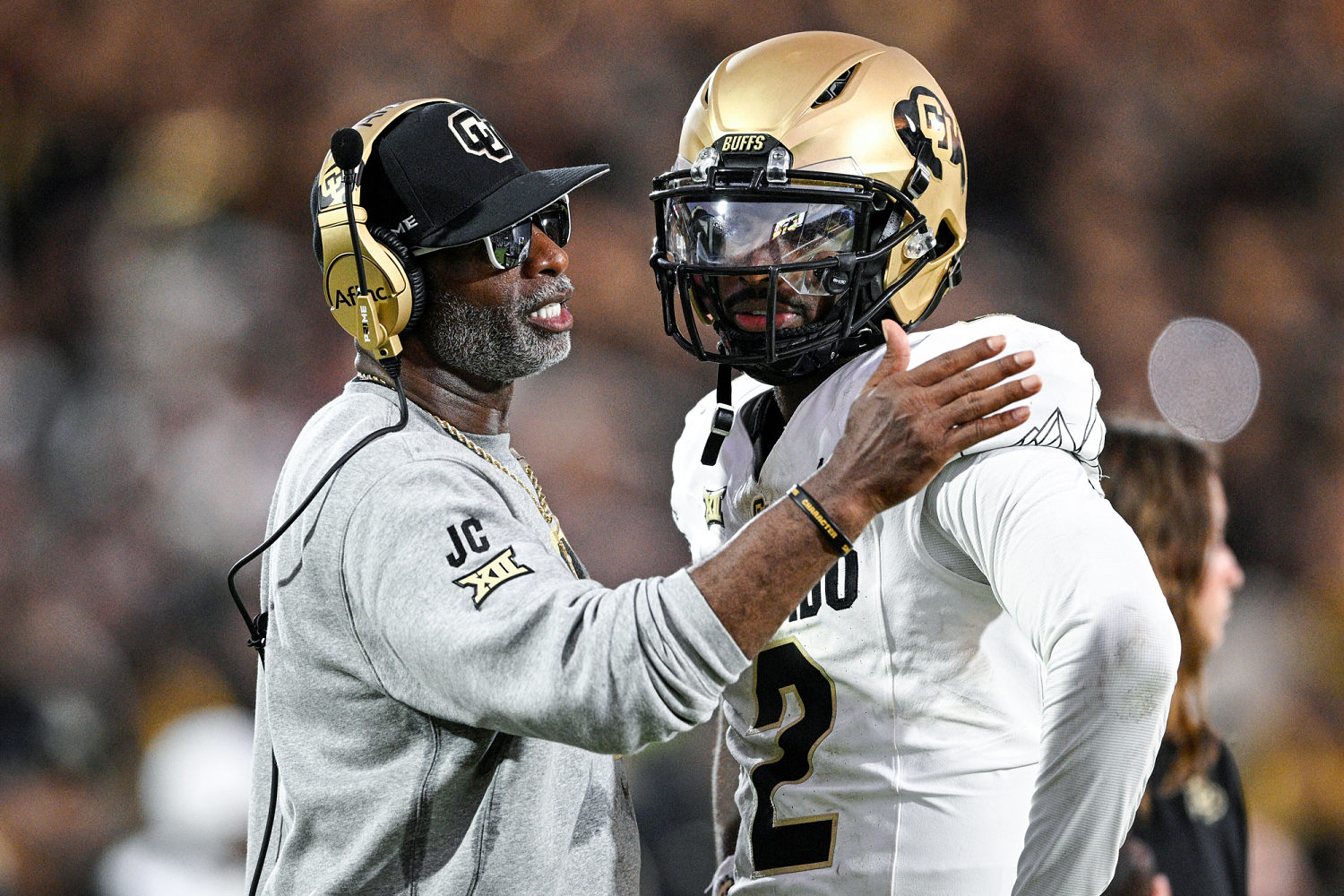
Many football fans will be shocked if University of Colorado quarterback Shedeur Sanders isn’t among the first names called in Thursday night’s NFL draft. Sanders, a four-year starter — he played his first two seasons at Jackson State University — is a top prospect in a draft class that NFL scouts generally view as short on franchise quarterback talent. There are at least five quarterback-starved teams picking in the top 10, and so, their thinking goes, it should be an early night for Sanders.
Doubts abound. Various NFL coaches and league executives — they’re always anonymous — have derided Sanders since the NFL combine.
Yet doubts abound. Various NFL coaches and league executives — they’re always anonymous — have derided Sanders since the NFL combine, foreshadowing a possible slide to later in the first round, if not after. Those doubts aren’t completely meritless. The defenses in Jackson State’s Southwestern Athletic Conference weren’t teeming with NFL-level talent. Colorado rejoined the Big 12 in 2024, but the team played only one ranked opponent all year. Sanders also declined to throw at the NFL combinewhich no doubt bothered some coaches and scouts. However, he did throw later at Colorado’s pro day.
While there are valid on-field reasons to debate whether a team should stake its future on Shedeur Sanders’ arm, today’s a good day for transparency about what inspires the majority of the debate: worries about how big a role his famous father, Deion (aka “Prime Time,” aka “Coach Prime”) Sanderswill seek to have in his son’s professional football career.
Shedeur Sanders is a classic nepo babydespite the “he got it out of the mud” narrative that his fans and his father’s fans like to spread. To say that Sanders has benefited from nepotism isn’t to insult the player or to stand with his critics whose animus toward him is less about his abilities and more about his father. Instead it’s an attempt to view the player with clarity and be honest about the reasons so much more time and attention, at least in sports media, are being devoted to him than on any other player in this year’s draft.
It’s true that Sanders is being considered for the NFL draft because of his talent and hard work. He compiled a 70.1% completion percentage with 134 passing touchdowns and only 27 interceptions in college. He’s what most football coaches want: an efficient passer who minimizes turnovers; in short, he earned his way to the NFL draft with his play.
But it’s also true that he owes much of his success to being the son of a Pro Football Hall of Famer who is one of the most braggadocious athletes to ever stride the planet. Deion Sanders, who’d never coached on the collegiate level, nonetheless had the clout to cut deals that made him his son’s head football coach at two NCAA Division I programs and the personality to do so unapologetically.
Deion Sanders, who’d never coached on the collegiate level, cut deals that made him his son’s head football coach at two NCAA Division I programs.
I’ve talked to fans who point out that University of Texas quarterback Arch Manning is projected as a top pick in next year’s draft, no doubt owed in part to the fact that his uncles, Peyton and Eli Manning, won four Super Bowls between them as quarterbacks and his grandfather, Archie Manning, played quarterback for the New Orleans Saints. But the comparison between the youngest Manning and the young Sanders ends at famous relatives. Whatever the elder Mannings have done to manage Arch’s climb has been done behind the scenes. To watch Shedeur’s college career was to also watch his dad’s second act as a coach and social media personality and to hear him call you a hater if you didn’t like what you saw.
He’s not wrong that many fans, and no doubt some coaches and league officials, don’t like the Sanders’ default in-your-face posture. If flashing an expensive watch at the opposing sideline in game, then posting a YouTube video about why you did it is an example of Shedeur mimicking his father’s cockiness, it’s also a, uh, prime example of a brand of puffery that some segments of America have always been uncomfortable with in accomplished Black men. Shedeur himself has even called that out, telling NBC Sports that he’s been mentored by former Black quarterbacks who understand what he’s been through.
If Sanders falls in the draft, it could be partly because some teams fear the idea of drafting him and then having to contend with public criticism from his dad if they make decisions “Coach Prime” doesn’t like. It’d be an awful reason for a talented player to have his draft stock tumble, but bad things have happened in the NFL draft for even less valid reasons. For his own part, Shedeur Sanders seems unmoved by it all. Asked in a recent interview about the prospect of not being taken first overall, he shrugged.
“Why would I be mad?” he asked. “You gotta understand, I think about it like this: These are good problems to have. You could be in a way worse situation.”
If Shedeur Sanders falls in the draft, it could be because teams fear drafting him and then having to contend with public criticism from his dad.
That’s a good outlook to have for somebody under the spotlight he’s under. However much Sanders owes his success to having a powerful parent, what he’s really owed from the outset is to be treated like any other prospect in this year’s draft. The best, yet most improbable, outcome is that he’s drafted high, then totally insulated from his father’s shadow and whatever projection coaches and fans might direct from elder onto junior. What Sanders deserves is the opportunity to succeed or fail on his own.
But nothing we’ve seen so far — from Shedeur Sanders, Deion Sanders, NFL teams or fans — suggests that is likely to happen.
Keith Reed is an award-winning journalist and a past senior editor at ESPN. His work has appeared in The Boston Globe, The Root, Vibe, Essence and elsewhere.


Although Texas Attorney General Ken Paxton had already earned a reputation as the most scandal-plagued U.S. Senate candidate in recent memory, the Republican’s troubles have managed to take a turn for the worse.
Just in the past couple of weeks, Paxton has been accused of using an address where he did not live while voting in recent elections and has faced allegations that he and his estranged wife declared three separate homes as their primary residence in mortgage documents — a practice that his party has, in other situations, characterized as an outrageous abuse.
Complicating matters, property records now suggest that the state attorney general, either in his personal capacity or through his trusts, now owns at least 15 properties, worth roughly $9 million.
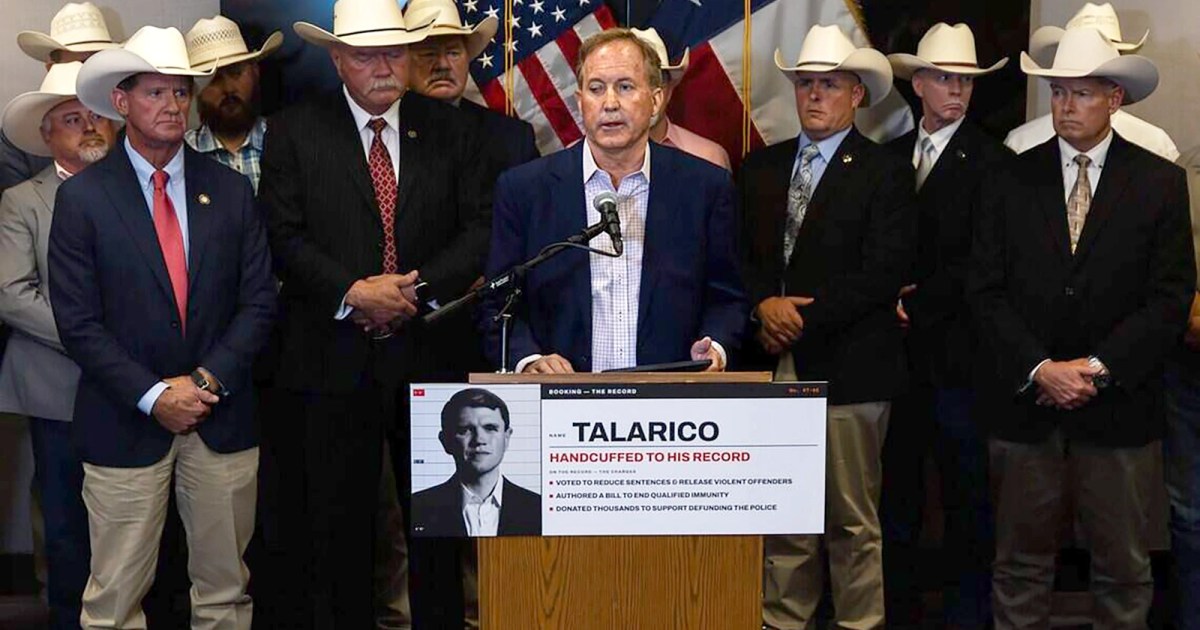
The good news is, Paxton finally held a press conference Tuesday — a “rare” occurrenceas one outlet called it, for a politician who doesn’t seem to care for questions — offering journalists an opportunity to ask the Texan about his many controversies. The bad news is, Paxton didn’t want to answer any questions about his many controversies, and he then abruptly abandoned his own event when reporters treated him like a Senate candidate.
“General, I wanted to give you a chance to respond to [Democratic state Rep. James Talarico] and his campaign,” one reporter said. “They’ve made a lot about the reports that have come out, one in The New York Times about you acquiring properties worth —”
At that point, Paxton, surrounded by 22 local sheriffs who support his candidacy, interrupted and said he only wanted to field questions related to “law enforcement.”
But in the United States, politicians don’t get to limit the scope of journalists’ questions, and so another reporter asked the state attorney general why he allegedly voted in one county while living in another. A Paxton aide, seemingly eager to rescue her boss, tried to intervene as the Republican walked away from his podium.
A Talarico spokesperson said in a statement, “Ken Paxton just refused to answer basic questions about reports he committed voter fraud and expanded his real estate portfolio to 15 properties on a government salary — because he has no answers for his corruption. If Ken Paxton can’t answer these simple questions, what is he planning to do in a debate?”
For the record, Paxton hasn’t agreed to any debates. He also hasn’t offered substantive answers to the same questions ahead of Tuesday’s event.
Stepping back, the embarrassing display underscored two notable elements of the Senate race in the Lone Star State. First, Paxton genuinely seems to believe he can go the entire campaign without fielding questions from independent news organizations about the brutal list of scandals that follows him like cans tied to a bumper.
And second, Republicans invested a remarkable amount of time and energy into trying to make the Texas race a referendum on, of all things, masculinity. But watching Paxton flee his own press conference in response to predictable and reasonable questions, a variety of words came to mind. “Manly” wasn’t one of them.
Steve Benen is a producer for “The Rachel Maddow Show,” the editor of MaddowBlog and an MS NOW political contributor. He’s also the bestselling author of “Ministry of Truth: Democracy, Reality, and the Republicans’ War on the Recent Past.”
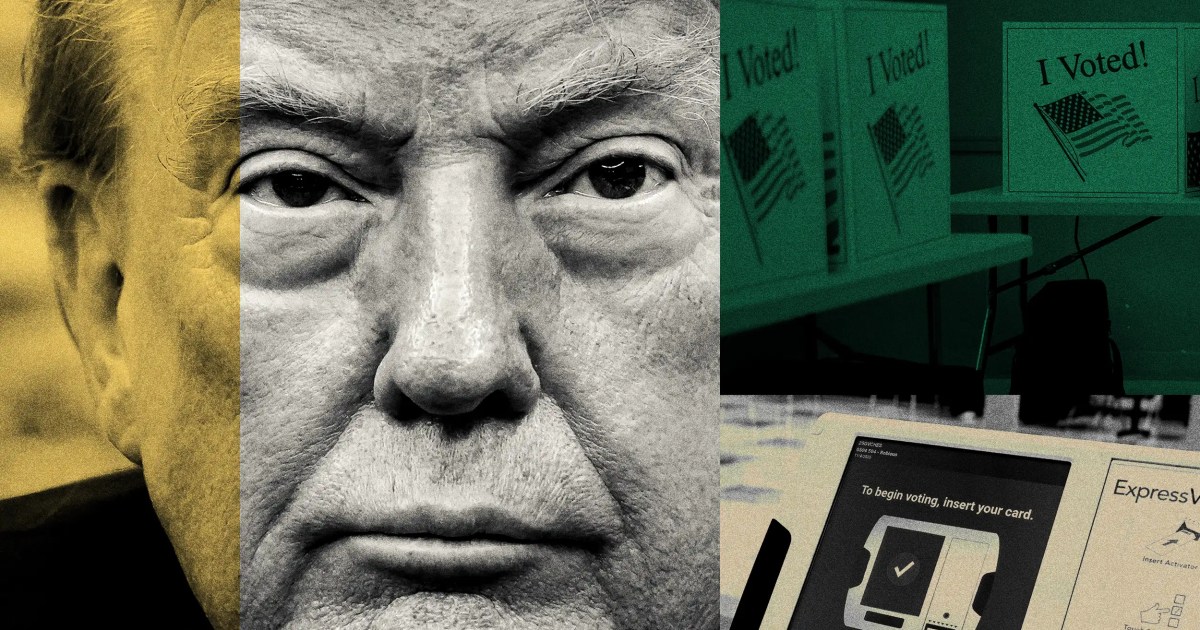
President Donald Trump says he is worried about foreign interference in U.S. elections. That was the reason he gave when he released declassified intelligence documents last week that ended up undercutting his own baseless claims about rigged elections.
In his primetime address on July 16, Trump said the U.S. “must take urgent action” to protect voting infrastructure against foreign actors. But shortly after taking office last year, Trump gutted a key agency designed to protect America’s elections from exactly that.
It’s called the Cybersecurity and Infrastructure Security Agency — an office created during Trump’s first term. CISA is one of the main federal partners for states on election security, sharing intelligence on potential threats to voting infrastructure and providing quick regional support.
After Trump returned to office, the cyber agency housed under the Department of Homeland Security took a major hit. Elon Musk’s DOGE fired more than 100 workers, including election security advisers. More than 600 others were placed on administrative leave, were reassigned or took buyouts.
Now the Trump administration is telling states they will only receive resources if they hand over voter rolls to be screened through a new federal database that a judge recently deemed unlawful in its current form.
That database is known as the Systematic Alien Verification for Entitlements, or SAVE, which experts and a federal judge are concerned has a high error rate that could disenfranchise voters.
Homeland Security Secretary Markwayne Mullin said CISA will release an “election infrastructure plan” in the next 30 days — barely three months out from the midterms, which will determine which party controls Congress.
“If they participate in the SAVE program, we’ll provide the resources and training to support state election integrity,” Mullin said last week. “We’re not trying to change the outcome.”
‘They’re flying blind’
Multiple current and former senior election and national security officials told MS NOW that they could not recall a time when the federal government held back resources and money meant to secure America’s elections.
And multiple state election officials have said they are not receiving any briefings on possible foreign threats to election security from the federal government. Such briefings were once a regular occurrence, they said.
During the first Trump administration, “we were collaborative — carrots rather than sticks,” said one of the former officials, who was granted anonymity to speak candidly. The second Trump administration is “very much focused on sticks.”
One election official in a swing state said the difference from 2024 is stark, saying that “it’s every state for themselves.” The official spoke on the condition of anonymity over concerns about retaliation from federal officials. During the last cycle, the state official said they had a regional federal cybersecurity expert “on speed dial” who could “see the whole puzzle.”
That doesn’t exist anymore, and without it, the state election official said, “we’re less informed on the pattern of the attackers and are slower to respond.”
“I’ve literally never heard anybody effectively say ‘to keep you safe, you have to give me what I want,’” said the swing state election official, referring to DHS threats to withhold resources if states don’t hand over sensitive voter data.
The risks compound at the local level, they added: “Does [a clerk’s] laptop have the IT infrastructure to defend against an attack from Iran? That’s what keeps me up at night.”
Cait Conley, a West Point graduate and combat veteran who served as the senior adviser to the director of CISA during the Biden administration, accused Trump of gutting the agency and sowing doubt about the security of U.S. elections in his speech last week.
“If Donald Trump were truly concerned about election security, he would not have fired hundreds of federal workers whose jobs were to secure our elections,” she said. Conley is now running for Congress in New York as a Democrat.
“His lies and misrepresentations are very clearly trying to lay the groundwork for calling this November’s election results into question when his party loses,” she said.
When asked about election officials telling MS NOW that they have received no intelligence briefings on possible foreign threats to election security, and have no access to regional cybersecurity advisers, DHS did not respond. DHS also did not respond directly to questions about the agency withholding resources unless states hand over voter data.
Instead, they provided a statement from acting CISA Director Nick Andersen, which said CISA “works with critical infrastructure owners and operators to assist them in securing both the physical security and cybersecurity of the systems and assets that support the nation’s elections.”
When an election infrastructure plan is done in the next 30 days, it will “offer to states the cyber resources they need, including information about available no-cost voluntary services such as the sharing of threat information, technical expertise, vulnerability scanning, and other risk mitigation support,” Andersen said.
Under Trump, CISA halted its funding of the Election Infrastructure Information Sharing and Analysis Center, which provides local governments with free access to election security operations centers, election security training, technical support and threat monitoring.
Tim Harper, who leads the elections team at the nonpartisan Center for Democracy and Technology, said teams across the FBI, the State Department and the Justice Department that worked on countering foreign influence have also been eliminated or sidelined.
But CISA was key to sharing and compiling intelligence across the federal government.
Parts of CISA’s election work, Harper explained, included granting security clearances to state election officials to give them real-time information to stop threats before they spread. His organization has direct knowledge of officials receiving no response when they have asked the federal government to provide assistance on cyber and physical security.
“Expecting local election officials to handle nation-state cyberattacks without federal support isn’t commonsense policy,” Harper said. “It’s a national security failure.”
States are trying to fill the gap with outside vendors and networks of cyber experts.
“It has taken a lot of work, and it shouldn’t have to be this hard, but the states are ensuring the 2026 election is secure despite federal withdrawal,” said David Becker, executive director of the Center for Election Innovation and Research, which works with elections officials from both parties on ways to build trust with voters in election results.
Becker said that the Trump administration’s near-weekly threats to arrest election officials have “become a running joke among election officials,” adding that they find it “laughable.”
Protecting elections
Established in 2018 during Trump’s first administration, CISA initially enjoyed sweeping bipartisan support. But Trump attacked the agency after Chris Krebs, then the director, said the 2020 election was “the most secure in American history.” Trump, who lost the election, immediately fired Krebs.
After Trump returned to office in 2025, his administration proposed a 17% cut — roughly $500 million — to CISA’s budget. It also proposed mass layoffs that would cut CISA staff nearly 30%, eliminating 1,083 of its 3,732 staffers. The plan was paused after almost 600 people accepted a buyout offer from the administration, Politico reported at the time.
Trump and members of his new administration have also accused CISA of undermining democracy instead of defending it. As DHS secretary, Kristi Noem, in a surprise keynote speech at a major cybersecurity conference last year, said CISA’s efforts to counter the spread of misinformation from America’s enemies, such as Russia and China, was an infringement on free speech.
“They were deciding what was truth and what was not,” she said of CISA. “And it’s not the job of CISA to be the Ministry of Truth.”
Former CISA officials called those claims patently false. And they warned that tech firms were hiring top CISA leaders, as well as CISA staffers, for their cybersecurity skills, and that the agency was being gutted.
“I’ve personally seen how CISA has lost its very best,” Jack Cable, a former CISA employee who left the agency in January, told lawmakers in a June hearing. “In the face of increasing threats, we can’t undermine the capacity of America’s cyber defense agency and its ability to attract and retain the best technical talent.”
Laura Barrón-López covers the White House for MS NOW.
David Rohde is the senior national security reporter for MS NOW and a two-time winner of the Pulitzer Prize for International Reporting. Previously he was the senior executive editor for national security and law for NBC News.
The resumption of hostilities between the United States and Iran has caused an uptick in U.S. casualties. Last week, CENTCOM confirmed the deaths of three more U.S. service members killed in actionand the total number of troops killed during the war currently stands at 18. Meanwhile nearly 100 troops have been injured over the past two weeks as Iran escalates attacks on U.S. bases across the Middle East.
President Donald Trump continues to try to cast the war as an operation of total U.S. domination against a defanged regime, but Iran is striking back, with American lives at stake, making justifications for continuing the unpopular war even harder for Trump. And with the president signaling an openness to escalating the conflict even further in the coming weeks, the human toll is likely to increase. (Iranian casualties are far worse, with at least 1,700 Iranian civilians killed, according to estimates from the U.S.-based Human Rights Activists News Agency.)
It will be nearly impossible for the Trump administration to ward off the reality that casualties make wars less popular.
Already lacking in meaningful transparency, the Trump administration appears to be growing more cagey about releasing information about casualties. But efforts to delay or obscure the information are unlikely to prevent the inevitable — the war will become even more widely despised as more people die.
CNN reported on Monday that the Pentagon has been “slow to disclose injuries to U.S. troops during the ongoing war with Iran, avoiding publicly confirming the fallout from Iranian attacks and mostly reserving totals to a military website that lags events by several days or even weeks.” And its mode of communication about casualties has shifted: “While earlier in the war U.S. Central Command, the military headquarters overseeing the war effort, would provide periodic updates on injuries, it has not been regularly disclosing non-fatal attacks in recent months,” BLN reported. (The Pentagon’s top spokesman, Sean Parnell, told BLN that reporting delays are necessary, saying, “Providing real-time information on non-fatal casualties to the media is the same as providing that information directly to our adversaries, which could put even more service members at risk with access to that quick information.”)
The New York Times pointed out that the Pentagon declined to divulge Iranian strikes on U.S. bases in Jordan last week, which in turn may have misled the public about why the U.S. was conducting airstrikes against Iranian military sites. And that happened amid a broader reticence to brief the public about the direction of the war: “The last major Pentagon briefing on the war was in early May.” (Parnell responded to the Times article in a statementsaying that “claims of concealment are fabrications.”)
Given the Trump administration’s dishonesty about the warthe president has long ago forfeited any right to be given the benefit of the doubt. But regardless of whether the Trump administration’s changes in its communication style has been motivated by operational security or making it harder for the public to see how much blood has been shed on its orders, the news is trickling out: The troops are being killed and injured.

Ultimately, it will be nearly impossible for the Trump administration to ward off the reality that casualties make wars less popular. In the 1970s the political scientist John Mueller found that support for the Vietnam and Korean wars “declined as a logarithmic function of American casualties.” Various scholars have since pointed out that there are nuances to how the public is affected by casualties, such as a sensitivity to a notable increase in the rate of casualties rather than just the absolute number of casualties themselves.
But there’s one particularly damning piece of scholarship out there for the Trump administration: a 2006 study by political scientists from Duke University and the Loyola University Chicago, which found that the public’s tolerance for the human costs of war is heavily shaped by the public’s “beliefs about the rightness or wrongness of the war” as well as “beliefs about the war’s likely success.”
That doesn’t bode well for Trump.
A recent Washington Post-Ipsos poll found that 68% of Americans said the Iran war was not “worth fighting,” and just 28% said it was. (BLN pointed out that the “negative 40-point split is worse than for either the Iraq or Afghanistan wars in Washington Post-ABC News polling.”) And in Aprila Post-ABC poll found that 61% of Americans believed the Iran war was a “mistake.” As high oil prices pinch Americans’ wallets and the Trump administration continually fails to bring Iran to heel, it’s hard to imagine that those numbers will look better for Trump.
The war with Iran has so far produced a fraction of the U.S. casualties of major U.S. wars of the past, and it is unlikely to reach comparable numbers unless Trump deploys ground troops. But widespread skepticism that this war is worthwhile or effective likely makes the administration more vulnerable to public anger over whatever casualties do emerge. It’s one thing for troops to die for a just cause or even a controversial cause, it’s another to die for no obvious reason at all.
Zeeshan Aleem is a writer and editor for MS NOW. He primarily writes about politics and foreign policy.
- Republicans release new crypto bill text, with Trump-blessed ethics provision included
- Darline Graham: Her brother’s work ‘took him from us’
- House passes stopgap funding bill, months before shutdown deadline
- Pressed for answers on scandals, Texas’ Ken Paxton abandons press conference
- Trump gutted the agency built to stop election interference
- Why Trump’s reported attempts to minimize Iran war casualties won’t work
- Rep. Andy Biggs wins Arizona GOP gubernatorial primary to face Katie Hobbs in November
- House passes temporary funding bill months early to avoid election season shutdown

- Maine Democrat Troy Jackson has raised $1M for his Senate bid so far
- Capitol agenda: GOP defectors threaten budget vote

-

 Politics1 year ago
Former ‘Squad’ members launching ‘Bowman and Bush’ YouTube show
-

 The Josh Fourrier Show2 years ago
DOOMSDAY: Trump won, now what?
-

 The Dictatorship1 year ago
Luigi Mangione acknowledges public support in first official statement since arrest
-
Uncategorized2 years ago
Bob Good to step down as Freedom Caucus chair this week
-

 Politics1 year ago
Former Kentucky AG Daniel Cameron launches Senate bid
-

 The Dictatorship1 year ago
Pete Hegseth’s tenure at the Pentagon goes from bad to worse
-

 Politics1 year ago
Blue Light News’s Editorial Director Ryan Hutchins speaks at Blue Light News’s 2025 Governors Summit
-

 The Dictatorship11 months ago
Mike Johnson sums up the GOP’s arrogant position on military occupation with two words