
Congress
7 things to watch for during Trump’s joint address to Congress

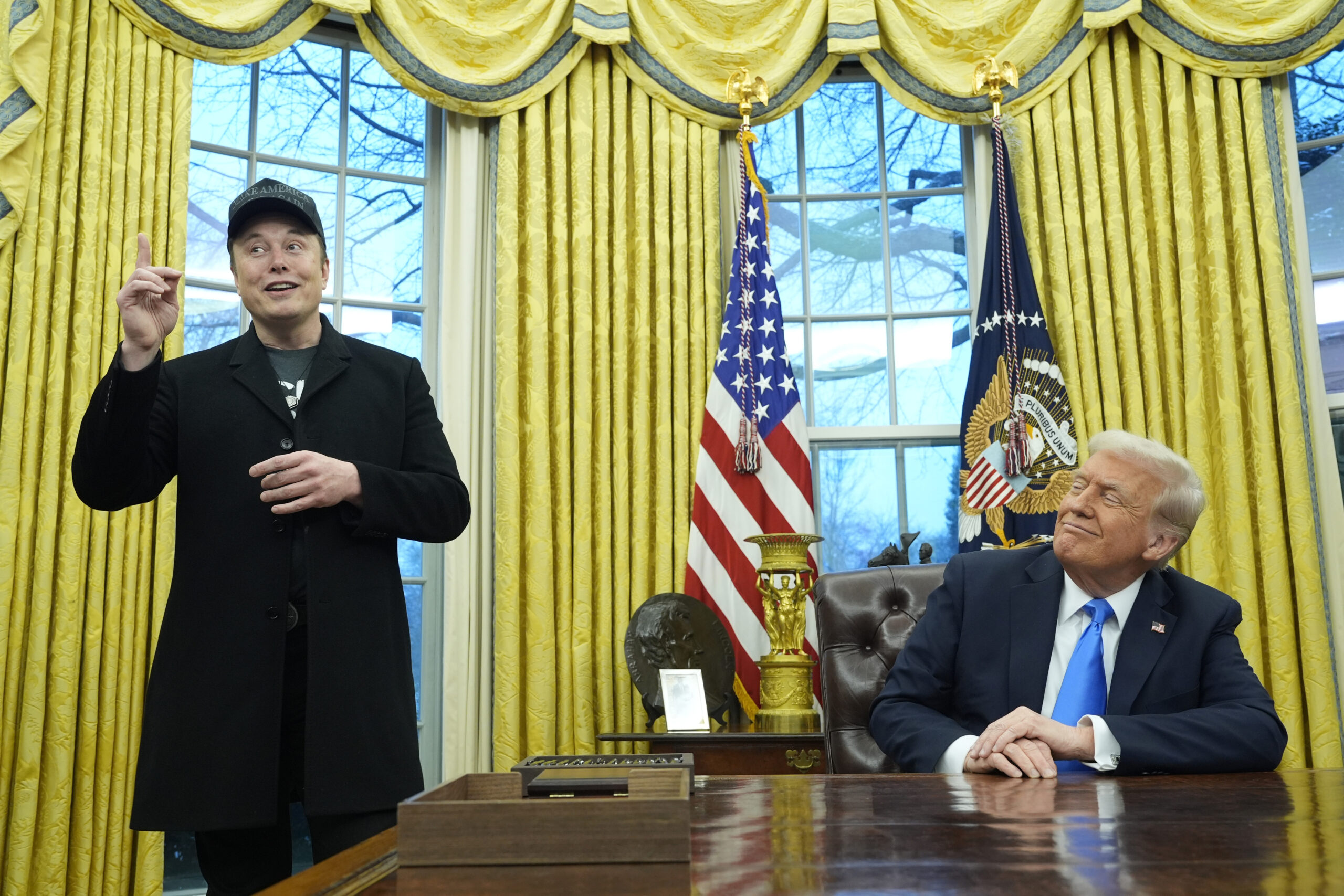
President Donald Trump shocked the nation eight years ago when his first joint address to Congress was, well, presidential.
There was none of what the president now likes to call his “weaves” — digressions from his prepared remarks and other tangents. There was no bashing of the media, no name-calling of his opponents. But Trump is not the man he was in 2017. Emboldened by his sweeping victory, and still seething over the persecution he believes he suffered when he was out of office, the president has more leeway this time around. What that will mean for his address to Congress on Tuesday is anybody’s guess at this point.
“TOMORROW NIGHT WILL BE BIG. I WILL TELL IT LIKE IT IS!” Trump wrote on Truth Social on Monday.
The theme of Trump’s speech will be the “renewal of the American Dream,” and it will include sections on the economy, border security and foreign policy, Fox News reported ahead of the address. An outside political adviser to the president, speaking on the condition of anonymity, told Blue Light News the president plans a heavy emphasis on immigration, with the invited guests expected to feature people whose family members were victims of crimes committed by undocumented migrants.
It is also widely expected that the slashing of the federal bureaucracy will come up in the president’s speech, as the so-called Department of Government Efficiency cuts have dominated his first month in office. And the president is expected to mention the assassination attempt in Butler, Pennsylvania, with someone who was at the rally anticipated to attend, the adviser said.
But if he goes off script? All bets are off, and anyone could find themselves in the president’s crosshairs.
“He’s not a sweeping orator. He tends to be a tactical orator off the prompter, and that’s what I would anticipate,” said Scott Jennings, a GOP strategist who has been a vocal Trump defender on BLN and who was at one point considered for Trump’s press secretary post.
Here’s a look at what to watch for during the Tuesday night address, which begins at 9 p.m. ET.
1. How does Trump address people’s frustrations with high prices?
Trump wasn’t thrilled with talking about high prices on the campaign trail. He famously complained to his supporters at an Inauguration Day rally, “How many times can you say an apple has doubled in cost?”
That attitude has been borne out through his first month-plus in office, with the president spending more time talking about Elon Musk’s efforts to dismantle the federal government and renaming the Gulf of America than he has about inflation. That focus on DOGE has made his allies increasingly uneasy.
Polling shows inflation and high prices remain the top issue Americans are concerned about, and many of them don’t think this administration is doing enough to address them. A recent Reuters-Ipsos poll found that 52 percent of respondents don’t think Trump is doing enough to help the economy and bring down prices, and the University of Michigan’s Consumer Sentiment Index plummeted to a 15-month low in February.
“Economy and illegal immigration. Those were, I believe, the two things that propelled Donald Trump to the White House for a second time, and he has to address both issues with the same verve,” said Barrett Marson, a GOP strategist in Arizona. “Ignore the voter discontent on the economy at your own peril.”
Expect the president to tout the U.S. manufacturing investments companies have made since he took office in January. That includes chip maker TSMC’s Monday announcement that it plans to invest $100 billion in U.S. chip plants, building on the $500 billion investment from Apple and the $27 billion investment from pharmaceutical manufacturer Eli Lilly announced last week. It’s a move that would echo the approach he took during his first address to Congress in 2017, when he touted investments from Ford, Fiat-Chrysler, General Motors, Sprint, Softbank, Lockheed Martin, Intel, Walmart and others.
The president’s allies argue that it’s been only a month, and that no one expected the economy to change overnight. And they say he is addressing the economy with tariffs aimed at boosting domestic manufacturing and executive orders targeting domestic fossil fuel production, along with cuts to federal spending they argue will yield an economic benefit down the road by improving the country’s fiscal health and boosting the private sector.
But it’s unclear whether all of that will be enough to satisfy Americans who are still feeling the pinch of inflation on their wallets. And new tariffs, some of which took effect Tuesday, could make inflation even worse.
“Blanket tariffs make it more expensive to do business in America, driving up costs for consumers across the board,” former Senate Republican Leader Mitch McConnell argued in a recent op-ed. “Broad-based tariffs could have long-term consequences right in our backyard.”
2. How much time does Trump spend talking about DOGE? And how does he frame Musk’s role?
Trump’s first month in office has been dominated by DOGE’s efforts to upend the federal bureaucracy, cut federal workers and unilaterally slash federal spending. Some of the president’s allies, however, fear DOGE is sucking up too much of the president’s time and attention and believe he should instead focus on passing an extension of his 2017 tax cuts, avoiding a government shutdown and addressing Americans’ concerns about inflation.
Keep an eye out for how much time the president spends talking about DOGE, as well as how he frames Musk’s role in it (a point that has been muddied over the last several weeks by the administration’s messaging both publicly and in court). Last week, administration officials confirmed that Amy Gleason, not Musk, is the administrator of DOGE, while Musk serves as a special adviser to the president.
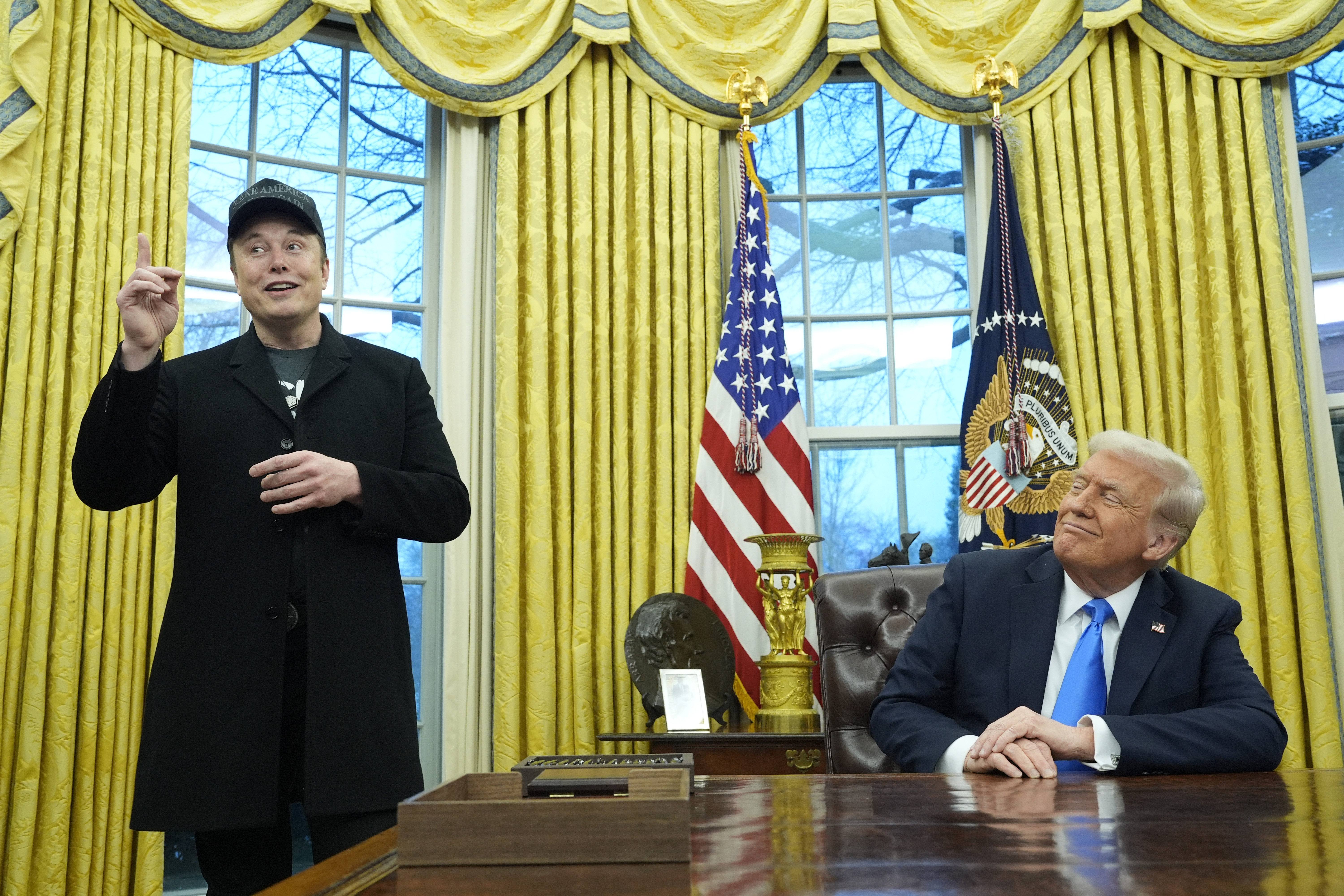
Musk himself is set to attend the speech, a White House official, granted anonymity to share details of speech planning, said. (Whether he will wear what has become his uniform as of late — a “Dark MAGA” hat and a black “tech support” t-shirt — is unclear.)
3. How does Trump talk about the administration’s progress on mass deportations?
Immigration is one of the president’s favorite topics. During his inaugural address, he promised his administration would begin the work of deporting “millions and millions” of immigrants with criminal records. But immigration has taken an unusually low-profile role in the early weeks of his administration as officials have seen lower-than-hoped-for numbers of deportations — and Trump himself has been reportedly unhappy with the administration’s progress.
The administration has yet to release official, comprehensive deportation numbers. But a recent Reuters report, referencing unpublished DHS data, found that the U.S. deported 37,660 people during Trump’s first month in office. That’s down from a monthly average of 57,000 during the last year of the Biden administration, though administration officials have disputed the latter set of numbers as “artificially high” because of higher levels of illegal immigration.
But expect immigration to once again be in the spotlight on Tuesday night, the outside Trump adviser said. A recent Harvard-Harris poll found that immigration remains one of Americans’ top issues only behind inflation, with 81 percent of respondents supporting the deportation of immigrants who are in the country illegally and have committed crimes, including 70 percent of Democrats.
Trump is likely to focus on a second set of immigration metrics his administration considers more positive: plummeting border crossings. Trump announced on Truth Social over the weekend that 8,326 people were apprehended at the border in February, the lowest number in at least 25 years — and a fraction of the 29,000 people who were apprehended in January and the 47,000 detained in December. (It’s worth noting border crossings had already dropped significantly under Biden’s efforts to clamp down on asylum.)
Fox News reported the president will use the speech to push Congress to pass more border security funding to support deportations and border wall construction.
4. About that mineral deal with Ukraine …
The televised blowup between Trump and Ukrainian President Volodymyr Zelenskyy in the Oval Office on Friday shocked much of the world and dashed hopes for a rare earth mineral deal that could have paved the way for a ceasefire. Trump, who in the run-up to the meeting had taken to social media to call Zelenskyy a “dictator,” accused the Ukrainian president of being ungrateful for U.S. support in the war and argued that he had “no cards” to play and was in “no position to make requests.”
Trump told reporters Monday afternoon that he would address whether that deal can be revived during the Tuesday night speech, saying that it would be “great” for the U.S. He’s also likely to address other hot-button foreign policy topics including the ongoing conflict in the Middle East and a new trade war with Canada and Mexico, after 25 percent tariffs on the countries took effect Tuesday.
Watch to see also how he talks about the leaders of U.S. adversaries, like China President Xi Jinping and Russian President Vladimir Putin, and those of its allies, like Canadian Prime Minister Justin Trudeau, U.K. Prime Minister Keir Starmer and French President Emmanuel Macron — and which ones he name-checks.
Other topics likely to come up: the Gulf of America, buying (or otherwise negotiating a deal with) Greenland for national security and critical mineral purposes, retaking the Panama Canal and — depending on how punchy the president is feeling toward the country’s neighbor to the north — making Canada the 51st state.
5. What’s his message to Congress?
Trump has made clear his desire to extend his 2017 tax cuts and boost border funding. But he’s largely left the details of how to do so up to Speaker Mike Johnson and Senate Majority Leader John Thune. He only dipped his toe into the reconciliation waters last week when the resolution Trump has referred to as “one big, beautiful bill” appeared to be heading for defeat in the House, making calls that persuaded some holdouts to switch their votes at the last minute.
He’s now expected to use the address to push for increased border funding, though it’s unclear whether he plans to also use the speech to press for his tax cuts and urge Congress to avoid a government shutdown later this month.
“I do think there’s an opportunity here for him to stand in front of the Republican majority and say, ‘Okay, you know, this doesn’t have to be hard. I don’t want to have to do this the hard way. I want to do this the easy way. So let’s do that,’” Jennings said. “It wouldn’t bother me if he told the Republicans in that room, ‘Look, my agenda is your agenda. That’s what people voted for. So I need you to join me here, and we’re going to do something amazing together.’”
6. What doesn’t Trump talk about?
Eight years ago, during his first address to Congress, Trump promised to repeal and replace Obamacare. It turned out to be an ill-fated effort that consumed much of the president’s first year in office before it died a sputtering death. Now, such a proposal isn’t even remotely on the table, though cuts to state Medicaid programs are.
Another topic not expected to come up: abortion. This was Trump’s Achilles’ heel on the campaign trail, and while appointing the Supreme Court justices key to overturning Roe v. Wade is one of the most notable accomplishments from the president’s first term in office, it is not something he wants to spend a lot of, if any, time talking about during his second. (He didn’t even talk about it during that first address in 2017.)
Also, the Bible. It seems unlikely that Trump will reference Scripture as he did during his first joint address, in which he paraphrased John 15:13: “There is no greater act of love than to lay down one’s life for one’s friends.” His second administration has overall taken a more secular turn from his first, trading faith for “common sense” in its new culture war.
7. How do the Democrats respond?
Democrats are looking to use Trump’s speech to highlight the impacts of his second-term policies.
Democratic lawmakers were all encouraged to bring guests who were affected either by DOGE or the House GOP’s budget. They’ve rolled out guests like union leaders, laid-off government workers, people who could be affected by cuts to Medicaid and people affected by the federal funding freeze. Internal party messaging guidance directed lawmakers to unite around a message that said “Trump and Republicans in Congress stand with Elon Musk and billionaire donors.”
It’s part of a less pugilistic stance towards Trump’s speech that will be just as much about his administration and Musk as it could be about the president.
Democrats aren’t expecting a mass boycott like in previous years, nor are major organized protests gaining traction. Some in the party said that they wanted to be present for the speech to show that Trump still faced opposition from inside the chamber.
Still, the Democratic Women’s Caucus is expected to wear pink in protest (in past years, they wore white to honor the suffragettes). And House Democratic Leader Hakeem Jeffries, in a “Dear Colleague” letter Monday evening, announced several pre- and post-speech events, including a gathering of House Democrats on the Capitol steps on Wednesday morning “for an event featuring the voices of the American people.”
Jake Traylor and Nicholas Wu contributed to this report.


SYRACUSE, New York — President Donald Trump came to New York on Friday to help a Republican win an uphill race for governor. But his visit was also a reminder of the complicated role he plays in his party’s fight to keep control of Congress.
Trump rallied alongside GOP gubernatorial nominee Bruce Blakeman, calling on New Yorkers to fire Gov. Kathy Hochul and, referring to the state attorney general, “her totally corrupt sidekick, Letitia ‘Peekaboo’ James.”
“Your city and state are dirty, filthy places, and everybody wants to leave,” he told some 5,000 attendees at a convention center in downtown Syracuse — which, he noted, was “a short distance from the beautiful shores of Lake America.”
“You gotta get your act together, and I tell you what, Bruce Blakeman will get your act together,” Trump said.
For Republicans, the president’s appearance underscored a political dilemma that extends beyond New York: Even as Trump increasingly appears to be a drag on their ticket, they need his loyal supporters to energize their base. While voters have soured on the president’s handling of the economy and costs, he remains a potent force in turning out MAGA voters — even in an otherwise Democratic-dominated state.
“The targeting of where the president goes is not a random exercise,” Marist University pollster Lee Miringoff said. “They’re looking to stir the base without stirring the opposition. They’re picking and choosing, that’s not uncommon. For him to come to New York to help the turnout upstate is a positive for the Republicans and his base.”
Blakeman, the Nassau County executive, hasn’t distanced himself from the president — nor have most of the top officials in New York’s GOP. Nearly every Republican running a competitive congressional race in this half of the state came to Friday’s rally, eager to make their presence known.
“I’m always happy to be with the president,” said Anthony Constantino, who’s running in a nearby red district that’s inched into toss-up territory. “He’s the leader of the free world, and I’m excited to have a great relation with him.”
Some GOP operatives, however, have quietly grumbled that their candidates need to start creating some distance from the president. Republicans from other parts of the state like Rep. Mike Lawler decided that campaigning in their districts was more valuable than trekking to be seen with Trump — as did several down-ballot candidates in Central New York. Democrats, notably, have been just as eager to highlight the visit.
“This is supposed to be a swing district. And the feedback I get is that the president is very unpopular,” said Democratic Rep. John Mannion, who represents Syracuse and the surrounding Central New York area. “He still certainly will have his core base of supporters, but I do think he’s lost support here compared to what he had around the 2024 election.”
Blakeman, for his part, isn’t worried about Trump’s drop in popularity.
“Kathy Hochul should be worried about her drop in popularity,” he said before taking the stage in Syracuse. “She’s the most unpopular governor in the history of the state of New York.”
Trump’s visit came against the backdrop of a darkening political environment for New York Republicans.
Immigration and Customs Enforcement shot a man in Manhattan on Thursday afternoon, stirring fresh condemnation of Trump’s aggressive deportation policies. New York City Mayor Zohran Mamdani, a democratic socialist who has a surprisingly warm relationship with the president, called on him to cease all ICE activity in the five boroughs. Hochul stressed that the shooting took place with a five-year-old child present and demanded that federal authorities “provide answers.”
Immigration is one of several areas where Blakeman has hewed close to the Trump wing of the party throughout his campaign.
“I’m outraged with Kathy Hochul for taking sides with somebody who was a convicted felon, someone who was an alleged drug dealer, a gang member,” he said Friday about the shooting in Manhattan.
While Trump’s speech repeatedly careened back to the rhetoric one could expect from any of his rallies — boasts about the stock market, complaints about ‘Dumocrats’ — he did manage to seamlessly blend almost all of Blakeman’s oft-used talking points into his stump speech.
“Since Hochul took office, she’s raised your utility rates 48 times, and energy prices in New York have skyrocketed 100 percent,” Trump said. “If Bruce Blakeman gets in, he will cut your electric bills by 70, 80, 90 percent.”
The climate outside of deep blue New York City is also turning increasingly hostile to the GOP. Constantino, who’s running to succeed Rep. Elise Stefanik in upstate New York, trails his Democratic foe Blake Gendebien by 4 points, a Siena Research Institute survey released Friday morning found. A Blue Light News poll showed that nationally one in four Trump voters believe Republican candidates should break from the president in order to win in November.
The wisdom of appearing with Trump has been debated by Republicans throughout the country at a time when gas prices are high and a foreign war drags on. And New York Democrats aren’t viewing the presidential visit as a concern.
Much of Hochul’s messaging this year has focused on making sure New Yorkers know Blakeman and Trump are friends. Her most-aired TV commercial features a puppeteer saying one Republican would do the other’s bidding.
“Puppets are my life. You tell them what to say, they say it,” the narrator says. “But that’s not what you want in a governor.”
Earlier in the day during an MSNOW interview, Hochul dismissed the rally.
“It’s obviously a very political event,” she said. “It seems like a last-ditch effort to breathe some life into a campaign that’s on life support.”
Despite his low approval ratings with voters, Trump’s visit stands to light up a Republican base that Blakeman will need to turn out next month to help him defeat Hochul.
Polling has shown the governor leading the GOP nominee by as much as 18 points in this deep blue state. Yet some Trump supporters maintain the president can help generate much-needed enthusiasm for Blakeman, especially in areas of upstate New York where the Long Island native is not well known.
“We actually have the ability to win these elections, but I just don’t see the enthusiasm out there,” Conservative Party Chair Gerard Kassar said. “Hochul has won the day as far as being a terrible governor, but now we’ve got to get our people out to vote.”
Winning is still a tall order for Blakeman — especially in a tough national political environment where polls show GOP candidates in red states like Texas, Ohio and Kansas struggling against Democratic challengers.
Republicans have not won statewide in New York since George Pataki secured a third term in 2002. Since then, the GOP has lost all levers of statewide power, and Trump’s tariffs as well as his decision to launch a war in Iran have not helped him fulfill his campaign pledge of addressing voters’ cost concerns.
The president’s political woes aren’t going unnoticed.
Privately, Republican operatives grumbled that the president’s visit put swing seat candidates in an uncomfortable spot.
“There’s a lot of commiserating between folks within the party structure — why is this happening? Why is he doing this?” said one Republican operative who was granted anonymity to freely discuss the dynamic. “Then you’ve got the blind loyalists who say, ‘Yay Trump’s coming’ — people who are too politically dumb to understand the ramifications of it.”
Yet the head of the Republican party kept his message very much in line with Hochul’s.
“Please pretend I’m on the ballot,” Trump told Central New Yorkers.
Sen. Chris Murphy wants Democrats to go big for Angie Nixon in Florida’s Senate race — and he’s pushing to raise some “serious money” to help.
“I do believe that we’d make a big mistake if we slept on Florida,” the Connecticut Democrat told Blue Light News on Friday. “I know it feels like a longer shot, but I just think this year is looking exceptional.”
Murphy plans to hit the trail with Nixon as part of a campaign swing for Senate candidates over the next three weeks that will take him through North Carolina and Florida, as well as events with Abdul El-Sayed in Michigan, Peggy Flanagan in Minnesota and Chris Pappas in New Hampshire. Murphy will serve as a surrogate for El-Sayed in the spin room at his next debate, and said he’s “just a big believer” in the Michigan Senate nominee.
Murphy’s bullishness about a blue wave comes as Senate Democrats are pushing the boundaries of a midterm battle map that is shifting further into red territory. The Chuck Schumer-aligned Senate Majority PAC has dropped roughly $5 million apiece into Texas and Kansas over recent days, and the minority leader has included Kansas and Mississippi in his pitches to donors.
“If I were in charge, I would definitely put some resources in Florida,” Murphy said. “When you have an exciting candidate like this, it’s a good long-term investment” in growing Democrats’ activist base.
Still, Murphy stressed he’s “not making any formal recommendations” on where Schumer or top Democratic campaign groups should move their money.
“They’ve got so many mouths to feed,” Murphy said. “That’s why I’m going to try to step up and do some work on my own.”
Murphy, who is considered a potential 2028 presidential contender, has spread roughly $2.5 million across candidates, campaign arms and other organizations this cycle. That includes transferring more than $500,000 to Democrats’ three top campaign arms and 25 state parties.
Prominent Democrats have been ramping up their attention on Florida. Sen. Bernie Sanders (I-Vt.) has funneled $250,000 toward Nixon’s campaign, along with other resources. Sen. Ruben Gallego (D-Ariz.) also told Blue Light News he hopes to campaign with Nixon.
But Democrats across suddenly competitive red states are clamoring for more cash and Florida is an expensive state, complicating the chances of a significant investment from national groups.
Nixon also faces an uphill battle against GOP Sen. Ashley Moody in the Sunshine State. A progressive state lawmaker, Nixon aligned herself with the Democratic Socialists of America over the summer in a state where many voters, especially those with ties to Cuba, reject such an ideology. Also, Republicans in Florida have a 1.5 million voter registration advantage over Democrats.
Senate Democrats’ top super PAC is pushing into Kansas.
The Chuck Schumer-aligned Senate Majority PAC is launching a $5 million statewide television ad blitz starting Saturday through Election Day — the latest sign that Democrats believe the Senate map is shifting onto red turf.
SMP had signaled in recent days it could get involved in the race, telling Blue Light News late last month it was “actively thinking” about whether to wade into the state where Democrats haven’t won a Senate seat in nearly a century but where Adam Hamilton narrowly leads GOP Sen. Roger Marshall in recent polls. Internal SMP polling that found an increasingly competitive race factored into the group’s decision to spend. It will also run digital ads.
“The gap is closing in Kansas,” SMP spokesperson Lauren French said in a statement. “We are committed to ensuring families understand Marshall’s real record of making health care and basic goods more expensive for working Kansans.”
Republicans are scrambling to shore up Marshall. Senate Leadership Fund, a top GOP super PAC aligned with Republican leadership, has booked over $10 million in ads through Election Day in the state, per ad tracking firm AdImpact.
SMP’s first ad attacks Marshall for joining Senate Republicans in voting to table a Democratic-led amendment last year to release the Jeffrey Epstein files. The Senate later approved legislation to release the files by unanimous consent. It’s the latest in a slate of ads from Democrats hitting their Republican rivals over the late, disgraced financier and convicted sex offender. Marshall’s campaign did not immediately respond to a request for comment.
Senate Democrats’ plunge into the state comes as the midterm battle map is undergoing a major realignment. Georgia and North Carolina — primed to be two of the cycle’s premiere battlegrounds — are tilting left to the point where national Republicans are retracting spending in both states and Democrats are starting to follow suit, freeing funds on both sides to shift elsewhere.
Republicans are racing to reinforce incumbents across what was once safer red turf. SLF has also pledged $5 million to bolster Sen. Darline Graham in South Carolina.
Democrats, meanwhile, are starting to spend more in red states. SMP has dropped over $2 million on digital ads in Texas. Schumer, the Senate minority leader, has included Kansas and Mississippi in his pitches to donors.
-

 Politics2 years ago
Former ‘Squad’ members launching ‘Bowman and Bush’ YouTube show
-
Uncategorized2 years ago
Bob Good to step down as Freedom Caucus chair this week
-

 The Josh Fourrier Show2 years ago
DOOMSDAY: Trump won, now what?
-

 The Dictatorship2 years ago
Pete Hegseth’s tenure at the Pentagon goes from bad to worse
-

 Politics2 years ago
Former Kentucky AG Daniel Cameron launches Senate bid
-

 The Dictatorship2 years ago
Luigi Mangione acknowledges public support in first official statement since arrest
-

 Politics2 years ago
Blue Light News’s Editorial Director Ryan Hutchins speaks at Blue Light News’s 2025 Governors Summit
-

 The Dictatorship1 year ago
Mike Johnson sums up the GOP’s arrogant position on military occupation with two words