
Congress
‘We’re running out of time’: GOP already antsy on Trump’s Hill agenda

Welcome to the Washington trifecta, Republicans. Now get ready to wait.
Even as the GOP takes unified control of the House, Senate and White House on Monday, congressional leaders are facing doubts about just how quickly they will be able to deliver major wins for Donald Trump. Their legislative plans are highly unsettled, and the clock is ticking toward distracting fights over federal spending and the debt limit.
And when it comes to the heart of Trump’s agenda — a sprawling party-line effort encompassing border, energy and tax policy — key strategic questions remain in flux. Once they agree on the general direction of travel, leaders will then have to navigate a thicket of nasty intraparty disputes on the policies themselves.
Under the most ambitious timeline put forth by Speaker Mike Johnson, it will be Memorial Day before that bill lands on Trump’s desk. Deeply skeptical Senate Republicans are readying their own conflicting plans in case the House falters.
“Everybody is feeling the pressure now of time,” said Rep. Ralph Norman of South Carolina, a member of the hard-right Freedom Caucus who has been pushing for quicker action. “In a short period, we’ve got to make something happen.”
Some smaller wins are at hand: Thanks to some Democratic cooperation in the Senate, Republicans expect to send a relatively small-bore immigration bill to Trump this week.
Named after a Georgia nursing student murdered last year, the Laken Riley Act would require broader incarcerations of undocumented immigrants accused of crimes. But it’s only a sliver of what Trump has in mind for immigration policy.
To fill out the House floor schedule in the first weeks, Johnson is eyeing bills on abortion and public safety that will likely get filibustered in the Senate. He’s also planning to put a bipartisan forestry and wildfire prevention bill up for a vote this week, with Congress unlikely to pass any aid for the wildfires tearing through California until at least March.
The Senate will churn through confirmations of Trump’s Cabinet and other nominees. And both chambers are hoping to use Congressional Review Act powers to claw back key Biden administration rules, something GOP leaders hope will help calm antsy conservatives.
But there is a massive distraction also looming: A March 14 government funding deadline that could result in a government shutdown if Trump and Republicans can’t come to a deal with congressional Democrats who still hold leverage due to the Senate filibuster.
Johnson has been moving carefully on the spending discussions and the party-line agenda talks, mindful of staying on the same page as Trump — who upended the last spending deal the speaker cut with Democrats in December. This time Johnson wants Trump’s sign off on key details related to both initiatives, according to two people granted anonymity to discuss the closed-door conversations. But it’s unclear if that will ever come.
Meanwhile, the committee chairs who will actually have to write the bills are left tapping their feet. “We’re running out of time,” said House Appropriations Chair Tom Cole (R-Okla.), who is waiting on top-line discretionary spending targets.
Settling some of these outstanding questions is likely to be on the agenda for a high-level meeting between Trump and congressional leaders Tuesday. Impatience is already emerging as a theme in interbranch relations: In a series of meetings last week on Capitol Hill, Trump policy chief Stephen Miller relayed the president-elect’s desire for “immediacy” in pushing through his legislative agenda.
The pressure is just as intense inside the House, where Norman and his fellow Freedom Caucus members continue to push a two-track approach to the party-line agenda in defiance of Johnson.
They want a smaller, border-focused package first that includes a debt limit hike and spending cuts. That’s essentially the opposite of what Johnson is now steering the conference toward — one massive bill with tax reform included but leaving a debt limit hike for bipartisan government funding talks.
Listed as a “key benefit” in the Freedom Caucus plan: “Speed to deliver huge early wins on key priorities for President Trump.”
Johnson, who shares fears with some House committee chairs that breaking up the bills could make them harder to pass given his narrow majority, tried to temper the unrest by laying out an aggressive timeline for pushing through the sprawling megabill in a closed-door conference meeting last week.
The timeline was a good start, one GOP lawmaker said leaving the meeting. “But at the end of the day, we need to know the plan,” the member said.
The speaker has also launched a listening tour. He is with scores of members about the plans, with a focus on hearing out their thoughts on making trillions of dollars in highly controversial spending cuts. GOP Whip Tom Emmer has corralled small working groups to hash out members’ diverging demands.
Meanwhile, leaders in both chambers are counting on Trump to settle things down with a flurry of Day One executive orders, many of which are expected to deal with immigration and reversing Biden-era climate and pandemic policies. Those actions, they hope will dampen the hard-liners’ push for immediate and sweeping legislative action on the border.
“I expect the president’s going to develop hand cramps signing executive orders,” Sen. John Kennedy (R-La.) said. “And that will demonstrate meaningful progress.”
But many senators still want to push their own two-track plan — notably Budget Chair Lindsey Graham (R-S.C.), who is preparing a border-first budget blueprint to jam the House with, should Johnson fail to deliver on a tight timeline.
Sen. Ted Budd (R-N.C.), who attended a meeting with Miller and House Republicans last week, said Trump’s early immigration executive orders would be “a good start” but “not permanent” and Republicans want to “codify” those executive actions in law — quickly.


President Donald Trump said early Saturday he would push to get the $1.8 billion “anti-weaponization fund” codified into law if the Senate does not confirm his attorney general pick, Todd Blanche.
The fund has emerged as a key issue stalling Blanche’s confirmation, with Sens. John Cornyn (R-Texas) and Thom Tillis (R-N.C.), who are both departing the Senate after the midterms, withholding their support in the Senate Judiciary Committee unless the White House commits to shelving the proposal in writing.
Now, Trump says the fund is back on the table, and maybe he’ll even keep Blanche on in an acting capacity if he can’t get his way in Congress next week.
“If Senators Cornyn and Tillis, both upset because I wouldn’t Endorse them (they lost, and quit, respectively!), aren’t going to approve Todd Blanche, one of the most respected professionals, according to everybody, in the Country, to be the United States Attorney General, then I will keep Todd as Acting A.G., and push hard to get the Anti-Weaponization Bill, which takes care of those who have been so badly treated by the Crooked Joe Biden (and Obuma!) Administration (I get nothing, although I was treated horribly!), PASSED,” he wrote.
“Todd Blanche was a voice of reason!” Trump wrote. “It will immediately be back on the table, and I will get it done.”
The missive comes a day after Trump reluctantly declared the fund “dead” in a Cabinet meeting at Camp David, making Saturday’s post a notable reversal in tactics as he moves from a negotiating posture to digging his heels in.
The fund stems from a settlement negotiated earlier this year that envisioned roughly $1.8 billion being doled out in payments to people who claimed they were unfairly targeted by the federal government during the Biden administration, which could include everyone from people who broke into the Capitol on Jan. 6, 2021, and assaulted police officers to Hunter Biden.
The Justice Department has since indicated it does not intend to move forward with the payments, with Blanche testifying before a congressional committee in June, “We’re not moving forward with the fund, period.”
But Tillis on Saturday wrote that the president’s latest social media barb was proof that he “clearly intends to resurrect the payout pot for punks either by inappropriately establishing another bogus fund or pushing Congress to vote for a bill that the majority of Republicans in the Senate would be against.”
“It’s unfortunate that Todd Blanche, who I consider qualified for the job, will not be confirmed because of this reversal,” the two-term North Carolina senator wrote.
But he teased that a deal may not yet be out of reach: “Hopefully, we can resolve this by Tuesday.”

Public scrutiny of domestic abuse allegations against Rep. Max Miller is quickly mounting. His Republican colleagues have been slow to respond.
New reporting on government documents claiming that Miller poured hot water on his ex-wife, Emily Moreno, held a gun to her head and broke their young daughter’s collarbone has brought a wave of new attention to the Ohio lawmaker’s long-running public marital dispute. This week, Moreno’s lawyer filed for a restraining order against Miller, accusing him of harassing his ex-wife’s counsel.
The surge of attention presents a dilemma for Republicans: speak out against their colleague who is running in a competitive race or face accusations of hypocrisy after hammering multiple similarly scandal-plagued Democrats — including Graham Platner, who recently ended his Maine Senate campaign, and Eric Swalwell, who resigned his House seat in April.
Miller, like Platner and Swalwell, denies any wrongdoing. And so far, those fellow Republicans have been largely silent. A host of prominent GOP leaders nationally and in Ohio either declined to comment or did not respond to inquiries from Blue Light News.
Keeping quiet and hoping for the best could be a risky strategy. Nonpartisan handicappers at the Cook Political Report have already upped Democrats’ chances to take the Cleveland-area seat, and House Democratic campaign brass is bullish about Miller’s opponent, ironworker Brian Poindexter, who has for months raised the abuse claims against the incumbent.
“These are serious allegations and deserve the full attention of law enforcement,” Poindexter said in a statement this week. “If all the allegations against Congressman Miller prove to be true, Max Miller should be in jail, not worried about retaining a seat in Congress.”

Even before the latest allegations were published by Mother Jones, which have not been independently confirmed by Blue Light News, Miller sued his ex-wife and her legal team for defamation. He argued that they made “false, malicious, and defamatory statements wrongly accusing [him] of being a violent and abusive husband and father.”
Miller’s campaign spokesperson said in a statement “this narrative has gone on long enough.”
“The facts speak for themselves: the court has continued to permit him joint custody of his child. If there were credible evidence supporting these outrageous accusations, that simply would not be the case,” the spokesperson, Abigail Angelos, said. “Congressman Miller will continue to vigorously defend his reputation against false and reckless allegations designed to inflame public opinion rather than reflect reality.”
A spokesperson for Moreno, Stefan Mychajliw, referred to the recent restraining order filing said in a statement: “There is a demonstrable pattern of repeated violent and dangerous behavior and the filing speaks for itself.”
Republicans are approaching a potential make-or-break moment next week: Aug. 5 is the last day to replace Miller on the ballot, and at least some in the party are quietly raising alarms with the House majority potentially teetering on just a few competitive seats.
One GOP operative granted anonymity to speak candidly accused some fellow Republicans of “burying their heads in the sand” and called the situation “Graham Platner on steroids.”
“What happens when Democrats run ad after ad targeting GOP voters about Miller abusing the daughter of a pro-Trump MAGA senator?” the person said. “What does that do to GOP turnout? How does that affect our candidates at the top of the ticket who are already in tough races?”
Moreno is the daughter of Republican Sen. Bernie Moreno, who has said little about the unfolding legal battle.
“Senator Moreno’s top priority is the safety and well-being of his daughter and granddaughter. While he does not litigate these matters in the media or respond to baseless public attacks, he will do whatever it takes to ensure a just outcome for his family,” Reagan McCarthy, a spokesperson for the senator, said.
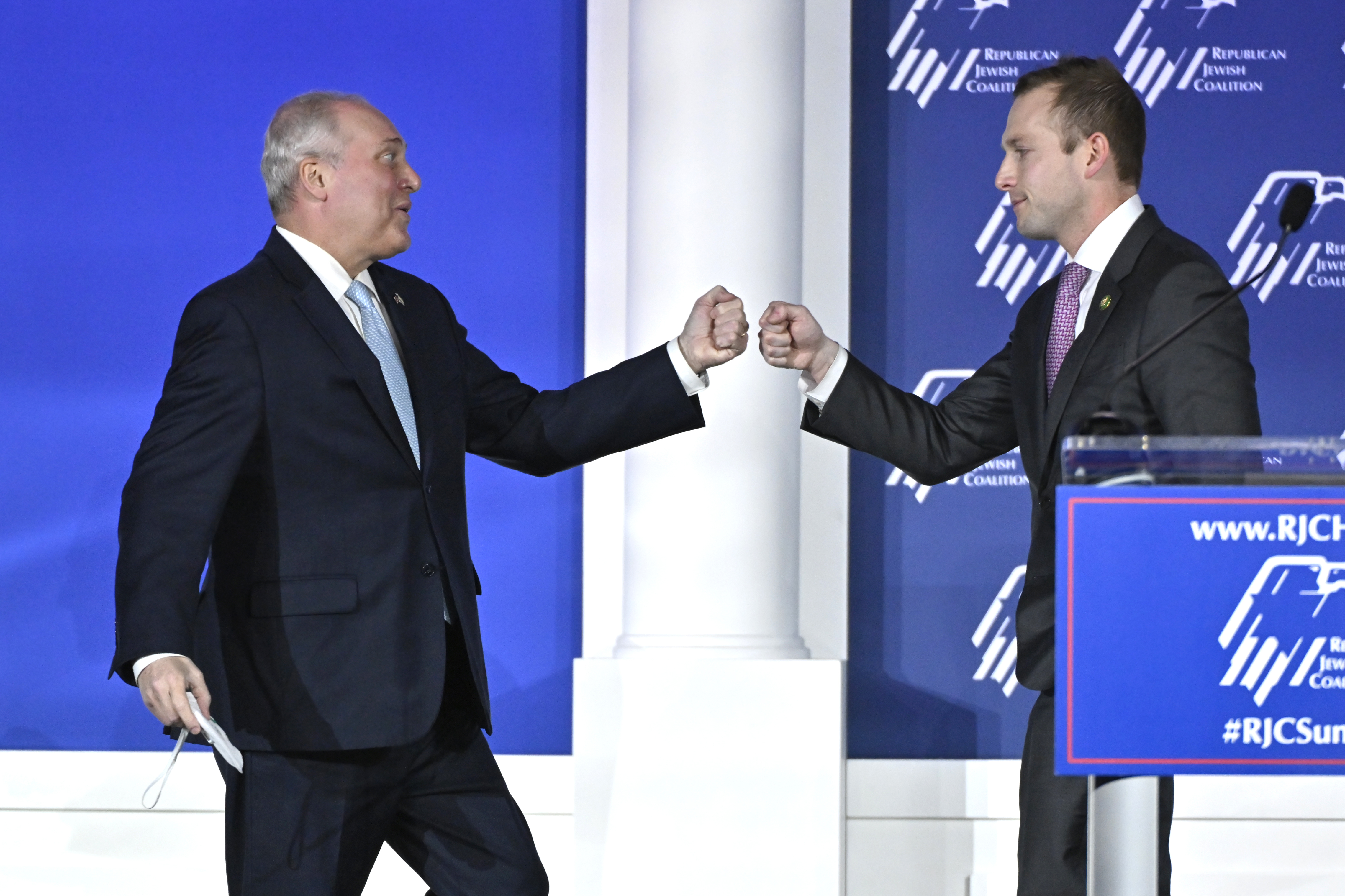
Other prominent Ohio Republicans also did not respond to requests for comment made through spokespeople, including Sen. Jon Husted, governor nominee Vivek Ramaswamy and Vice President JD Vance.
Before Miller’s election to Congress in 2022, he worked for President Donald Trump doing advance work. He is a mainstay of the MAGA universe, with deep personal ties to many of his House GOP colleagues — despite his outspoken criticism of Speaker Mike Johnson. Miller also previously faced accusations from former White House press secretary Stephanie Grisham, which he has denied through an attorney.
The drumbeat of allegations about Miller has put some of his House colleagues in an awkward position. Rep. Anna Paulina Luna (R-Fla.) said she knows both Miller and Moreno “personally,” noting that she had a joint baby shower with Moreno hosted by former Speaker Kevin McCarthy.
“What I hate about this entire situation is that these articles the press are putting out have been very nasty especially with accusations and it is only hurting one person… their daughter. I do not know Max to be a violent person and have only ever found him to be incredibly kind and honorable,” Luna said in a text message.
She added, “I will also not disparage Emily. She comes from a wonderful family and Senator Moreno is one of the best in the Senate. I think this divorce has been incredibly painful for both parties involved and would ask the press to consider those facts.”
One Republican lawmaker, outgoing Rep. Nancy Mace of South Carolina, called the allegations against Miller “horrific.”
“They must be investigated, and if true, he should resign immediately,” she said in a statement.
Several Democrats, including the leadership of the Democratic Women’s Caucus, have also said that the House Ethics Committee must open an investigation into Miller.
“The recent reports of domestic violence and child abuse against Representative Max Miller are deeply disturbing and Congress can’t ignore them,” the leaders of the caucus, Reps. Teresa Leger Fernández of New Mexico, Emilia Sykes of Ohio and Hillary Scholten of Michigan, said in a joint statement. “Allegations of violence against women and children have to be met with the utmost seriousness.”
Johnson has also deferred to the Ethics Committee, which has not announced any action regarding Miller. The independent Office of Congressional Conduct also declined to comment on the allegations and whether they would be investigating it.
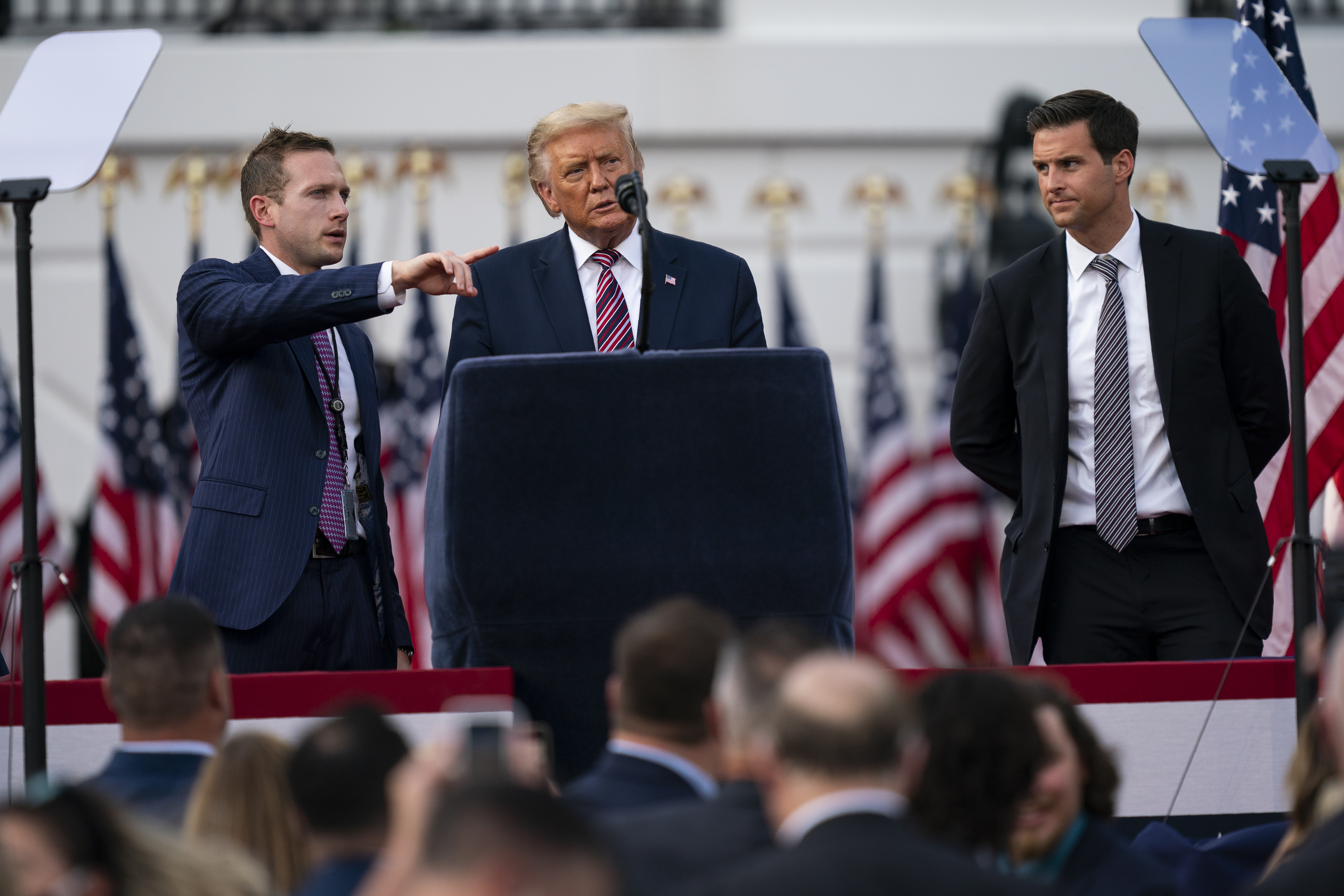
The speaker was asked last week why Republicans allow Miller and Rep. Cory Mills of Florida, who has also faced domestic abuse allegations, in their conference— especially after Democrats dumped Platner following a sexual assault accusation first reported by Blue Light News. Mills, like Miller, has denied wrongdoing.
Johnson responded that “the key word there is allegation.”
“We have a process here,” Johnson told reporters at a news conference. “I’m not in the business of commenting on investigations as they’re in process, and we’ll see how that shakes out.”
But waiting for the results of a potentially years-long Ethics investigation might not cut it for Republicans who are under 100 days out from the midterms. The abuse allegations have handed Democrats an emotional campaign talking point, and created difficult questions for Miller’s fellow Republicans.
Rep. Jim Jordan, perhaps the most prominent Ohio Republican in Congress, brushed off questions about Miller during a Thursday CNN interview, calling it a “family matter.”
“I know Max is a good man. I was up campaigning for him, I hope he wins reelection,” Jordan said in the interview. “He’s done a good job as a member of Congress, and we should all pray for his family. These are all difficult times that they’re going through, we understand that. These kinds of situations always are.”
The GOP operative said Republicans “can expect a lot more awkward moments like Jim Jordan on BLN so long as Miller is serving in Congress.”
House Majority PAC, a well-financed super PAC aligned with Minority Leader Hakeem Jeffries, isn’t shying from the situation. Already the PAC has spent over $1 million in the Cleveland media market, and spokesperson CJ Warnke said HMP is “willing to do whatever it takes to take back the House, and nothing is off the table.”
“Democrats are expanding the map deeper into Trump territory by the day, and Brian Poindexter will defeat the scandal plagued Max Miller,” he said.
Meredith Lee Hill contributed to this report.
Senate Judiciary Chair Chuck Grassley rescheduled a planned vote on Todd Blanche’s nomination as attorney general late Friday in a preemptive move as negotiations between the Trump administration and GOP holdouts continue.
The vote, now set for Tuesday after a scheduled Thursday vote was postponed, isn’t an indication that a deal allowing for Blanche’s confirmation is near, so much as it is a nod to Judiciary Committee rules that require three days of notice for a panel meeting.
There is no sign that President Donald Trump is about to acquiesce to the unflinching demands of Sen. John Cornyn (R-Texas), who wants a controversial settlement agreement between Trump and the IRS substantially pared back.
Cornyn, who lost his primary to a Trump-endorsed candidate, wants the Justice Department to nullify a $1.8 billion “Anti-Weaponization Fund” and limit the scope of a tax audit immunity component of the pact.
Trump told reporters earlier Friday the fund is “dead” but added “I wish it weren’t.”
“I’d like to see them compensated,” he added, referring to people he considers victims of government abuse, including participants in the Jan. 6, 2021, Capitol attack.
To advance Tuesday, Blanche needs to pick up Cornyn and Sen. Thom Tillis (R-N.C.), another senator on the panel with similar concerns. He can’t lose any GOP votes if he wants to be reported favorably out of the Judiciary Committee.
“Chairman Grassley wants Todd Blanche’s nomination to be successful,” said a Judiciary Committee spokesperson, who declined to be named. “Noticing the markup gives more time for the White House to secure the votes for the President’s nominee. Grassley would like to see Blanche confirmed before the August recess as he has an excellent record restoring law and order and keeping Americans safe.”
- Congress ended surprise medical bills — doctors and insurers hate it
- Trump puts his ‘anti-weaponization fund’ back on the table
- ‘Platner on steroids’: Max Miller abuse claims have Republicans silently sweating

- It might take ‘a lightning bolt from God’ to get these Senate Democratic hopefuls to bow for independents
- Blanche vote is rescheduled, but there’s no deal
- Reflecting pool damage was the result of botched work, not vandals, DOJ says
- Pentagon ends leadership of Ukraine aid group as US distances from Europe
- New disclosures reveal $9M in corporate donations to Trump’s Freedom 250
- Oil industry warns refining limits could keep energy prices high
- Scalise will kick off August campaign sprint in marquee Nebraska House race
-

 The Josh Fourrier Show2 years ago
DOOMSDAY: Trump won, now what?
-

 Politics1 year ago
Former ‘Squad’ members launching ‘Bowman and Bush’ YouTube show
-

 The Dictatorship1 year ago
Luigi Mangione acknowledges public support in first official statement since arrest
-
Uncategorized2 years ago
Bob Good to step down as Freedom Caucus chair this week
-

 Politics1 year ago
Former Kentucky AG Daniel Cameron launches Senate bid
-

 The Dictatorship1 year ago
Pete Hegseth’s tenure at the Pentagon goes from bad to worse
-

 Politics1 year ago
Blue Light News’s Editorial Director Ryan Hutchins speaks at Blue Light News’s 2025 Governors Summit
-

 The Dictatorship11 months ago
Mike Johnson sums up the GOP’s arrogant position on military occupation with two words