
The Dictatorship
Elon Musk unleashes shutdown chaos as he flexes his power

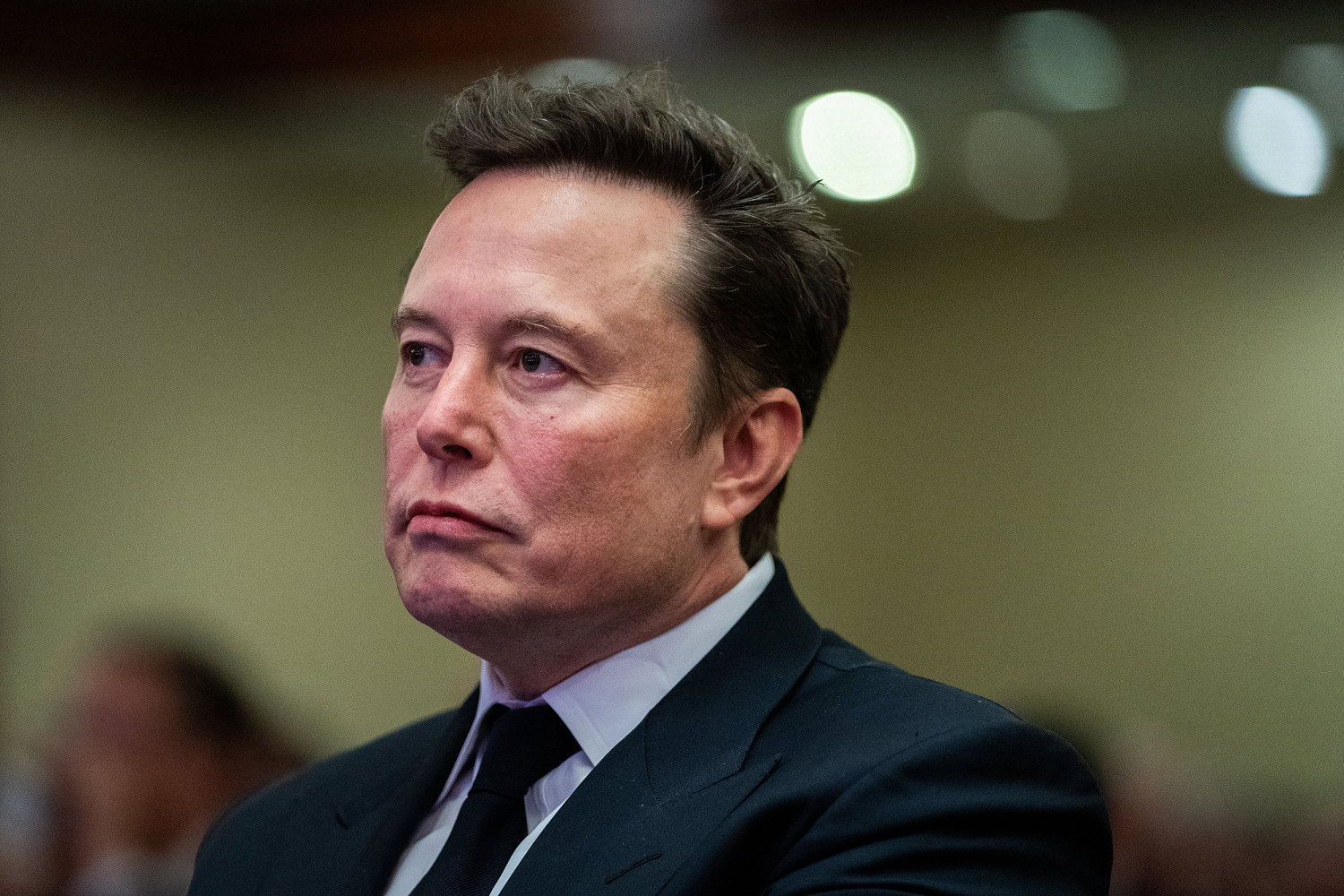
The power of Musk
Despite what Donald Trump and JD Vance may say, the chaos on Capitol Hill this week can be traced back to one man: Elon Musk.
House Speaker Mike Johnson had negotiated a deal with Democrats that was by all accounts a typically larded-up 1,500-page behemoth of a funding bill.
But despite the bill’s imperfections, there was an agreement that seemed to have wrapped up all the loose ends for the year. Members of Congress and their staffs were packing their bags and getting their last-minute Christmas shopping done in Washington.
Then Musk stepped in.
With over 100 posts on his own platform X — including the 1:32 p.m. declaration“THIS CRIMINAL BILL MUST NOT PASS” and another threatening“Any member of the House or Senate who votes for this outrageous spending bill deserves to be voted out in 2 years!” — Musk managed to blow up months of negotiation, leaving Johnson scrambling.
Given that he doesn’t seem to know that only 19 Republican senators are up for re-election in 2026, I am a bit skeptical that Musk knows exactly how a bill becomes a law. This summary from Johnson made it sound a lot like he had to explain how the process of getting approval for spending typically works. And there is a real question whether Musk would follow through with his threat to fund primary opponents against anyone who opposes Trump’s agenda.
But what this week made clear is that Musk has more power than the speaker of the House, who is second in line to the presidency. And maybe even the vice president-elect. I mean, where is Vance these days anyway?
Further confirmation of Johnson’s weakness came when Trump was asked about his confidence in him, Trump responded: “We’ll see. What they had yesterday was unacceptable … It’s a Democrat trap.” If this week made one thing clear, Musk’s X account is going to make for a heck of a ride in Washington come January.
A story you should be following: Democrats pass over AOC for oversight role
This week, House Democrats voted 131-84 to name Rep. Gerry Connolly74, ranking member of the House Oversight Committee over Rep. Alexandria Ocasio-Cortez. While Connolly, an eight-term Democrat, brings a wealth of experience to the role, this vote feels like a major missed opportunity to place a highly influential communicator as ranking member of one of the few House committees that garner national attention.
According to The New York TimesConnolly benefited from strong behind-the-scenes support from Speaker Emerita Nancy Pelosi. The result wasn’t particularly close, even as Democrats embraced generational change in other key leadership roles this week.
The good news is that Ocasio-Cortez will undoubtedly remain at the forefront of the Democratic Party’s messaging. But Democrats will need to fire on all cylinders if they hope to garner national attention for important Oversight Committee debates following Rep. Jamie Raskin’s departure from the role.
Another story you should be following: Trailing Supreme Court candidate asks same court to throw out 60,000 ballots
Atop the growing list of shockingly anti-democratic moves from North Carolina Republicans, this week, Republican state Supreme Court candidate Jefferson Griffin asked North Carolina’s Supreme Court to throw out 60,000 ballots from last month’s election.
Griffin, who trails Democratic Justice Allison Riggs by just 734 votes, claims these ballots are invalid because some voters lacked a driver’s license or Social Security number on file, and others living abroad did not include photo ID with their ballots.
All three of these challenges were rejected last week by North Carolina’s Democrat-controlled state elections board. However, with North Carolina’s Supreme Court holding a 5-2 Republican majority, Griffin is banking on a more favorable ruling.
This isn’t the GOP’s first attempt to undermine voters in North Carolina. In October, Republicans tried — and failed — to remove 225,000 voters from the rolls just weeks before Election Day. That effort was dismissed by a federal judgebut the state Supreme Court could still take a different approach.
Some good news: Biden appoints 233 federal judges
As his term nears its end, President Joe Biden is cementing a historic judicial legacy, appointing a total of 233 judges as of this week, including more judges of color than any president before him. On Monday, Tiffany Johnson became the 40th Black woman confirmed to a lifetime federal judgeship under Biden — more than any president in a single term. Overall, 60% of his appointees are people of color, part of his goal of reshaping the judiciary to better reflect America.
Biden’s appointments include Justice Ketanji Brown Jacksonthe first Black woman on the Supreme Court, and record numbers of former public defenders and civil rights lawyers. With Senate Democrats racing to confirm more nominees before Republicans gain Senate control, these nominees will no doubt shape the judiciary for decades to come.

Jen Psaki is the host of “Inside with Jen Psaki”airing Sundays at 12 p.m. ET and Mondays at 8 p.m. EST. She is the former White House press secretary for President Joe Biden.


PARIS (AP) — From the outset, China wasn’t included when major powers gathered in 1975 at a chateau outside Paris to fix the slumping global economy, the first of what have become annual summits by the G7 club of wealthy nations to forward their interests.
No surprise there. Imagining Chinese revolutionary leader Mao Zedong brainstorming with U.S. President Gerald Ford and other leaders would have been unthinkable.
China was in turmoil, nowhere close to becoming the economic giant it is now. Mao had also helped defeat France and U.S. forces in Vietnam, by militarily supporting Ho Chi Minh’s communists that took power. So Mao would have been the odd man out had he been at the inaugural Rambouillet summit of six nations, growing into the G7 when Canada joined the following year.
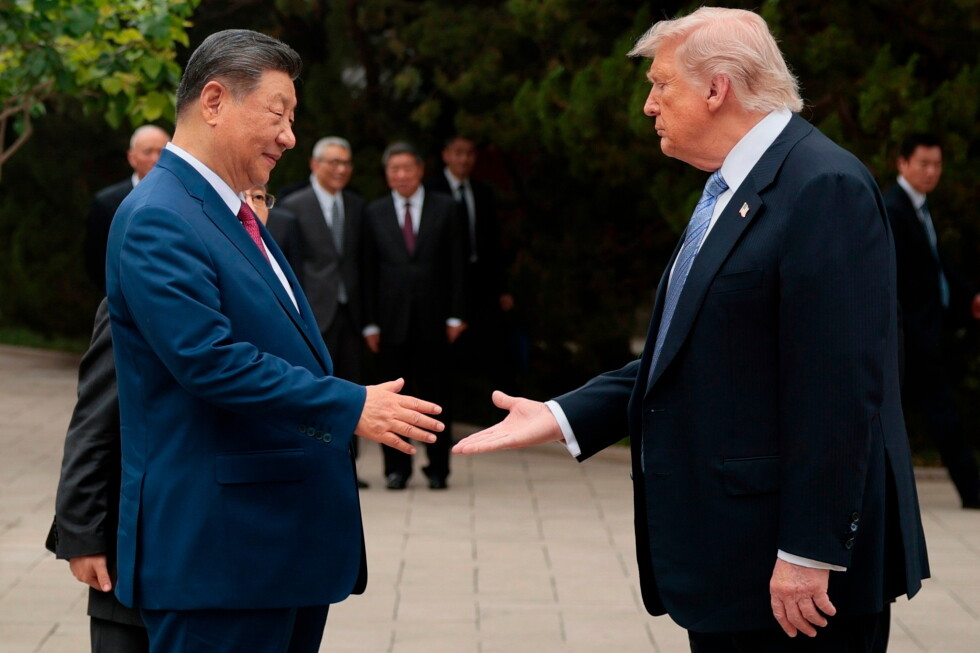
But as U.S. President Donald Trump and his G7 counterparts gather again in France from Monday, China’s exclusion from the informal club’s summits also looks odd, given its now immense sway over the world’s economic well-being and affairs.
Put simply: Without China, does the G7 make sense?
Here’s a closer look:
By the numbers, China would be a shoo-in
If determined only by economic success, China would already be in the club.
Its economy, swollen by decades of growth since Mao’s death in 1976, now dwarfs those of G7 nations Germany, Japan, the United Kingdom, France, Italy and Canada — leaving only the United States to catch. By this measure, a G7 summit without China is arguably like a soccer World Cup without 5-time winner Brazil.
From being “only a tiny, benign, panda bear” in 1975, ”China has become a great global dragon,” says John Kirton, a University of Toronto specialist on the G7.
“So many understandably ask: Would the G7 and the global community be better off if China became a member of the G7 club? A plausible answer is ‘Yes.’”
But it’s only for democracies
A year ago, Trump mused about possibly expanding the club to include China, saying “ it’s not a bad idea ” when a journalist asked him.
But an unwritten G7 rule has always been that it’s only for democracies.
“We are each responsible for the government of an open, democratic society, dedicated to individual liberty and social advancement,” the founding leaders declared in Rambouillet in 1975.
China wouldn’t have cleared that bar then, during Mao’s rule that claimed many millions of lives through famine and revolutionary upheaval.
Nor, under President Xi Jinpingwould China do so now. By multiple measures, including the annual Freedom in the World study the World Press Freedom Index or the Canadian Fraser Institute’s ranking of economic freedom, China lags far behind G7 nations for civil liberties.
Sign up for Morning Wire: Our flagship newsletter breaks down the biggest headlines of the day.
China a priority subject for the G7
China’s clout impacts all G7 countries, in myriad ways. It sells far more goods than it buys, announcing a record trade surplus of almost $1.2 trillion in 2025, which is a source of friction with other industrial powers. It controls supplies of crucial rare minerals. Its technological advances and growing military strength are giving rivals cold sweats. And it is the world’s biggest emitter of climate-warming pollution.
All this means that China will be an elephant in the room at the Monday-to-Wednesday summit in the Alpine spa town of Evian-les-Bains.
As host, French President Emmanuel Macron has carved out time for the leaders to talk about how to rebalance trade with China, amid fears that soaring Chinese exports of cars and other products could wreck G7 industries.
The chemistry between Trump and other G7 leaders has been bad of late — over the Iran war and other bones of contention — but China could be an issue that unites them, said Cédric Dupont, who specializes in international politics at the Geneva Graduate Institute.
“They agree on the same thing, you know: China is a problem,” he said.
Beijing looking on warily
China’s Communist Party-led government has in the past criticized the G7’s exclusiveness and painted it as a relic of the Cold War when the world was more divided along ideological lines.
But in a statement to The Associated Press ahead of the Evian gathering, the Chinese Foreign Ministry took a more nuanced view, saying “the G7 should serve as a catalyst for solidarity and cooperation rather than an amplifier of division and confrontation.”
Beijing-based analyst Wang Zichen says that “Beijing is wary of the G7 because it sees the group as structurally aligned with U.S.-led Western power, and increasingly as a venue where China is discussed as a challenge or threat.”
But Chinese leaders cannot ignore it.
“China recognizes that the G7 still represents a very significant concentration of economic, technological, military and financial power,” said Wang.
China seen as a threat to G7 cohesion
Analysts say that admitting China into the club could wreck its cohesion, not only because Beijing’s authoritarian system of government, interests and its positions on Russia, Iran and other major issues don’t align with those of G7 democracies but also because its presence could test their long-standing alliances.
“China inside would indeed be a Trojan horse,” said Kirton. With a Chinese leader at the table, “individual members might be tempted to break G7 ranks to secure special favors from him on the economic, critical minerals, digital technology and other issues they address.”
Chris Alden, an international relations expert at the London School of Economics and Political Science, said that adding China “would make it very difficult for it to function.”
Russia’s example is also a barrier to China
The G7’s last expansion — accepting Russia as a member in 1998 — didn’t end well.
The club froze out Russian President Vladimir Putin when he seized Crimea from Ukraine in 2014, foreshadowing the full-scale war now raging since 2022.
Trump said last year that excluding Russia “was a very big mistake.”
But Kirton said the experience convinced other leaders “that they should never take a chance on a less than fully democratic power becoming a full member of their fully democratic club again.”
___
Associated Press writers Ken Moritsugu and E. Eduardo Castillo in Beijing and Jamey Keaten in Geneva contributed.
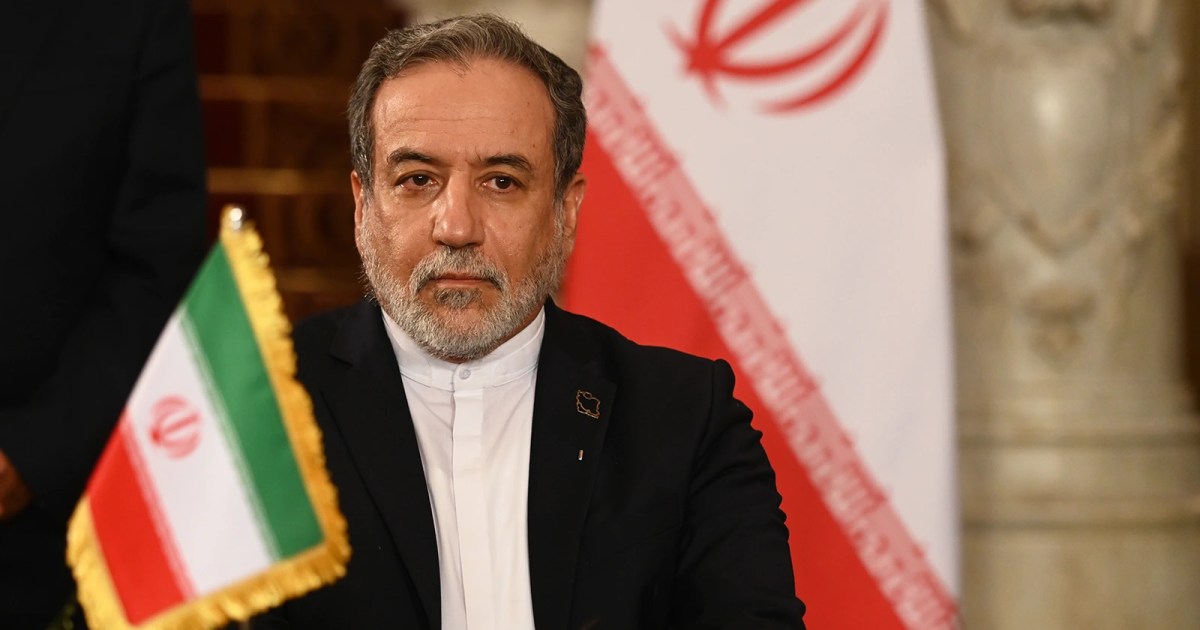
Iran and the United States reached a deal Sunday aimed at ending the Middle East war, according to President Donald Trump and Tehran’s deputy foreign minister, marking a major breakthrough after months of conflict and on-again, off-again negotiations.
The statements from Trump and Tehran raised hopes for an end to fighting that has left more than 7,500 dead, most of them in Lebanon and Iran, and rocked the global oil market.
“The Deal with the Islamic Republic of Iran is now complete. Congratulations to all! I hereby fully authorize the toll free opening of the Strait of Hormuz, and, simultaneously herewith, authorize the immediate removal of the United States Naval blockade,” Trump announced on Truth Social. “Ships of the World, start your engines. Let the oil flow!”
Oil prices fell in the hours following the announcement, with U.S. crude oil tumbling nearly 5%. Stock futures rose and Asian-Pacific stock markets traded higher Monday morning as investors appeared hopeful for a long-term peace deal.
Iranian Deputy Foreign Minister Kazem Gharibabadi confirmed on Iranian state media that a deal had been reached and would be signed Friday in Switzerland. He said Iran’s agreement came after 14 hours of talks with mediators from Qatar.
Pakistani Prime Minister Shehbaz Sharif, whose country has also worked as a mediator, announced on social media that “both sides have declared the immediate and permanent termination of military operations on all fronts, including in Lebanon,” where Israel has been battling the Iran-backed Hezbollah militant group.
“With the agreement now in place, mediators will facilitate a series of meetings this week,” Sharif said. “These pre-implementation discussions will lay the foundation for the technical talks and the official signing ceremony.”
The announcement comes after weeks of intensive negotiations mediated by regional partners after both sides had signaled in recent days that an agreement was close.
The memorandum is not a final peace treaty. Instead, it outlines commitments by both sides as negotiators work toward a broader agreement, establishing a framework for a 60-day negotiating period. That window is meant for U.S. and Iranian officials to resolve outstanding disputes and negotiate a more comprehensive agreement.
A senior administration official told reporters on a background call Friday that the framework includes commitments related to reopening the Strait of Hormuz and lifting the U.S. blockade on Iranian ports.
The proposed agreement, the senior administration official said, also calls for the dismantling of Iran’s nuclear program, with highly enriched nuclear material to be destroyed on-site by the U.S. and a guarantee of “long-term peace in the region.”
A senior Iranian officialhowever, told Reuters that the U.S. had agreed to allow Iran to dilute its stockpile of highly enriched uranium on Iranian soil under a final deal.
“I am somewhat concerned that Iran’s view of the agreement seems different than what the American negotiating team is claiming,” Sen. Lindsey Graham, R-S.C., said as news of the deal emerged Sunday.
The senior Trump administration official said the agreement would include Israel and Iran’s terror proxies — a notable element given that renewed attacks between Israel and Hezbollah in Lebanon on Sunday threatened to derail the deal entirely.
The war began Feb. 28 with joint U.S. and Israeli airstrikes that killed hundreds, including Iran’s longtime supreme leader, Ayatollah Ali Khamenei. Trump and others in his administration repeatedly promised it would be over in weeks and that deals to pause the fighting were imminent, only to walk back those statements.
Early in the fighting, dozens of children died when an airstrike destroyed a school. Despite reports from within the U.S. intelligence community that American forces were likely responsible, and that faulty intelligence may have played a part, the Pentagon has yet to acknowledge that, saying only that it was under investigation.
As combat wore on, Iran repeatedly fired missiles and drones at U.S. allies in the region and attacked ships trying to transit the Straight of Hormuz. Israel bombarded Beirut and other areas and sent ground troops into southern Lebanon in pursuit of Hezbollah leadership.
As gas prices in the U.S. soared, Trump’s approval ratings plummeted, piling tension on his relationship with congressional Republicans, especially those up for re-election.
Expectations for a deal had risen in recent days as officials from the U.S. and Pakistan, which has been acting as a mediator, indicated that progress was being made behind the scenes.
Though the deal is set to be signed next Friday, Trump said over the weekend that he expected a deal would be signed Sunday, which he first declared on social media a day earlier. He also shared a post from Sharif — who has played a key mediating role — announcing that an agreement was expected to be finalized “in the next 24 hours.”
Iranian officials poured cold water on the expected deal up until the last minute. Citing state media, Reuters reported Saturday that Iran’s Foreign Ministry spokesperson Esmaeil Baqaei denied that the memorandum of understanding would be signed Sunday, which also happened to be Trump’s 80th birthday.
“We will have to wait and see about the exact date of the signing of the memorandum of understanding, although it will not be tomorrow,” Baqaei said, according to Reuters.
This is a developing story. Please check back for updates.
Ebony Davis is a breaking news reporter for MS NOW based in Washington, D.C. She previously worked at BLN as a campaign reporter covering elections and politics.
Julia Jester covers politics for MS NOW and is based in Washington, D.C.
The Dictatorship
Cage fighting, anyone? Welcome to Trump’s 80th birthday party on the White House lawn.
President Donald Trump is celebrating his milestone 80th birthday on Sunday with a spectacle of men cage fighting on the White House South Lawn.
“UFC Freedom 250,” a series of invite-only mixed martial art fighting competitions that are part of the Trump administration’s year-long ‘America250’ celebrations, brought lots of fanfare, and plenty of controversy.
The president is marking his new status as an octogenarian alongside administration officials, donors and family, despite criticism of the event’s venue, along with its potential to financially benefit those involved.
Trump and his friend Dana White, Ultimate Fighting Championship CEO, have repeatedly claimed that the spectacle was only coincidentally timed with the president’s birthday. “It happens to be my birthday, but I didn’t do it for that reason,” Trump said. “‘Sir, we like the June 14 date.’ I said, ‘Yeah, that’s my birthday,’” he recounted. “They didn’t know it, but they picked it.”
But Vice President JD Vance wished his boss a happy birthdaysaying, “Looking forward to celebrating later today at the UFC fight!”
“Happy Birthday to the GOAT,” Vance wrote in an X post.

Several members of the Trump family were spotted in Washington for the president’s birthday weekend, including his daughter Ivanka Trump, son-in-law Jared Kushner, and granddaughter Kai Trump. First lady Melania Trump was also set to join the wrestling festivities on the South Lawn, according to a White House official. The president was slated to have dinner with his family before the birthday brawl, the White House said.
Notably, Kushner — a businessman with investments in the Middle East who is not currently employed by the administration — is playing an active role in negotiations to end the war with Iran, which Trump telegraphed he hoped would reach a new breakthrough on Sunday with the possible signing of a new negotiating framework.
The podcast and social media stars who were instrumental to Trump’s 2024 election victory, including Joe Rogan, came to Washington for the spectacle. Rogan, a longtime UFC commentator, previously criticized the decision to hold the fight outdoors because of potentially dangerous weather conditions — a prescient warning with rain, wind and thunderstorms in the forecast.
On Sunday afternoon, the White House said “rain or shine, we’re celebrating our great country no matter what” after The Weather Channel posted an ominous forecast on social media.
John Shahidi, a major content creator manager and Trump ally, was also expected to be in attendance, along with two NELK Boy members, the popular YouTube podcasters who backed then-candidate Trump in 2024, Kyle John Forgeard and Salim Sirur. John Fisher, a golf creator known as “Big John,” were in the mix, too, according to a person familiar with the matter, who requested anonymity to speak freely.

The presence of viral influencers is a reminder of the political capital the president’s team needs to restore ahead of the crucial 2026 midterms, given that the president’s approval ratings have sharply dropped in recent months. UFC’s most loyal fanbase — young men —are a critical voting bloc for the GOP, who have grown frustrated with the economy under Trump.
Rogan has repeatedly taken aim at Trump’s policies, including disagreement with Trump’s mass deportation campaign, tariffs and the war with Iran. Nonetheless, the host of the most-listened-to-podcast has remained in Trump’s orbitMS NOW previously reported, demonstrating the president’s acknowledgement of Rogan’s reach to his base.
Unlike typical 12-to-15 fight Ultimate Fighting Championship events, UFC Freedom 250 consists of only seven fights. Rather than taking place in a traditional indoor sports arena or stadium in Las Vegas, Nevada, the White House fight night was orchestrated underneath a 90-foot red, white and blue steel arch structure estimated to cost around $60 million. White has repeatedly insisted that the UFC — not taxpayers — are funding production costs.
MS NOW captured video on a jumbotron screen of “The Claw,” as it’s known, erected on the South Lawn. It was a compilation of imagery from the nation’s founding, civil rights protests, first responders at the scene of the 9/11 attacks, the first moon landing, boxing legend Muhammad Ali and UFC fighters in the ring — a nod to the United States’ 250th anniversary.
The imagery of the civil rights era, however, stands in stark contrast to efforts by the Trump administration to remove references to slavery or racial discrimination in museums and on federal websites. “Our fighting spirit is a living legacy of all who step forward when the moment demands,” a narrator says. “We’re a nation born of revolution, so fight is in our DNA.”
The Claw and its towering canopy and location drew fierce criticism from those who said it desecrates the historic building that represents the government’s executive branch. Critics also bemoaned the use of federal property, given Trump — whose financial disclosures showed he invested in UFC’s parent company in March — along with his allies, including Paramount CEO David Ellison, who is airing the fight, could profit from the extravaganza.
A federal judge on Friday denied an emergency request by a watchdog group to block the fights.
Lindsey Pipia contributed to this report.
Erum Salam is a breaking news reporter for MS NOW, with a focus on how global events and foreign policy shape U.S. politics. She previously was a breaking news reporter for The Guardian.
Akayla Gardner is a White House correspondent for MS NOW.
- Capitol Agenda: The new faces of the Freedom Caucus
- Why Trump and other G7 leaders meeting without China might be a mistake
- The Freedom Caucus is losing its stalwarts. Here’s who to watch next.
- Trump’s North Korea-Iran nuclear paradox could reveal a path to resolution
- 12 dead in Missouri plane crash, authorities say

- Graham ‘concerned’ that Iran views deal with U.S. differently than Trump administration
- Democrats hold 5-point edge over GOP ahead of midterms: Poll
- Pence cast doubt on possibility of US, Iran peace deal before Trump announcement
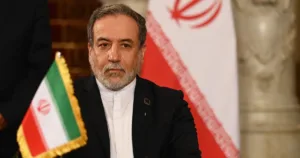
- U.S. and Iran say they have finally reached a deal, but details are still emerging
- Cage fighting, anyone? Welcome to Trump’s 80th birthday party on the White House lawn.
-

 Politics1 year ago
Former ‘Squad’ members launching ‘Bowman and Bush’ YouTube show
-

 The Dictatorship1 year ago
Luigi Mangione acknowledges public support in first official statement since arrest
-

 Politics1 year ago
Former Kentucky AG Daniel Cameron launches Senate bid
-
Uncategorized2 years ago
Bob Good to step down as Freedom Caucus chair this week
-

 The Dictatorship1 year ago
Pete Hegseth’s tenure at the Pentagon goes from bad to worse
-

 The Josh Fourrier Show2 years ago
DOOMSDAY: Trump won, now what?
-

 Politics1 year ago
Blue Light News’s Editorial Director Ryan Hutchins speaks at Blue Light News’s 2025 Governors Summit
-

 The Dictatorship9 months ago
Mike Johnson sums up the GOP’s arrogant position on military occupation with two words