
Politics
Trump’s bringing several billionaires — and their conflicts — to Washington

Donald Trump has reshaped the Republican Party to embrace a brand of populism that prioritizes its working-class base and is at least outwardly skeptical of corporate power.
But since his second election last month, Trump has leaned heavily on aides and Cabinet picks who share a distinctive characteristic with him: wealth from complex business entanglements.
Trump has appointed a raft of rich business people and investors — including several billionaires and multiple Wall Street executives with complex financial interests — to fill out top roles in his administration, raising a vast array of potential conflicts of interest that could span the federal government and complicate Senate confirmations.
The billionaires set to join the second Trump administration include Howard Lutnick, a Wall Street CEO who Trump tapped to be Commerce secretary; Warren Stephens, the CEO of an Arkansas financial services firm who he picked to be ambassador to the United Kingdom; presumptive NASA administrator nominee Jared Isaacman; and deputy Defense secretary Steve Feinberg.
“It opens up the door for there being a lot more possible conflicts of interest because their personal wealth is so vast,” said Delaney Marsco, director of ethics at the Campaign Legal Center.
The potential for conflicts cover a wide variety of industries from health and defense to the financial and cryptocurrency sectors.
The selections exemplify how Trump’s brand of economic populism has still carved out room for the ultra-wealthy. Despite running as a critic of corporate power and economic elites, several of the people Trump has chosen and considered for top roles come from backgrounds in business and finance.
With so many nominees presenting such conflicts of interest — and the general indifference from both Trump and his supporters — the ho-hum response to a new administration populated with so many ultra-wealthy picks is yet another example of how Trump has shattered the Overton window on ethics.
Morgan Ackley, a spokeswoman for the transition team, defended Trump’s appointments and said delivering on the campaign’s promises means “appointing respected professionals and industry leaders to usher America into a new Golden Age. These highly qualified men and women have the talent, experience, and necessary skill sets to Make America Great Again.”
To be sure, the president-elect is expected to pursue policies from trade to labor to antitrust that align with the populist vision he ran on. Some selections — like presumptive Labor secretary nominee Lori Chavez-DeRemer, who is seen as an ally to unions — represent shifts from the pre-Trump GOP orthodoxy.
The wealthy picks and their potential conflicts have become an early focus for the left, including Democratic lawmakers who are fighting the nominees.
One target: Trump’s pick to run Medicare and Medicaid, heart surgeon and TV personality Dr. Mehmet Oz. Democrats argued in a letter Tuesday to Oz that he has many conflicts of interest, including “deep financial ties to private health insurers” — documented in the disclosures he filed in his failed 2022 Pennsylvania Senate bid — and “previous advocacy for Medicare privatization.” The lawmakers asked him to provide assurances that he will “commit to fully divesting of any and all financial holdings related to the insurance industry if you are confirmed.”
Trump’s economic picks are also expected to face scrutiny. Sen. Elizabeth Warren (D-Mass.), who is poised to become the top Democrat on the Senate Banking Committee, has criticized Treasury pick Scott Bessent, a hedge fund executive, as having “expertise [in] helping rich investors make more money, not cutting costs for families squeezed by corporate profiteering.”
Lutnick, the Commerce pick who also co-chairs the Trump transition team, has said he will step down from his companies and divest his interests upon Senate confirmation. He has close ties through his firm Cantor Fitzgerald to a controversial foreign cryptocurrency firm called Tether. The connection could become a focus given Trump’s pledge to overhaul crypto regulations in his second term.
And then there’s Elon Musk, the world’s richest man with a net worth now estimated at more than $400 billion, who could have an opportunity to shape regulations, contracts and budgets in a way that benefits his own interests. Because his Department of Government Efficiency, or DOGE, will be set up outside of the federal government, the Tesla, SpaceX and Starlink CEO won’t be subject to conflict of interest laws. But by deploying his own wealth to serve as the president’s political enforcer, Musk may be able to maintain his proximity to the president for some time — and to push policies that could improve his own bottom line.
Still, while several of Trump’s picks are facing questions about whether they can be confirmed by a GOP Senate that includes several moderates who will be up for reelection in 2026, conflict of interest issues haven’t been a major focus.
Sen. Mike Rounds, a moderate Republican from South Dakota who is seen as a swing vote on some controversial nominees, said Trump’s wealthy picks “have been successful and they have a different way of looking at things outside of government.”
“The founding fathers wanted folks coming from the business communities to be a part of this process, and that’s healthy,” he said. “You want individuals that get it from the inside, that understand it, and can see what’s going on in the industry. So no, I don’t have a concern in that regard.”
Like this content? Consider signing up for Blue Light News’s West Wing Playbook newsletter.


The only convicted associate of Jeffrey Epstein is serving 20 years in prison…
Read More
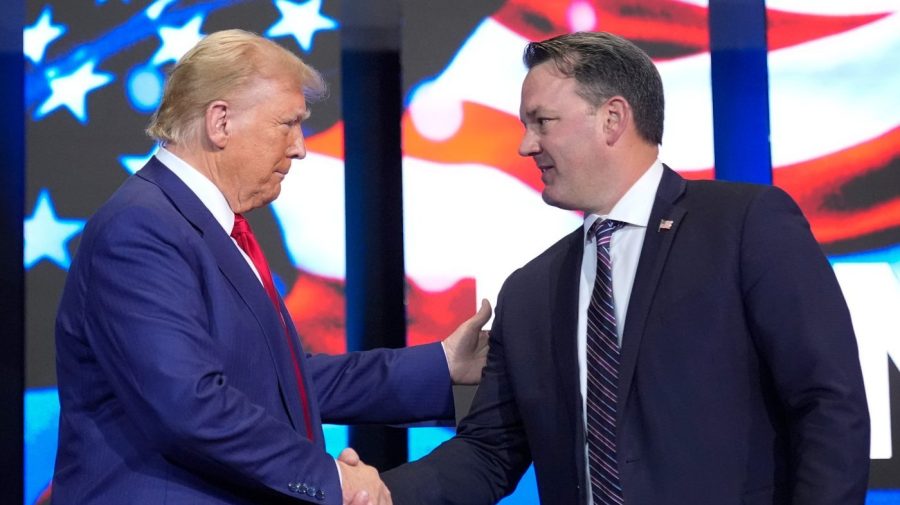
Georgia Republicans dealt a blow to President Trump on Tuesday, bucking his preferred pick, Lt. Gov. Burt Jones (R), for healthcare executive and billionaire Rick Jackson in the Peach State’s gubernatorial primary. Jackson defeated Jones by single digits in the Republican gubernatorial runoff — marking the second time one of Trump’s endorsees in a major statewide…
Read More
Politics
Ian McKellen says he yelled ‘Mar-a-Lago!’ while shooting ‘Avengers: Doomsday’ Magneto destruction scene
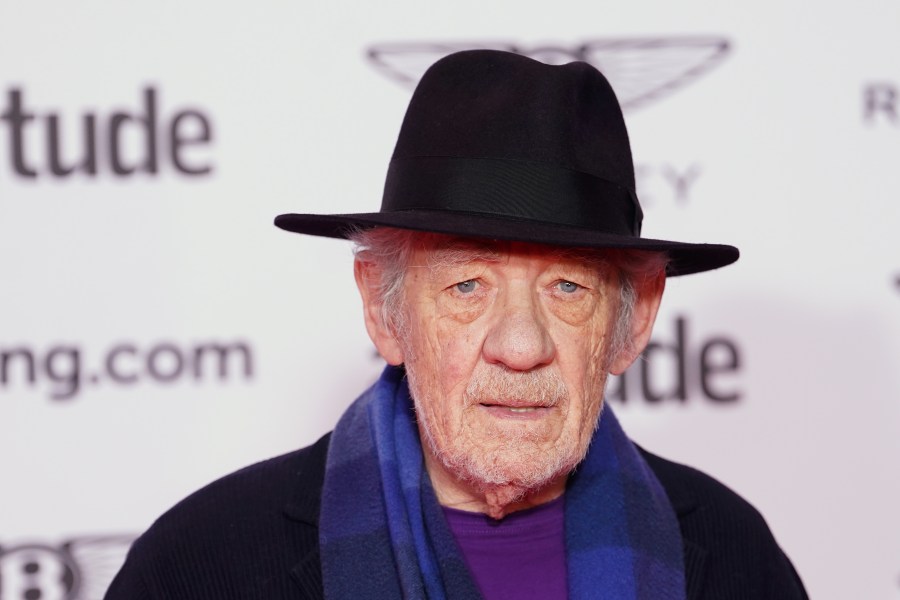
Sir Ian McKellen on Sunday said he would yell out “Mar-a-Lago,” referring to President Trump’s Palm Beach, Fla., resort, while portraying “X-Men” villain Magneto when shooting scenes of destruction for the upcoming Marvel film “Avengers: Doomsday.” The British actor spoke with The Guardian about his time shooting the film and described a scene where brothers Anthony…
Read More
- Congressional staff visit prison facility where Ghislaine Maxwell is held
- How a fired FEMA leader got a second chance from Trump
- The Democratic Socialists of America are leaving it all on the field in NYC
- Trump falls short in Georgia governor’s race: 5 takeaways from Tuesday’s primaries
- Ian McKellen says he yelled ‘Mar-a-Lago!’ while shooting ‘Avengers: Doomsday’ Magneto destruction scene
- White on track to succeed Holmes Norton as DC delegate
- Federal judge temporarily blocks Idaho’s transgender bathroom ban

- Pastors for Trump founder advances to runoff in Oklahoma primary for Hern’s seat

- Trump’s endorsement power just met its $100M limit
- Republicans are still really worried about beating Jon Ossoff
-

 Politics1 year ago
Former ‘Squad’ members launching ‘Bowman and Bush’ YouTube show
-

 The Dictatorship1 year ago
Luigi Mangione acknowledges public support in first official statement since arrest
-

 Politics1 year ago
Former Kentucky AG Daniel Cameron launches Senate bid
-
Uncategorized2 years ago
Bob Good to step down as Freedom Caucus chair this week
-

 The Dictatorship1 year ago
Pete Hegseth’s tenure at the Pentagon goes from bad to worse
-

 The Josh Fourrier Show2 years ago
DOOMSDAY: Trump won, now what?
-

 Politics1 year ago
Blue Light News’s Editorial Director Ryan Hutchins speaks at Blue Light News’s 2025 Governors Summit
-

 The Dictatorship9 months ago
Mike Johnson sums up the GOP’s arrogant position on military occupation with two words