
Congress
Capitol agenda: House Democrats’ next big battle

A battle of the competing factions of a potential House Democratic majority is already underway.
An expected wave of both progressives and moderates in the midterms has members of both contingents feeling strongly that any 2026 gains would be proof that their wing of the party should dictate the legislative agenda ahead of 2028.
In private phone calls, group chats and strategy sessions, the left flank is plotting out how to leverage its expanding ranks, while centrists are scheming about how to act as a counterbalance.
“There’s going to be some real tension, because we have to move,” progressive Rep. Delia Ramirez of Illinois said in an interview. “Preserving perfect relationships with colleagues who don’t feel the urgency the way that some of us feel it, because we live it every day, isn’t my top priority. Protecting people is.”
The Congressional Progressive Caucus gathered incumbent and incoming members to Washington last month to strategize about how to advance their policy wishlist and to outline what Ramirez described as “non-negotiables.”
Likely members of the new liberal cohort — whichsome are calling “The Bloc” — all campaigned on ending U.S. aid to Israel, abolishing Immigration and Customs Enforcement and passing “Medicare for All.”
Because fewer progressives are running in competitive races this year, the left has had more breathing room to begin organizing its new members. But the more centrist collectives on Capitol Hill — like the New Democrat Coalition, the Blue Dog Caucus and Problem Solvers Caucus — are hoping to quickly catch up and have already sketched out governing agendas that hew closely to the campaign messages coming from top party leaders.
“Just like with the progressives, there have been conversations among moderates about our policy priorities, with a clear proactive agenda,” said Rep. Josh Gottheimer of New Jersey, a veteran leader of the moderate wing. He said that he expects some of his colleagues on the left will push for “policy red lines that are too extreme and out of step with our democratic values.”
Members of the New Dems published a 65-page dossier in May pushing consensus bills that target lowering costs. And House Minority Leader Hakeem Jeffries, on track to be speaker in a new Democratic majority, has already previewed an early slate of bills that align closely with their vision — rolling back Republican-led Medicaid cuts, restoring expired Affordable Care Act subsidies and ending President Donald Trump’s tariffs.
Still, both moderates and progressives boast that they have Jeffries’ ear and have lobbied him in recent months to take up their priorities.
What else we’re watching:
— WARREN EYES LEADERSHIP MOVE: Sen. Elizabeth Warren doesn’t want to be Senate Democratic leader next year, but she is looking at taking on a bigger role after the midterms. A person familiar with the Massachusetts Democrat’s thinking, granted anonymity to speak candidly, says “Warren will take a close look at Senate leadership opportunities, including the No. 3 slot.” Sen. Amy Klobuchar currently holds that spot, but is expected to win next week’s race to be governor of Minnesota, creating a vacancy.
— A CONTESTED RACE FOR GOP CONFERENCE CHAIR?: Chatter is building around whether anyone will challenge House GOP Conference Chair Lisa McClain of Michigan for her leadership slot next year. And, according to three people granted anonymity to share private conversations, some Republicans are hoping McClain’s previous opponent, Rep. Kat Cammack, gets into the race. Four House Republicans granted anonymity to speak candidly said they doubt Cammack will actually mount a challenge, but the Florida Republican isn’t ruling it out.
— COMPANIES PREPARE FOR DEMOCRATIC OVERSIGHT: A broad range of tech, finance, crypto and industrial companies, panicking over the likely onslaught of partisan investigations if Democrats retake Congress, are hiring lobbyists and crisis communications experts to gird against the potential deluge of inquiries. They’re also seeking outside legal counsel to help avoid reputational damage as Democrats promise to scrutinize private-sector dealings with the Trump administration.
Riley Rogerson, Jordain Carney, Mia McCarthy, Daniel Barnes and Oliver Ward contributed to this report.


The top Democrats on the House Judiciary and Oversight Committees want President Donald Trump to preserve his conversations with artificial intelligence chatbots as part of an inquiry into whether Elon Musk’s AI assistant played a role in shaping White House policy — a preview of what’s to come if their party flips the chamber next week.
In a letter to Trump obtained by Blue Light News, Reps. Jamie Raskin of Maryland and Robert Garcia of California are demanding that the president preserve “any prompts” submitted to AI chatbots, including Musk’s Grok, OpenAI’s ChatGPT and Anthropic’s Claude while “carrying out your constitutional, statutory, or other official or ceremonial duties,” along with the AI responses.
Raskin and Garcia — who are expected to wield the Judiciary and Oversight gavels if Democrats win back the House, respectively — are also asking for a briefing on the matter by 5:00 p.m. on Nov. 11.
Their request was informed by reporting that said Trump sought Grok’s “advice on carrying out some of your presidential duties, including asking Grok to opine on how Venezuelans would respond to the capture of President Nicolás Maduro.” The lawmakers note that, just “weeks later,” Trump “ordered the U.S. military, without congressional authorization, to attack Venezuela and capture President Maduro.”
Garcia and Raskin called the example “deeply troubling” because Trump “consulted Grok — but not Congress — on your military deployment to Venezuela, circumventing Congress’s constitutional power to declare war and introducing instead into American foreign policy decision making a technology that is highly manipulable and demonstrably error-prone.”
They also said the use of AI chatbots by the White House “exposes the United States to acute national security risks” and that usage “exposes the country to malign influence from unknown and unaccountable third parties.”
A White House official said in a statement that “the White House preserves all required records in accordance with the law.”
Musk did not immediately respond to a request for comment.
Elizabeth Warren is looking at making a move within the Senate Democratic leadership team after the midterms.
Warren, who is currently in the No. 5 spot, isn’t interested in being top leader but could try to take on a bigger role on the caucus’ leadership team, according to a person with knowledge of her thinking who was granted anonymity to speak candidly.
“After the midterm elections, Warren will take a close look at Senate leadership opportunities, including the No. 3 slot,” the person said.
As Steering and Policy chair, Sen. Amy Klobuchar now holds the No. 3 spot in the caucus. But she’s expected to win the Minnesota governor’s race next week, which would leave the top tier of the Senate Democratic leadership team without a woman for the first time in a decade.
Former Sen. Debbie Stabenow previously held the third-ranked spot but retired. Sen. Patty Murray (D-Wash.) also previously held the position but left leadership.
A spokesperson for Warren declined to comment. Her potential move comes as Senate Democratic Leader Chuck Schumer is seeking reelection as leader and Sen. Brian Schatz (D-Hawaii) is expected to move unopposed into the No. 2 role of whip. Sen. Cory Booker (D-N.J.) is in the caucus’ No. 4 position.
It’s not clear if Booker, who is viewed as a potential 2028 White House contender, will try to move to a different spot next year. He currently chairs the Strategic Communications Committee, a position that gives him influence over caucus messaging strategy. A spokesperson declined to comment Wednesday.
Warren and Booker are friendly, and colleagues don’t expect them to run against each other in the upcoming shakeup. Democrats have generally avoided public leadership contests and instead work out titles and positions privately.
The title and responsibilities for the No. 3 position, as well as other posts, also could change as Democrats reshuffle things after the midterms. Leadership elections aren’t expected until early December.
A similar dynamic played out two years ago when both Booker and Klobuchar were eyeing the No. 3 gig, which at that point was overseeing Senate Democrats’ Policy and Communications Committee. As part of the deal, Klobuchar took the No. 3 spot as chair of a reconfigured Steering and Policy Committee, and Booker got the No. 4 spot with a portfolio tailored to his interest in messaging.
Warren joined the leadership team in 2014 and has steadily climbed through the ranks to become a leading progressive voice in the Senate. She’s not planning a repeat run for president in 2028 and is instead focusing, in part, on helping drive the party’s economic policy. She’s also likely to chair the Senate Banking Committee if Democrats flip the majority next week.
Warren was also part of a group of senators who split with Schumer and the Senate Democratic campaign arm over their primary strategy during the current election cycle. But she’s also helped raise money for the party organs, including more than $1 million for the DNC online, according to a person with knowledge of DNC fundraising who was granted anonymity to disclose private figures.
She’s also raised more than $1 million for the DSCC and has been campaigning with candidates across the country. She’s visited several states in recent weeks including Michigan, Maine and New Hampshire, which all have battleground Senate and key House races.
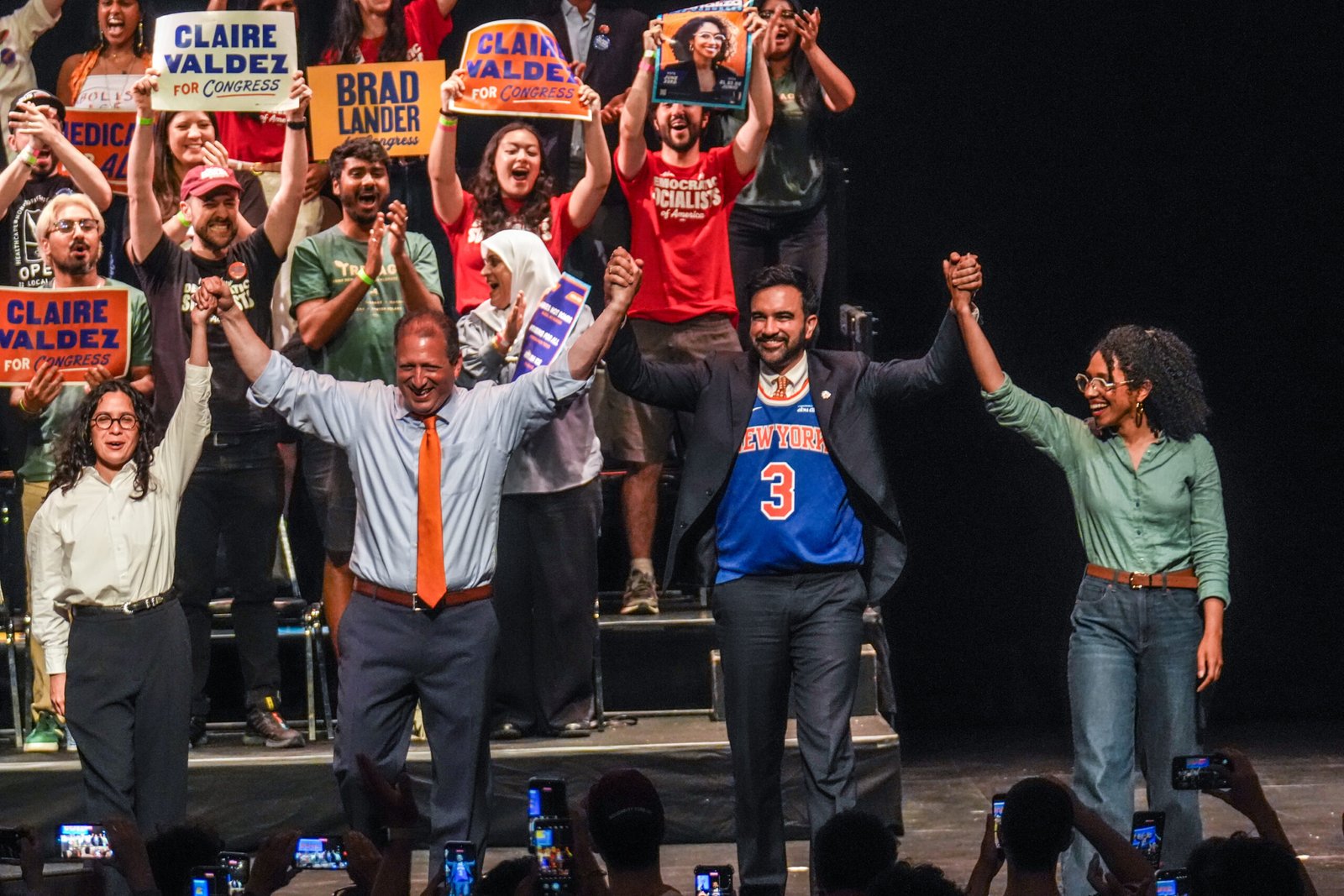
The battle for the future of a House Democratic majority is already underway.
In phone calls, group chats and strategy sessions, competing wings of the party are jockeying for position, seeking to build unity, influence and governing agendas in advance of what they hope will be an Election Day romp.
The Congressional Progressive Caucus gathered incumbent and incoming members to Washington last month to prepare an agenda and discuss how they will use their leverage to advance it. Moderate Democrats are also scheming in behind-the-scenes conversations about how they can act as a counterbalance to the left with their own affirmative vision for the majority.
The early plotting sets up an inevitable clash between the factions — both of which are already arguing any midterm gains would be proof that their wing of the party should be standard-bearers ahead of the 2028 presidential election.
“There’s going to be some real tension, because we have to move,” progressive Rep. Delia Ramirez of Illinois said in an interview. “Preserving perfect relationships with colleagues who don’t feel the urgency the way that some of us feel it because we live it every day isn’t my top priority. Protecting people is.”
Both sides are courting potential incoming members with offers of mentorship and campaign resources as they attempt to shore up their ranks.
Ramirez is mentoring an incoming batch of ultraprogressives, including Darializa Avlia Chevalier and Claire Valdez of New York and Melat Kiros of Colorado, whom she recently hosted in Chicago to talk about shared priorities. All campaigned on ending U.S. aid to Israel, abolishing Immigration and Customs Enforcement and passing “Medicare for All” universal health coverage, in addition to promoting economic populist policies like a minimum wage increase.
These presumptive members, many of whom identify as democratic socialists, have garnered outsize attention — some are calling them “The Bloc” — but the organizing effort has extended to a larger group of incoming progressives.
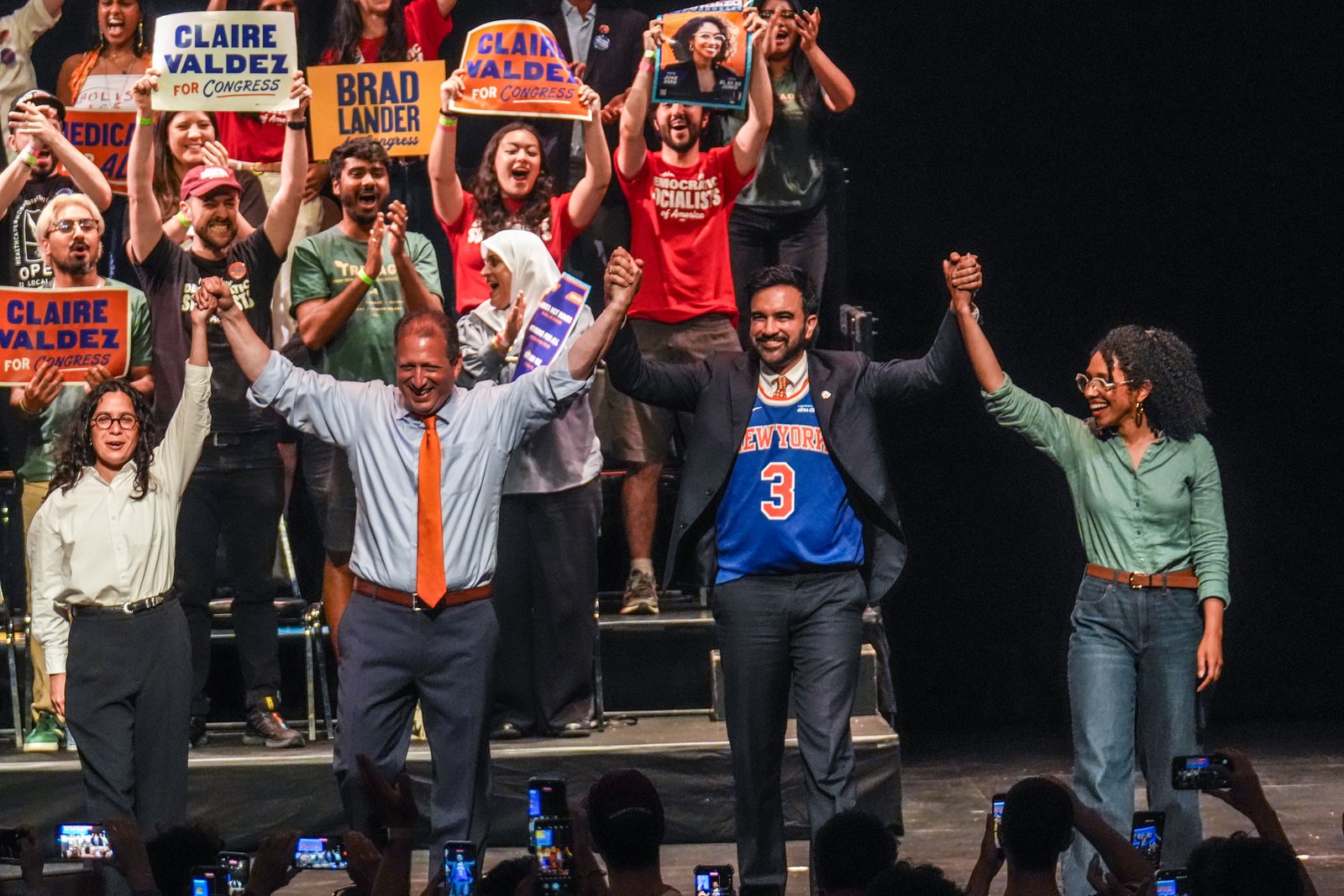
That outreach has included a September retreat run by the Congressional Progressive Caucus chair, Rep. Greg Casar of Texas, as well as other senior progressives such as Rep. Pramila Jayapal of Washington, a former CPC chair. The group strategized about how to maximize their influence to advance their wishlist and to settle on what Ramirez described as “non-negotiables.”
In a session on Medicare for All, for example, the progressives discussed pushing for a committee vote and Congressional Budget Office fiscal estimate on the policy as ways to build momentum around the issue ahead of a possible post-2028 Democratic trifecta.
Jayapal said the conversations centered on developing an “inside-outside strategy” that identifies points of leverage in the House — such as procedural votes and the drafting of a caucus rules package — to reflect “the voice of many of our new members who are coming in on fire.”
Moderates, meanwhile, are already wary of seeing routine House business weaponized for factional warfare, potentially threatening the reelection prospects of swing-district members. Members of overlapping centrist groups, including the New Democrat Coalition, the Blue Dog Caucus and Problem Solvers Caucus have discussed how to serve as a counterweight to the left.
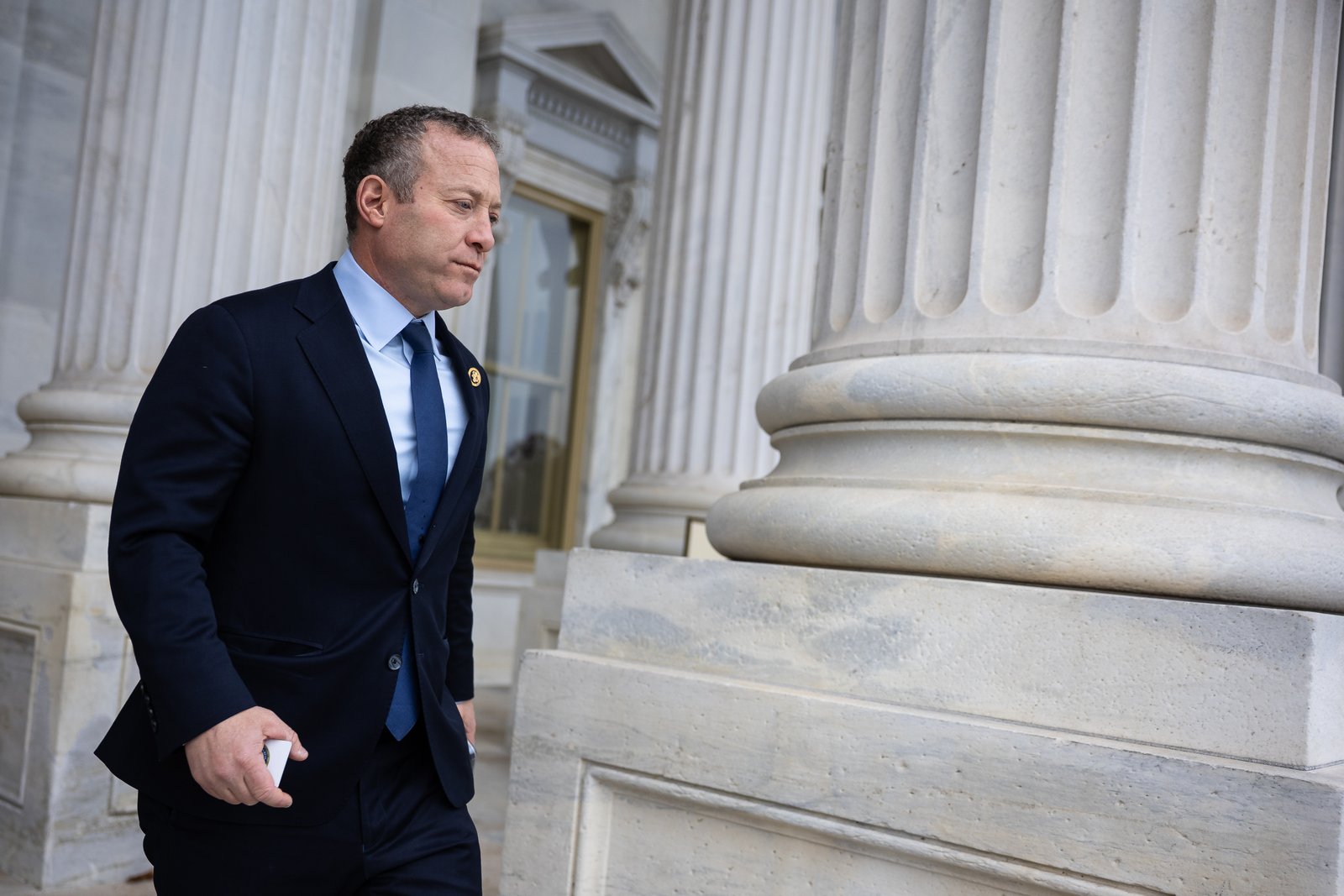
Rep. Josh Gottheimer of New Jersey, a veteran leader of the centrist wing, said he was eyeing “concrete steps to stop socialists trying to jam the extremist parts of their agenda.”
“Just like with the progressives, there have been conversations among moderates about our policy priorities, with a clear proactive agenda,” Gottheimer said. “As expected, there will be policy red lines that are too extreme and out of step with our democratic values. Many of us are already talking to each about the importance of countering those extremist positions and focusing on issues more representative of the majority of Americans.”
“The good news: there are plenty of issues, frankly, that most Democrats agree on,” he added. “But there are places where you’ll see tension.”
Precisely how moderates plan to neutralize the party’s left flank remains a topic of live discussion among members and aides, who say a specific plan will depend on the outcome of the midterms. They are banking on a bumper crop of new pragmatic members from traditionally Republican territory to simply outnumber the “Bloc.”
“There is a lot of angst among some moderates about this DSA faction and squad expansion,” a senior moderate Democratic operative said in an interview. “The size of the majority will matter a lot.”
Each side is getting support from outside groups who are helping to develop policy plans and marshal grassroots support for their respective positions.
On the left, for instance, the Justice Democrats have convened meet-ups and are working to establish lines of communication between members. Centrist groups like Searchlight Institute and Third Way, meanwhile, are hosting their own meetings and cautioning Democrats against taking up certain hard-left positions.
“We see our role as, frankly, being kind of the hall monitor of the situation,” said Searchlight spokesperson Tré Easton. “Let’s make sure that as Democrats are given the opportunity to govern, they remember why voters sent them to be there in the first place.”
Because fewer progressives are running in competitive races, the left has had more breathing room to begin organizing incoming members. But the centrist organs are hoping to quickly catch up and have already sketched out governing agendas that hew closely to the campaign messages coming from top party leaders.
The New Dems — the largest ideological bloc of House Democrats, with more than 110 members — published a 65-page dossier in May pushing broadly acceptable bills that target lowering costs.
Rep. Nikki Budzinski of Illinois, who is running unopposed to chair the group in the next Congress, said in an interview that the group’s size “will make us a force in determining the Democratic caucus’s agenda” — with an eye on delivering on the campaign promises that incoming members made.

“We want to make sure that we’re running and accomplishing the policy that they don’t have to run from themselves back home,” she said. “That these are things that they can run toward.”
House Minority Leader Hakeem Jeffries has already previewed an early slate of bills that align with the New Dems’ vision — rolling back Republican-led Medicaid cuts, restoring expired Affordable Care Act subsidies and ending President Donald Trump’s tariffs.
Jeffries has also taken steps to get his left and right flanks used to talking to each other and seeking compromise. This summer, he established five working groups, each led by a progressive and a moderate, to develop proposals to lower health care, housing, energy, child care and grocery costs.
He told reporters earlier this month that Democrats had made an “ironclad” promise to “focus on the affordability crisis and to drive down the high cost of living.”
“We intend to keep it, and it’s what unites Democrats across the ideological spectrum,” he said.
Both moderates and progressives boast that they have Jeffries’ ear and have lobbied him in recent months to take up their priorities. But should Democrats fulfill internal expectations and win the majority, the speaker election looms as an initial flashpoint in the factional clash.
Although no alternative candidate has emerged, some incoming progressives have withheld commitments to supporting Jeffries as speaker, with many saying they want further “conversations” about the governing agenda — if not outright concessions.
For the centrists, support for Jeffries is a litmus test: Rep. Greg Stanton of Arizona, who leads the New Democrats’ campaign arm, said it is a prerequisite for candidates to win the group’s support.
Kiros, for example, did not say in an interview if she would back Jeffries for speaker but she described a “wonderful” conversation with him about her top priorities: Medicare for All, a data center moratorium and Israel arms embargo.
She and other progressives have offered an olive branch to moderates, acknowledging there will be ways to work across the caucus — and even across the aisle — to pass law. Members of both wings have repeatedly raised passing a minimum wage hike.
“A big part of what the Progressive Caucus has been committed to doing has been to reforming the image of the Democratic Party back into a party that puts working class people first,” Casar said. “It means doing important outreach work to other parts of the Democratic Caucus.”
But leaders on the left said that working with moderates should not be confused with ditching the values they campaigned on.
Voters, Ramirez said, “are tired of nice little words and statements and letters, and they want to see us fight like hell for them.”
Mia McCarthy contributed to this report.
- Capitol agenda: House Democrats’ next big battle
- Moderates put the left on notice

- Trump clashes with Maryland over golf project on a Superfund site
- Trump’s anti-Muslim attacks dominate Michigan’s election homestretch
- Elizabeth Warren eyes post-election Senate leadership move
- Top House Democrats demand Trump preserve conversations with Grok
- The battle for the future of a House Democratic majority is raging

- ‘Lisa is Lisa’: Murkowski endorses a Democrat as she faces 2028 dilemma
- TV station says it is ‘pulling’ GOP ad attacking Pennsylvania House candidate
- Pelosi in London
-

 Politics2 years ago
Former ‘Squad’ members launching ‘Bowman and Bush’ YouTube show
-
Uncategorized2 years ago
Bob Good to step down as Freedom Caucus chair this week
-

 The Josh Fourrier Show2 years ago
DOOMSDAY: Trump won, now what?
-

 Politics1 year ago
John Legend advises Trump to drop the ‘dictator s‑‑‑’ if he wants Nobel Peace Prize
-

 The Dictatorship2 years ago
Pete Hegseth’s tenure at the Pentagon goes from bad to worse
-

 Politics2 years ago
Former Kentucky AG Daniel Cameron launches Senate bid
-

 The Dictatorship2 years ago
Luigi Mangione acknowledges public support in first official statement since arrest
-

 Politics2 years ago
Blue Light News’s Editorial Director Ryan Hutchins speaks at Blue Light News’s 2025 Governors Summit