
Politics
Trump wants the Postal Service to radically overhaul mail voting. But ballots are already going out.

President Donald Trump’s controversial demands for the Postal Service to overhaul and monitor millions of mail ballots hit another snag on Friday, when North Carolina became the first state in the nation to start sending out ballots for the November election.
In March, Trump signed the initial executive order, which aimed to crack down on mail-in voting — which he regularly alleges without evidence is a vector for widespread voter fraud — and assert an unprecedented amount of federal control over the upcoming elections.
Under this order and the subsequent rule drafted by the U.S. Postal Service, the USPS would refuse to deliver ballots to states that failed to provide lists of eligible mail voters or did not adhere to an approved envelope design style.
Since then, the order has faced legal challenges, and it remains paused by a federal judge’s orders. But the Trump administration has asked the Supreme Court to allow the new rule to proceed — something current and former election officials from both parties say would be both a legal nightmare that oversteps the federal government’s traditional role in elections and a logistical one that is happening far too close to the November election to implement even if they agreed with it.
“Why the hell are you rocking the boat this late in the game?” said Stephen Richer, a former Republican recorder of Maricopa County, Arizona, who has clashed with Trump allies for defending the security of the 2020 election.
Still, election officials are trying to project a sense of normalcy for voters, particularly in North Carolina, which serves as a test of whether established local election systems can operate normally amid intensifying federal scrutiny.
“I want to emphasize this point because there has been a lot of outside noise: Our county workers are ready,” Sam Hayes, a longtime Republican lawyer in the state and now executive director of the North Carolina State Board of Elections, said in a Thursday afternoon press conference.
He added, “All we can do is what we’re doing. … It is business as usual as far as I’m concerned.”
Despite the legal challenges, the Trump administration has continued to press the courts to let it proceed. The Trump administration asked the Supreme Court on Thursday to lift an order from a Massachusetts judge which temporarily prevents the USPS from enforcing their rule. It is the second time the Trump administration has asked the Supreme Court to step in, after winning an earlier victory in which the high court dismissed an earlier hold on the rule as premature.
“The uncertainty is coming from a single activist judge who continues to try and obstruct President Trump from implementing commonsense measures to protect the security of mail-in ballots and ensure only Americans vote in American elections,” White House spokesperson Lauren Bis said in a statement. “These safeguards for mail ballots were proposed months ago giving election officials ample time to prepare for the 2026 election.”
The USPS did not immediately respond to requests for comment.
Election officials said that if the rule goes into effect this close to November, it would cause chaos and place added strain on the USPS and election officials. And an anonymous federal whistleblower said in a report circulated earlier this week by Sen. Richard Blumenthal (D-Conn.) that the USPS was moving forward in a “secretive, rushed, chaotic, and fundamentally flawed process” to try to implement the new system ahead of the midterms.
In the coming weeks, states across the country will follow North Carolina’s lead. Nine other states will begin mailing ballots in the next two weeks, according to a tracker from the National Conference of State Legislatures — with the biggest day for mailing coming 45 days before the election in mid-September.
“It would be so outrageous to try to let this go into effect. It’s hard to even imagine,” said Ben Hovland, a senior fellow for democracy at the progressive think tank Center for American Progress and former Democratic commissioner with the Election Assistance Commission who was fired by Trump in July.
He added, “It would be a break-glass moment for our democracy.”
The rule would require meticulous changes to ballot handling and tracking practices that Hovland said are impossible to implement before Election Day in about two months, effectively disenfranchising millions of voters.
“Ballots are printed. Envelopes are printed. You can go on and on with all the practical reasons that show that implementing something like this at this time is not feasible,” he said.
Richer said he doubted the new rules would bring about more security. Even if the USPS received lists from the states, according to the postal service’s final rule, it would not do any additional vetting of the list, Richer said.
“It’s just that the mail ballots have to be on that list, and I don’t see what added value for election integrity that does,” he said.
He added, “It creates a lot of administrative burden, and I think it creates a lot more opportunity for error.”
While a decision looms in the courts, election officials and experts cast doubt on the likelihood of the rules going into effect before November. A more pressing issue, they said, is the confusion and uncertainty surrounding mail-in ballots, which could subvert and change the behaviors of voters.
“It makes things seem messy or difficult, and it can dissuade people from participating or coming out to vote,” Hovland said. “It certainly also helps establish a pretext to make bad faith claims about election results.”
Hovland said that while none of these claims of voter fraud are backed up with facts, they could cause Americans to lose faith in the voting process.
Still, some current officials contended they were well-prepared for whatever happens — and that they’d be able to communicate effectively with voters who have become increasingly buffeted by dramatic rhetoric about the once-unmentioned nuts and bolts of actually running an election.
“There’s always a lot of noise around elections, that’s not going to change, and it can be hard to differentiate that from what’s actually going on on the ground,” said Jason Tyson, director of external affairs for the North Carolina State Board of Elections.
As Election Day approaches, Tyson and election officials said they urge voters to check their registration status and make a plan to vote.
He added, “I think we’ve got a really well-trained, solid staff who are ready, and who have gone through all of the checks and balances and points of contact that we need to do to get to where we are.”


President Donald Trump and his allies are mounting a last-minute mission to shore up his longtime personal friend in a battleground Arizona district.
GOP groups have spent more than $22 million to boost Jay Feely against Democrat Amish Shah, with much of that spending coming in the final weeks of the race. The president has known Feely for decades as a friend and golf partner, and he sees the former Arizona Cardinals kicker as a formidable candidate, according to two Trump officials familiar with their relationship, who were granted anonymity to share details about it.
The ferocious support for Feely appears to mark a rare instance of personal friendship and loyalty shaping political strategy in the close of the midterm campaign — especially after Trump personally intervened to clear a pathway for Feely to clinch the nomination. Trump and his allies have largely taken an unsentimental approach to political spending, including backing away from high-profile Senate races in Georgia and North Carolina where Trump loyalists are on the ballot.
Trump, in public and private, maneuvered other Republicans out of the way so Feely could switch races and defend one of the premier battleground districts in the country, according to the two Trump officials.
Still, Feely has been forced to navigate Trump’s deep unpopularity on the campaign trail.
Shah has been working to tie Feely to Trump in a flurry of ads, in the district where the president has an approval rating around negative 13 points, according to Democratic internal polling viewed by Blue Light News.
Feely, a star GOP recruit, also attended a meeting with Speaker Mike Johnson and tech billionaire Elon Musk in Texas this August as top Republicans worked to secure Musk’s help in defending the House GOP majority alongside the Senate, according to two people with direct knowledge of the meeting, granted anonymity to share private details.
Musk has donated $20 million to the top House GOP super PAC, though he’s focused much of his attention this midterms season on the Texas Senate race.
The Trump team appears to be taking a pragmatic view of Feely’s campaign, giving him some room to distance himself from the White House — even if that means avoiding the president’s rallies and breaking with him on other matters, according to the two Trump officials and two other people with direct knowledge of the matter who were granted anonymity to speak candidly.
Feely posted on social media this week: “I will stand up to anyone including the president if it is not in the best interest of this district and this state.” He and another battleground Arizona Republican, Rep. Juan Ciscomani, didn’t attend a rally Trump held in their state Oct. 14.
Brian Seitchik, Feely’s general consultant and a former 2016 and 2020 Trump campaign staffer, would only say Feely “regrettably could not attend” the event.
Feely’s run is a rare case this cycle where the Republican candidate is a well-known figure in his own right — and who has been personal friends with Trump for decades. He’s running in a wealthy GOP-held district that includes Scottsdale and part of the Phoenix suburbs that the president only narrowly won in 2024 and Democrats are eager to flip. Trump officials are keenly aware if they lose the seat, Democrats could hold it for several elections to come.
“Both parties know how important the seat is,” Feely told Blue Light News at the GOP midterm convention in Dallas this September. “It’ll be one of three to five seats in the country that’ll determine who wins the House,” he said, predicting it would “probably be the most expensive race in the country.”
“I’m honored to have a relationship with President Trump for the last two decades and to have his support at the same time,” Feely added at the time.
Internal polling on both sides show Feely locked in a tossup race against Shah, who was a physician with the New York Jets during Feely’s tenure on that team.
Feely noted the importance of winning over independent voters in the district. That’s an even harder task now given the growing unpopularity of the war in Iran and high fuel prices hitting voters.
The White House did not respond to a request for comment.
“In a race that’s going to come down to potentially hundreds of votes, Jay is doing the hard work required to win this battleground seat,” Seitchik, Feely’s general consultant, said.
Trump and Feely, who went on to have a career in broadcasting, have known each other for several decades. They’ve golfed together in recent years: Feely posted a photo of himself with Trump in August of 2020 after a round of golf with the president at his Bedminster, New Jersey, club. “What an epic day!!” he wrote.
Trump-aligned super PACs have poured north of $9 million into the race to boost Feely on the airwaves against Shah. The top House GOP super PAC, Congressional Leadership Fund, is highly focused on defending the seat and has also dropped nearly $7 million on the race. And the National Republican Congressional Campaign has spent $2.6 million on coordinated ad buys with Feely’s campaign.
Feely was originally running in the redder 5th District to replace Andy Biggs, who is now competing to be the state’s next governor. But Trump urged Feely to switch races to the battleground 1st District after retiring GOP Rep. David Schweikert announced he would also run for governor.
Trump’s encouragement helped draw Feely into a GOP primary fight with Gina Swoboda, a longtime Trump ally and former state party chair. The president initially expressed support for both Feely and Swoboda, but soon he posted only in support of his personal friend.
“I know Jay well, and he is a TOTAL WINNER, on and off the field!” Trump wrote.
President Donald Trump is asking voters to “pretend” he is on the ballot. That might backfire.
New results from The POLITICO Poll show that Democratic midterm voters are more motivated to oppose the president than Republican voters are to support him. Many Republican voters also aren’t looking for blind loyalty to Trump in the midterms: Half say they’d rather their local candidate aim to win, even if it means speaking out against the president.
It’s not uncommon for voters in the party out of power to be more motivated in a midterm year. But the lopsided findings are an ominous sign for Trump, who has fundamentally reshaped the GOP over the past decade and has once again staked his brand — and political capital — on delivering wins for Republicans in November.
With less than two weeks before the election, the poll suggests Republicans are pragmatic, and care more about preventing a blue wave than standing by Trump. And in a year when voter frustration over high pricesappears poised to play a major role, that distinction could prove consequential.
The poll, conducted by London-based firm PF Global, reveals the extent to which frustration with Trump is driving Democrats: Nearly half of Democratic midterm voters say they will be voting “mainly to oppose President Trump,” compared to just 38% of Republican voters who say they will be voting mainly to show support for Trump.
Instead, a plurality of Republican midterm voters — 48% — say their main motivation when casting a vote is to show support for a local candidate. Only 37% of Democratic voters agree.
“[Trump is] 100% motivating Democrats more than Republicans,” said Doug Heye, a longtime GOP strategist. “That may have been the case regardless, but it’s even more true with words like ‘diesel’ and ‘Iran’ now a part of everyday political discussion.”
Half of Republicans think candidates have a better chance of winning if they align themselves with Trump rather than breaking from him, compared to just 30% who believe candidates would have a better chance of winning if they break away.
But half of Republicans also accept their candidates speaking out against the president if that’s what they need to do to win their own election. That’s compared with 37% who say candidates should remain loyal to the president and support his agenda, even if it means risking a loss.
On top of that, majorities of Republican voters say Trump himself should give candidates some room to break with him on specific policy issues to win elections.
If it helps GOP candidates’ chances of winning, they said, the president should allow for disagreement on the speed of AI development, the cost of living, and whether the war in Iran was a good decision. That holds true for pluralities or even majorities of Trump 2024 voters who self-identify as part of the “MAGA” movement across each policy area, suggesting that even his most loyal voters want the president to let candidates distance themselves if it can help them win.
“President Trump is the unequivocal leader, best messenger, and unmatched motivator for the Republican Party, and he is committed to maintaining Republican majorities in Congress,” said White House spokesperson Davis Ingle.
RNC spokesperson Natalie Baldassarre said “Blue Light News didn’t need to conduct a poll to know that Democrats are motivated by their hatred for President Trump and Republicans.” She added that the GOP is “running on actual accomplishments like cutting taxes and securing the border,” while saying Democrats have made “investigations, obstruction, and impeachment” their campaign platform.
Still, the tension is playing out in real time as Republican candidates locked in competitive races walk a tightrope between maintaining Trump’s support — and that of his MAGA base — without alienating critical moderate and independent voters. They’re especially under pressure as Trump hits the campaign trail in battlegrounds and red states, with several candidates having to quietly make calculations whether it will hurt them politically to appear next to him.
“I think Republicans … are stuck choosing which finger to cut off,” said a national GOP operative, granted anonymity to speak candidly about the midterm landscape. “There is no good answer.”
In Iowa, where voter frustration over some of Trump’s marquee policies, including tariffs and rising costs stemming from the Iran war, has mounted, Republican candidates have sought to create some distance from the president. Republican Rep. Ashley Hinson, the party’s Senate nominee, has said the war needs to be “brought to a successful and immediate end.” She also skipped a rally Vice President JD Vance held in the state last month.
Several other GOP candidates have also skipped Trump rallies in their home states, and many have grown increasingly wary of mentioning Trump in ads, including in red states that over the last few months have suddenly started to look competitive. In battleground Georgia, GOP gubernatorial nominee Rick Jackson has carefully navigated his relationship with Trump, avoiding public breaks with the president on policy but still limiting direct references to him in campaign ads and on the debate stage.
“I don’t know that Trump coming [to Georgia] helps Republicans more so than it excites Democrats, especially in a wave election year,” said Jason Shepherd, a former Cobb County GOP chair who is supporting Jackson.
That leaves Republican candidates in a tricky position: Their voters are willing to accept breaking from Trump if victory is on the line, but voters — and candidates — won’t know what will cost them their race until it’s too late.
“There’s no reason to gratuitously attack the White House and make an enemy,” the national GOP operative said. “But the end game here is to get reelected, and if they have to get reelected, but the president’s annoyed at them for a period of time, they’ll get over it.”
While Republican candidates balance loyalty to Trump with the possibility of breaking away on certain issues, Democratic midterm voters remain highly motivated to vote against Trump’s agenda.
Even Trump’s endorsement of a Republican candidate seems to influence Democrats more than Republicans: Roughly 70% of Democratic midterm voters say his endorsement would make them less likely to support a candidate, compared to 55% of Republican midterm voters who say the endorsement would make them more likely to support a candidate.
“The midterm elections are about anger management and failed expectations,” said North Carolina based GOP strategist Paul Shumaker. “A lot of Republicans and swing voters feel like their expectations have not been met in helping address their economic concerns.”
Alec Hernández and Alisa Vasquez contributed to this story.
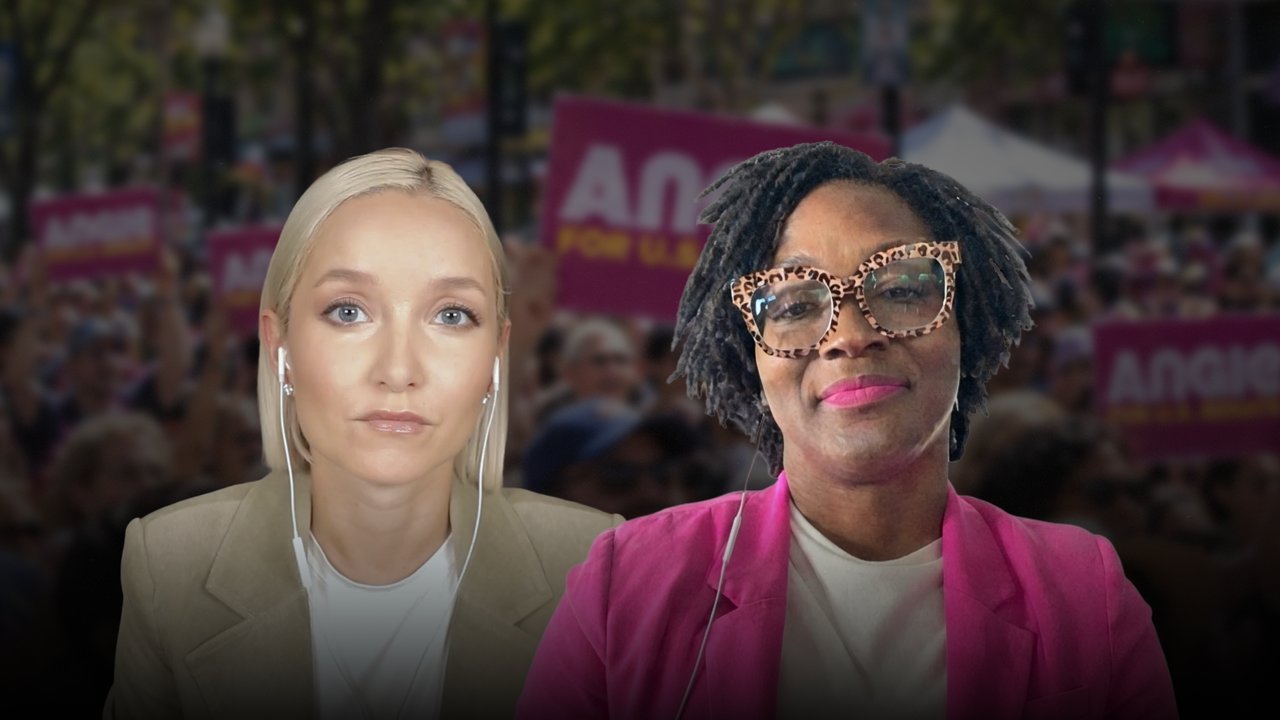
Can Angie Nixon prove Democrats can win in Florida?
lead image
- Exit of RFK Jr. ally widens rift in GOP tent
- Meet Trump’s favorite House Republican candidate
- Democrats want Mullin in the hotseat in the next Congress
- John Barrasso to campaign with Ken Paxton
- Capitol agenda: Bennie Thompson warns about Dems’ late bet
- Poll: Trump wants the midterms to be about him. That could backfire.
- Can Angie Nixon prove Democrats can win in Florida?
- Elon Musk pours another $76 million into boosting Republicans
- Senate Democrats’ campaign arm takes out $15M loan
- Democrats’ top Senate super PAC has raised $354M this year
-

 Politics2 years ago
Former ‘Squad’ members launching ‘Bowman and Bush’ YouTube show
-
Uncategorized2 years ago
Bob Good to step down as Freedom Caucus chair this week
-

 The Josh Fourrier Show2 years ago
DOOMSDAY: Trump won, now what?
-

 The Dictatorship2 years ago
Pete Hegseth’s tenure at the Pentagon goes from bad to worse
-

 Politics2 years ago
Former Kentucky AG Daniel Cameron launches Senate bid
-

 The Dictatorship2 years ago
Luigi Mangione acknowledges public support in first official statement since arrest
-

 Politics2 years ago
Blue Light News’s Editorial Director Ryan Hutchins speaks at Blue Light News’s 2025 Governors Summit
-
 Politics1 year ago
John Legend advises Trump to drop the ‘dictator s‑‑‑’ if he wants Nobel Peace Prize