
Congress
The Democrat who thinks she can land an AI deal with Republicans

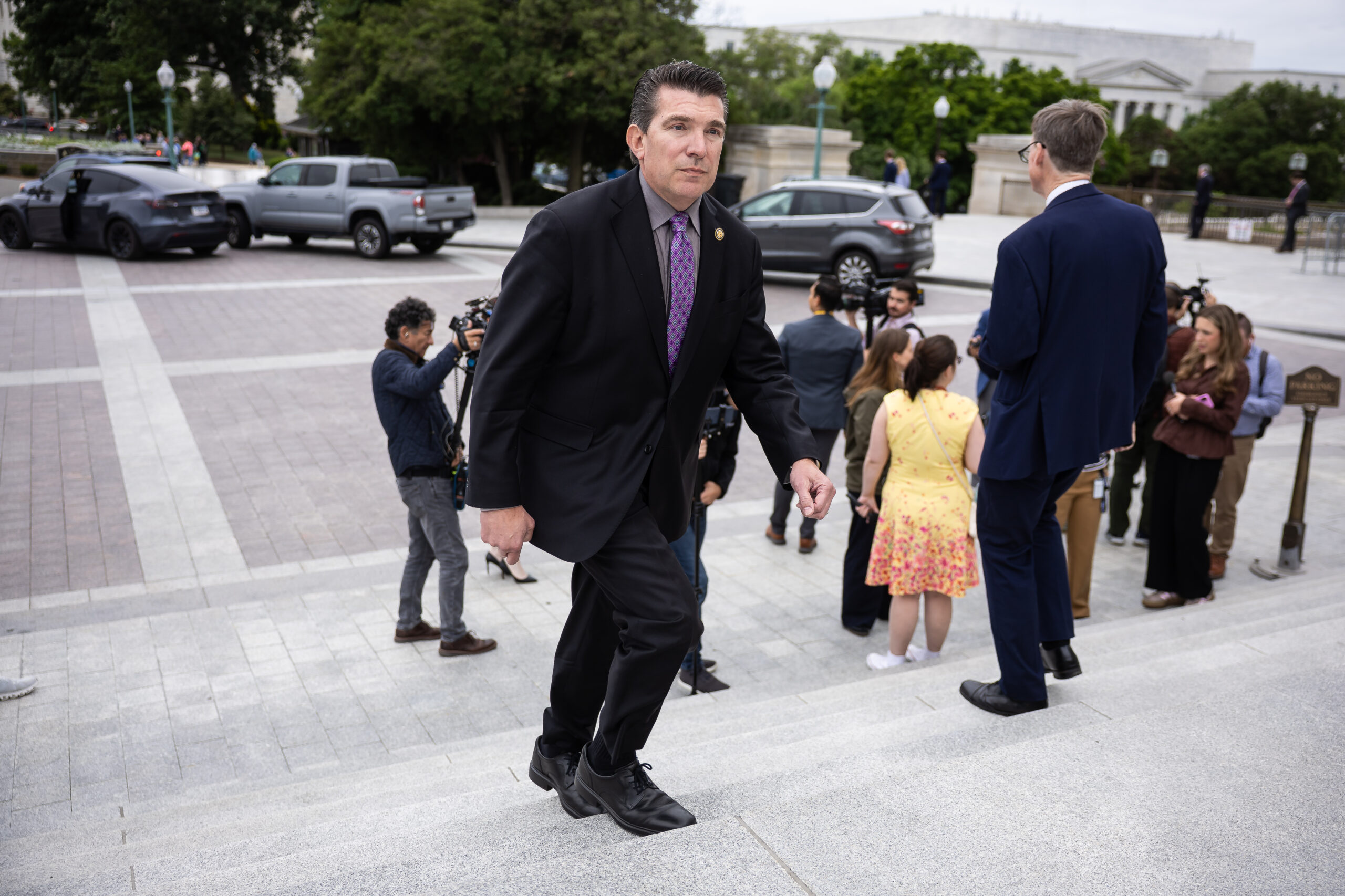
As Democrats struggle to come up with a plan to regulate artificial intelligence, one member of Congress has a high-risk idea: talk to the opposition.
Rep. Lori Trahan of Massachusetts, a four-term lawmaker and member of the House Energy and Commerce Committee, has been involved in conversations around the emerging technology for some time.
In the last three weeks, however, Trahan has gotten more serious about clinching a bipartisan accord. That includes meeting privately with Rep. Jay Obernolte of California, a Republican who also serves on the committee and has long held an interest in AI policy and has deep ties to the tech industry.
Her decision to carve out this partnership without the explicit blessing of her party leaders — who are instead encouraging a small group of Democrats to pursue a separate, partisan track — is already raising eyebrows.
“There’s a big difference between putting a stake in the ground on tech, and making it clear that you’re serious on tech, and undermining the caucus’s position on AI,” said a senior congressional Democrat who was granted anonymity to speak candidly due to the sensitive nature of ongoing AI negotiations.
In an interview last week, Trahan said her engagement was a no-brainer.
“I think it’s not a mystery what I’m fighting for in these conversations,” she said. “Safety is paramount; our kids, our national security, innovation. … We think the moment requires it.”

But Trahan’s gambit is no sure bet. If she can strike a viable agreement with Obernolte, she will have proven that she has the political savvy ideal for an aspiring leader: She’s a co-chair of the House Democratic messaging arm and isn’t ruling out a bid for a promotion in the next Congress. If she can’t clinch a deal — or worse, if she signs off on something her fellow Democrats think gives too much away — she could alienate members of her own party in Washington and back home.
Democrats have been struggling to define where they stand on AI for months amid competing priorities. If they move to put more guardrails on AI companies, they could face retaliation from deep-pocketed, pro-AI super PACs. If they let these companies proceed unchecked, progressives warn it could put the party out of step with voters concerned about lost jobs, the energy consumption associated with data centers and infringements on personal privacy.
Trahan said Democrats can’t afford to wait or retreat: “Suppose there is a catastrophic event or suppose there is a disruption to an employer where people are laid off because you weren’t at the table, we weren’t having these conversations,” she said. “Like, how do I look folks back in the eye and say, ‘Oh yeah, we were just waiting until we had the gavels.’”
As she works with Obernotle, Trahan insisted she has sought input from fellow Democrats and received recommendations, but not “pushback.” She added she is approaching discussions with “humility” and considers herself a “team player” in the caucus.
Her caucus, however, is consumed with its own deliberations. Rep. Ted Lieu of California, the No. 4 Democratic leader, is helping lead a “House Democratic Commission on AI and the Innovation Economy,” convened by House Minority Leader Hakeem Jeffries.
With Reps. Josh Gottheimer of New Jersey and Valerie Foushee of North Carolina serving as co-chairs, the commission is currently working to come up with an AI regulatory framework Democrats can own and campaign on ahead of the midterms — all but spurning conversations with Republicans and distancing themselves from Trahan’s efforts.
“I know very little about what she and Obernotle are discussing. I have not been read in,” Lieu said in an interview. “We’re focused on building a framework for Leader Jeffries before the end of the year on what Democrats should focus on after we flip the House.”
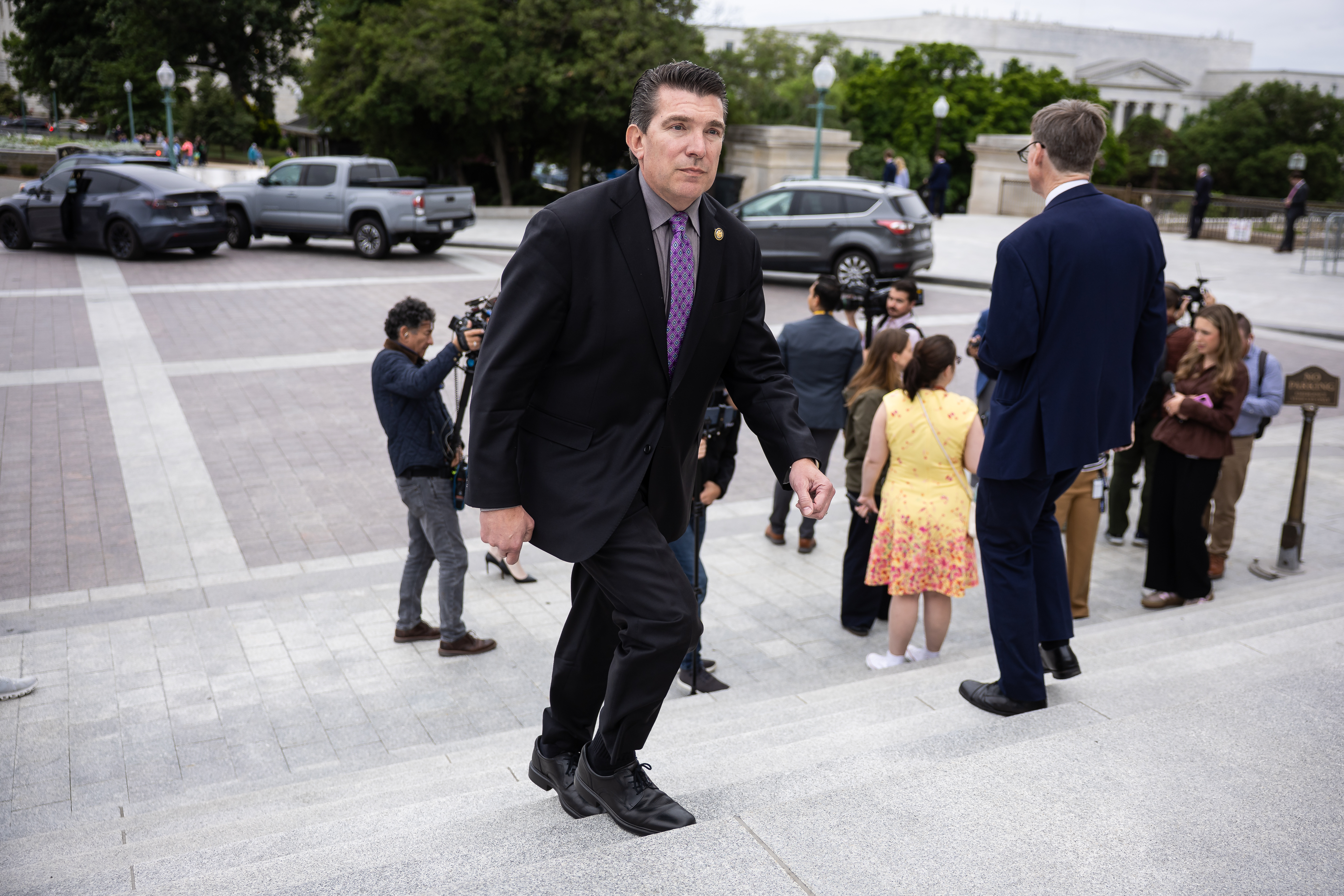
“But members can do whatever they want,” he continued. “I haven’t followed [Trahan] — I literally have no idea what language even looks like or if they’ve even talked about language.”
In a potentially awkward situation depending on what comes of Trahan’s efforts, Lieu expects to become House Democratic Caucus chair in the next Congress — and Trahan is one of a handful of members angling for the vice chair slot Lieu now holds.
Regarding her leadership ambitions, Trahan said that “if there’s an opportunity for me to continue at the leadership table, I would love to have that conversation.”
Jeffries, asked about her AI pursuits, said in a brief interview, “I haven’t talked to Lori Trahan about it.”
Trahan is also taking a gamble by entering into high-stakes policy talks with a Republican who doesn’t have a great track record of landing deals with Democrats.
Lieu ran an AI policy task force with Obernolte in the previous Congress, and they introduced legislation earlier this year that would improve standards, invest in workforce development programs and deter harmful deepfakes. That bill has gone nowhere.
Meanwhile, Rep. Sam Liccardo (D-Calif.) engaged in his own series of talks with Obernolte earlier this year that likewise failed to bear fruit.
“We’re all interested in trying to find a framework that makes sense,” Liccardo said in an interview. “Jay is open-minded, but he has constraints on his side of the aisle, and it makes it very difficult to find openness.”
Trahan and Obernolte have declined to publicly discuss specific policies that are under consideration in their discussions, with Obernolte not even wanting to divulge he was working with Trahan on anything related to AI: “I am neither confirming or denying that I am talking to her,” he said in an interview.
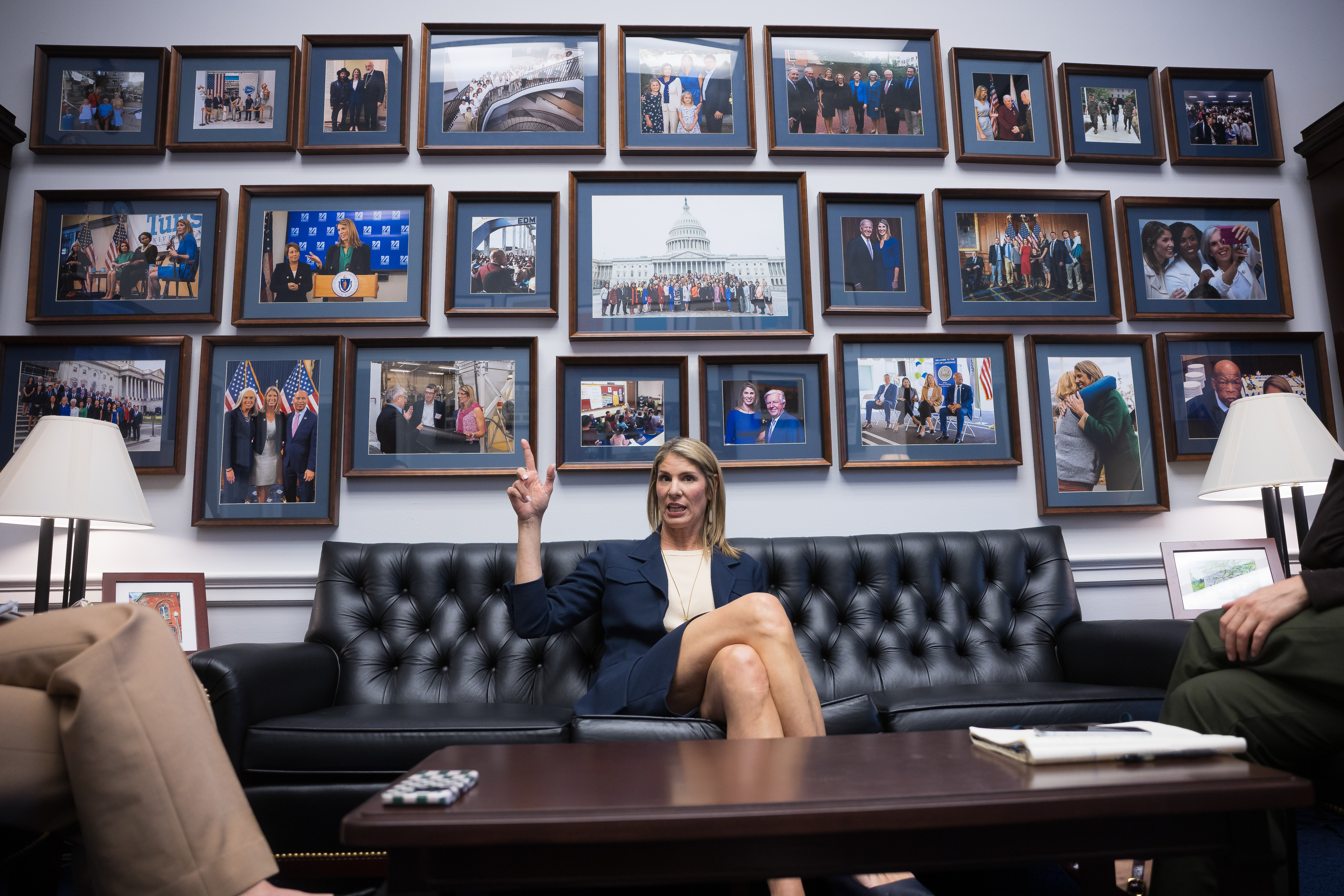
Trahan, in contrast, said, “I’ve been very happy to work with Jay. … I like the way the conversations are progressing, and, you know, I’m hopeful that we can share something soon.”
They could run into problems. Obernolte has consistently pushed for replacing existing state laws on AI with an overarching federal framework. That’s a more moderate approach than banning states from making their own AI rules without any federal guardrails — which is favored by GOP leadership — but it remains anathema to many Democrats.
Earlier this month, people familiar with Trahan and Obernolte’s talks said a potential deal would involve preempting AI safety laws like those in California and New York that require top AI developers to disclose information about new models to identify security risks.
That potential trajectory prompted alarm from blue state legislators, including in Trahan’s home state, where a data center boom has rattled locals worried about job losses, higher energy prices and environmental impacts.
Last month, Massachusetts State Sen. Michael Moore and State Rep. Tricia Farley-Bouvier wrote to Trahan that while they aren’t opposed to a federal framework, they don’t want to undermine existing state laws, such as on data privacy.
Trahan declined to rule out that state preemption is on the table in her talks with Obernolte but she said her subsequent conversation with Moore and Farley-Bouvier was “productive,” with the three of them “aligned on our values in terms of making sure we hold the line on safety.”
Moore, in an interview, echoed Trahan’s characterization of their phone call, but added he hadn’t yet seen a draft of her proposal and warned that he didn’t necessarily trust the Trump administration to implement it responsibly.
This isn’t Trahan’s first politically fraught policy fight. She recently said she tried to negotiate with Republicans on the so-called SCORE Act, which would among other things preempt a patchwork of state laws governing how student athletes are paid.
She wanted to help land a bipartisan bill that would level the playing field for everyone — what she calls her guiding principle in AI talks. But Trahan eventually walked away when GOP leaders decided to pursue a partisan path, culminating in a canceled floor vote on the measure last week.
As for why she thinks bipartisan AI negotiations might be different, Trahan suggested it could, if nothing else, come down to stamina.
“The stakes are too high for us to rush it,” she said, “and they’re too high for us to get it wrong.”
Gabby Miller and Brendan Bordelon contributed to this report.


The chair of the House Agriculture Committee said he’s not willing to “accept bad results” as a tradeoff for the benefits of advancements in artificial intelligence — a direct rebuttal to OpenAI CEO Sam Altman.
“As someone who practiced health care for 28 years, I’m never willing to accept bad results. I think we just need to do our best,” Rep. G.T. Thompson, a Pennsylvania Republican, told reporters Monday.
He was responding to Altman’s comments to Decoded by Blue Light News that people “should accept some bad things happening for the benefits of this technology and people having the agency.”
Pressed further on whether he agreed with Altman’s premise, Thompson replied, “No, I think we have to work harder to prevent any bad things from happening.”
Altman’s comments come in the wake of increased panic over the risks of catastrophic destruction from AI, with many industry leaders and experts arguing that guardrails are needed on the technology to prevent it from spinning out of human control.
Pressure is building on Congress to regulate the rapidly-advancing technology, but lawmakers are divided over whether the AI industry needs federal regulation or if it’s capable of governing itself.
The executives of major AI labs and tech companies gathered at the White House last week to discuss solutions with President Donald Trump, who believes overregulating AI will have national security repercussions. The group ended up signing a “morally binding” AI accord that critics say won’t do enough to prevent a worst-case scenario.
Thompson noted Monday he believes that AI will bring “tremendous solutions,” specifically in regards to finding cures for health issues like cancer and Alzheimer’s disease. But he also said AI has to be led with “principle” — comparing it to how he addressed digital assets in a bill to regulate the cryptocurrency industry, which he worked on as chair of the Agriculture Committee.
“The first principle is ‘do no harm.’ So we need to protect consumers, and that means, I think, building some guardrails — some guidelines — to do that,” Thompson said. He added that the second principle is to “foster innovation.”
“I think AI has a lot to do with that,” he added. “I don’t think AI works without RI: Real Intelligence.”
LE SUEUR, Minnesota — Senate Majority Leader John Thune said Monday there is no “consensus” yet on advancing a bill establishing permanent daylight saving time even as President Donald Trump ramps up pressure on Republicans to pass it.
Thune addressed the matter in a Monday interview after Trump used his Truth Social account multiple times over the weekend to rail against the legislation, known as the Sunshine Protection Act — going so far as to post the personal cell phone number of one of its GOP opponents, Sen. Tom Cotton of Arkansas.
“The president feels strongly on it like he does a lot of issues,” he said. “It’s something we’re having conversations about but there’s no clear path forward or consensus on it yet.”
While Trump singled out Cotton for scrutiny, Thune made clear the opposition to the permanent daylight saving time proposal — which would lead to very late winter sunrises in some parts of the country — ran deeper than one senator.
Cotton has publicly voiced opposition to the proposal for year, citing, among other things, the fact that children in his state would be going to school in the dark for part of the year.
Sen. Roger Wicker (R-Miss.) voiced similar objections Monday to reporters in the Capitol, saying he was mindful of “safety concerns in the more northern and rural states where children get on the school bus in very early hours.”
Thune, who spoke during a campaign swing in Minnesota with GOP Senate nominee Michele Tafoya, has himself opposed previous daylight saving bills. He said Monday that “a lot of it depends on where you are in the country” and that “your geography probably has as much to do with your position on that as anything.”
Sen. Rick Scott (R-Fla.), who has aligned himself closely with Trump, is among the lawmakers who have been pushing to get the bill through the Senate. He recently told POLITICO, “I’m going to make sure it gets passed this year.”
Riley Rogerson contributed to this report.
Democrats have pulled back some of their ads in North Carolina’s Senate race, days after the top Senate Republican super PAC paused its future spending in the state.
WinSenate, a group affiliated with the Senate Minority Leader Chuck Schumer-aligned Senate Majority PAC, has removed roughly $1.1 million in North Carolina ad buys this week, according to ad tracking firm AdImpact. The group still has roughly $18.8 million in future reservations through Election Day.
“Senate Majority PAC is committed to seeing this race through to victory, and will continue to make spending decisions based on how to best build a strong Senate majority,” Senate Majority PAC spokesperson Lauren French said in a statement.
The move, combined with the GOP-aligned Senate Leadership Fund’s decision to pause future spending, are a signal that both parties are shifting resources amid an ever-expanding Senate map. Democrats are increasingly confident in their North Carolina Senate nominee, Roy Cooper, as he continues to hold a sizable lead in public polling over Republican Michael Whatley — but some privately say states like Michigan and New Hampshire need more resources.
Meanwhile, multiple Republican groups, not just SLF, have retreated from the state in recent weeks, effectively deciding that it’s no longer worth the money to boost Whatley’s campaign.
The Koch-aligned Americans for Prosperity Action left North Carolina off its $22 million list of future spending across key Senate contests, and Old North Action removed $6.5 million in ad reservations last month.
The Cooper campaign, however, is still treating the race as competitive, pointing to North Carolina’s closely divided electorate and the fact that President Donald Trump won the state in each of the past three presidential elections.
“North Carolina is a truly 50/50 state and Democrats haven’t won a US Senate race in 18 years. We can’t take anything for granted or our eye off the ball,” said Morgan Jackson, a senior adviser to the Cooper campaign. “DC is broken and we’re going to continue to run this race like we’re ten points down to ensure North Carolinians get the change they desperately need.”
-

 Politics2 years ago
Former ‘Squad’ members launching ‘Bowman and Bush’ YouTube show
-
Uncategorized2 years ago
Bob Good to step down as Freedom Caucus chair this week
-

 The Josh Fourrier Show2 years ago
DOOMSDAY: Trump won, now what?
-

 The Dictatorship2 years ago
Pete Hegseth’s tenure at the Pentagon goes from bad to worse
-

 Politics2 years ago
Former Kentucky AG Daniel Cameron launches Senate bid
-

 The Dictatorship2 years ago
Luigi Mangione acknowledges public support in first official statement since arrest
-

 Politics2 years ago
Blue Light News’s Editorial Director Ryan Hutchins speaks at Blue Light News’s 2025 Governors Summit
-

 The Dictatorship1 year ago
Mike Johnson sums up the GOP’s arrogant position on military occupation with two words