
Congress
Hakeem Jeffries finally gets a signature win

In the more than three years since he became the top House Democratic leader, Hakeem Jeffries has sometimes struggled to escape the shadow of his esteemed predecessor.
He stood alone in the limelight Wednesday, however, after engineering a feat of political hardball — a statewide vote paving the way for new Virginia congressional maps that could wipe out four GOP-held seats — that earned praise from Nancy Pelosi herself.
“I’m very proud,” the former speaker said in an interview, adding Jeffries has handled redistricting “fabulously.”
Tuesday’s vote was the culmination of months of lobbying from Jeffries to counter the mid-decade redistricting push launched by Trump and his allies in Texas. He barnstormed the country, pressing Democratic state legislators to match the GOP blow-for-blow.
Not all of his entreaties were successful, but he found partners in the Virginia state house who were willing to tee up a plan that would turn the Commonwealth’s 6-5 Democratic map into a 10-1 advantage. Jeffries backed the effort with $38 million in funding from a leadership-aligned group, House Majority Forward — the biggest single expenditure in the fight.
“Donald Trump and Republicans launched this gerrymandering war,” Jeffries told reporters Wednesday. “And we’ve made clear as Democrats that we’re going to finish it.”
Now that his bet has paid off, Jeffries has concrete proof of his political savvy — and muscle — as he moves to secure the speaker’s gavel in November.
That could help quiet concerns from some Democrats about whether the infamously careful Jeffries is the man for a moment when Trump is pulling every possible lever of his power to gain advantage for the GOP.
His allies say he has now proven he can match the Trump administration stride for stride in strategy and rhetoric.
“He did a damn good job, and we got it,” Democratic Rep. Debbie Dingell of Michigan said in an interview. “And if people are going to screw around, we’re not afraid to push back.”
Jeffries showed some swagger in the immediate aftermath Wednesday. During a morning news conference, he employed language more befitting of a battlefield than Capitol Hill.
Flanked by other top party leaders, he called DCCC Chair Suzan DelBene of Washington a “field general.” He said Democrats would “continue to fight one battle after another.” And Jeffries warned Republicans in Florida that if they embark on their own redistricting scheme, they will “F around and find out.”
Jeffries’ other favorite slogan of late is a direct jab at Trump: “Maximum warfare. Everywhere. All the time” — a quote from an August New York Times article attributed to a person close to the president describing the MAGA approach to redistricting.
The aggressive approach is not only aimed at Republicans, however, but at doubters in his own party who have compared him unfavorably to Pelosi — who spent the final four years of her speakership in daily battles with Trump, often getting the best of the president.
For better or worse, Jeffries is nowhere as well-known as Pelosi was at the height of her power. About a quarter of Americans polled last month by BLN had no idea who Jeffries is — significantly trailing his Senate counterpart Chuck Schumer in name recognition. And those who do know him haven’t been especially impressed, even inside his own party: A November YouGov poll — taken shortly after the end of a record government shutdown — found that 23 percent of Democrats held an unfavorable view of the House minority leader.
But members of his caucus — who have been eager to aggressively counter GOP power grabs in the post-Pelosi era — showered their leader with praise Wednesday.
“Those of us who’ve been here with him over his career never had even a moment of regret,” Democratic Rep. Emanuel Cleaver, who is being targeted in a GOP-led redistricting effort in Missouri, said in an interview. “And he is going to lead us out of the wilderness, and I look forward to him becoming a speaker.”
Still, some in his caucus and on the campaign trail to join it — mainly on the progressive wing — have openly called on Jeffries to do more to counter Trump and Capitol Hill Republicans. That sentiment has not entirely faded.
“I think every leader should always be doing more,” Rep. Delia Ramirez (D-Ill.) said in an interview. “And he hears me say this all the time.”
In response to the demands, Jeffries pointed to the ousters of “toxic” Homeland Security Secretary Kristi Noem and Attorney General Pam Bondi in a brief interview as proof that Democratic lawmakers were getting results. Jeffries has also found major success using discharge petitions and other unorthodox legislative maneuvers to commandeer the House agenda from Speaker Mike Johnson.
“We’re going to continue to push back aggressively against the Trump administration,” he said. “There’s certainly more work to be done in that regard, and we’re continuing to lean in.”
Ramirez conceded that the redistricting wins have gone some way to proving his abilities as a party leader.
“Yesterday was a good step forward for him,” she said.
Progressives might still seek to mount an alternative to Jeffries if Democrats can retake the House majority in November. But most members of the caucus are mostly relieved that, with the four new Virginia seats in hand, they appear to have successfully parried the GOP redraw effort.
“I hope it means we have a greater likelihood of Speaker Jeffries,” Rep. Don Beyer (D-Va.) said of the vote in his home state. “A strong leader with a clear agenda for the American people.”


Tom Cotton made his name in Washington as an outspoken critic of a Democratic president’s deal to check Iran’s nuclear ambitions.
Now, with a president of his own party angling toward a similarly structured agreement, the Arkansas Republican is so far using a softer voice.
Cotton, the No. 3 Senate Republican and Intelligence Committee chair, is not alone among GOP defense hawks in finding himself in an awkward position more than a decade after lambasting President Barack Obama’s Iran deal.
But the combination of his prior ferocity toward the Iranian regime and his current leadership responsibilities have put him into an especially tight spot as President Donald Trump and Vice President JD Vance sell their 14-point “memorandum of understanding” to skeptical Republicans.
Cotton moved toward critiquing that framework in a Fox News interview Thursday, crediting Trump for “making Iran weaker than it’s been in decades” while airing concerns that “certain aspects of this deal are a step in the wrong direction.”
“We need to make sure that we don’t squander the leverage that we’ve built” against Iran, he said.
That is a far cry from the rhetoric Cotton deployed as a freshman senator in 2015, when Obama was moving in concert with other global powers to force Iran to curb its nuclear program in return for sanctions relief and other economic favors.
Cotton led a brash effort to undermine the deal — most notably by organizing a public letter signed by 46 other GOP senators to Ayatollah Ali Khamenei, then the supreme leader of Iran, warning that “anything not approved by Congress is a mere executive agreement” that could be nixed by a future administration.
The letter enraged the Obama administration and congressional Democrats, but it was prescient.
After he was elected in 2016, Trump withdrew from the deal, known as the Joint Comprehensive Plan of Action, setting the stage for his second-term military campaign against Iran that he is now seeking to end by trading curbs on Iran’s nuclear program for sanctions relief and other economic favors.
If that was the only jam Cotton was facing from Trump this week, it would be plenty. But the discomfiting Iran situation has been compounded by the president’s recent moves to upend Cotton’s careful negotiations aimed at extending a key surveillance program for three years.
After Trump blew up that deal by appointing a political ally to a top intelligence position, Cotton moved quickly to fast-track a permanent replacement through his committee and rekindle the surveillance deal — only to watch Trump blow things up once again.
Majority Leader John Thune, like most Senate Republicans, had nothing but praise this week for the “great job” Cotton was doing amid the tumult over the expired spy law and the director of national intelligence drama.
“He’s a really strong chair on the committee. And he had it all teed up and ready to go,” Thune said in an interview. “Now it’s just … back to the drawing board.”
But Cotton’s moves amid the back-and-forth — particularly his decision to publicly announce a hearing would move forward Wednesday for DNI nominee Jay Clayton even after Trump publicly declared he was “cancelling” it — attracted attention on the right.
Former Trump strategist Steve Bannon voiced blistering criticism of Cotton, calling him “out of control” and suggesting he “should be turfed out” of his safe seat over trying to proceed with the hearing. Cotton is up for reelection and expected to win easily.
Cotton backtracked, postponing the hearing while noting that it was “regrettable” that Trump directed Clayton not to appear. The White House didn’t respond to questions about Cotton.
Thune defended Cotton, saying he was “operating within his rights and prerogatives” as chair in insisting, however briefly, that the hearing would go on.
Unlike most GOP senators, Cotton is unusually tight-lipped around the Capitol, enforcing a blanket “no comment” policy in the hallways this week as reporters tried several times to ask him about everything from the surveillance program to Clayton to Iran. His office did not respond to an interview request.
Cotton has plenty of supporters within the Senate Republican conference, where he is well-liked and won a contested race for the No. 3 leadership spot. And his quick rise through the party has generated speculation that he could one day become Senate GOP leader or run for president.
It’s not lost on Republicans that even the straight-talking 49-year-old, who was under consideration for a Trump Cabinet position, has found himself crosswise with the administration. That speaks to the larger issues the Senate GOP is facing as the president’s rash decisions complicate their carefully laid plans, they say.
“Senator Cotton is surely, surely a big fan and supporter of the president,” Sen. Lisa Murkowski (R-Alaska) said. But, she added, “he’s got a committee to run.”
Cotton is also hardly alone among his GOP colleagues in voicing concerns about the memorandum of understanding signed by Iran and the United States.
Though there are now more senators with MAGA-aligned “America First” foreign policy instincts than a decade ago, Cotton is part of a still-prominent pack of national security hawks that include the likes of Sen. Lindsey Graham of South Carolina and former Senate Majority Leader Mitch McConnell of Kentucky, who recruited Cotton to run in 2014.
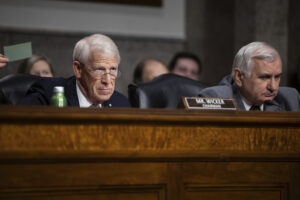
Sen. Roger Wicker (R-Miss.), who chairs the Armed Services Committee, went even further than Cotton in a Thursday statement that said the agreement is “completely out of step with the president’s goals.” And Sen. John Cornyn (R-Texas), a member of Cotton’s committee, predicted that the agreement would only be an “intermission” in Iran’s decadeslong conflict with the United States and Israel.
“They get $300 billion — it’s not going to be for constructive or useful purposes,” Cornyn said, a reference to a “reconstruction fund” included in the agreement.
Cotton aired concerns about multiple financial concessions included in the Trump-signed memorandum, including a new allowance for Iran to conduct oil sales that he estimated would provide as much as $6 billion a month
“That money … we know is not going to build new hospitals or day cares,” Cotton said Thursday on KTHV, a Little Rock TV station. “It’s going to go to replenish their drone stockpiles, their missiles, to support terrorists.”
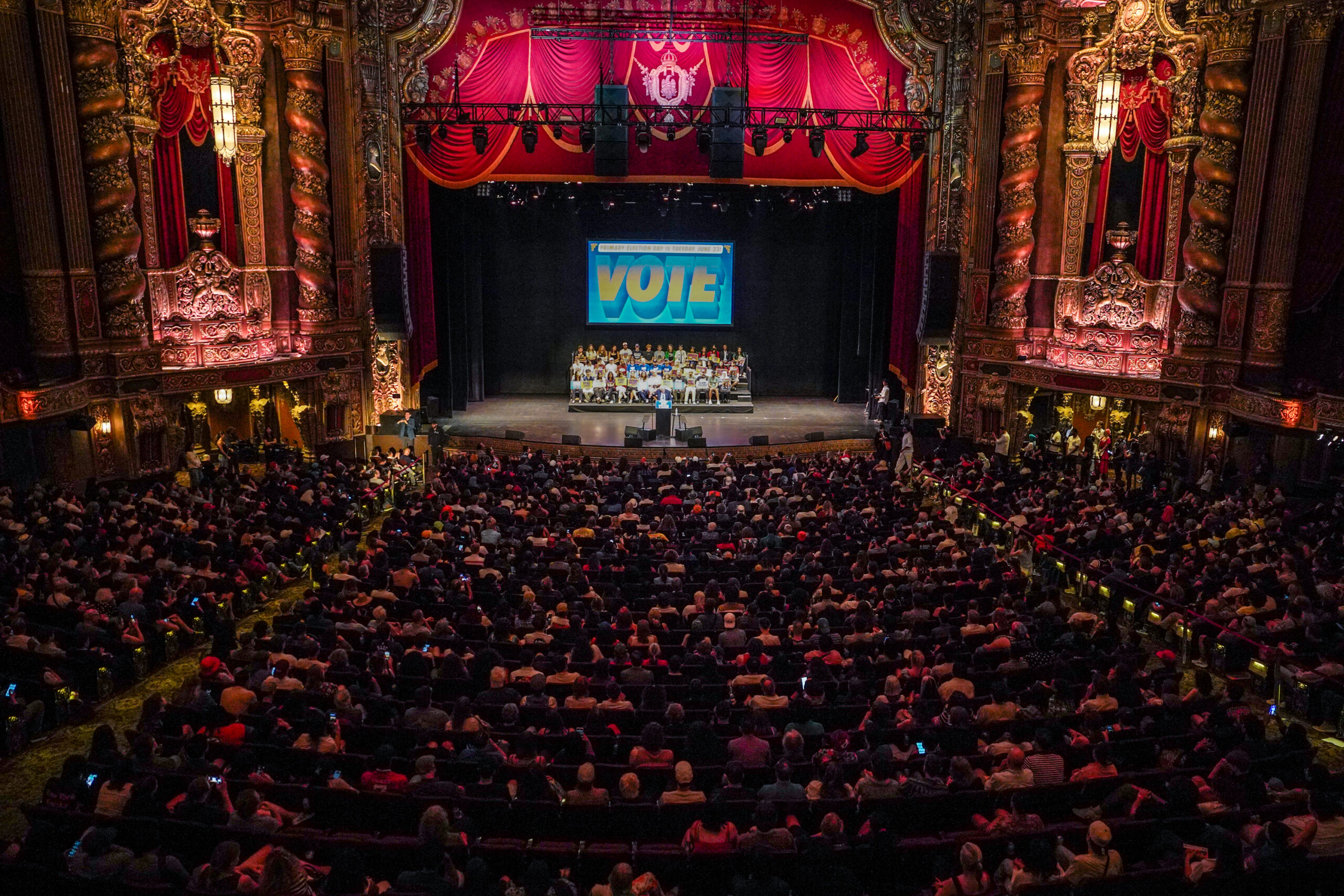
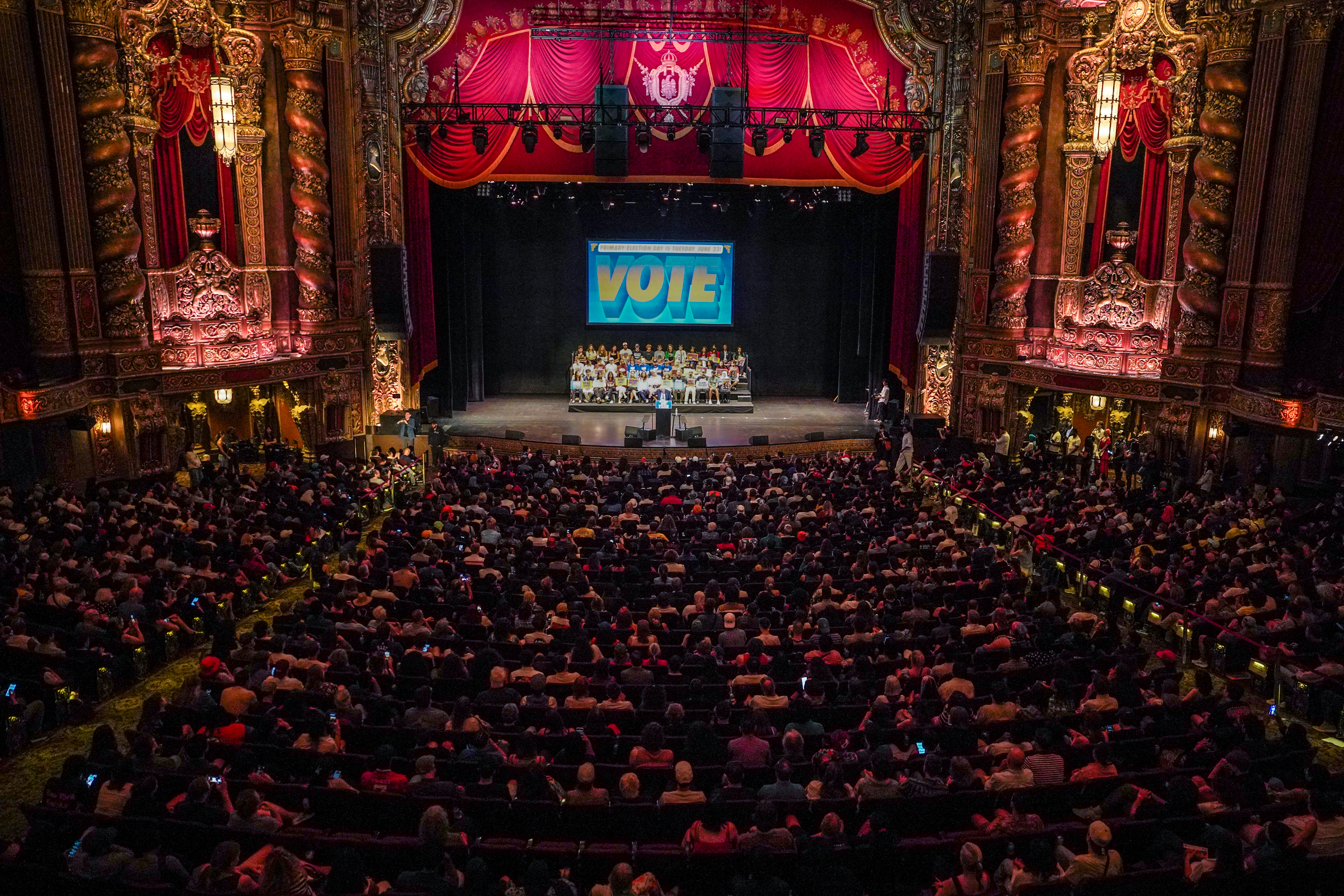
NEW YORK — With just five days to go until the primary election in New York, Mayor Zohran Mamdani issued a stark warning to members of Congress who believe “incumbency is a substitute for action”: Watch out.
“People often ask me what I think of the state of the Democratic Party,” Mamdani said to the crowd at the Kings Theatre in Brooklyn as he boosted his endorsed congressional candidates. “This slate here today is our answer. The Democratic Party must change.”
The democratic socialist framed Tuesday’s election as much more than what that means for New York, though. In recounting how people also ask him about the 2028 presidential election, he put it bluntly: “It starts now. It starts on Tuesday.”
“For far too long, our party has seen its job as managing decline instead of delivering material change for working people,” Mamdani said. “That old way of thinking will lose on Tuesday. And frankly, it will lose in South Carolina and New Hampshire. It will fall short of 270 electoral votes, because the party of the past will not be what leads us into the future.”
Mamdani, joined by Vermont Sen. Bernie Sanders, urged his supporters to show up for his endorsed candidates “the way you showed up for me.” They include former New York City Comptroller Brad Lander, who’s challenging two-term Rep. Dan Goldman; state Assemblymember Claire Valdez, who’s vying for retiring Rep. Nydia Velázquez’s seat; and community organizer Darializa Avila Chevalier, who’s trying to unseat five-term Rep. Adriano Espaillat, the chair of the Congressional Hispanic Caucus.
Mamdani’s endorsed slate of legislative candidates were at the rally, too.
The rally featured standard stump speeches from the candidates, highlighting the need to support working class New Yorkers and immigrants. Speakers called out the American Israel Public Affairs Committee, the pro-Israel group that has loomed over many of these primaries — despite no evident spending from its independent expenditure arm. Sanders also emphasized his call to ban super PACs, which have reshaped primaries across the city.
Taking place just hours after the massive ticker-tape parade celebrating the Knicks’ historic championship, there were also Knicks references galore.
“I hate to break it to you, but OG Anunoby is not here to save the day,” said Mamdani, who was wearing a Knicks jersey under his suit. “The only hands we can count on are ours.”
Sanders, who is wildly popular in New York, previously endorsed Valdez and Lander. Both Valdez and Avila Chevalier are members of the Democratic Socialists of America and are backed by the city chapter in their bids. Sanders had not officially endorsed Avila Chevalier prior to the rally.
“Why are progressives and socialist candidates winning elections all across this country?” Sanders asked. “The answer in my view is not complicated. The working class of America understands that our current economic system is rigged, that it is designed to benefit the wealthy and the powerful.”
Polling has shown Lander with a lead over Goldman, and a tight race for Velázquez’s seat. Public polling is scarce in the Espaillat race, but recent internal surveys suggest Avila Chevalier is posing a real challenge to the incumbent. Mamdani endorsed her just weeks ago, much later than Lander and Valdez, but his engagement in the race has significantly elevated its profile.
“Six months ago, they told us this race was over before it started,” Avila Chevalier said at the rally. “They told us Adriano was untouchable, that he was an institution, that you don’t run against someone like him and win. That this district was his, and that we should wait our turn. And they said it with such confidence, like the outcome had already been written. Look around. Look at what we’ve built.”
Mamdani’s decision to get involved in congressional races is stress-testing how the new mayor navigates relations with powerful, well-respected party figures — many of whom he’s on the opposite side of.
Mamdani’s endorsement is expected to be a significant asset for his picks; he had dominant performances across these districts in last year’s mayoral primary. And that shine doesn’t seem to have dulled. Recent polling has shown that Mamdani has high approval ratings.
Goldman did not support Mamdani during last year’s mayoral primary or the general election, as Lander has often pointed out. Espaillat backed former Gov. Andrew Cuomo in the primary, but supported Mamdani in the general election. Valdez’s opponents, Brooklyn Borough President Antonio Reynoso and city Council Member Julie Won, both supported Mamdani in the primary.
The mayor has been active on the trail for his congressional candidates of choice in the closing stretch of the campaign. And he touted them all in an advertisement that ran during the first game of the Knicks’ finals run.
Still, Lander has tried to keep some distance. When asked at a recent press conference why he would appear in that ad with Avila Chevalier, who attended a pro-Palestinian rally the day after Hamas’ Oct. 7 attack in 2023 — the same rally Lander said he left the DSA over — he said it was an “opportunity to show New Yorkers that politics can be a team sport.” He also clarified that he has not endorsed candidates in any other congressional primaries.
Avila Chevalier told reporters that she went to that rally to “stand against” Israel engaging in “a response that is often disproportionate and creates a greater loss of life.” She added that she has “condemned Hamas” and does “not believe that celebrating the loss of anybody’s life is OK.”
Kings Theatre isn’t located in any of the districts these congressional hopefuls are trying to represent — though it neighbors the seats that Lander and Valdez have their eyes on.
It’s especially far from Espaillat’s district, which includes parts of upper Manhattan and the Bronx.
While handing out campaign literature to people walking out of the subway in Hamilton Heights, Blue Light News asked Espaillat if he had thoughts about Avila Chevalier appearing at the rally.
“I’m rallying right here in my district with my constituents — not in Brooklyn,” he replied.
Jason Beeferman contributed to this report.
Retirement groups are calling on Congress to investigate Meta over a wave of social media scams targeting older Americans.
In a letter sent Thursday to House Homeland Security Committee Chair Andrew Garbarino (R-N.Y.) and ranking member Bennie Thompson (D-Miss.), the groups alleged Meta has been slow to take down fraudulent ads, leaving seniors vulnerable to financial loss. The letter, shared exclusively with POLITICO, was signed by the Alliance for Retired Americans, the American Postal Workers Union Retirees and the American Federation of Teachers, among others.
“Fraudulent Medicare ads have proliferated on Meta platforms and too many seniors are getting scammed while Meta profits,” said Richard Fiesta, executive director of the Alliance for Retired Americans. “We are calling on Congress to investigate how these scams are allowed to spread, what Meta knew about them, and why stronger protections are not in place. Seniors should not be left vulnerable while scammers and tech companies cash in.”
The letter’s demands follow a report published last month by the Center for Countering Digital Hate, a nonprofit advocacy group, which alleged that Meta has profited by leaving up fraudulent ads, many of which target Medicare recipients.
“Scammers are determined criminals who use increasingly sophisticated tactics to defraud people and evade detection,” Meta spokesperson Andy Stone said in a statement. “We aggressively fight scams on and off our platforms because they’re not good for us or the people and businesses that rely on our services and for years we’ve been one of law enforcement’s strongest partners in the fight against this type of online crime — identifying criminals, disrupting their crimes and helping bring them to justice.”
Stone pointed to several examples of Meta’s efforts to combat scams on its platform, including a recent collaboration with U.S. and Thai law enforcement to disrupt online scams.
It’s not the first time Meta has faced scrutiny over the scams: Sens. Richard Blumenthal (D-Conn.) and Josh Hawley (R-Mo.) urged the Federal Trade Commission and the Securities Exchange Commission to open an investigation into the company in November after Reuters reported that Meta in internal documents projected 10 percent of its 2024 revenue would come from fraudulent ads. And in February, a group of bipartisan lawmakers pressed Meta CEO Mark Zuckerberg over its plans to prevent and combat fraud on its platforms.
Reps. Dan Meuser (R-Pa.) and Lou Correa (D-Calif.) also introduced bipartisan legislation earlier this year to combat predatory scam ads.
- World Cup fuels ticketing reform demands
- Friction between President and Republicans growing…
- White House scheduled to meet with groups on AI and kids’ safety bills
- Senate Armed Services chair slams Iran peace deal
- Tom Kean Jr. will return June 30 to House, spokesperson says

- White House delivers Iran agreement to Congress

- Jay Clayton nomination remains up in the air, Thune says
- Smallest team, biggest pitch
- In the World Cup’s missing country, failure sparks bitter political battle
- The happiest World Cup game
-

 Politics1 year ago
Former ‘Squad’ members launching ‘Bowman and Bush’ YouTube show
-

 The Dictatorship1 year ago
Luigi Mangione acknowledges public support in first official statement since arrest
-

 Politics1 year ago
Former Kentucky AG Daniel Cameron launches Senate bid
-
Uncategorized2 years ago
Bob Good to step down as Freedom Caucus chair this week
-

 The Dictatorship1 year ago
Pete Hegseth’s tenure at the Pentagon goes from bad to worse
-

 The Josh Fourrier Show2 years ago
DOOMSDAY: Trump won, now what?
-

 Politics1 year ago
Blue Light News’s Editorial Director Ryan Hutchins speaks at Blue Light News’s 2025 Governors Summit
-

 The Dictatorship9 months ago
Mike Johnson sums up the GOP’s arrogant position on military occupation with two words