
Congress
This is how Democrats say Oversight Republicans are trying to squash the Epstein investigation

Members of both parties have for months been hijacking House Oversight Committee business to call votes on subpoenas for high-profile figures in the Jeffrey Epstein investigation — and Democrats say chair James Comer has quietly instituted a new strategy to contain the practice.
The Kentucky Republican’s workaround, they allege, is to hold “roundtables” on various issues within the panel’s jurisdiction rather than hearings. Roundtables are more informal and don’t permit members to offer motions to subpoena witnesses during unrelated committee business, as is allowed during hearings.
Over the past year, some GOP members have joined with Democrats to take advantage of the panel’s subpoena rules. In July, they voted on a surprise motion to release the full Epstein files when top congressional Republicans were dragging their feet. Lawmakers also compelled now-former Attorney General Pam Bondi to testify and were prepared to haul in Commerce Secretary Howard Lutnick, too, before he said he would appear before the committee voluntarily.
This trend is outlined in a new memo prepared by Oversight Democratic staff, obtained by Blue Light News, which claims that by moving to roundtables, Republicans “are avoiding the only forum where Democrats can force votes, demand documents, and hold the majority accountable.”
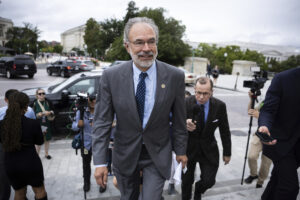
“We’ve heard from committee members, both Republicans and Democrats, that they are frustrated,” Rep. Robert Garcia, the top Democrat on the committee, said in an interview Monday. “We have important investigative work, and they want to do this right as we are in the middle of this single, largest government cover-up in the modern history of the Congress. And they want to neuter the Oversight Committee. Give me a break.”
A spokesperson for Oversight Republicans, when reached for comment, did not address a question about whether the uptick in roundtables was intended to prevent subpoena votes. The spokesperson said the panel “continues to hold many hearings” and will host a markup on fraud prevention legislation next week.
“Roundtables provide opportunities to have more substantive and direct conversations with ordinary Americans about issues facing communities across the U.S.,” the spokesperson said.
But the members’ subpoena free-for-all over the past nine months has undoubtedly created a complicated political dynamic for Comer. He has become the de facto leader of the congressional Epstein probe, forcing him to balance calls for transparency with the political fallout of Trump’s onetime relationship with the late, convicted sex offender.
Republicans have noticed the connection between the spike in subpoenas and the subsequent increase in roundtables in lieu of hearings.
Rep. Glenn Grothman (R-Wis.), during a March subcommittee roundtable on mental health issues, at one point said, “It’s no secret why we are not doing a formal hearing today. We’d like this hearing to be solely focused on the issue before you, and there is some concern that — both parties are guilty of this — that they make motions in the middle of the hearing and try to bring up unrelated topics.”
Republicans have also gone on subpoena sprees of their own, most notably by forcing the February depositions of Bill and Hillary Clinton.
Rep. Anna Paulina Luna (R-Fla.) suggested she wasn’t happy about the new status quo.
While stopping short of criticizing roundtables directly, she said in an interview, “I am a fan of committees that like to do the motions to subpoena.”
The last full-committee hearing convened by House Oversight was in March, on fraud in Minnesota. At that hearing, Republican Rep. Nancy Mace of South Carolina forced a vote to subpoena Bondi for her handling of the federal Epstein investigation. Five Republicans joined all Democrats present in voting for the subpoena motion, and Bondi’s recent ouster isn’t quelling calls for her to appear before the panel under oath.
Since that time, first lady Melania Trump delivered a public statement denying she was ever victimized by Epstein and urging Congress to hold hearings with true victims — an entreaty that could resonate with Mace and others who are bought into the subpoena exercise, though Comer has indicated he plans on having such hearings.
In the meantime, Oversight subcommittees have held five roundtables this year alone on topics such as artificial intelligence and the Internal Revenue Service. The full committee is scheduled to convene a sixth roundtable Tuesday morning addressing “lawfare against American agriculture.”
That’s compared to the two subcommittee roundtables listed for all of 2025; Comer hosted no full committee roundtables since becoming chair in 2023, the panel’s website shows.
Several Oversight Republicans said in interviews they appreciate the opportunity to examine policy areas without the partisan mudslinging and subpoena distractions that Oversight has become known for this term.
“When you’re really trying to get to the bottom of something, it’s a much more conducive way of doing it,” said Rep. Eric Burlison (R-Mo.).
Rep. Clay Higgins (R-La.) argued during a recent committee hearing on the misuse of federal funds in Minnesota that the subpoena-happy approach taken by his colleagues is undermining the seriousness of the panel’s work.
“Listen to your Uncle Clay, America — you don’t just normally start out with a subpoena introduced as a vote by a member,” Higgins said. “I object to this process that is false and not reflective of the serious investigative work that the Oversight committee performs day in and day out.”
“Very well said,” Comer replied.


Senate Republicans want a say on a deal President Donald Trump is touting to end the monthslong war in Iran.
The absence of publicly released text for the “memorandum of understanding” Vice President JD Vance reportedly signed with Iranian officials Sunday sparked bipartisan scrutiny on Capitol Hill about what the deal might entail.
Senators in both parties agreed: More information needs to come to Congress soon, and any agreement touching on the future of the Iranian nuclear program would have to eventually be subject to a congressional vote.
“If you want a deal to last, it can’t be an executive agreement,” said Sen. James Lankford. “We’ve got to have a vote of Congress to be able to solidify [it] long term.”
The Trump administration said it expects release of the memorandum of understanding no later than Friday.
The agreement reportedly includes reopening the Strait of Hormuz to commercial shipping, but it’s not clear to what degree Iran will be required to abandon its nuclear program. The White House circulated talking points to Hill Republicans Monday touting the deal, including that “Iran will never have a nuclear weapon” and “energy prices … are coming down,” according to a copy of the document reviewed by Blue Light News.
“If it’s a secret deal, then how can I take it seriously?” Sen. Thom Tillis told reporters.
Weighing heavily on several lawmakers is the possibility of an agreement landed by the administration looking very similar to the last Iran nuclear deal, consummated more than a decade ago by then-President Barack Obama amid a bipartisan uproar over trading sanctions relief and cash concessions to the Iranian regime in return for curbs on its nuclear ambitions.
Democrats believe Trump should’ve never abandoned that deal — known as the Joint Comprehensive Plan of Action — in his first term, while GOP defense hawks despised it from the start.
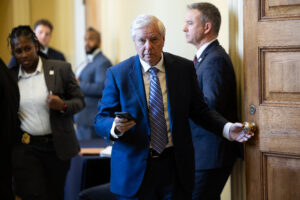
“If [the Iranians] can enrich [uranium] anywhere at all, then it’s the same as JCPOA,” said Sen. Lindsey Graham of the Trump administration’s forthcoming deal. “If they can’t enrich, then that makes it a good deal.”
One legacy of that 2015 controversy: the GOP-controlled Congress at the time passed legislation allowing for congressional review of any agreement dealing with the Iranian nuclear program. That law gives members the ability to kill a deal via a disapproval resolution that could be subject to presidential veto.
In the absence of further details, senators mainly agreed that they wanted a chance to formally review and vote on Trump’s deal — even as some Republicans predicted the administration would find a way to avoid that happening.
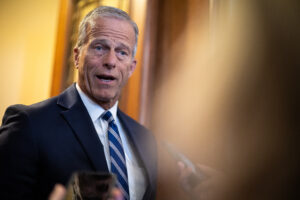
Senate Majority Leader John Thune said Monday there is “probably some expectation” that his chamber would ultimately vote on the agreement while declining to weigh in on the particulars.
“I just don’t know enough about it yet, and I don’t think even the people who follow this stuff closely up here know that much about it,” he said, adding that he expected Vance or other administration officials to brief members on the deal at some point.
What else we’re watching:
— DEMS NONCOMMITTAL ON SPEEDY CLAYTON CONFIRMATION: It’s unclear if Senate Republicans will be able to move at the lightning speed they’d hoped to in confirming Jay Clayton to serve as director of national intelligence by the end of the week. If every Senate Intelligence member agrees, Clayton could get a committee vote Thursday following his Wednesday hearing. Confirming Clayton on the Senate floor hours later would require getting agreement from every senator to speed up the process. Opposition from a single member would punt a vote to next week.
— THUNE AIMS FOR HOUSING BILL PASSAGE THIS WEEK: Thune is hoping his chamber can pass an updated version of a bipartisan housing affordability bill by the end of the week. The legislation comes after talks between Thune, Senate Banking Chair Tim Scott and ranking member Elizabeth Warren. Two Senate Democratic aides granted anonymity to discuss ongoing plans said the bill was also discussed with the House and the White House.
Katherine Hapgood contributed to this report.
President Donald Trump is touting a deal that would end the monthslong war with Iran — and potentially ease some of the political headwinds bearing down on Republicans.
GOP lawmakers still have lots of questions.
The absence of publicly released text for the “memorandum of understanding” Vice President JD Vance reportedly signed with Iranian officials Sunday left an information vacuum on Capitol Hill, where senators of both parties were left airing concerns about what the deal might entail.
Even most Republicans agreed: More information needs to come to Congress soon, and any agreement touching on the future of the Iranian nuclear program would have to eventually be subject to a congressional vote.
“If you want a deal to last, it can’t be an executive agreement,” said Sen. James Lankford (R-Okla.). “We’ve got to have a vote of Congress to be able to solidify [it] long term.”
The bipartisan scrutiny of the long-brewing agreement is a legacy of the last Iran nuclear deal, consummated more than a decade ago by then-President Barack Obama amid a bipartisan uproar over trading sanctions relief and cash concessions to the Iranian regime in return for curbs on its nuclear ambitions.
Trump withdrew from the deal in his first term, and now he is back with an agreement that — pending release of the text and final negotiations yet to come — could end up looking like Obama’s deal. That has raised the hackles of both defense hawks who despised the original agreement, known as the Joint Comprehensive Plan of Action (JCPOA), and Democrats who believe Trump never should have left it in the first place.
Sen. Lindsey Graham (R-S.C.), one of those defense hawks, told reporters that he was “pulling for a deal,” while also making note of serious discrepancies in the terms that have emerged thus far.
“The MOU being described by us sounds really very good; the MOU being described by Iran sounds awful,” Graham said.
“If they can enrich [uranium] anywhere at all, then it’s the same as JCPOA. If they can’t enrich, then that makes it a good deal,” he continued, adding in a separate conversation that he was “skeptical that Iran will ever go there” to cease enrichment.
The Trump administration said it expects release of the memorandum of understanding no later than Friday.
The possibility that Congress would take any kind of vote on the agreement is also a legacy of the 2015 deal. Amid bipartisan concern about the Obama administration’s pursuit of nuclear talks, the GOP-controlled House and Senate that year passed legislation allowing for congressional review of any agreement dealing with the Iranian nuclear program.
That law, however, does not require Congress to approve a deal — it rather gives it the ability to kill a deal via a disapproval resolution that could be subject to presidential veto. That means each chamber would have to effectively muster a two-thirds majority to block Trump, something it did not come close to doing in 2015.
Senate Majority Leader John Thune said Monday there is “probably some expectation” that his chamber would ultimately vote on the agreement while declining to weigh in on the particulars.
“I just don’t know enough about it yet, and I don’t think even the people who follow this stuff closely up here know that much about it,” he said, adding that he expected Vance or other administration officials to brief members on the deal at some point.
The lack of specificity was par for the course on Capitol Hill Monday, with many senators expressing exasperation that text of the signed agreement has not yet been released.
“If it’s a secret deal, then how can I take it seriously?” Sen. Thom Tillis (R-N.C.) told reporters.
The agreement reportedly includes reopening the Strait of Hormuz to commercial shipping, but it’s not clear to what degree Iran will be required to abandon its nuclear program. Vance indicated in a series of interviews that the administration will attempt to ensure Iran does not develop or obtain a nuclear weapon but left details regarding civilian nuclear facilities and potential uranium enrichment unaddressed.
The White House circulated talking points to Hill Republicans Monday touting the deal including that “Iran will never have a nuclear weapon” and “energy prices … are coming down,” according to a copy of the document reviewed by Blue Light News. The administration also argued in the memo that the agreement “beats” the Obama-era agreement.
In the absence of further details, senators mainly agreed that they wanted a chance to formally review and vote on the deal — even as some Republicans predicted the administration would find a way to avoid that happening.
“I don’t expect that to happen,” Sen. John Cornyn (R-Texas) said about a vote. “They’ll try to write it around the treaty requirements, so I don’t expect we’ll vote on it.”
Sen. Mike Rounds (R-S.D.) said the administration should send the deal to Congress “if they want it to be something other than a political agreement, like the JCPOA was.”
Most congressional Republicans have been eager for Trump to find a way out of the nearly four-month war, which has driven up energy prices ahead of the November elections. Thune predicted Monday that a deal would “have a very positive impact on the economic situation in the country and that obviously will translate into the political situation in the country.”
Some of Trump’s most vocal allies on Capitol Hill praised the agreement Monday.
Sen. Eric Schmitt (R-Mo.) said has had conversations with senior White House officials and he was “very hopeful.” Sen. Bernie Moreno (R-Ohio), who is likely the next Senate GOP campaign chair, added on X: “President Trump deserves our trust and support as he works to bring peace to the Middle East.”
Democrats were largely keeping their powder dry Monday on how they would handle a vote on the agreement. Some could find it hard to oppose a deal that ends hostilities on negotiated terms roughly similar to what was secured under a Democratic president in 2015.
But plenty of Democrats questioned what was gained by the conflict.
“We still don’t know the details,” Minority Leader Chuck Schumer said on the Senate floor. “The American people need to know exactly what’s in the deal. … We know this for certain: We are worse off than before Trump began his foolish war of choice.”
Meredith Lee Hill contributed to this report.
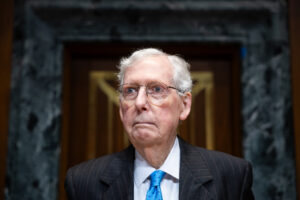
Senate Majority Leader John Thune said Monday he hopes his predecessor as top Republican, Mitch McConnell, returns this week from a hospitalization.
Thune said he had not yet spoken directly with the 84-year-old Kentuckian but is getting “readouts from his staff.”
Asked about McConnell’s condition or if he knew if he would be back this week, Thune told reporters, “I’m hopeful that he’ll be back this week.”
A McConnell spokesperson said Sunday that he had been admitted to the hospital but did not provide details on his condition or why he was hospitalized — a break from recent prior instances where the seven-term senator was hospitalized.
A former McConnell staffer who spoke on the condition of anonymity was told the senator was doing much better Monday without any further details on what put him in the hospital.
Daniel Desrochers contributed to this report.
- DC is about to pick new leaders. Trump is watching.
- Senate to confirm Jay Clayton as soon as Thursday
- Senate eyes vote on updated housing affordability legislation

- Capitol Agenda: The new faces of the Freedom Caucus
- Capitol agenda: Trump leaves Congress in dark on Iran deal
- Thune is ‘hopeful’ Mitch McConnell will return this week
- Senate Republicans want a say on Trump’s Iran deal
- Thune is ‘hopeful’ Mitch McConnell will return this week
- Trump questioned Mike Collins about his hardline abortion stance before endorsing him
- RFK Jr. is popping up in battleground districts
-

 Politics1 year ago
Former ‘Squad’ members launching ‘Bowman and Bush’ YouTube show
-

 The Dictatorship1 year ago
Luigi Mangione acknowledges public support in first official statement since arrest
-

 Politics1 year ago
Former Kentucky AG Daniel Cameron launches Senate bid
-
Uncategorized2 years ago
Bob Good to step down as Freedom Caucus chair this week
-

 The Dictatorship1 year ago
Pete Hegseth’s tenure at the Pentagon goes from bad to worse
-

 The Josh Fourrier Show2 years ago
DOOMSDAY: Trump won, now what?
-

 Politics1 year ago
Blue Light News’s Editorial Director Ryan Hutchins speaks at Blue Light News’s 2025 Governors Summit
-

 The Dictatorship9 months ago
Mike Johnson sums up the GOP’s arrogant position on military occupation with two words