
Congress
DHS funding proposal falls flat as Democrats, conservatives and Trump raise doubts

Key negotiators circulated a potential deal Tuesday to end a five-week standoff over Department of Homeland Security funding and, among other things, pay beleaguered transportation screeners as mounting security lines snarl airports.
Nobody in Washington, however, seems too excited about it.
The framework brokered by a handful of Senate Republicans and the White House Monday got a cool reception from Senate Democrats, who said it does nothing to rein in immigration enforcement abuses at the center of the DHS funding impasse.
Conservative Republicans pushed back on the idea that some Immigration and Customs Enforcement funds would be left out of the agreement and pursued separately under the party-line reconciliation process, calling it a capitulation to Democrats.
Even President Donald Trump, who has gone back and forth on the DHS shutdown talks but hosted the White House meeting Monday evening where the latest proposal was hatched, gave the plan only a tepid endorsement in his first public comments on it Tuesday.
“We’re going to take a good hard look at it,” he said in the Oval Office, later adding, “They are getting fairly close. But I think any deal they make, I’m pretty much not happy with it.”
The griping heard up and down Pennsylvania Avenue cast fresh doubt on whether Congress would be able to act this week to end the shutdown that started Feb. 14 — even as hourslong waits at some U.S. airports weighed heavily on lawmakers.
The Republican proposal would forgo about $5.5 billion in funding for Enforcement and Removal Operations under ICE, in lieu of agreeing to a series of constraints Democrats want to impose on DHS enforcement personnel.
Key Democrats rejected that tradeoff Tuesday. Washington Sen. Patty Murray, the Senate’s top Democratic appropriator, said the new GOP offer “contains no reforms to ICE or Border Patrol” and “that’s not acceptable.”
Republicans had hoped to isolate the point of greatest contention, the conduct of DHS agents carrying out Trump’s mass detention and deportation agenda, while funding the rest of the sprawling department. But GOP leaders said they would not put fetters on agents whose salaries were not being funded under the bill.
“A lot of the reforms are contingent on funding for ICE,” Senate Majority Leader John Thune told reporters Tuesday afternoon. “So if you’re not going to have funding, I don’t know how all of a sudden now they can demand reforms.”
ICE received $75 billion in last summer’s GOP megabill, leaving it largely immune from the funding lapse that has crippled other parts of DHS.
“The problem is that they have everybody at DHS right now doing immigration enforcement,” said Connecticut Sen. Chris Murphy, who is the top Democrat on the Homeland Security funding panel but not central to the negotiations.
By funding other DHS agencies, Murphy added, “you’re providing money for immigration enforcement.”
The qualms are not just coming from Democrats.
Conservatives are strategizing behind the scenes to kill the framework because it leaves out ICE funding in the uncertain hope of passing it through reconciliation, according to three people granted anonymity to describe the private effort.
Some Republicans expect their right-flank colleagues to try to lobby Trump to tank the deal or demand changes, two of the people said.
A White House spokesperson gave the emerging plan only a lukewarm blessing Tuesday before Trump made his public comments. The president made clear he remains more invested in passing a partisan elections bill, the SAVE America Act, than cutting a deal to end the DHS shutdown.
The framework would pair the leftover $5.5 billion in ICE funding with some provisions of the SAVE America Act, though the strictures of the reconciliation process would severely limit the GOP’s options.
“I want to support Republicans,” Trump said. “Sometimes it’s awfully hard to get votes when you have Democrats that don’t want to have voter ID, they don’t want to have proof of citizenship, they don’t want to do anything about men playing in women’s sports.”
Ultraconservatives in the House are also assembling to oppose the proposal negotiated by GOP senators, warning their leaders against going around them to pass the agreement. Speaker Mike Johnson could make such a move using fast-track procedures if he had the necessary support from a critical mass of Republicans and Democrats to vault a two-thirds-majority threshold.
And there is a significant swath of the House GOP, including mainstream leadership allies, who consider the idea of not fully funding ICE a nonstarter.
Senate Majority Leader Chuck Schumer said Democrats will offer a counterproposal to the GOP offer. House Minority Leader Hakeem Jeffries is expected to meet with Schumer Tuesday and gather with his caucus Wednesday morning before the offer is delivered.
“I can assure you it will contain significant reform in it,” Schumer told reporters Tuesday.
Murray, who has been meeting with White House officials, lamented that negotiations have been a moving target.
“It is awfully hard to find common ground with Republicans when it’s not clear that they have common ground amongst themselves,” she said Tuesday. “The only way we are going to get out of this mess is if we know that the president is on the same page as the Republicans.”
Top Republican senators are anxious to reach an accord to end the shutdown before the House and Senate are scheduled to adjourn later this week for a recess stretching into mid-April.
“We’re ready to go, OK? We’re ready,” North Dakota Sen. John Hoeven, a senior Republican appropriator, said Tuesday as he left Thune’s office. “So the Democrats need to join us now and get it done. I mean, we’ve bent over backward negotiating with them.”
Mia McCarthy, Meredith Lee Hill and Jordain Carney contributed to this report.


Florida has been viewed for months as the potential capstone of a GOP redistricting campaign, but now Sunshine State Republicans are growing wary after the dramatic flip of two legislative seats in the state — including one where President Donald Trump votes.
Republicans already hold a commanding 20-8 edge over Democrats in the Florida House delegation, and some in the GOP — including Gov. Ron DeSantis — believe they could pick up as many as five more seats with a rare mid-decade redraw of district lines.
Some Florida incumbents are now warning in stark terms it could backfire.
“I think the Legislature needs to be very cognizant of the fact that if they get too aggressive … you could put incumbent members at risk,” GOP Rep. Greg Steube said. Some seats that Republicans previously won by eight or nine points, he said, could instead have only a four- or five-point GOP advantage — putting them in reach for Democrats in a wave election.
DeSantis, citing a state Supreme Court decision from last year and a potential ruling from the U.S. Supreme Court, has already called a special session of the state Legislature in April to push ahead with new lines. So far there have been no official maps produced or any signs that lawmakers have started working on them.
Republican anxiety has only grown further after Democrats notched surprising wins in special elections Tuesday, including a Palm Beach County district that contains the Mar-a-Largo resort where Trump lives and votes.
While many in the GOP have brushed off the Democratic gains there and in other states as anomalies, private qualms are growing among the incumbents whose seats could be put at greater risk due to redistricting.
“We keep saying these are kind of one-off things that haven’t gone our way,” said one Florida House Republican granted anonymity to speak candidly. “But I’m not seeing any of the one-offs that are going our way.”
“To talk as aggressively as some of what we’ve heard, there’s no way to get there without significantly weakening some districts,” the member added.
House Democrats are hoping to capitalize on the opportunity. Minority Leader Hakeem Jeffries quickly sent a warning Tuesday night that redistricting could backfire.
“We will crush House Republicans in November if DeSantis tries to gerrymander the Florida congressional map,” Jeffries said in a post on X.
Others are openly objecting to redistricting on more high-minded grounds. Rep. Daniel Webster, a veteran Republican from central Florida, called it a “slippery slope.”
“I’ve been around enough reapportionments to know it can come back and bite you,” he said.
“I don’t like this redistricting stuff,” Jacksonville-area Rep. John Rutherford said, noting south Florida would likely bear the brunt of any changes. “But if they think they can get another two seats or something, have at it.”
Any significant redraw in Florida would likely focus on changing districts that were drawn based on racial considerations, the subject of the court rulings DeSantis has cited. While much of the focus has been on seats held by Democrats, Republicans concede it could lead to changes to the Miami-area district represented by GOP Rep. Mario Diaz-Balart.
Some incumbents are also worried that redistricting — still weeks away — is hindering their reelection campaigns as the midterms approach.
“Why would you knock on doors if you don’t know if those doors are gonna be in your district or not?” Steube said.
The hand-wringing over Florida comes as the fallout from Trump’s monthslong redistricting push continues to ripple through the House. Republicans kicked things off with a surprise effort to draw new maps in Texas, but Democrats countered with an effort to draw California’s lines in their favor.
After months of wrangling in about a dozen states, the whole effort looks to end up close to a wash — after some Republicans tried to warn party leaders the heavy-handed effort could backfire.
A group of House Republicans from Florida privately discussed their concerns about the fallout of yet another redistricting push in their state, several Republicans confirmed — especially amid rising anxiety that Hispanic voters could be turning away from the GOP.
House GOP leaders mostly brushed off the Florida special elections in public comments Wednesday, arguing that low-turnout, off-cycle races shouldn’t be considered midterm bellwethers. But some suggested there are lessons to be learned from Tuesday’s results.
“Surely you look at those and see, are there things we can learn and improve upon when the big election comes?” House Majority Leader Steve Scalise told reporters Wednesday. “And obviously, November is the election that we are focused on.”
The top leaders of the House GOP’s campaign arm, Reps. Richard Hudson of North Carolina and Brian Jack of Georgia, both deferred to the state Legislature on redistricting in Florida Wednesday.
Hudson, the NRCC chair, said Florida’s growing population means redistricting “makes sense to do,” but he said he was more concerned about turnout and other factors.
Jack, the group’s deputy chair for recruiting, similarly talked up the candidates Republicans would be fielding in Florida and elsewhere. As for redistricting, he said, “I defer to the Legislature.”
“It’s up to them,” he said, “not up to us.”
House Budget Committee Chair Jodey Arrington is making clear he will push for the “fraud prevention” spending cuts he wants across state and social safety net programs in order to pay for any Iran war funding in a second GOP reconciliation bill.
The Texas Republican is meeting soon this afternoon with Senate Budget Committee Chair Lindsey Graham (R-S.C.) in Graham’s office to discuss plans.
Sen. Ruben Gallego on Wednesday called former Attorney General Merrick Garland a “coward” over his handling of prosecuting Jan. 6 insurrectionists.
Speaking at an event with Economic Liberties, the Arizona Democrat said it “took way too damn long” to hold anyone accountable for the 2021 attack on the Capitol.
“We didn’t move fast enough in holding Jan. 6 Republicans, the president, everyone up and down the organizations that were helping out, accountable,” Gallego said, adding that he “100 percent” blames Garland for not being more aggressive.
Despite more than 1,500 people being charged with crimes for their participation in the deadly attack on the Capitol, some Democrats were displeased with Garland’s prosecution tactics.
Though Trump was eventually indicted on federal charges, some Democrats accused Garland of waiting too long to launch an investigation into Trump. Garland announced the appointment of special counsel Jack Smith in 2022, citing Trump’s reelection bid as part of his decision to begin the investigation.
“I think he was a coward, and if I could ever take down his photo from the U.S. Attorney’s office, I would gladly do it,” Gallego said of Garland. “He was willing to sacrifice our democracy for the institution of the DOJ. There is no DOJ without democracy.”
The remarks from Gallego echo his previous criticism of Garland for his handling of Jan. 6 prosecutions, including when he was still in office.
“I’m just not seeing the urgency from the attorney general,” Gallego told CNN in 2022. “He’s thinking more about protecting the institution of the Department of Justice. And I appreciate that, but he has to be thinking about protecting the institution of democracy.”
- Arrington: Fraud cuts for war funding
- Gallego: Merrick Garland was a ‘coward’ over Jan. 6

- Trump demands ‘clean 18-month extension’ of key spy powers

- Democrats send new DHS funding offer
- Biden-era DOJ memo: Trump hoarded classified documents relevant to his businesses
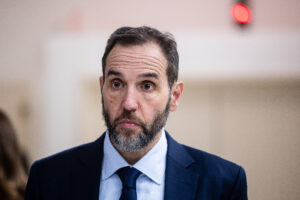
- 51 percent in new poll say they hope Democrats take control of House
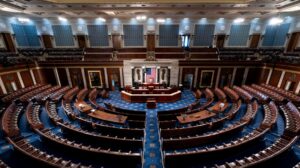
- TSA chief warns staffing problems could close airports, threaten World Cup

- Agriculture secretary: Rising fertilizer prices ‘shouldn’t be too disruptive’ for US farmers
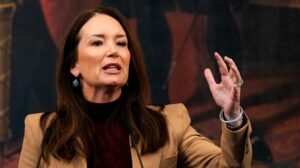
- Pentagon testing judge’s ruling on press restrictions –it’sabout control

- Maxine Waters, 87, refuses to retire, could chair powerful committee

-

 The Dictatorship1 year ago
Luigi Mangione acknowledges public support in first official statement since arrest
-

 Politics1 year ago
Former ‘Squad’ members launching ‘Bowman and Bush’ YouTube show
-

 Politics1 year ago
Former Kentucky AG Daniel Cameron launches Senate bid
-

 Politics1 year ago
Blue Light News’s Editorial Director Ryan Hutchins speaks at Blue Light News’s 2025 Governors Summit
-

 The Dictatorship7 months ago
Mike Johnson sums up the GOP’s arrogant position on military occupation with two words
-

 The Dictatorship1 year ago
Pete Hegseth’s tenure at the Pentagon goes from bad to worse
-
Uncategorized1 year ago
Bob Good to step down as Freedom Caucus chair this week
-

 Politics11 months ago
Democrat challenging Joni Ernst: I want to ‘tear down’ party, ‘build it back up’