
Politics
Talarico won his primary. What happens next is outside his control.

James Talarico’s charmed political journey has broken his way at almost every juncture of his career, from “The Joe Rogan Experience” invite as he was weighing a Senate bid last summer to his star turn in Texas’ quorum break to a fundraising windfall over a spiked Stephen Colbert interview in the primary’s homestretch.
But as he gave his not-quite-victory speech late Tuesday night, Talarico faced a more uncertain future than he had hoped. The Associated Press eventually called the election for him hours later, though voting problems in Crockett’s home base of Dallas County delayed the result.
And suddenly, it looks like he could face a much tougher opponent than he’d banked on in the general election.
Talarico and Democrats had hoped for months that the preacher would get to face scandal-tarred Texas Attorney General Ken Paxton, but Sen. John Cornyn (R-Texas), a less objectionable general-election foil, had outperformed expectations and fought him to a draw, forcing a runoff.
For the disciplined and studious Democrat who can commit scripture and prepared remarks to memory in a matter of minutes, and who is known by aides to linger over edits to social media posts and ads, the unknown outcome of the runoff is an unwelcome twist, the seemingly rare thing he cannot control.
Even with a 12-week head start on whomever voters select as his opponent in a brass-knuckled, dregs-scraping, cash-consuming GOP runoff, Talarico could still face a four-term incumbent with a long track record of big general-election wins.
Amid a legal dispute over voting precinct hours in Dallas County, Talarico did not quite declare victory in a short speech just after midnight local time, when he was leading the race but before the Associated Press called it.
“We are still waiting for an official call, but we are confident in this movement we’ve built together,” he said after lamenting what he called “voter suppression.”
“We are not just trying to win an election,” Talarico said at his rally in Austin. “We are trying to fundamentally change our politics, and it’s working.”
Earlier Tuesday, a district judge permitted the Dallas County Democratic Party to extend polling hours until 9 p.m. central, but the Texas Supreme Court granted Attorney General Ken Paxton’s request to set aside the votes of those people who were not in line by 7 p.m.
The polling problems are just the latest in a long history of voter suppression and voting rights battles in the state — ones that have particularly impacted Black and Hispanic voters. Crockett first gained national attention as a state representative battling against the Texas GOP’s move to pass a law that added new restrictions on voting, an issue once again in the spotlight as her Senate campaign came to a close.
In a statement earlier in the evening, Talarico’s campaign acknowledged that they were “deeply concerned about the reports of voters being turned away from the polls in Dallas and Williamson counties following the GOP’s implementation of precinct-specific voting locations for Election Day.”
Talarico ran well in heavily white and Hispanic areas on Tuesday, but has conceded he has work to do with Black voters if he’s going to win in November — an effort that could be complicated by the sour final note of voter confusion.
The final stretch of the contest pitted Talarico’s and Crockett’s supporters against each other in bitter feuds, often along racial lines, that played out on social media platforms like TikTok and X. Those debates focused on whether Democrats believed Crockett, a Black representative from Dallas, could be elected in a deep-red state — as well as over a claim made by a social media influencer that Talarico had described a former opponent as a “mediocre Black man,” comments he says were misconstrued.
Still, his strong performance against Crockett has jolted Democratic hopes of winning Texas for the first time in more than a generation, forging a wider than expected path to flipping the Senate — and out of the wilderness.
“I’d be very worried if I were the national Republican Party after tonight,” said Emily Cherniack, the founder and CEO of New Politics, and a longtime Talarico ally. “Strong turnout, especially among Latino voters, signals real dissatisfaction with Republicans in power. That’s a huge warning sign for November for them.”
Up until Tuesday, Senate Democrats had staked their chances of flipping the Republican-controlled Senate on just four states: North Carolina, Maine, Ohio and Alaska.
But now, some Democrats believe Talarico can cobble together a winning coalition in the most improbable of states — no Democrat has a Senate seat in Texas since 1988 — based on his class-focused message seeking to unite voters across parties.
“A perfect storm is lining up for Texas Democrats,” said Mark McKinnon, the former Texas media operative who started out advising Democrat Ann Richards on her gubernatorial campaigns before switching to Republican George W. Bush in 1997. “They have a nominee who can appeal to moderates and soft Republicans. Talarico could be Moses who leads the Lone Star Democrats out of the desert they’ve been in for 35 years.”
Public and private polls have mostly shown close races in either matchup; Talarico would start off with the edge over Paxton but trail Cornyn.
“It is still a massive mountain to climb, but this doesn’t hurt the effort,” one former staffer on Kamala Harris’ presidential campaign said of Talarico’s win.
Talarico has argued that he can beat either foe.
“I think both of them are extraordinarily weak,” Talarico said in an interview with Blue Light News just days before Election Day. “Paxton and Cornyn, they’re different. Paxton was guilty of illegal corruption. That’s why my colleagues and I impeached him in the Texas House. But Cornyn is guilty of legalized corruption. He was the deciding vote on the Big, Ugly, Bill which kicked millions of Texas off their health care, took food out of the mouths of hungry Texas kids all to give tax breaks to his donors. Both of them are guilty of using their public offices to enrich their donors — Ken Paxton in an illegal way, but John Cornyn in a legal way. I look forward to prosecuting the case against either of them — whoever makes it out.”


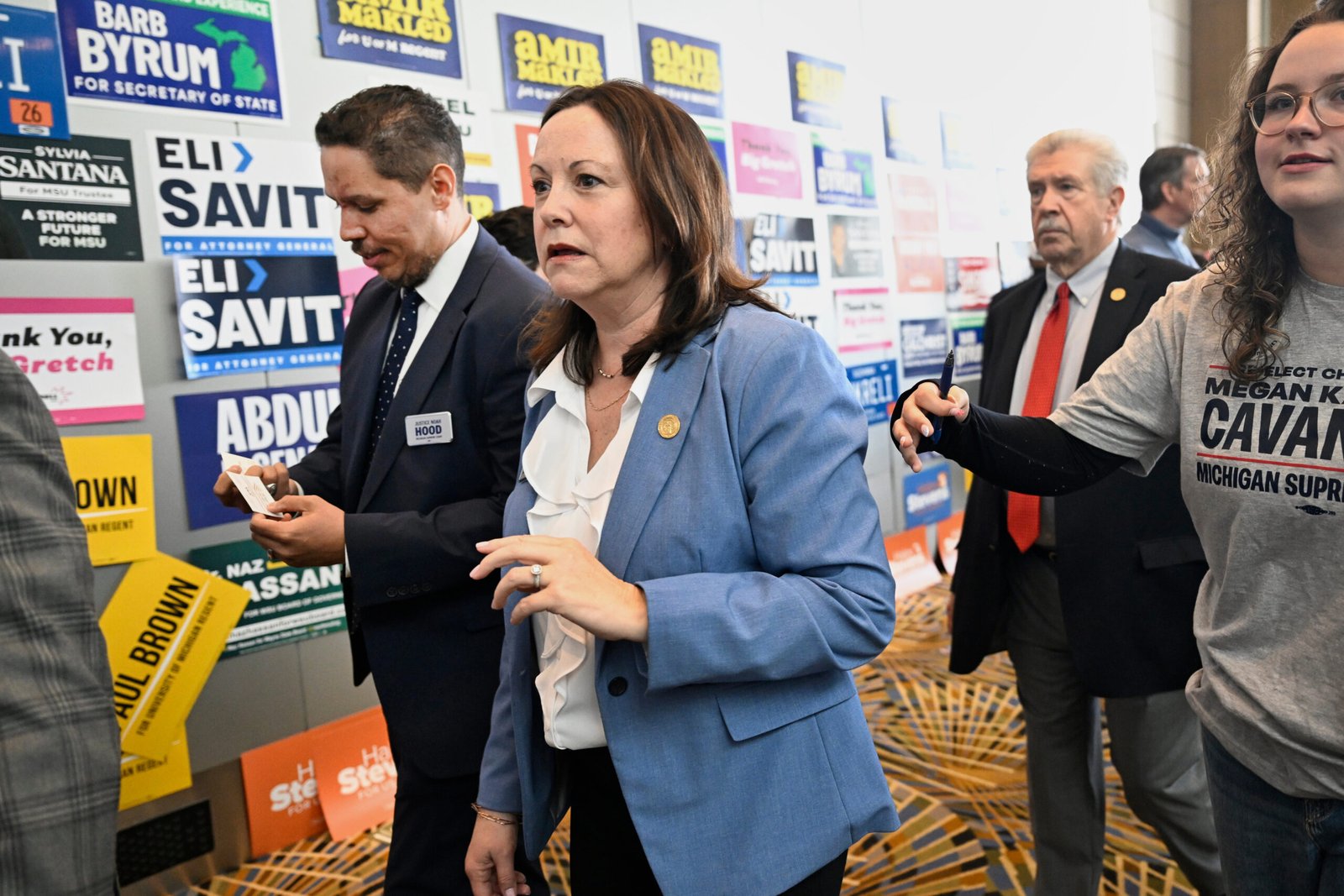
Liberal groups have spent millions in a handful of battleground state supreme court races ahead of Tuesday’s elections, looking to lay the groundwork for Democrats to win control of more courts ahead of a crucial redistricting cycle.
At the center of the fight are races for Republican-majority state supreme courts in North Carolina and Ohio, where this year’s results could set the stage for Democrats to flip the makeup of the benches in 2028. National groups are also spending to defend the liberal majority on Michigan’s court and on an open seat in Montana, where voters will also decide whether judicial elections remain nonpartisan.
The investments are yet another reflection of how state supreme court elections have become national political battlegrounds. The high court justices have become arbiters of major disputes, from abortion rights to election integrity and redistricting. Those who win in the coming cycles will likely preside over challenges to congressional and legislative maps that are drawn in a handful of states after the midterm election — and then nationwide after the 2030 census.
Nowhere are the contests more heated than in North Carolina.
Democrats’ defense of a seat currently held by Anita Earls is “step No. 2” to flip the North Carolina Supreme Court, said Anderson Clayton, the state’s Democratic Party chair. “In 2028, we’re looking at being able to take three Republican seats on that court.”
Democrats lost four seats on the state supreme court in the 2020 and 2022 elections, and the Republican majority cleared the way for a Republican-led gerrymandering in 2023.
Clayton said her group has spent more than $1 million on the state supreme court race. Earls has also drawn support from national Democrats like Pete Buttigieg and Maryland Gov. Wes Moore.
“If we had won a state Supreme Court race then in 2020 in our state, Hakeem Jeffries would be speaker of the House right now,” said Clayton, adding that her group is trying to build the foundation for congressional majorities “in 2032 and beyond.”
The ACLU is among the groups making long-term investments in state supreme court races. It has poured $8 million into state supreme court races in North Carolina, Michigan and Montana this year, in addition to Georgia and Wisconsin races earlier this year, said Deirdre Schifeling, the group’s chief political and advocacy officer, making it one of the top spenders in these contests.
The ACLU’s multi-cycle strategy to build “pro-civil rights, civil liberties majorities” is also targeting Arizona, Pennsylvania, Kentucky and Ohio, Schifeling said. The group already set aside resources for supreme court races in Wisconsin and Pennsylvania in 2027 and will begin fundraising for the 2028 races early next year.
More than $14 million has been spent on television ads in North Carolina, Michigan, Ohio and Montana, most of it benefiting Democratic and liberal-leaning candidates, according to estimates from the liberal-leaning Brennan Center for Justice. Most of the liberal candidates have also outraised their conservative competitors.
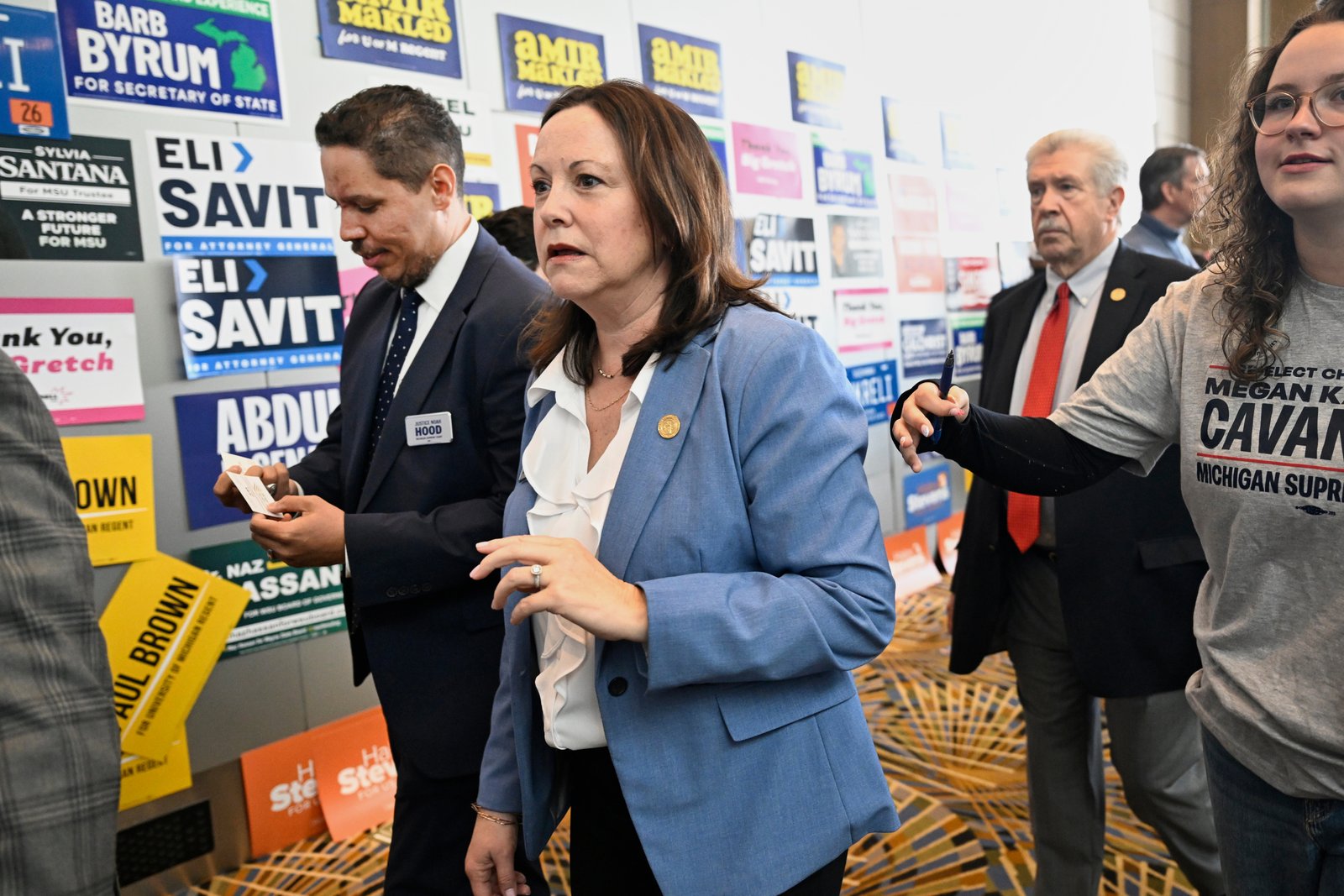
By contrast, the electoral headwinds have forced Republicans to defend statewide offices and state legislatures they currently control, leaving fewer resources for the judicial races.
Republican-aligned groups like the Republican State Leadership Committee — the party’s chief downballot campaign organization — have largely stayed on the sidelines this cycle after warning for months they were being swamped by Democrats. The organization’s judicial affiliate reported more than $5 million in expenditures across 2024 and 2025.
“Democrats understand what is at stake, and have dumped massive amounts of resources into these contests,” said RSLC President Edith Jorge-Tuñón in a statement. “The RSLC is fighting back with smart and targeted spending because the investments we make today will determine whether we are positioned to protect our majorities, compete in the next redistricting cycle, and secure Republican victories for years to come.”
The National Democratic Redistricting Committee — the party’s main redistricting-focused group — declined to discuss this year’s total spending in judicial races this year, but NDRC President John Bisognano said in a statement that “the upcoming 2026 and 2028 state supreme court elections are critical to the long-term fight to protect democracy.”
And those involved in supreme court fights said they believed spending will only increase down the road, particularly from major industry players.
“I think that the money flowing into those races from external interests tells the tale of what big money, big pharma, big data recognize about the next areas that they can seek to leverage and control to their benefit,” said Tish Gotell Faulks, the state courts director at the liberal Alliance for Justice Action. “Those interests are now turning to the state courts and seeking to capture those courts as well.”
Democratic Rep. Haley Stevens endorsed Republican Mike Rogers in the Michigan Senate race on Sunday — a stunning break with her party that derails Democrats’ attempts to create a united front for Abdul El-Sayed.
Her endorsement comes just a few days after she said she was going to vote for El-Sayed.
The two former primary rivals have been locked in a public, escalating feud over El-Sayed’s and his allies’ criticism of Israel.
“Abdul said that I was no longer welcome in his campaign and that I should stay away. And he’s right,” Stevens said in a video posted to social media on Sunday after she appeared at a Detroit church alongside Rogers.
“And that’s why I am endorsing Mike Rogers for the United States Senate today,” she said. “I don’t belong in Abdul’s campaign.”
- Democrats eye state supreme court races — this year and beyond

- The trust-busters going after CVS are Republicans
- New York Republicans bet anger at Albany can blunt a Trump backlash
- Shapiro’s strategy for tackling measles outbreak: Don’t listen to RFK Jr.
- Democratic Rep. Haley Stevens endorses Republican Mike Rogers for Michigan Senate
- Chris Murphy is hospitalized after stroke
- November 2026
- Why a MAHA mom who loves RFK Jr. is backing Democrats who don’t
- Progressives and moderate Dems are already jockeying to claim credit for Tuesday
- Raphael Warnock is ‘nauseously optimistic’ about Dem’s midterm chances

-

 Politics2 years ago
Former ‘Squad’ members launching ‘Bowman and Bush’ YouTube show
-
Uncategorized2 years ago
Bob Good to step down as Freedom Caucus chair this week
-

 The Josh Fourrier Show2 years ago
DOOMSDAY: Trump won, now what?
-

 Politics1 year ago
John Legend advises Trump to drop the ‘dictator s‑‑‑’ if he wants Nobel Peace Prize
-

 The Dictatorship2 years ago
Pete Hegseth’s tenure at the Pentagon goes from bad to worse
-

 Politics2 years ago
Former Kentucky AG Daniel Cameron launches Senate bid
-

 The Dictatorship2 years ago
Luigi Mangione acknowledges public support in first official statement since arrest
-

 Politics2 years ago
Blue Light News’s Editorial Director Ryan Hutchins speaks at Blue Light News’s 2025 Governors Summit