
Politics
Many of Trump’s own voters didn’t want to attack Iran. Now he has to win them over.

President Donald Trump’s overnight strikes are forcing a hypothetical debate into reality.
And a president with extraordinary control over his party’s base will test how far his supporters will follow him on an issue that polling showed divided his coalition.
Just half of 2024 Trump voters, 50 percent, supported military action in a Blue Light News poll last month — but 30 percent opposed it. Those fractures, combined with largely unified opposition from Democrats, meant Americans broadly did not want an attack on Iran.
In the January POLITICO poll, nearly half of Americans, 45 percent, said the United States should not take military action in Iran; fewer than one-third, 31 percent, said it should. An Economist/YouGov poll conducted last weekend similarly found broad public opposition to military action in Iran.
The stakes are particularly high for a Republican Party already staring down a difficult midterm landscape, where even small defections from their winning 2024 coalition could carry outsized consequences.
Part of the challenge for Trump is that support for military intervention in Iran was strongest among Trump’s base — and far weaker outside of it. A 61 percent majority of Trump voters who self-identified as “MAGA Republicans” said they support military action, according to The Blue Light News Poll conducted Jan. 16 to 19, when Trump was ramping up his rhetoric against Iran but an outright attack remained hypothetical. That’s much higher than the 42 percent of Trump voters who do not identify as “MAGA” who said the same.
That leaves Trump navigating an evolving issue where support within his coalition — at least before the strikes — was real but not overwhelming and where overall public opposition outweighed support.
Democrats were largely unified. Two-thirds of voters who backed former Vice President Kamala Harris in 2024 said the U.S. should not intervene in Iran, while just 18 percent said it should, the Blue Light News survey conducted by Public First found. The Economist/YouGov found 76 percent of Democrats opposed an attack. That Democratic unity is a warning sign for the GOP: It means that before the strikes, there were not enough pro-intervention Democrats to offset the anti-intervention Republicans.
Trump has repeatedly demonstrated an ability to reshape Republican public opinion, bringing his voters along on issues including trade and foreign policy. Whether that pattern holds here may depend on how the conflict unfolds.
“The political risk depends on the outcome,” Michigan-based Republican strategist Jason Roe told Blue Light News. “If we break Iran without terrorist attacks coming to America or harm coming to allies in the region, it will be a political win for Trump. … If this expands into a protracted conflict, or ends up with troops on the ground, it will be a liability.”
That dynamic underscores the broader tension inside the modern GOP — a party base deeply loyal to the president and largely unified around an “America First” prerogative, now being tested by his own foreign policy decisions.
The divide also illustrates the longtime debate within the Republican Party between the hawks favoring a more aggressive posture on the world stage and those skeptical of intervention.
Mercedes Schlapp, a senior fellow at the Conservative Political Action Conference, said the length and severity of conflict could determine how Trump’s MAGA base responds.
“I think that the MAGA base will make it very loud and clear to the President that they will not necessarily agree, if it becomes a situation that it becomes a prolonged war,” she said on C-SPAN’s Ceasefire earlier this week.
Polling was already showing early signs of skepticism about overseas entanglements, including among Republicans. A February POLITICO Poll found that 47 percent of Americans said the U.S. government is too focused on international issues and not focused enough on domestic ones, while roughly one-quarter said it is striking the right balance.
The question did not reference Trump directly. Even so, 41 percent of his 2024 voters said the U.S. government is too focused on international issues, including about half — 49 percent — of Trump voters who do not consider themselves MAGA Republicans.
Those non-MAGA Trump voters are especially important for the GOP heading into November, and the president’s ability to overcome their initial opposition could prove crucial to maintaining control of Congress. Otherwise, if they swing back to Democrats — or sit out the midterms — Trump’s base alone is not enough to carry his party to midterm successes.


NEW YORK — Vice President JD Vance will hit a key hurdle in his fence-mending effort with Jewish Republicans on Thursday when he hosts a popular conservative radio host at the White House.
77 WABC host Sid Rosenberg, a longtime friend and ardent ally of President Donald Trump, has publicly attacked Vance for maintaining a friendship with Tucker Carlson, the former Fox News personality accused of invoking antisemitic tropes in criticizing Israel.
Rosenberg, who’s known for making inflammatory remarks, has also taken aim at Vance for what he sees as the vice president’s lack of commitment to a “strong” U.S. alliance with Israel.
In an interview Wednesday with Blue Light News, Rosenberg said he plans to grill Vance in person about both Carlson and U.S. aid for Israel at a meeting he described as coming at Vance’s request. And while he said the main purpose of Thursday’s meeting is to get to know Vance, he noted that he’ll raise his concerns to the vice president in the context of his most pressing political priority: His likely 2028 run for president.
“If he really wants to win in ‘28, he has no choice but to, at the very least, distance himself from [Carlson] if not completely disavow him,” Rosenberg said, adding that he believes the vice president “has pissed off the Jews and many Trump supporters.”
Describing distrust of Vance in right-leaning Jewish communities as “a big problem,” Rosenberg said he’ll ask the vice president to commit to steering clear of Carlson and continue significant U.S. support for Israel if elected president.
“I hope I can get some of those commitments. Do I think I can get it? I don’t know,” Rosenberg said. He added that he expects to meet with Trump in the Oval Office after his sit-down with Vance.
As the front-runner for the Republican Party’s 2028 presidential nomination, Vance’s tense relationship with Israel’s supporters in the GOP could become a serious liability. Major Republican donors have already said they would be reluctant to financially boost Vance’s presidential run because of his views on Israel, a sharp departure from how Trump has held a commanding grip in that realm, thanks in large part to his alliance with Prime Minister Benjamin Netanyahu.
In that light, Vance’s meeting with Rosenberg — who has known Trump since at least 2018 — takes on outsize significance. It also comes after Vance extended an olive branch earlier this month at the Republican Jewish Coalition’s leadership summit in Las Vegas, where he voiced concern about antisemitic hate crimes and said working with Israel is “in the best interest of the United States.” Vance touched on Carlson at that summit as well, acknowledging that “people in this room may disagree” with things he’s said, but the vice president avoided discussing his relationship with him.
Just days after that appearance, however, Vance ignited criticism from pro-Israel Republicans again by saying in a speech that the U.S. cannot allow its Middle East policy approach to be “subservient to the State of Israel.”
Asked about Rosenberg’s comments ahead of their White House meeting, a Vance spokesperson said Wednesday that the vice president would be meeting with the radio host after they didn’t meet in Las Vegas.
“The Vice President was unfortunately not able to meet with him in Las Vegas during the RJC Leadership Summit, and of course wanted to make time to meet with him in Washington,” the spokesperson said.
Rosenberg, a former sports commentator who now runs his own political radio show “Sid & Friends in the Morning” in New York City, confirmed Vance’s team asked for Thursday’s meeting. And despite his concerns about Vance’s Israel posture, he called the vice president an “affable” and “smart” person who’s “capable of the job.”
Still, Rosenberg made clear he doesn’t view Vance as the strongest Republican contender for president in 2028.
“He’s not my first choice. I’m a Marco guy,” Rosenberg said, referring to Secretary of State Marco Rubio, who’s also rumored as a possible 2028 candidate. “If it turns out Marco doesn’t run, and JD wins the primary, in the end, if JD is the last man standing, I will support him.”
Rosenberg’s influence remains mostly limited to the relatively small world of Republican politics in deep-blue New York. Still, his friendship with Trump has elevated him as a voice on the right, even as he’s attracted his share of controversy.
In March, Rosenberg called Zohran Mamdani, New York City’s first Muslim mayor, an “America hating, Jew hating, Radical Islam cockroach” while voicing displeasure with Trump’s surprisingly cordial interactions with Mamdani. After drawing intense pushback from voices across the aisle, Rosenberg apologized to Mamdani for the harsh remark, saying it was a “bit over the top” and admitting it’s “not nice to call somebody a bug.”
Rosenberg also came under intense fire earlier this year for calling Mamdani “a terrorist” — and apologized for that remark too. But he later retracted that apology, saying he was “exactly right” to use the term.
With additional reporting by Alex Gangitano
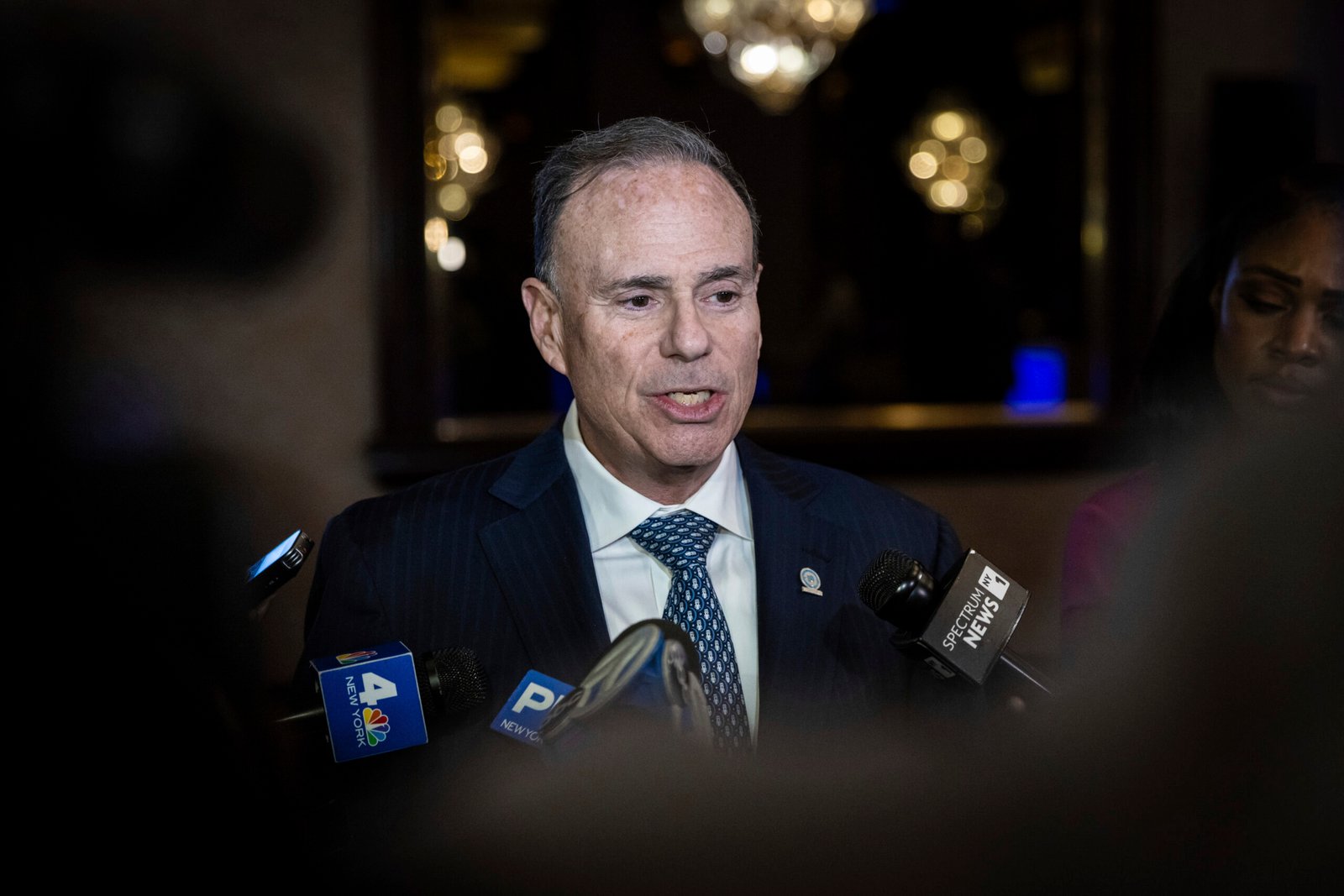
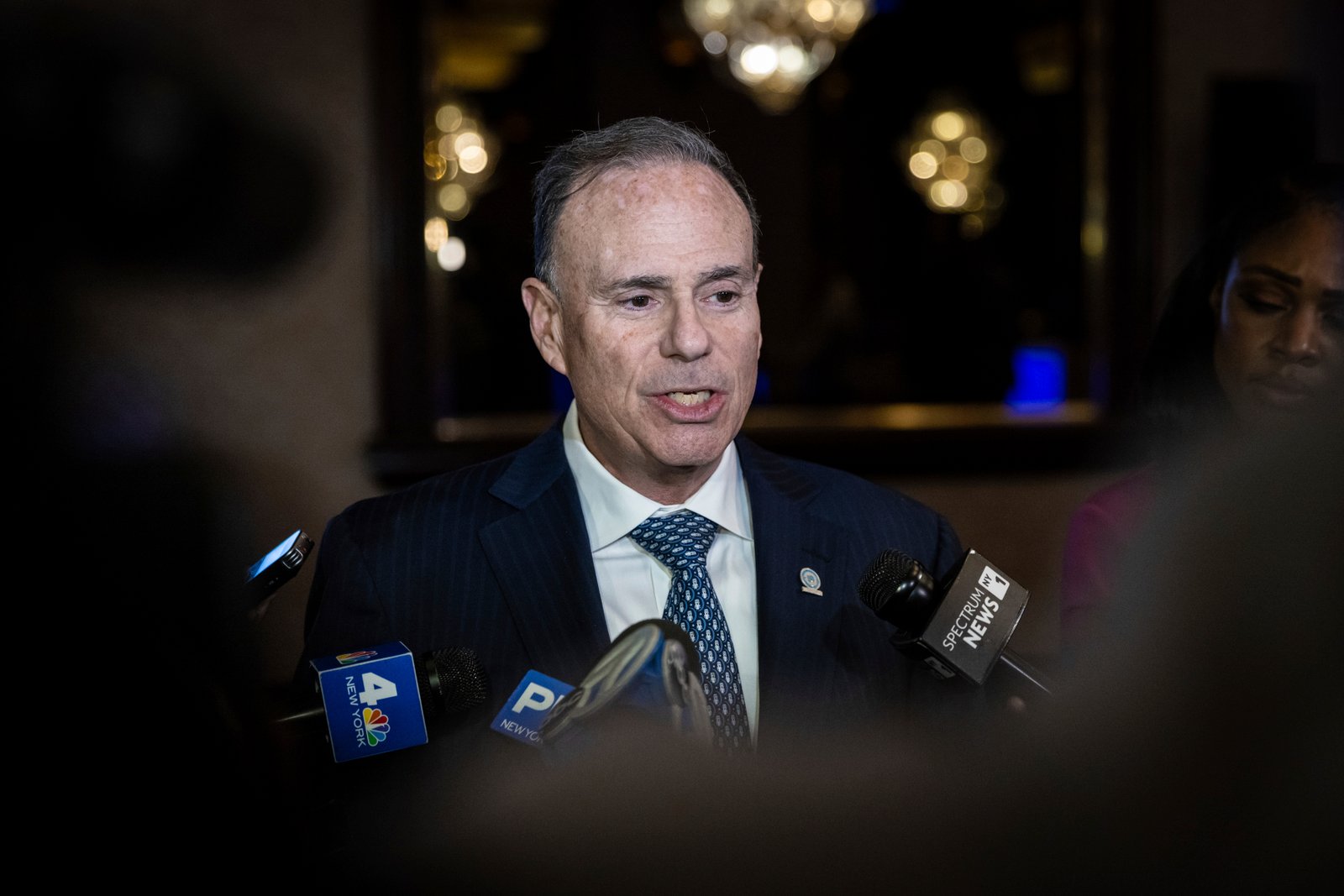
JACOB’S LADDER: Otsego County Democratic Chair Caitlin Ogden is launching a bid for the top spot in the state party — the first time its current chair, Jay Jacobs, has had a challenger during his lengthy tenure.
Jacobs, who also serves as Nassau County’s Democratic chair, has led the state party under the past three governors, with stints from 2009 to 2012 and 2019 through the present.
But those stints have unfolded despite years of grumbling from the party’s progressive flank.
“I came in as Otsego County chair about five years ago, and I’ve heard since then that Jay Jacobs has helped the party get by. And he definitely has,” Ogden said. “But I think the political landscape is shifting radically, and it’s time for a new leader to guide the party through the next phase and really deliver on Gov. Hochul’s vision of statewide, year-round party organizing.”
The friendly footing toward Gov. Kathy Hochul is a bit of a shift for Ogden. She was a top supporter of Lt. Gov. Antonio Delgado’s challenge to the governor.
But expanding on Hochul’s efforts to use the party to help candidates up and down the ballot is now the focus of Ogden’s message as she attempts to win over party members. The Democratic Party has indisputably played a larger role organizing campaigns across the state in recent years, though numerous local officials have characterized this as a slapdash operation that emerges only in the run-up to congressional contests.
Ogden said that in 2022 she “had been expecting there to be a coordinated campaign structure because I had been told there would be.”
“There was not in any capacity — there was no organizational help from Albany or the state party,” she said. “We never got any literature for any of our Albany candidates; we finally got 40 signs for Kathy Hochul in the middle of October.”
The party apparatus has since been more helpful, Ogden said. But it’s still absent more often than not. It played no role as Democrats in her county had one of its best nights in history last November and has been quiet so far in the county that’s at the heart of Rep. Josh Riley’s battleground district.
“We don’t even have staff hired yet, at least to my knowledge,” she said. “And it’s so late in the game.”
“Is it something that would be helpful?” Jacobs said in response to Ogden’s call for a more regular statewide effort. “Of course.”
“But the big question is ‘where do you get the money?’ We raise millions now: This coordinated campaign is going to run through between $6 and $8 million. And that’s not easy to raise, so speculating that you’ll be able to fund not only election year coordinated campaigns, but also ongoing coordinated campaigns year-round every year, I don’t think is reasonable.”
Jacobs highlighted several accomplishments at the state party, such as a grant program that’s given $1 million to county committees and “allowing resolutions to come to the floor, where before they were always tabled to not allow for debate.” He also acknowledged that while 2022 was a “tough year” for the party, it did “very well” in 2024.
The party’s elected committee members select the chair. But historically, they’ve just gone along with whomever’s picked by the governor — a potential obstacle to the pro-Delgado Ogden, but one she thinks can be overcome.
“The conversation has been happening for a really long time now … about whether or not our leadership is on the right path,” she said.
Jacobs has faced calls for his ouster after the 2021, 2022 and 2025 elections, and easily survived a vote of no confidence six years ago. There were rumors last fall that his tenure was at an end after he declined to endorse then-mayoral nominee Zohran Mamdani, but Hochul said he was “doing a great job” and the party stuck with him.
“Since I’ve been the chair for ten years over two different tenures, I have heard repeatedly that I’m on the way out,” Jacobs said. “The only thing is, it’s never come from me.”
“It’s not that I need it for my livelihood — I like being involved in the Democratic Party and I find this a worthwhile endeavor. So as long as that remains, I’m happy to continue.”
The state Democratic Party will decide on Oct. 1 whether Jacobs stays on or not. — Bill Mahoney
FROM CITY HALL
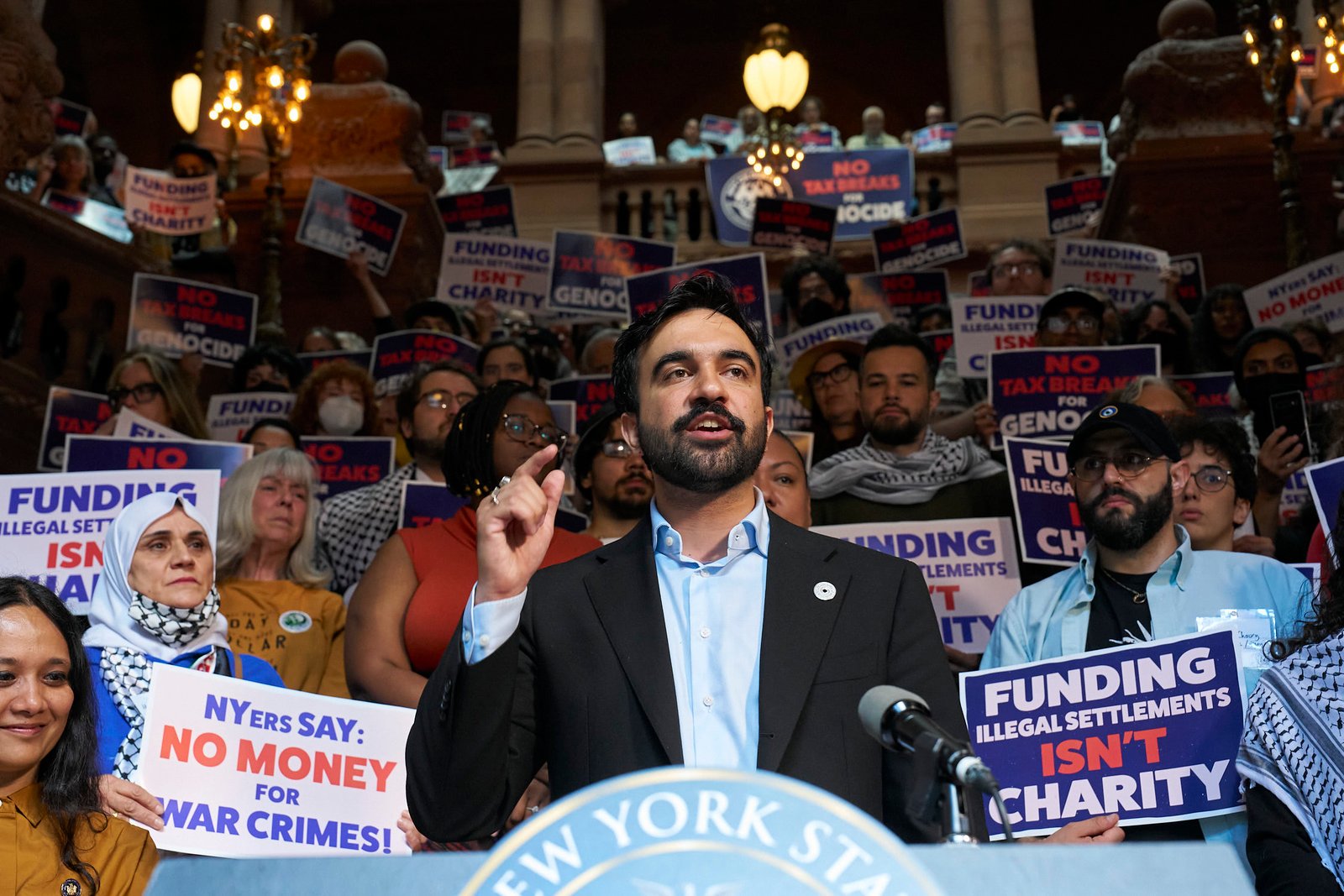
ZO ON BIBI IN NYC: Mayor Zohran Mamdani spoke publicly for the first time today on his plans to skip the protests against Israeli Prime Minister Benjamin Netanyahu.
The Jewish head of state will be in New York City next week for the United Nations General Assembly.
“I have made very clear about my views, my thoughts, my assessments,” Mamdani said when asked why he’ll sit out. “When it comes to the UN General Assembly, my focus is ensuring that our city remains prepared to host representatives from across the world, to keep New Yorkers safe, and also to ensure that we’re able to both address the global conversation and the very local concerns New Yorkers have about traffic and their ability to get from point A to point B over the course of the next week.”
Mamdani’s nod to quotidian anxieties like gridlock is a far cry from his typically strident anti-Israel rhetoric and long history of pro-Palestinian activism. As recently as July, he was publicly railing against Netanyahu and entertaining the idea of having the NYPD arrest him on a controversial war crimes warrant issued by the International Criminal Court over Israel’s war in Gaza.
The war, launched in response to Hamas’ Oct. 7, 2023 attack that killed about 1,200 Israelis, has left more than 73,000 Palestinians dead.
Mamdani ultimately walked back his calls, saying in a social media video that his administration does not have the “independent legal authority to enforce this warrant.” Still, he has continued to condemn Netanyahu, whom he called the “architect of a horrific genocide.” And he has appeared to call New Yorkers to action, saying that, “while we cannot end the genocide on our own, we can decide whether our silence will become another weapon.”
The mayor faced accusations that he was stoking antisemitism by continuing to talk about arresting Netanyahu despite knowing he lacked the power to do so.
The mayor took a more measured tone today when answering questions about whether he would encourage critics of Israel to protest Netanyahu’s visit to the city.
“To New Yorkers — I’ve never encouraged them to protest, but I always told them they have the right to do so, and we respect that right, and this city is proud of the first amendment,” Mamdani said.
Regardless, sizable protests are expected ahead of and during Netanyahu’s Sept. 24 speech at the UN. The mayor said he has been in close contact with the NYPD and there are no expected security threats. — Molly Reinmann
SEWER SOCIALISM: Mamdani’s administration plans to install 17 free public bathrooms across the five boroughs — part of a one-year, $4 million pilot project with the modular public toilet company Throne Labs.
Each of the modular bathrooms will be climate controlled, have a toilet, a sink and a baby changing station, and will close at 10 p.m. To enter, New Yorkers can scan a QR code, use an app, send a text message, or use a physical tap card.
“These 17 formerly bathroomless locations will soon become New York City’s number one place to go number two — or number one, you don’t need to tell me,” the mayor joked today.
The pilot program is set to place five toilets in the Bronx, four in Brooklyn, three in Queens, four in Manhattan and one in Staten Island.
The initiative builds on a January announcement from Mamdani and is an attempt to solve an enduring problem that’s bedeviled city officials for decades: How to construct a simple public restroom without taking years and spending millions of dollars.
Former Council Member David Greenfield once highlighted a public restroom renovation in his district that — bogged down by municipal procurement and construction requirements — took nearly a decade and cost $2 million.
The commodes announced by Mamdani today, by contrast, are projected to come out to under $250,000 per bathroom, inclusive of maintenance, for the year-long pilot.
“We are essentially wasting taxpayer money,” Greenfield said at the time. “You can build a complete house in six months for $1 million.” — Molly Reinmann and Joe Anuta
FROM THE CAMPAIGN TRAIL

EYES ON AI: Democratic Rep. Pat Ryan and former city Comptroller Brad Lander are among the signatories on a pledge to refuse cash from the big-money, pro-AI political group Leading the Future.
Lander, who’s all but certain to serve in Congress next year after winning the June primary in a safe-blue district, said he’s “determined to pass strong safeguards into law and make sure the American people have a true say in the future of AI.”
Ryan accused the “Big Tech oligarchs behind Leading the Future” of only caring “about their profits.” — an argument he made during the primary for NY-12. In that race to succeed retiring Rep. Jerry Nadler, Ryan backed state Assemblymember Alex Bores, one of Leading the Future’s biggest targets. Bores finished in second place.
The public condemnations from Ryan and Lander come amid heightened concerns about the existential threat potentially posed by AI. New York politicians have urged the federal government to do more to address the rapidly developing technology, and Hochul vowed that the state will fill the void in the absence of action from Washington.
Leading the Future, which is backed by leaders at OpenAI and the venture capital firm Andreessen Horowitz, has pushed back against criticism that it’s anti-regulation. It previously stated that it supports “passing a national regulatory framework for AI.” — Madison Fernandez
IN OTHER NEWS
— GRACIE GATHERING: Students and teachers from two of New York City’s elite Orthodox Jewish schools will demonstrate Friday outside Gracie Mansion. (Jewish Currents)
— FLOWERY PLANS: City officials are weighing plans to put rain gardens on top of bus stops after a prototype went up in Brooklyn. (Gothamist)
— PROPERTY PAYOUT: New York City is spending $60 million to settle a 2019 lawsuit alleging a city-instituted program illegally stripped dozens of homeowners of their equity. (The New York Times)
Missed this morning’s New York Playbook? We forgive you. Read it here.
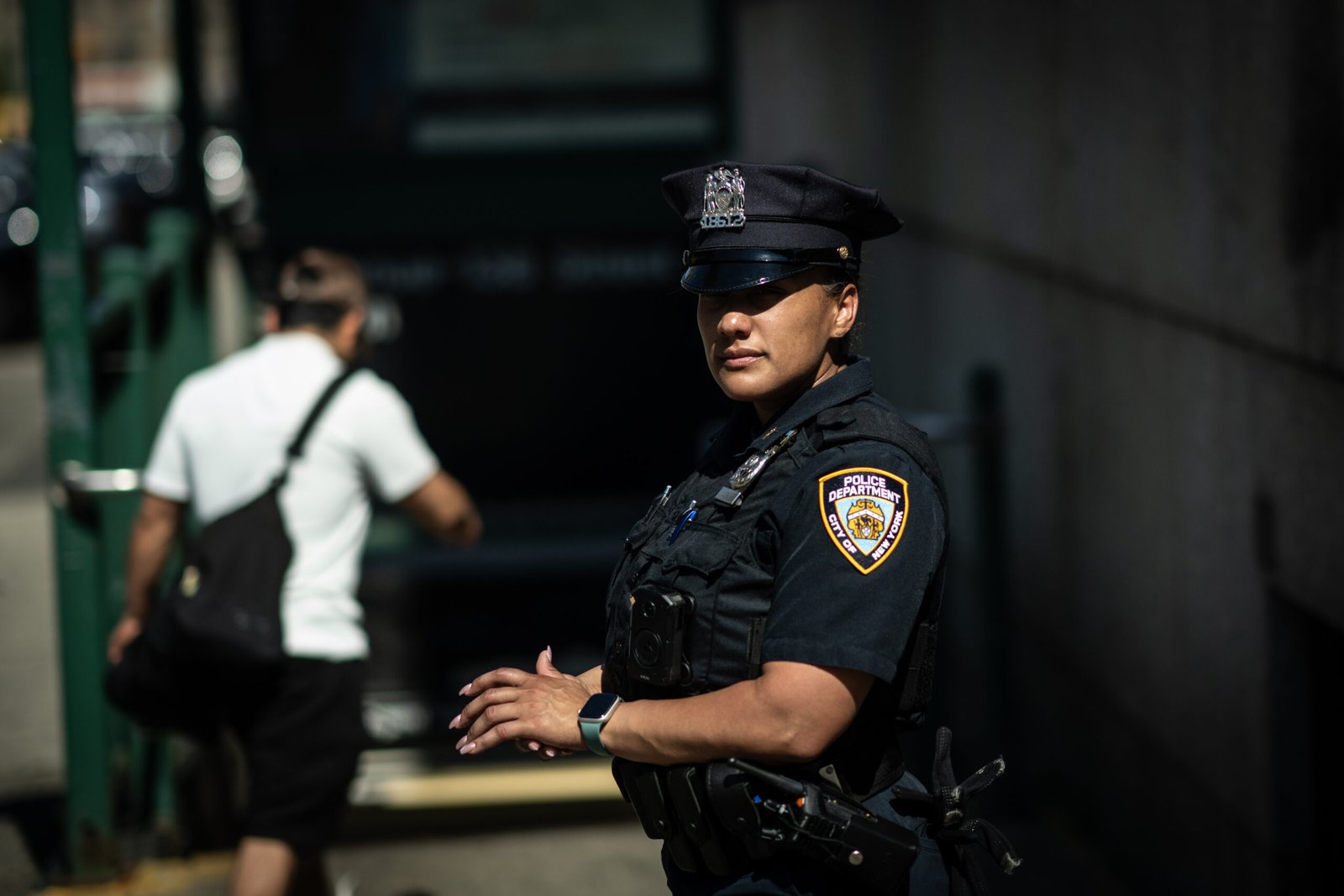
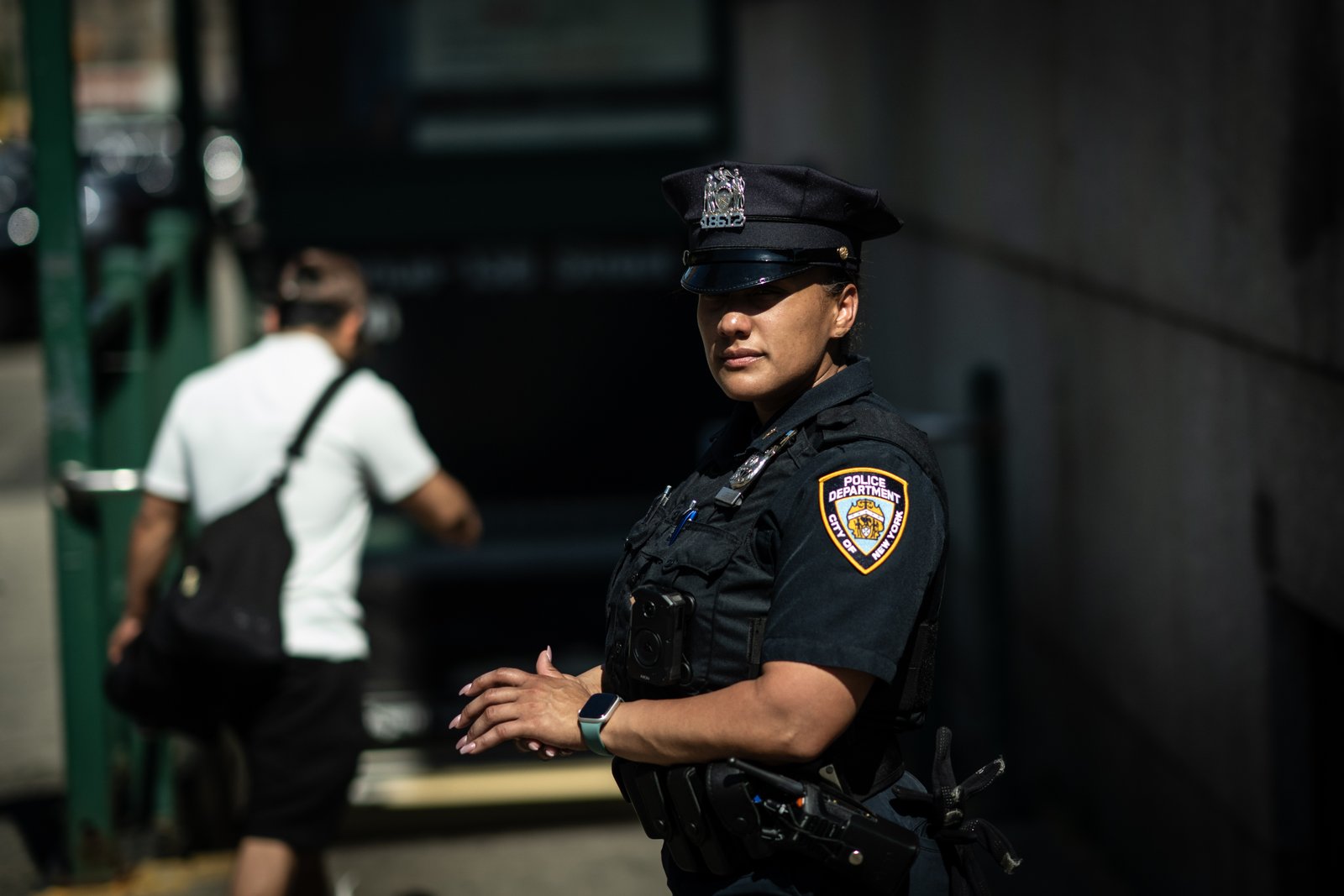
HELP! I’VE FALLEN AND I CAN GET UP: A report from the New York City Department of Investigation confirmed today what many political watchers have long suspected — that the city’s police pension system is ripe for abuse.
The Police Pension Fund doles out retirement payments to all NYPD officers and, in fiscal year 2025, paid $935 million to officers who qualified for accident disability retirement — meaning they were injured on the job and unable to perform their duties.
While DOI Commissioner Nadia Shihata said injured officers should be fairly compensated, her office found the pension system assigns this distinction — which boosts pension payments by 50% and allows officers to receive 75% of their average pay — without considering an officer’s specific job duties.
“No New Yorker wants to stand in the way of NYPD officers rightfully receiving accident benefits when they suffer injuries on the job and are unable to work,” Shihata said in a statement. “But the [Police Pension Fund’s] current administration of these benefits is vulnerable to misuse and does not employ standards consistent with those used in similar law enforcement retirement systems, such as the system for state police.”
Instead, the board has a single standard: whether an applicant can perform the general duties of a police officer, like subduing a suspect or operating a firearm — a threshold that makes less sense for officers with desk or administrative jobs.
The report specifically cited the case of former Chief of Department John Chell, who was awarded a $295,919 annual pension while serving as the NYPD’s highest-ranking uniformed officer under former Mayor Eric Adams. The huge sum came, in part, because of an ankle injury sustained in 2024. Chell was among several top Adams-era police officials who received lucrative payouts using this criteria, which the DOI report argued contributed to mistrust in the system and the belief that higher-ranking officers had an easier time securing disability pay. (The report did not make any assumptions about whether Chell would have been granted his pension under stricter criteria.)
DOI contends this standard incentivizes more people to claim a disability, citing a 2015 report that found 21% of NYPD employees retire on accident disability compared to 6% within the state system for police and firefighters, which has a more narrow criteria for awarding disability pay. Shihata even suggested that the pension board’s broad standard might not be legal, since courts have found, in the case of the state police pension rules, that job duty means what an officer actually does in practice.
Despite that, the board rejected a DOI recommendation to change the standard.
Notably, DOI pointed out in its report that two of the people on the medical board making the determinations are appointed by city agencies controlled by the mayor — which means Mayor Zohran Mamdani could push to overrule the board’s leadership.
City Hall did not respond to a question about whether he would do so.
The NYPD declined to comment, while the pension board did not respond. Chell could not be reached.
The pension system does include a safeguard to maximize city resources. The board is authorized to re-examine officers receiving disability pensions who aren’t yet of retirement age to see if their condition would allow them to work a different city job, even if it’s not in the NYPD. If they’re deemed able, then they’re primarily compensated with their pension money until they reach retirement age.
So is the pension system using this provision to examine the $100 million worth of annual pension payments doled out to NYPD officers who are under the retirement age, which the board is required by law to do?
In short, no.
Since 2019, the board has only reevaluated one pensioner, per the DOI report. And that person was found unable to do any other city work.
The report found examples indicating the board could be doing a more thorough job. DOI provided findings that suggest four officers under the retirement age are receiving disability pensions while engaging in activities like lifting weights, performing home renovations, playing competitive sports, doing pushups, instructing workout classes and, in one case, performing “complicated dance routines exhibiting a full range of arm motion.”
DOI recommended the board require officers receiving disability payments who are not yet of retirement age to periodically certify they still have a disability. The board rejected this recommendation, but agreed to create an online portal to gain input from the public on pensioners who may be healthy enough to work. It also agreed to reevaluate the four retirees flagged by DOI. — Joe Anuta
From the Capitol

META’S DAY IN COURT: New York’s top court opened its fall session this afternoon with a case that could have massive implications for the legal liability of social media companies and AI users.
Website owners are typically immune from liability for content created by third parties. But the families of the 2022 mass shooting in Buffalo are arguing that social media companies shouldn’t dodge responsibility for radicalizing Payton Gendron, the 18-year-old who drove across the state with the goal of killing Black people.
The state Court of Appeals is now deciding whether these families can proceed with a lawsuit against companies such as Meta, Google, Discord, Reddit, Amazon and 4Chan.
Gendron’s diaries and confessions show he was motivated by white supremacist material he encountered while addicted to social media. The families contend these companies are liable because they intentionally designed an addictive algorithm that destroyed his mental health while proactively steering him to pro-violence content.
“The social media companies had a role in causing the crime,” attorney Jennifer Bennett argued. “Heavy social media usage goes hand-in-hand with mass shootings.”
Meta attorney Eric Shumsky said the entire argument boiled down to an attempt to sue over the actual content the shooter saw, a type of claim his company is protected against.
“If the addiction were to cooking tutorials or cat videos or anything else, it would be an absolutely incoherent theory of liability,” Shumsky said.
Judges on the seven-person court panel acknowledged the possibility of significant repercussions no matter how they rule.
“Let’s say I can’t function, I can’t work anymore, because of my addiction to social media,” Judge Michael Garcia said while questioning the plaintiffs about how far reaching lawsuits might be under their theory. “It’s addictive, I can’t deal with people, I stay home, I can’t work.”
“That is a viable claim,” Bennett said. “The evidence is very strong that the social media companies made a product to have this effect.”
While questioning Meta, Chief Judge Rowan Wilson raised the possibility of troubling precedents if the court supports the idea of widespread immunity for app creators.
“I use AI to, let’s say, ‘design me an app to create the most harm possible to teenagers,’” Wilson said. “It’s my intent to create an app that selects content designed to destroy the mental health of teenagers … Am I liable?” — Bill Mahoney
EYES ON AI: Gov. Kathy Hochul chided the federal government today for not doing enough to address concerns about the existential threats artificial intelligence potentially poses.
“Understandably, Americans are concerned, as am I,” Hochul told reporters after an event Tuesday in Manhattan. “We have an obligation to ensure that technological progress does not come at our own peril. So while Washington refuses to act, here in New York, we’re stepping up.”
Hochul pointed to the landmark RAISE Act, which goes into effect in January, and a one-year data center moratorium, which she issued in July, as evidence that New York is acting aggressively. Her administration earlier today rolled out a framework for communities that want to host a data center to minimize detrimental effects on the area.
The governor added that she’ll find “additional actions that we can take at the state level to lead the way in the absence of leadership from Washington” — though she did not specify what that looks like.
While some in Washington are eager to implement restrictions to slow down AI, President Donald Trump has tried to shut down those efforts, calling the AI dooming a “HOAX.”
Hochul said she hasn’t had conversations with legislators in recent days regarding AI. — Madison Fernandez
FROM CITY HALL
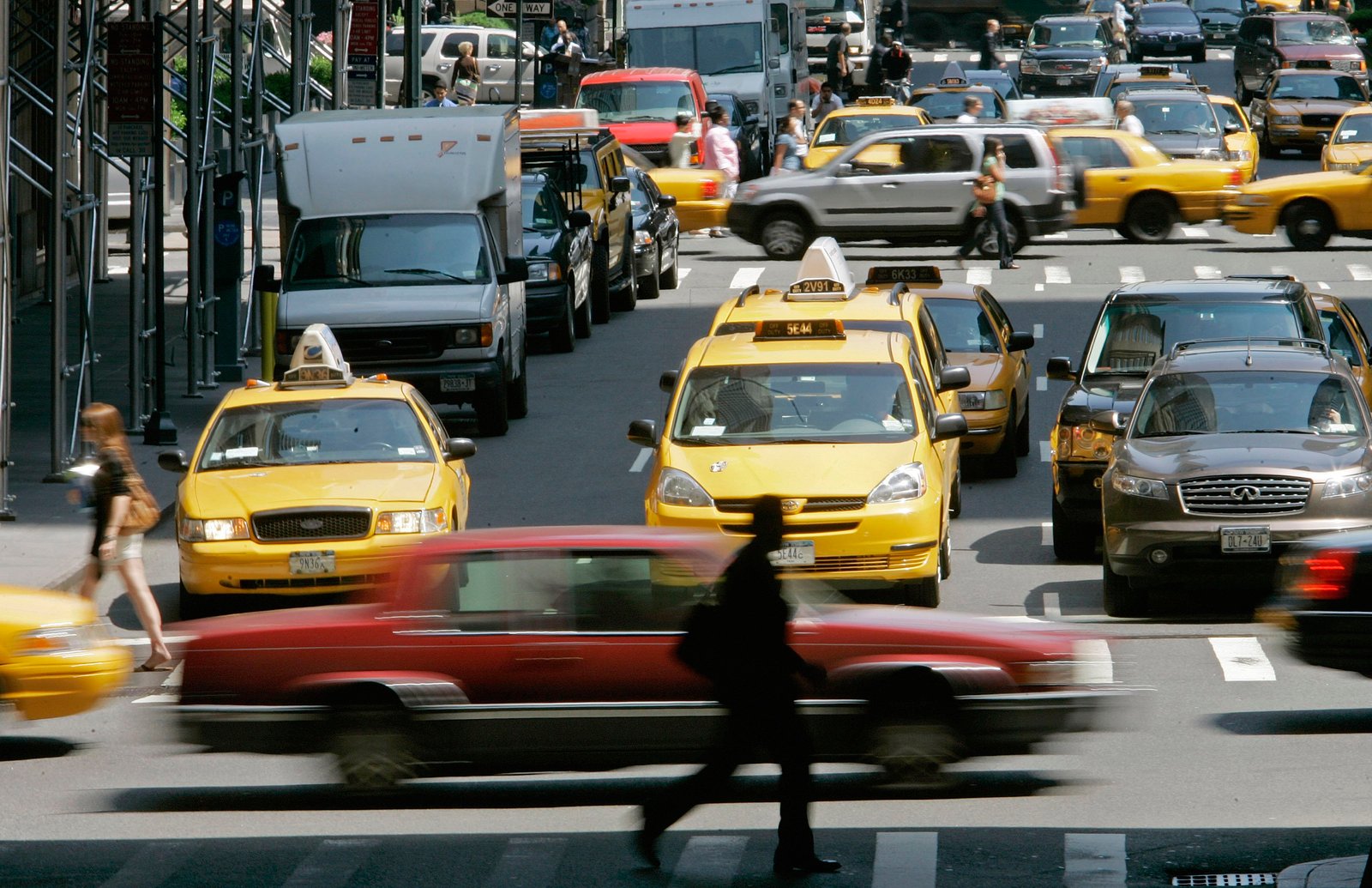
TO ENFORCE OR NOT TO ENFORCE — THAT’S THE QUESTION: Mamdani wouldn’t commit today to ordering the NYPD to step up enforcement of traffic violations in New York City — because he’s focused on “behavioral change,” not punishment.
The NYPD’s rate of issuing tickets to drivers who speed, blow through red lights, block bike lanes or otherwise break traffic laws remains far below pre-pandemic levels. And transit advocates, including left-leaning allies of Mamdani, say the police department must get back to issuing more violations, arguing that it’s critical to keeping city streets safe.
This afternoon, though, Mamdani declined repeatedly to say whether he will deliver such marching orders to the NYPD and suggested enforcement isn’t a key priority for him.
“Our goal here is not going to be measured in terms of the number of tickets that are issued or the violations, but rather behavioral change, and the NYPD is a partner in delivering that change,” Mamdani said, speaking at a press conference in Brooklyn held to unveil his new street safety plan, which contains ambitious proposals but is light on many implementation details.
How does the city change behaviors without stepping up enforcement, though? In response to that question, Mamdani suggested the answer could lie in developing more protected bus and bike lanes and otherwise redesigning streets to make them safer for pedestrians.
At the same time, Mamdani said he’s committed to “a continued partnership with the PD to use those tools of ticketing when any violation is present.”
“We’re going to be taking a hard look at how best we can change behavior that we’re seeing in violation of street safety laws, and then utilize that. That includes the PD,” he said.
The mayor’s comments came after Streetsblog reported the NYPD has shifted its traffic violation strategy to prioritize enforcement against scofflaws on e-bikes and other micromobility vehicles. That shift comes in spite of the fact that car drivers account for the vast majority of crashes and traffic deaths in the city, data shows. — Chris Sommerfeldt
FOILED ATTEMPT: The Manhattan Institute, a conservative think tank, is suing the Mamdani administration over its handling of Freedom of Information Law requests.
The think tank has been seeking records related to meetings between foreign dignitaries and Ana María Archila, commissioner of the Mayor’s Office of International Affairs. Archila has faced criticism for attempting to meet with an Iranian diplomat amid that country’s war with the U.S.
While the Adams administration provided tailored estimates for FOIL requests (but by no means fulfilled them in a timely manner), the institute found Mamdani’s City Hall team began giving out blanket six-month timetables for fulfilling requests.
“City Hall has turned FOIL into a six-month waiting room for everyone,” Manhattan Institute City Policy Analyst Santiago Vidal Calvo and General Counsel Cameron Macdonald wrote in explaining their suit, which was filed in Manhattan Supreme Court. “That is why we are suing.”
The city did not immediately respond to a request for comment about the lawsuit. — Joe Anuta
SCREENS IN SCHOOLS: The New York City public school system banned unfettered access to YouTube on school-issued devices for the current school year, the Department of Education revealed Tuesday.
The ban — which went into effect last week, ahead of the first day of school — comes amid calls from City Council members to limit the use of YouTube, personal devices and AI in the classroom.
“We heard everyone loud and clear,” DOE official Scott Strickland said at a Council hearing today. “As of Wednesday night at 5 p.m., we filtered YouTube out of all student devices. They shouldn’t be able to access it either on a Chromebook or an iPad both at school and at home.”
Council member Shekar Krishnan, who chairs the Council’s Oversight and Investigations Committee and was co-leading Tuesday’s hearing, said he was “very glad to hear” of the YouTube ban.
Educational videos embedded into Google Classroom for specific lessons will be exempt from the ban.
Earlier this month, Mamdani announced a year-long AI moratorium for students in grades 2-K through eighth grade. Hochul and lawmakers in Albany also rolled out a full-day “bell-to-bell” restriction on cellphone use during the school day last school year.
Ahead of this afternoon’s hearing, Krishnan and Council member Eric Dinowitz, who chairs the Education Committee, held a rally railing against screen-heavy classroom instruction and calling, among other things, for a YouTube ban.
“We will not let the greed of big technology companies get in the way of our children’s future and their education,” Krishnan said at the rally. — Molly Reinmann
IN OTHER NEWS
— DECLASSIFIED DOCS: Trump said he’d consider releasing classified documents related to 9/11 after victims’ families pleaded for clarity on Saudi Arabia’s involvement. (NY Post)
— TIED UP: Long Island Democratic House candidate Christopher Gallant acknowledged he posed in bondage gear for an ad campaign over a decade ago. (The New York Times)
— ICE ARRESTS: Police in the Westchester village of Port Chester have turned over more people with no criminal record to ICE than other local law enforcement agencies, despite assertions the police department would not cooperate with ICE. (NY Focus)
Missed this morning’s New York Playbook? We forgive you. Read it here.
- Capitol agenda: China fears drive AI divide
- JD Vance faces test in White House meeting with Israel-backing radio host
- Industry titans’ warning to Congress: Do what we say or health insurance premiums go up
- Poll: China fears drive polarization on AI regulations
- Democrats keep pressure on Hakeem Jeffries to punish rogue members
- House passes GOP-backed bill targeting data center power costs
- House passes Russia sanctions bill, handing Trump more leverage against Moscow
- Rand Paul kills Kennedy’s AI ‘kill switch’ bill
- Jay Jacobs gets his first-ever challenger for state Dem chair
- ‘The US can’t lose’: Pentagon plows ahead on AI despite warnings
-

 Politics2 years ago
Former ‘Squad’ members launching ‘Bowman and Bush’ YouTube show
-
Uncategorized2 years ago
Bob Good to step down as Freedom Caucus chair this week
-

 Politics2 years ago
Former Kentucky AG Daniel Cameron launches Senate bid
-

 The Josh Fourrier Show2 years ago
DOOMSDAY: Trump won, now what?
-

 The Dictatorship2 years ago
Luigi Mangione acknowledges public support in first official statement since arrest
-

 The Dictatorship2 years ago
Pete Hegseth’s tenure at the Pentagon goes from bad to worse
-

 Politics2 years ago
Blue Light News’s Editorial Director Ryan Hutchins speaks at Blue Light News’s 2025 Governors Summit
-

 The Dictatorship1 year ago
Mike Johnson sums up the GOP’s arrogant position on military occupation with two words