
Politics
Democrats are cashing in after DOJ failure to indict them

The six Democrats who urged military servicemembers in a video not to comply with illegal orders notched a significant legal win when federal prosecutors failed to criminally indict them. Now they’re looking to gain political momentum and build their campaign war chests.
“We are not done,” said Pennsylvania Rep. Chrissy Houlahan at a press conference alongside fellow House members.
“We will continue to push back. The tide is turning and accountability is coming,” Colorado Rep. Jason Crow said in a video posted to social media.
Michigan Sen. Elissa Slotkin said in a fundraising email: “They tried to indict me.”
The group of Democrats, including two senators and four House members with backgrounds in national security, came out swinging against President Donald Trump and the Justice Department Wednesday for what they said was an abuse of power and a threat against all Americans’ right to freedom of speech. In addition to a flurry of social media posts and two afternoon press conferences, several have been making the cable news rounds and scheduled appearances on high-profile late night TV shows — signs that they see political opportunity in Trump’s attacks and are hoping to bottle that clout.
“Democrats have limited power at the federal level right now and need to leverage every opportunity to capitalize on Trump’s overreach and lawlessness to raise the necessary funds to ensure we have a balance of power at the end of the midterms,” said Democratic strategist Adrienne Elrod. “It takes resources to get our message out, hold Trump to account, and win back seats, and I’m glad these members are seizing on this moment and fighting back.”
As Democrats sharpen their attacks against Trump heading into the midterms, his Justice Department’s unprecedented attempt to prosecute the Democratic lawmakers — most of whom represent crucial battleground states like Michigan, Arizona, and Pennsylvania — has inadvertently elevated their profiles. And the Trump administration, by failing to secure an indictment after months of public sparring with the Democrats and threats from the president, has bolstered their credibility as bare-knuckle fighters who can take on Trump and win.
In this attention-driven political economy, Trump has given a valuable boost to a group of Democrats that includes some with an eye toward future leadership positions in the party – including for Slotkin and Sen. Mark Kelly of Arizona, who are often discussed as potential future presidential candidates.
“Trump has elevated them by his baseless attacks and his attempt to weaponize the judicial system against them that has flopped so hard,” said Democratic strategist Ian Russell. “That certainly has given them a platform – an even larger platform – as leaders who are focused on keeping our country safe, serving those who serve us, and so forth.”
The six members of Congress released a video on social media late last year urging military servicemembers to ignore illegal orders amid questions about the legality of the Trump administration’s strikes on alleged drug boats from Latin America. That quickly drew Trump’s ire and prompted the launch of an investigation into the group that they lambasted as politically motivated.
The Department of Justice’s failure to indict the Democrats gave them a new opportunity to draw attention.
“Today wasn’t just an embarrassing day for the Administration. It was another sad day for our country,” Slotkin posted on X Tuesday night, as the first reports circulated that a grand jury had rejected the attempt to indict her and five Democratic colleagues.
Slotkin has become one of the party’s most prominent voices as it seeks to chart a path out of the political wilderness. Seizing on the new political attention — which can be hard to come by in a Republican-controlled Washington — she sent a fundraising appeal the next morning, held a press conference, went on TV and sent a barrage of posts on X.
“The investigations kept coming when we were quiet. So, if it’s going to be bad when you’re quiet, you might as well go on offense and have this conversation publicly,” Slotkin said in an interview on MS Now.
The strategy reflects a broader dynamic for the Democratic Party: Trump’s actions often serve as their best fundraising tool. A Blue Light News analysis of ActBlue data this week found that many of the party’s largest online fundraising spikes last year came after a Democrat stood up to — or was attacked by — Trump.
“Trump elevating them is the kind of thing that makes Democratic donors, strategists, activists, go, ‘Ah, I like what I see,’” said Russell, the Democratic strategist.
That dynamic has proven especially true for Kelly, who is also in a protracted public battle with Secretary of Defense Pete Hegseth over the video. Hegseth initiated a review of Kelly’s public comments that could demote the Navy captain’s rank and reduce his retirement pay. Kelly has sued to halt the review.
Kelly has emerged as a top Democratic fundraiser, the Blue Light News analysis found, dominating online fundraising for weeks after the Pentagon announced the investigation even though he’s not up for reelection this year.
Shortly before news broke Tuesday night that a grand jury had declined to charge the Democrats, the Arizona senator blasted out another fundraising appeal that nodded to his legal proceedings. “What we need from this team, right now, is the peace of mind that Mark has all the resources he’ll need to stay the course,” said one fundraising email signed by “Team Kelly” on Tuesday.
At least two of the House Democrats investigated by the Justice Department sent similar pleas for cash in recent weeks. Rep. Jason Crow (D-Colo.) – who serves as one of the Democratic Congressional Campaign Committee’s recruitment co-chairs – asked supporters for $10 after detailing the federal inquiry opened into the video, and Rep. Chris Deluzio (D-Pa.) made clear in his own pitch that he would not “be intimidated by any harassment campaign.”
In addition to fundraising appeals and appearances on cable news shows, the House members — which also includes Maggie Goodlander of New Hampshire — presented a unified front at a Wednesday press conference, casting the effort as political retribution.
“This was about Donald Trump trying to send a message, a message that if you dare step out of line, if you dare dissent and speak up and push back against his agenda, that you will be crushed,” Crow, the Colorado Democrat, said at the press conference.
Longtime Democratic strategist Jesse Ferguson said the failed indictments — and broader message of retribution — gives lawmakers in his party a potent political argument: Democrats were right when they warned that Trump was going to use the justice system for his personal retribution.
“He proved they’re not the boy who cried wolf,” he said. “They’re the meteorologist who predicted the hurricane.”


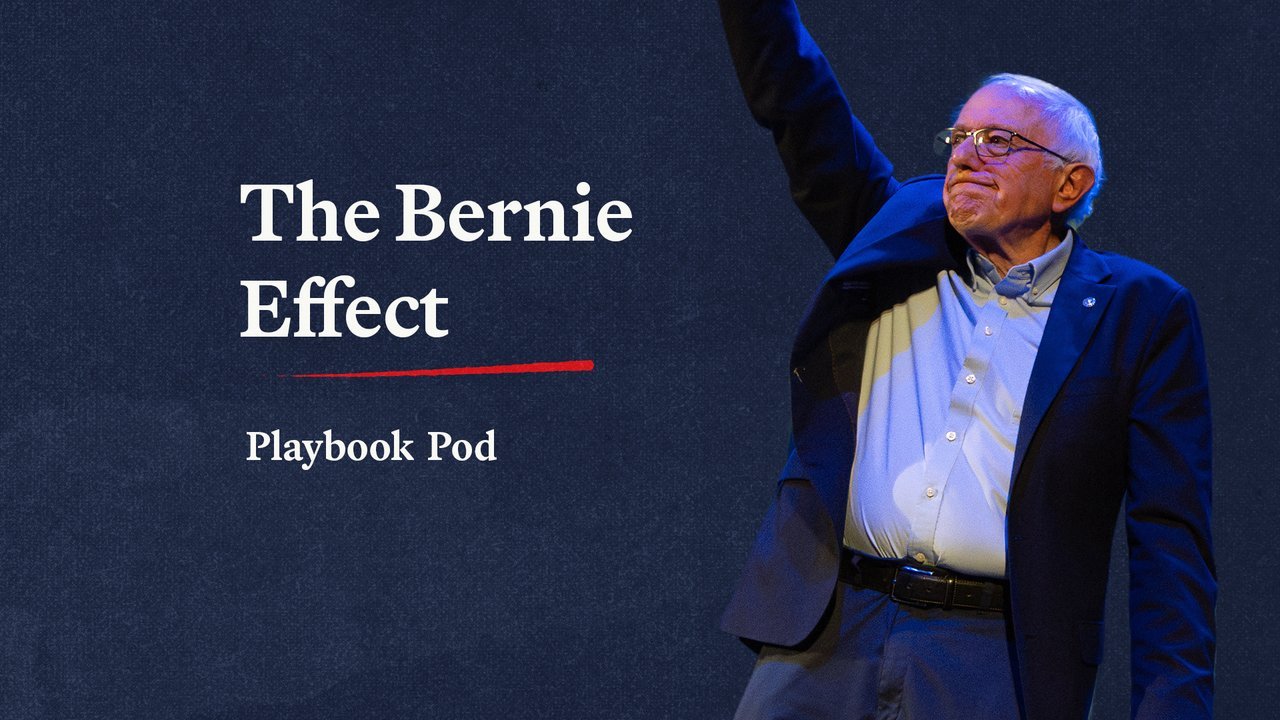
In 2016, two populist revolutions threatened to remake American politics. Donald Trump’s conquered the Republican Party and delivered him the presidency. Bernie Sanders’ fell short against Hillary Clinton, but introduced a populist economic vision that, at the time, much of the Democratic establishment dismissed as politically impractical.
Ten years later, Trump and MAGA were hit with a devastating midterm repudiation, as candidates across the country in blue and red states echoing versions of Sanders’ message broke through in places that once seemed beyond Democrats’ reach.
Sanders, as cantankerous as ever, isn’t surprised.
“If you’re asking me, am I shocked by that? That the argument about economic justice and taking on oligarchs and fighting for the working class is working in Texas, is working in Ohio, is working in Montana, is working in Florida, is working all over the country — no, I am not shocked,” Sanders said in an interview Wednesday, fresh off over 20 rallies in October alone. “That is what I’ve always believed.”
Sanders’ laser focus on economic populism in 2016 faced criticism from his own party during his contentious primary against Clinton for being too dismissive of identity politics — often couched as his lack of support among Black voters. Now, his brand of relentless focus on corporate and billionaire election interventions and income inequality proved a winning formula not only for Abdul El-Sayed in Michigan, but for James Talarico in Texas, Sam Forstag in Montana and Rebecca Cooke in Wisconsin.
“Bernie normalized the kind of campaigning that really is about making a direct appeal to working people,” El Sayed told Blue Light News. “Wherever I went in Michigan, there are people who remember Bernie 2016 and Bernie 2020 — we stand on the shoulders of giants.”
Given the booming results on Tuesday and the breadth of wins for the left, Democrats will test whether they can avoid the same pitfalls that ultimately dogged them following their last major win in 2020 with Joe Biden’s blue-collar charm at the top of the ticket, after which the party gradually slipped back down the culture war slope.
To avoid that, Sanders said the party can do both, but that Democrats need to have the “courage” to focus on the day-to-day needs of working families, no matter what the billionaires funding the Democratic Party say.
“It’s not either or. You can fight against bigotry and discrimination, but you have got to have the courage,” he said. “The courage now to say to the billionaires who are funding the Democratic Party: ‘Thank you very much for your help, but right now we are going to focus on the needs of the working families of this country, whether you like it or not.’”
Sanders’ reach is perhaps nowhere more evident than in New York City, which has emerged as the mecca of American progressivism, where Mayor Zohran Mamdani — once a Sanders-endorsed local official — is now perhaps the heir-apparent to Sanders’ progressive mantle.
The man behind Mamdani’s seismic rise, progressive wunderkind Morris Katz, had more than most on the line this week. After his top client Graham Platner dropped out of the Senate race in Maine earlier this year amid scandal, Katz worked this cycle for Gina Hinojosa in Texas, Randy Villegas in California and Brian Poindexter in Ohio, while his firm, Fight Agency, worked with El-Sayed and Pennsylvania’s Bob Brooks.
The day before the election, The Atlantic published a 3,500-word piece that put “Katz’s theory of politics” on the ballot.
“A lot of people wanted to know what I’d say if we lost,” Katz said, referencing an infamous Kanye West quote on Wednesday and running on 45 minutes of sleep. “I guess we’ll never know. That’s about how I feel today.”
Like Sanders, Katz sees a progressive future laser-focused on economics as the clear way forward — and nowhere is that more clear than in Texas.
“Hundreds of millions were spent against James and Gina trying to tag them on a trans issue,” he said. “It failed in epic fashion because there was no room for misunderstanding or ambiguity over what they stood for, because they had grounded themselves in such affirmative and positive economic messaging.”
“Those attacks have succeeded in the absence of an affirmative message,” he added. “Once you’re able to define yourself and provide a message, it’s just a lot harder for that to work.”
It’s the same formula Mamdani rode to Gracie Mansion — and, Katz argues, the lesson Democrats finally absorbed. “For a long time, politicians accepted the realities of how people felt about the economy but refused responsibility for having to take an active role in changing it,” he said. “There’s no room for that anymore.”
Katz sees his and Sanders’ theory of politics as having won out across the Democratic spectrum — not just on the left flank, but among the moderates who once resisted it.
“The more moderate wing of the party has changed the definition of what a moderate is. I think that’s great,” he said. “We should be a big tent party, but you are seeing a big tent that is unified in opposition to the oligarchy, that is unified in opposition to corruption, and that is united in a pursuit of fundamental and structural change. And that’s going to be really encouraging if that can carry over to 2028.”
For Sanders, it’s vindication of an argument he’s made for years and that Democrats have ignored — despite what he says is its simplicity.
“Focusing on the needs of the vast majority of American people who are struggling in the richest country on earth, while the very rich are getting richer, man, you don’t need a Ph.D. in economics or political science to figure that out,” he said. “That is the issue. How do we create a decent standard of living for all of our people? How do we end the corrupt campaign finance system? That is exactly what Democrats have got to do.”
At 85, Sanders campaigned this cycle like a man running out of time.
In the wake of Trump’s historic return to power in 2024, Sanders launched the “Fighting Oligarchy” tour, which came when many democrats were on the sidelines but provided a lot of the arguments, and even helped discover actual candidates, who a year later would swamp races earlier this week. Since the tour, Sanders has held 58 rallies during the midterms, endorsed more than 150 candidates across the primaries and general election, spent north of $16 million on organizing and deployed staff and volunteers into key Senate states including Michigan, Minnesota and Florida, an adviser to Sanders told Blue Light News.
“People say, ‘you know, Bernie, you’re not 21 years of age. What keeps you going?’” Sanders said. “What keeps me going is you look at the people who we have just elected yesterday, and look at the hundreds of other people who we have elected in school board and city council. You have wonderful people, black and white and Latino, coming from rural areas, urban areas.”
“I hope the Democratic leadership has seen what’s happening around the country,” he added.
Looking ahead to 2028, progressives see Tuesday as evidence the left’s economic politics can win anywhere — and that any doubt from moderates that a progressive should run for president should be laid to rest.
“I think we’ve got to rethink politics,” Sanders said. “We can win over millions of Republicans and independents who are struggling economically if we focus on the issues that are important,” he added, pointing to Villegas in Bakersfield, “a Republican town,” along with Forstag, Cooke and others who flipped Republican-held seats.
“These are people who ran on a progressive agenda, taking on a Republican district, and they won,” he said.
Katz said Tuesday was proof that heading into 2028, voters want candidates who look nothing like Washington — the kind he’s helped elect from Texas to California.
“You saw a hunger for a different kind of candidate — on congressional [level], teachers and waitresses and firefighters and iron workers and smokejumpers. And on the Senate level, pastors and doctors and teachers,” he said. “This hunger for expanding who is in Congress, who’s in the positions of power, feels real.”
What progressive candidate can pick up the left’s momentum heading into 2028 remains a question, but Katz said he viewed Tuesday’s results as more evidence that New York Rep. Alexandria Ocasio-Cortez — who closed out Villegas’ campaign in California a week before the election and stumped in Michigan, Montana and Pennsylvania — should consider running for president.
“You’d be hard pressed to look at the results of the election and say they’re anything other than encouraging in the context of her ability to win nationwide,” Katz said.
Lisa Kashinsky contributed to this report.
Bernie’s populist moment
lead image
AUSTIN — Texas. Florida. Pennsylvania. Colorado. Arizona. Nevada. California.
The historic landslide of Latino voters toward Democrats hit battleground after battleground Tuesday, crumbling the coalition that helped carry President Donald Trump to victory just one cycle ago.
“This is an earthquake,” Democratic Latino operative Sergio Gonzalez told Blue Light News on the sidelines of Texas Governor-elect Gina Hinojosa’s victory party in Austin. “Latinos were angry. They were angry this election.”
While the entire country shifted toward Democrats, nowhere shifted as dramatically as predominantly Latino areas. Across the nation Latino voters of all backgrounds — Mexican Americans and Central Americans in the Southwest, heartland and on the West Coast, Puerto Ricans and Dominicans in Pennsylvania, Venezuelans, Puerto Ricans and Cubans in Florida — unhappy with the economy and furious over Trump’s immigration enforcement fled the party in droves.
In a single cycle, Democrats appeared to reset Republicans’ gradual decade-long gains with Latino voters.
Latino voters who “broke for President Trump in historical numbers [in 2024] … had to make a hard change because their paycheck wasn’t moving fast and far enough for them,” said Trump’s former Labor Secretary Lori Chavez-DeRemer in an interview Tuesday night. “And Republicans ran out of runway on that.”
The epicenter of the earthquake was Texas, where a turnout surge — especially among younger first-time Latino voters — helped Democrats sweep Texas’ statewide offices — the first time since 1994 they’ve won any at all. Republicans won only one of the five House seats they had gerrymandered.
“What we’re seeing today is a political realignment,” said Democratic Rep. Henry Cuellar, who romped to a 30-point victory Tuesday night in a newly redrawn district Trump carried by double digits two years ago.
“Republicans were renting the Hispanic vote — yet governed like they owned it,” said Giancarlo Sopo, the GOP strategist behind Trump’s viral2020 Spanish-language campaign jingle.
But Democrats have been here before. Then President Barack Obama and his Democratic nominee Hillary Clinton posted similarly strong numbers with Latinos, before Trump’s blue-collar populism helped break through for the GOP.
Some Democrats warn that their party should not misread this week’s results to assume that Latinos are once again loyal Democratic voters.
“Tonight ought to scare the hell out of both political parties,” said Javier Palomarez, president and CEO of the U.S. Hispanic Business Council, on Tuesday. “Americans are running out of patience, and the politicians who keep mistaking their votes for unconditional loyalty are going to find themselves unemployed.”
Latinos’ swing right two years ago had been fueled by frustration over inflation combined with some voters’ dissatisfaction with the Biden administration’s border policy. A cycle earlier, in 2020, Trump made significant inroads in Florida and Texas as well. But growing economic woes under Trump, combined with his hardline interior immigration enforcement, swung those communities hard this time around.
“In the Hispanic community, the hyper-aggressive ICE raids, I think, will go down as one of the darkest blemishes in modern history,” Democratic Rep. Vicente Gonzalez, who cruised to reelection Tuesday in a seat Trump had won by 10 points, told Blue Light News Tuesday night. “The American people are struggling right now, and and and they delivered a very heavy punishment at the ballot box today.”
Heavily Latino counties swung more toward Democrats than any other type of place, according to preliminary returns. A handful of counties in Texas that are more than 90 percent Latino swung more than 25 points toward Democrats from 2024, the results show. Latino-majority Miami-Dade County in South Florida swung nearly 20 points.If current results hold, roughly half of the 10 Latino Republicans who served in the last Congress won’t be returning, while Democrats’ Latino caucus will grow significantly.
“We put in the hard work. Talk to Latino voters early and often, and they’re showing up,” Rep. Linda Sanchez (D-Calif.), who chairs the Congressional Hispanic Caucus’ BOLD PAC, told Blue Light News. “They trust Democrats more on the economy now. They see us as real champions and fighters.”
Trump won Starr County, Texas — part of Cuellar’s district — with 58 percent of the vote two years ago, the first time in more than a century that a Republican had won a presidential election there. On Tuesday, Democrat James Talarico won 77 percent there.
That county, like many others in the Rio Grande Valley, had long favored Democrats but moved toward the GOP during the Trump era. That’s now all been erased, as Brownsville native Gina Hinojosa will become the first Hispanic governor of Texas since it became a U.S. state. “We’ve called the RGV a bellwether for so long,” Melissa Morales, the executive director of SOMOS PAC, told Blue Light News. “But to actually get the first Latina governor of Texas from the RGV I think is a bellwether in its own of what the next generation of leadership looks like.”
In California’s 22nd District, a Central Valley district which is roughly three-quarters Latino, progressive Democrat Randy Villegas was leading incumbent GOP Rep. David Valadao 66%-34% with roughly two-thirds of the vote in. A handful of rural majority-Latino counties in Kansas — Seward, Finney and Ford — that Trump had won by more than 30 points in 2024 were narrowly won by Democratic Senate candidate Adam Hamilton. The counties were among those shaken by ICE raids earlier in the fall.
“Recent ICE activity in southwest Kansas turned around the electorate out here,” said Republican state Sen. Bill Clifford, who represents Finney County.
The results are a vindication for Democrats who’ve been clamoring for more investment into Latino voters.
“I think this would be a wake-up call to the Democratic Party in general that investing in Latino outreach, communication, and good candidates makes a big difference, especially in areas that you think were considered red back in the day,” Sen. Ruben Gallego (D-Ariz.) told Blue Light News Tuesday night.
- Katherine Clark launches majority leader bid
- Trump loyalists face off to lead a decimated House GOP
- Bernie Sanders lost the fight in 2016. A decade later, he won the war.
- The AI boom hits a blue-state roadblock
- Bernie’s populist moment
- RFK Jr. and Trump have to make a decision about their future together
- Capitol agenda: House GOP’s old guard is in for a fight
- Democrats prepare for something new in the House: Teamwork
- Thune’s chat with Trump
- Emmer’s whip pitch
-

 Politics1 year ago
John Legend advises Trump to drop the ‘dictator s‑‑‑’ if he wants Nobel Peace Prize
-

 Politics2 years ago
Former ‘Squad’ members launching ‘Bowman and Bush’ YouTube show
-
Uncategorized2 years ago
Bob Good to step down as Freedom Caucus chair this week
-

 The Josh Fourrier Show2 years ago
DOOMSDAY: Trump won, now what?
-

 The Dictatorship2 years ago
Pete Hegseth’s tenure at the Pentagon goes from bad to worse
-

 Politics2 years ago
Former Kentucky AG Daniel Cameron launches Senate bid
-

 The Dictatorship2 years ago
Luigi Mangione acknowledges public support in first official statement since arrest
-

 Politics2 years ago
Blue Light News’s Editorial Director Ryan Hutchins speaks at Blue Light News’s 2025 Governors Summit