
Politics
Border Patrol agent shoots 2 in Portland: Officials


Two people were hospitalized on Thursday after a shooting involving U.S. Border Patrol agents in Portland, Ore., according to officials. Local police said they responded to a call from one of the people wounded at around 2:24 p.m. local time. “Officers applied a tourniquet and summoned emergency medical personnel…
Read More


Politics
Young men are swinging away hard from Republicans, pessimistic about economy, new poll finds
Republicans’ 2024 gains among young men have evaporated — and that could have instant ramifications this November, according to a new Cygnal poll.
President Donald Trump narrowly carried young men in 2024, according to exit polls, a big swing toward the GOP from past elections. But Democrats’ generic ballot lead among male likely voters ages 18-30 now sits at 57%-40%, according to the new survey.
Trump’s favorability is underwater at just 38%-55%, and Republicans’ net favorability among the demographic now sits at -9 points, with 40% viewing the party favorably and 49% unfavorably.
One silver lining for the GOP: Among all registered voters sampled, including those least likely to turn out in November, the Democratic generic ballot lead is much smaller, 44% to 41%.
“It is not a very good electorate, if you’re the Republican Party, among the people who are the most determined to vote,” said Alex Tarascio, pollster and principal at Cygnal, in an interview with Blue Light News ahead of the poll’s release during Thursday’s Symposium on Young American Men.
Young men alone likely won’t determine control of Congress; they make up a fraction of the electorate, and they are less likely to vote than women of the same age or their older counterparts. But that lack of enthusiasm itself is a warning sign for Republicans, who will need to motivate their base ahead of November if they wish to maintain control of Congress.
The young men sampled are overwhelmingly concerned about cost-of-living issues — the same reason that many swung toward the GOP two years ago.
When given a list of options and asked which will matter most in determining their vote in November, a wide plurality — 29% — selected “inflation and the cost of living,” and another 14% chose “housing costs and being able to afford a place to live.” When asked what policies would make the biggest difference in their lives, the top answers again deal with the economy: The most-selected options were lowering the cost of goods, lowering housing costs and cutting taxes.
Many young men feel pessimistic about their ability to achieve success. When asked if they feel the rules in this country are set up to work for or against young men, 43% said they feel the rules are set up against them to 47% who said the rules are set up in their favor.
That pessimism bleeds into how they view other institutions. Both the Democratic Party (-1) and Republican Party (-9) have net-negative favorability among the demographic, and the White House’s current occupants are even more unpopular: Vice President JD Vance sits at 37% favorability with -10 net favorability, while Trump is at 38% favorability with -17 net.
“Young men are pretty down on institutions and political figures, and this one isn’t any exception to that,” Tarascio said.
Republicans successfully targeted young men and low-propensity voters in 2024 to help propel them to victory largely in part by having Trump sit for interviews with podcast hosts and influencers popular with young men. Trump has yet to return to those forums en masse ahead of the midterms, but he’s repeatedly told voters to pretend as if he’s on the ballot in November.
But Trump may no longer be the motivator he once was for turning out young, male, low-propensity voters. Among those surveyed who were least likely to vote, Trump’s net favorability is -22, lower than the respondents most likely to vote, where his net favorability is -19.
“If Trump gets in front of them, I don’t think it’s a bad bet, but for some of these people it could backfire,” Tarascio said.
The poll was conducted Sept. 15-18 with a sample of 800 registered male voters ages 18-30. The margin of error is plus or minus 3.46 percentage points.
The National Republican Senatorial Committee is shifting its focus away from the North Carolina and Georgia Senate races as it works to shore up red states like Texas and flip other Democratic-held seats.
In a closed-door meeting Wednesday, Sen. Tim Scott, the chair of the NRSC, told Senate Republicans that the campaign arm will focus its spending going forward on defending GOP seats in Maine, Alaska, Ohio, Iowa and Texas and trying to flip the Democratic-held seats of Michigan and New Hampshire, according to four people in the room who were granted anonymity to share private details.
That list notably leaves out North Carolina GOP nominee Michael Whatley’s battle against Democrat Roy Cooper and Georgia GOP nominee Mike Collins’ effort to unseat Democratic Sen. Jon Ossoff.
Scott’s briefing is the clearest sign yet that Republicans have deprioritized the two states, as POLITICO has reported, while senior Republicans grow increasingly resigned to the possibility of losing those races. It’s a remarkable shift: President Donald Trump carried Georgia twice in 2016 and 2024 and North Carolina over the last three presidential elections.
In deprioritizing North Carolina, the NRSC is effectively ceding a state that Democrats haven’t won in the Senate since 2008.
Still, other GOP groups with massive war chests, including Trump’s MAGA Inc., could pick up the slack.
Scott also shared with the senators polling showing Republicans are locked in tight battles in several other key races, which tracks with much of the public polling, according to the four people.
For example, one poll found that GOP Sen. Jon Husted of Ohio is still trailing former Democratic Sen. Sherrod Brown. Scott also showed polling indicating Republican John Sununu is essentially neck-and-neck with Democratic Rep. Chris Pappas in New Hampshire, a seat Republicans are laser-focused on trying to flip.
NRSC did not respond to a request for comment. Neither did Collins’ campaign.
“As Roy Cooper said earlier this year about U.S. Senate races in North Carolina, ‘Democrats are often ahead until they are not.’ And then just last week Cooper, correctly, observed, ‘We know a lot of undecided voters lean Republican.’ We’re confident we will have the resources to get our message out to North Carolina voters and win,” said Whatley Spokesman DJ Griffin in a statement.
Georgia GOP party chair Josh McKoon dismissed the notion that his state was being deprioritized by Republicans in Washington, even as he acknowledged beating Ossoff will be a challenge.
“Every cycle, someone in Washington leaks that they’re thinking about moving money,” he said in a text message. “What matters is who shows up — and what the actual numbers say.”
Senate Majority Leader John Thune is set to headline a fundraiser for Collins in Atlanta on Thursday, alongside the state’s popular Republican governor, Brian Kemp. The Collins campaign is also making the case that one in 10 Georgia voters — who backed Trump in 2024 and plan to vote for Jackson — are still “up for grabs,” according to a memo obtained by POLITICO.
“The goal in Georgia is to strike a balance where you are spending as little for Senate as possible while not derailing Rick Jackson’s, so far, very strong bid for Governor in a difficult environment,” said a GOP pollster granted anonymity to speak candidly about the landscape. Public polling shows the governor’s race has much tighter margins, with Jackson leading Democratic nominee Keisha Lance Bottoms in some recent surveys.
Sen. John Cornyn (R-Texas), who lost his Senate primary to Trump-backed Ken Paxton, was also in the room. He later told Blue Light News that the party has to make tough decisions.
“At some point I think the people spending that money are going to have to make hard choices and figure out where the money can have the biggest impact, and certainly Texas is the most expensive,” Cornyn said.
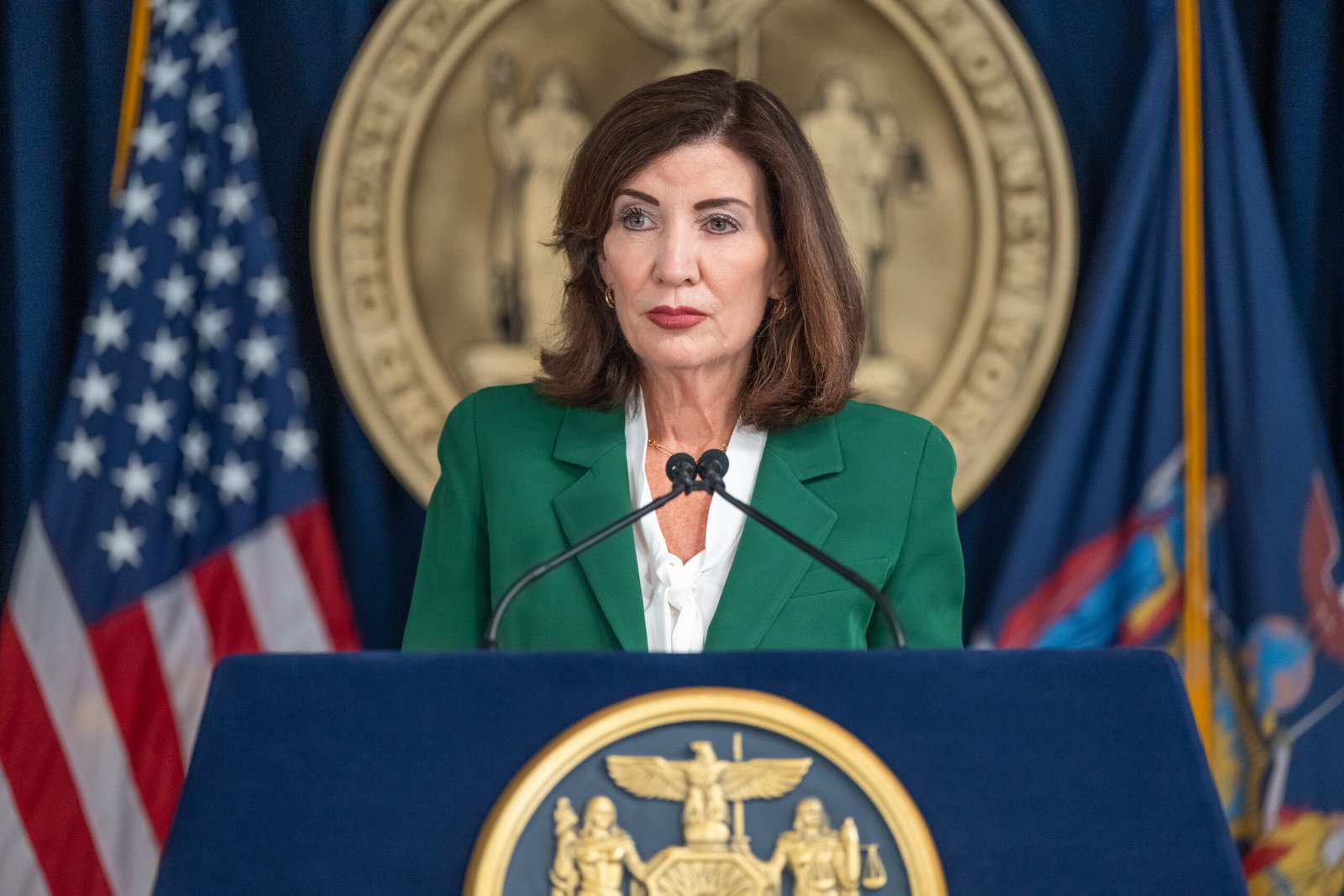
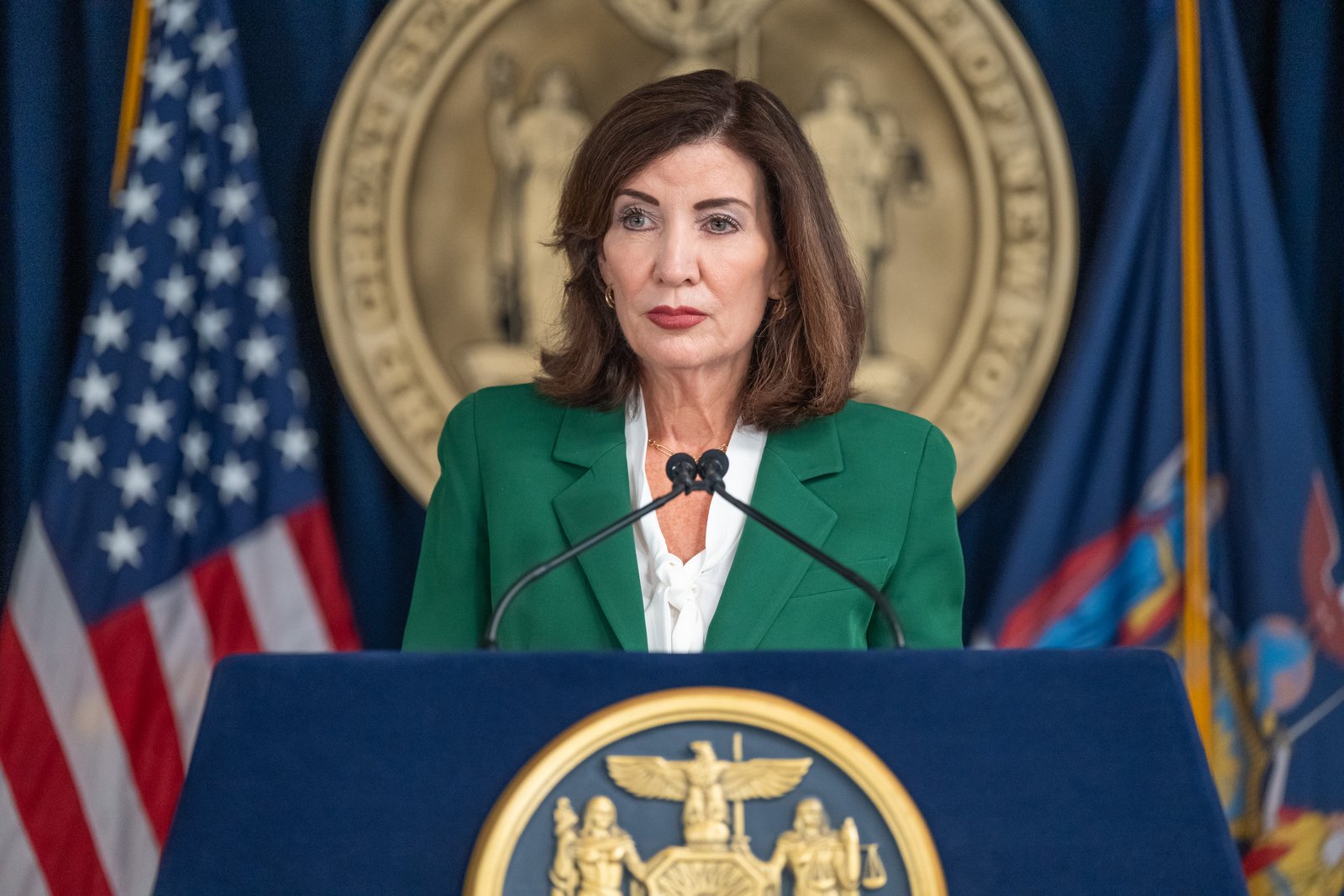
Q THE LANDSLIDE: Quinnipiac University released a poll today that found Gov. Kathy Hochul leading Republican Bruce Blakeman 58-39 — putting her on track for the fourth-largest landslide by a New York gubernatorial candidate in the past 200 years.
It’s by far the best poll for Hochul this year and certainly better than a Siena University survey out this morning that found her with a modest 9 point lead over the Nassau County executive.
So which one’s closer to reality?
The last time both pollsters released New York numbers on the same day was a few weeks before Hochul’s last election in 2022. Siena found at the time that her lead over then-Rep. Lee Zeldin was quickly shrinking, having dropped from 17 to 11 points.
The Q Poll painted a more dire picture for the governor.
“We released a poll in mid-October showing that Hochul had a 4 point lead over Lee Zeldin,” Quinnipiac spokesperson Mary Snow said. “And it went against the grain of other polls out there at the time.”
Hochul wound up winning that race by about 6 points.
Pollster vs. pollster results in prior elections have been mixed. Both Q and Siena nailed Andrew Cuomo’s eventual 23 point margin of victory in October 2018 polls, though Siena’s early November numbers that year found Cuomo’s lead had shrunk to 13. An infamous Q Poll from September 2010 found Cuomo with a stunningly small 6 point lead over Buffalo firebrand Carl Paladino, while a Siena poll the next day found a much more predictive 57-24 Cuomo advantage.
The biggest difference this time around is that Quinnipiac assumed a higher share of November’s turnout will be in deep blue New York City.
The five boroughs accounted for 31 percent of the statewide turnout in 2022 and 34 percent in 2018. Siena’s sample assumed 30 percent of this year’s voters will come from there, while 38 percent of Quinnipiac’s sample was from the city.
Quinnipiac also does more to avoid undecided voters. “One tweak that we made after 2020 was an adjustment to the questions that we ask, so that we try to cut down on the number of people who say they don’t know,” Snow said.
Only 3 percent of the Q Poll’s sample declined to weigh in on the Hochul-Blakeman race, while the comparable number was 9 percent in Siena’s poll. And it appears as if a lot of the Quinnipiac respondents who might not have answered Siena’s questions broke toward the incumbent: Siena has Hochul winning New York City 61-27 while Quinnipiac has her up 70-27; Siena had her up 57-34 among women while Quinnipiac found her lead at 63-34.
Another notable difference between the methodologies that may account for the divergent results is that Quinnipiac’s sample was based on asking respondents what party they affiliate with. Siena uses voter registration files.
“For a couple of years running, the New York Times/Siena Poll was ranked as the most accurate poll in America,” Siena spokesperson Steve Greenberg said. “Siena has been polling New York state for nearly a quarter of a century, and we have shown that we get it right almost all of the time.”
Republicans, for their part, believe both sets of numbers are far overstating Hochul’s advantage.
“Blakeman is closer in the polls I’ve seen than Lee Zeldin was at this moment in time four years ago,” state Senate Republican Campaign Committee Chair George Borrello said. “As I travel around New York state, I have seen literally thousands of Bruce Blakeman signs. Yet I can count on one hand the number of Kathy Hochul signs I’ve seen, unless you count the ones that say ‘Fire Hochul.’” — Bill Mahoney
From the Capitol

MEGAWATT DEAL: New York has made its first awards for large-scale batteries under a new program and secured contracts for new renewables that are close to getting built.
The state’s energy authority contracted for 719 megawatts from 13 solar, wind and hydroelectric projects and 950 megawatts of battery storage from eight projects.
NYSERDA President and CEO Doreen Harris announced the awards Wednesday during a Climate Week event hosted by the state’s renewable developers association.
“Everything that we do with respect to our energy system costs money,” Harris said. “When we invest in clean energy, not only are we talking about low single-digit percentage increases in cost, we are talking about benefits that far exceed those costs.”
Hochul warned that federal headwinds and rising expenses made a more ambitious pace of transitioning to clean energy too costly as she successfully fought to weaken New York’s ambitious climate law earlier this year. But she has highlighted her continued support for progress on offshore wind, renewables, storage and nuclear this week.
New York and developers are racing the expiration of federal tax credits. Renewables that didn’t start construction by July 4 — or don’t finish work by the end of the year if they start after that deadline — won’t be eligible for those key incentives that lower the cost of contracts for the state.
Read more from Blue Light News Pro’s Marie J. French here.
FROM CITY HALL
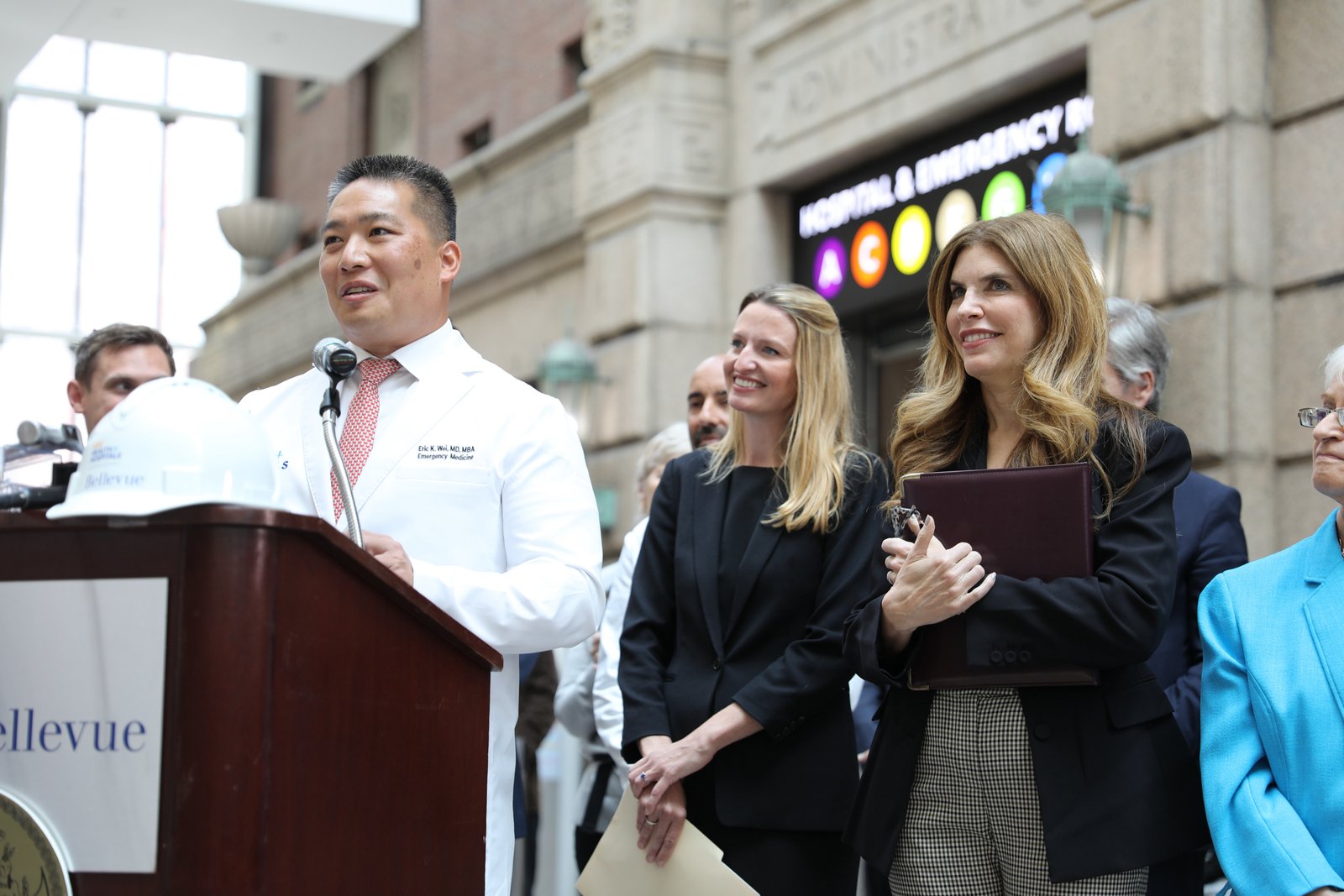
MAKING ROOM: Bellevue Hospital announced a major renovation and expansion of its inpatient psychiatric wing, fueled by an infusion of $26.5 million from the City Council.
Bellevue, which is part of the NYC Health + Hospitals system, will use the new capital funding to add 40 beds for adult psychiatric patients over the next few years — bringing the division’s total capacity to 204 beds.
Hospital officials said the expansion will ease the bottleneck of patients with severe mental illnesses who need to be admitted for continued observation and treatment; those inpatient psychiatric units have been operating consistently at 98% capacity.
“The need here demanded an investment of this scale,” Council member Virginia Maloney, who spearheaded the funding, said during a news conference in the hospital’s atrium.
Bellevue Hospital CEO Eric Wei said the facility has seen a bump in psychiatric patients since the April 2025 closure of Mount Sinai Beth Israel several blocks away. Bellevue’s dedicated ER for psychiatric patients, which Wei said sees about 30 patients daily, is undergoing its own $40 million expansion.
“We are unfortunately needing to transfer out about 90 patients a month to other inpatient units because there’s no room in our inpatient psychiatric units,” Wei said in an interview. “We’re always feeling like I’m toeing the line. We’re very busy.”
Bellevue was so overwhelmed as of late that hospital officials asked FDNY to stop bringing them patients with psychiatric emergencies, according to EMS union Local 2507. Those diversion requests continued for at least a couple weeks in late August and early September, a union spokesperson said. — Maya Kaufman
IN OTHER NEWS
— INSTITUTIONAL FAILURE: A NYC high school which once enrolled 3,000 students now has only 90. (The City Reporter)
— FIRST IN THE NATION: In a new TV ad, Hochul is touting her first-in-the-nation data center moratorium. (City & State)
— HITTING THE BRAKES: The rollout of electric school buses in New York state has been rocky. (The New York Times)
Missed this morning’s New York Playbook? We forgive you. Read it here.
- Young men are swinging away hard from Republicans, pessimistic about economy, new poll finds
- Capitol agenda: Democrats fracture over college sports
- Diesel export fight strains GOP ties with Big Oil
- Stalled military nominees leave a Pentagon void
- Inside the fierce House GOP war over committee waivers
- Senate Republicans have 1 more chance to oppose the Iran war before the midterms
- NRSC Chair Tim Scott leaves Georgia, North Carolina off his list of top Senate targets
- States jockey to land Trump’s new Space Academy
- The NY governor race pollster scrum

- Senators weigh staying in town to vote on data center bill
-

 Politics2 years ago
Former ‘Squad’ members launching ‘Bowman and Bush’ YouTube show
-
Uncategorized2 years ago
Bob Good to step down as Freedom Caucus chair this week
-

 The Josh Fourrier Show2 years ago
DOOMSDAY: Trump won, now what?
-

 Politics2 years ago
Former Kentucky AG Daniel Cameron launches Senate bid
-

 The Dictatorship2 years ago
Luigi Mangione acknowledges public support in first official statement since arrest
-

 The Dictatorship2 years ago
Pete Hegseth’s tenure at the Pentagon goes from bad to worse
-

 Politics2 years ago
Blue Light News’s Editorial Director Ryan Hutchins speaks at Blue Light News’s 2025 Governors Summit
-

 The Dictatorship1 year ago
Mike Johnson sums up the GOP’s arrogant position on military occupation with two words