
Politics
Israel rift complicates Democrats’ midterm comeback

NEW YORK — Just as Democrats are finding their footing by focusing on affordability, their differences on Israel are threatening to tear them apart.
Spurred by polling that shows support for the Jewish state slipping among voters nationally, congressional challengers are lining up across the country to take on stalwart Israel supporters in an attempt to energize left-leaning voters. But the deluge of Democratic primaries being waged in some part over this issue also threatens to exhaust resources, muddy the party’s messaging and bloody candidates ahead of the general election.
Pro-Israel Democrats believe supporters should mobilize with urgency to confront this crop of challengers.
“The main, centrist Democratic Party as a whole is doing a terrible job managing this whole process,” said Mark Botnick, a former advisor to ex-New York City Mayor Michael Bloomberg, who contributed more than $10 million to efforts opposing Zohran Mamdani’s successful mayoral campaign. “That’s not to say the Israeli government has made it easy for them. It’s fine for someone to be against their policies, but it’s very different to be against the existence of the Jewish state, which in my eyes is antisemitism. The party has done an abysmal job of getting up and saying that.”
Next year’s midterms are pivotal: Democrats locked out of power in Washington need only net three House seats and four in the Senate — a tougher task — in order to seize control over either chamber.
Pro-Israel incumbents are facing challenges in New Jersey and New York, while primary battles in Michigan and Illinois are also being prepped by pro-Palestinian candidates. The coming contests have put Democrats on edge. As they try to win back power in the closely divided House, they are desperate to avoid messy primary races.
The American Israel Public Affairs Committee is mobilizing too — months before the first vote is cast — to identify potential incumbents who need shoring up as the primary fields take shape.
“Our 6 million grassroots members understand the stakes in the upcoming midterms, and that is why they are deeply motivated and engaged to help elect pro-Israel candidates and defeat detractors,” said AIPAC spokesperson Marshall Wittmann.
The Democratic Majority For Israel’s political action committee got an early jump on the cycle as well — so far endorsing 26 Democratic House incumbents across the country, an initial slate that includes lawmakers in Illinois, California, Pennsylvania and Ohio. The group’s board chair, Brian Romick, called it a “critical moment for the U.S.-Israel relationship.”
Primary bids fueled by opposition to Israel are complicating Democrats’ path to victory next year, despite signs of increasingly favorable political terrain following wins in Georgia, Virginia and New Jersey. The efforts underscore the yawning chasm facing Democrats over Israel more than two years since the Oct. 7 attacks by Hamas and a devastating war in Gaza that has killed thousands of Palestinians. Jewish Democrats are alarmed by what they consider open antisemitism among far-left candidates encouraged by Mamdani’s success in the New York City mayoral race.
AIPAC-backed Rep. Rob Menendez in New Jersey appears likely to draw a challenge from Mussab Ali, a former local school board president with a strong social media following. Ali, like Mamdani, began criticizing Israel within weeks of the Oct. 7 attacks — early compared to most people with hopes of running for office.
Michigan’s open Democratic Senate primary offers another microcosm of the party’s evolving dynamics on the issue. The three-way brawl pits a sitting representative backed by the pro-Israel lobby against a former booster of the “uncommitted” movement to pressure a Gaza ceasefire and a progressive state lawmaker who’s shifted away from Israel.
The Middle East crisis is also reshaping the contours of at least two House Democratic primaries in Illinois — home to large Jewish, Middle Eastern and Muslim communities. Statewide the tensions are apparent as well in the U.S. Senate contest to replace retiring Democrat Dick Durbin.
And in New York City, home to the nation’s largest Jewish population, left-leaning challengers backed by the Democratic Socialists of America are eager to unseat Israel-supporting incumbent Reps. Dan Goldman, Grace Meng, Ritchie Torres and Adriano Espaillat.
That includes a Mamdani-endorsed challenge to Goldman by former New York City Comptroller Brad Lander — a primary that promises to be a marquee intraparty fight over the issue.
If successful, candidates willing to criticize Israel stand to remake a Democratic Party that has historically backed the Jewish state since its 1948 founding — a path some party officials acknowledge already may be too difficult to alter after the war isolated the country. The challenges by Israel critics, too, highlight growing Muslim populations and commensurate political strength in pockets around the country.
Foreign affairs has divided Democrats before. Opposition to the war in Iraq helped Barack Obama stand out as a state senator in Illinois, while higher-profile pro-war Democrats — like Hillary Clinton — saw their electoral fortunes sink when support for the war became a disqualifying issue among Democrats.
Israel — and increasing hostility from the left toward it — has conjured deep-seated emotions among Democrats watching the situation unfold with disbelief. Taken together, there’s a pervasive worry among Jewish political leaders that shifting political winds in the United States will have long-term consequences for Israel — and Jews — in the decades to come.
“The whole democratic socialist movement has become very anti-Israel, which I don’t understand at all,” said David Weprin, a Queens state lawmaker. “I grew up with Israel being a very progressive country, a democratic country, one that tolerates everyone. It’s definitely something that I find disturbing.”
Democrats’ divisions over Gaza are perhaps nowhere more pronounced than in Michigan, where disparate views of Israel continue to roil state politics and where Democrats are grappling with how to re-engage Arab American voters who shifted toward Trump last year.
In Michigan’s marquee Democratic Senate primary, DMFI PAC endorsed Rep. Haley Stevens, who’s viewed as the establishment pick and who represents a substantial Jewish population. Stevens described herself as a “proud pro-Israel Democrat” in accepting DMFI’s support. She also said she’d fight in the Senate to “support Israel’s security [and] ensure the ceasefire holds in Gaza.” AIPAC’s PAC, which has funneled millions toward Stevens in the past, has yet to issue an endorsement this cycle but features her prominently on its website.
Her opponents have taken far more critical stances toward Israel.
Abdul El-Sayed, a past gubernatorial hopeful who backed the “uncommitted” movement during the 2024 presidential primary but later endorsed Vice President Kamala Harris, has described Gaza as a Rorschach test for Democrats’ values. He has repeatedly criticized Israel’s military actions and the U.S. dollars funding them — and has used those stances to draw contrasts with rivals.
El-Sayed was the first in the race to call the conflict in Gaza a genocide, a stance state Sen. Mallory McMorrow later adopted. McMorrow also joined El-Sayed in rejecting support from AIPAC. And both said they would have voted in favor of resolutions from Sen. Bernie Sanders blocking weapons sales to Israel — legislation Stevens said she would have voted against.
McMorrow, whose husband is Jewish and whose daughter was the target of death threats after the Oct. 7 attacks, has shifted on Israel in a way that reflects the broader transformation occurring within the Democratic Party. She initially declined to call the war a genocide, but changed her stance in October after a September United Nations report claiming Israel had committed one.
El-Sayed has indirectly criticized McMorrow for being a late adopter of his positions as the two progressives compete for the same slice of voters, including younger voters for whom Gaza remains an animating issue.
The primary will also provide an early test of whether Michigan Democrats have been able to reengage Muslim voters, like those in Dearborn who have historically backed Democrats but who split their tickets last year between Trump and Democratic Sen. Elissa Slotkin.
“The politics around Israel-Palestine have changed dramatically over the last few years,” said a Democratic strategist who’s worked on Michigan races and was granted anonymity to speak candidly about the Senate primary’s dynamics. “For 2026 and beyond, it’s less about candidates reacting and more about what they believe on the issue as a matter of core values. Just claiming to support a two-state solution isn’t going to cut it anymore.”
Tensions over Israel are also simmering in a pair of Illinois House races and the U.S. Senate contest.
The House seats are currently held by Rep. Jan Schakowsky, who is retiring, and Rep. Raja Krishnamoorthi, who is running for the U.S. Senate seat now held by Durbin.
State Sen. Laura Fine, one of the top candidates vying for Schakowsky’s seat, has been the beneficiary of a supportive AIPAC email — even though the organization has yet to endorse or donate to her campaign directly. Other high-profile candidates among the 17 in the Democratic primary include the left-leaning suburban Mayor Daniel Biss and social media influencer Kat Abughazaleh. Biss is Jewish, and Abughazaleh is Palestinian-American.
The district spans Chicago and Evanston — home to Northwestern University — and includes suburban communities with significant Jewish, Muslim and Arab populations.
In the district now held by Krishnamoorthi, candidates Junaid Ahmed and Yasmeen Bankole have both made Gaza a campaign priority and are running against former Rep. Melissa Bean, who hasn’t been endorsed by AIPAC but is viewed as a more moderate candidate.
In New Jersey, Menendez appears to be hedging in a district that has significant Arab and Jewish populations. While he supports Israel, he has also chastised colleagues for Islamophobia, including “vile rhetoric” directed at Mamdani.
“My record of delivering for all of our residents and standing up to the Trump Administration speaks for itself. The same is true for my approach to the Middle East, from advocating for the release of the hostages, to surging humanitarian aid to Gaza, to working towards a lasting and durable peace for the region,” he said in a text message. “I look forward to having that conversation and will forcefully push back on any attempt to misrepresent my record.”
As support for Israel has weakened, Menendez’s likely challenger Ali believes pro-Israel politics can be disqualifying for incumbent Democrats.
“Eventually, politicians who think that they can hide behind talking points will be outed,” Ali said. “You’re seeing that right now with a bunch of people challenging AIPAC’s influence.”
Mamdani’s meteoric rise has fueled far-left challenges to incumbent Democrats across the Big Apple. Several Democrats have expressed interest in running against pro-Israel Democrat Dan Goldman. In the Bronx, former Democratic Committee Vice Chair Michael Blake has predicated his campaign on running against Torres’ stridently pro-Israel views.
The dynamic facing the party is a reversal from the 2024 cycle, when moderate Democrats backed by millions of dollars in support from AIPAC ran to oust anti-Israel lawmakers. The Democratic Majority for Israel PAC spent more than $11 million on races across the country during the 2024 election as well, with 80 percent of its endorsed candidates winning their races.
In New York City’s suburbs, Rep. George Latimer successfully defeated incumbent Democrat Jamaal Bowman after a bitterly fought race featuring plenty of rhetoric about Israel.
Latimer, who was among the incumbents recently endorsed by DMFI, said in an interview he expects another left-flank primary challenge next year, driven in part by opposition to Israel. Prominent Jewish leaders in New York, though, are skeptical the posture makes much sense when most voters are focused on pocketbook concerns — an issue effectively leveraged by Mamdani.
“Everybody in America wants to be Zohran Mamdani, but there’s only one Zohran Mamdani,” said David Greenfield, a former city councilmember and head of The Met Council, a Jewish charity. “The reason he won is not because of Israel, he won because of affordability.”


The National Republican Senatorial Committee is shifting its focus away from the North Carolina and Georgia Senate races as it works to shore up red states like Texas and flip other Democratic-held seats.
In a closed-door meeting Wednesday, Sen. Tim Scott, the chair of the NRSC, told Senate Republicans that the campaign arm will focus its spending going forward on defending GOP seats in Maine, Alaska, Ohio, Iowa and Texas and trying to flip the Democratic-held seats of Michigan and New Hampshire, according to four people in the room who were granted anonymity to share private details.
That list notably leaves out North Carolina GOP nominee Michael Whatley’s battle against Democrat Roy Cooper and Georgia GOP nominee Mike Collins’ effort to unseat Democratic Sen. Jon Ossoff.
Scott’s briefing is the clearest sign yet that Republicans have deprioritized the two states, as POLITICO has reported, while senior Republicans grow increasingly resigned to the possibility of losing those races. It’s a remarkable shift: President Donald Trump carried Georgia twice in 2016 and 2024 and North Carolina over the last three presidential elections.
In deprioritizing North Carolina, the NRSC is effectively ceding a state that Democrats haven’t won in the Senate since 2008.
Still, other GOP groups with massive war chests, including Trump’s MAGA Inc., could pick up the slack.
Scott also shared with the senators polling showing Republicans are locked in tight battles in several other key races, which tracks with much of the public polling, according to the four people.
For example, one poll found that GOP Sen. Jon Husted of Ohio is still trailing former Democratic Sen. Sherrod Brown. Scott also showed polling indicating Republican John Sununu is essentially neck-and-neck with Democratic Rep. Chris Pappas in New Hampshire, a seat Republicans are laser-focused on trying to flip.
NRSC did not respond to a request for comment. Neither did Collins’ campaign.
“As Roy Cooper said earlier this year about U.S. Senate races in North Carolina, ‘Democrats are often ahead until they are not.’ And then just last week Cooper, correctly, observed, ‘We know a lot of undecided voters lean Republican.’ We’re confident we will have the resources to get our message out to North Carolina voters and win,” said Whatley Spokesman DJ Griffin in a statement.
Georgia GOP party chair Josh McKoon dismissed the notion that his state was being deprioritized by Republicans in Washington, even as he acknowledged beating Ossoff will be a challenge.
“Every cycle, someone in Washington leaks that they’re thinking about moving money,” he said in a text message. “What matters is who shows up — and what the actual numbers say.”
Senate Majority Leader John Thune is set to headline a fundraiser for Collins in Atlanta on Thursday, alongside the state’s popular Republican governor, Brian Kemp. The Collins campaign is also making the case that one in 10 Georgia voters — who backed Trump in 2024 and plan to vote for Jackson — are still “up for grabs,” according to a memo obtained by POLITICO.
“The goal in Georgia is to strike a balance where you are spending as little for Senate as possible while not derailing Rick Jackson’s, so far, very strong bid for Governor in a difficult environment,” said a GOP pollster granted anonymity to speak candidly about the landscape. Public polling shows the governor’s race has much tighter margins, with Jackson leading Democratic nominee Keisha Lance Bottoms in some recent surveys.
Sen. John Cornyn (R-Texas), who lost his Senate primary to Trump-backed Ken Paxton, was also in the room. He later told Blue Light News that the party has to make tough decisions.
“At some point I think the people spending that money are going to have to make hard choices and figure out where the money can have the biggest impact, and certainly Texas is the most expensive,” Cornyn said.
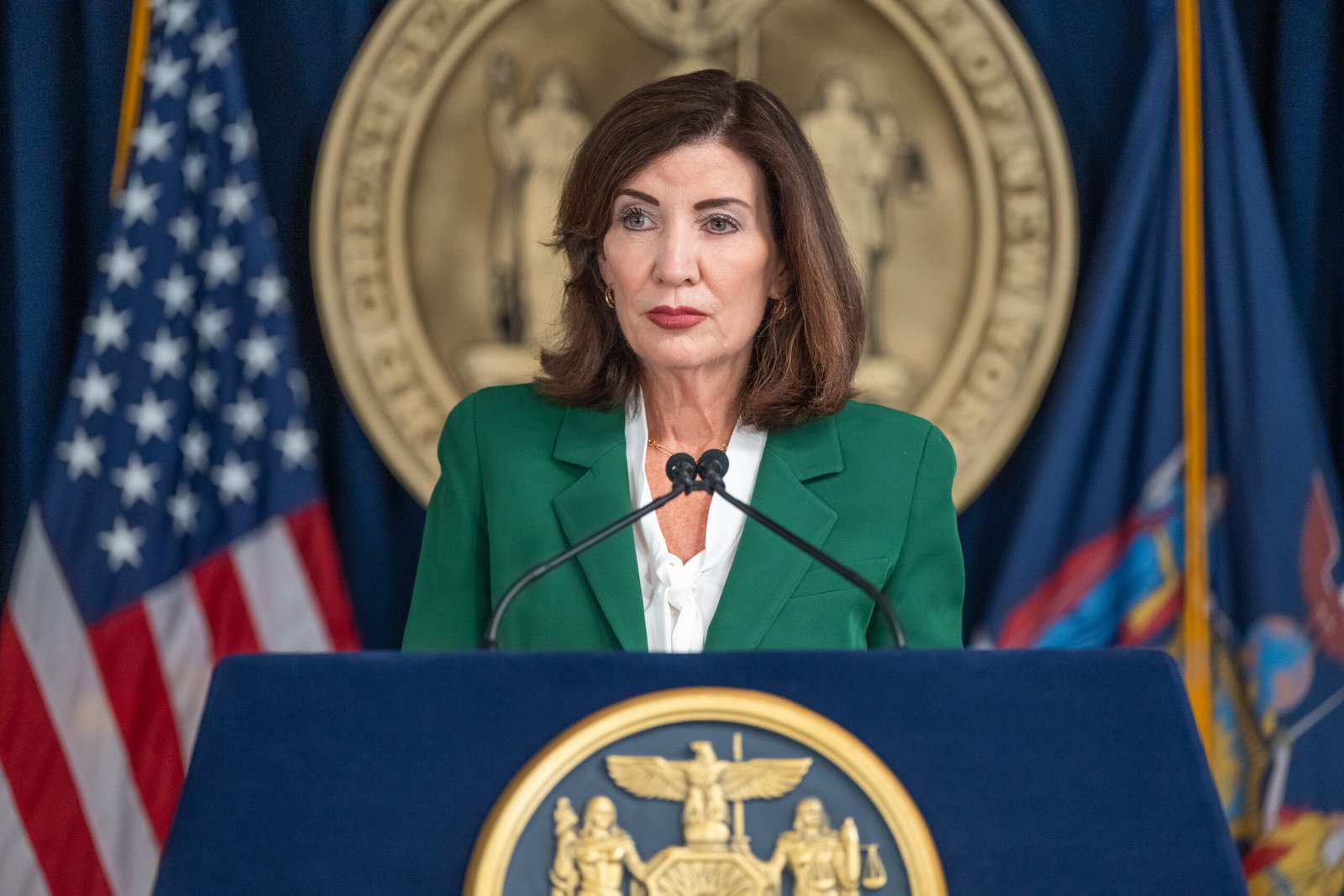
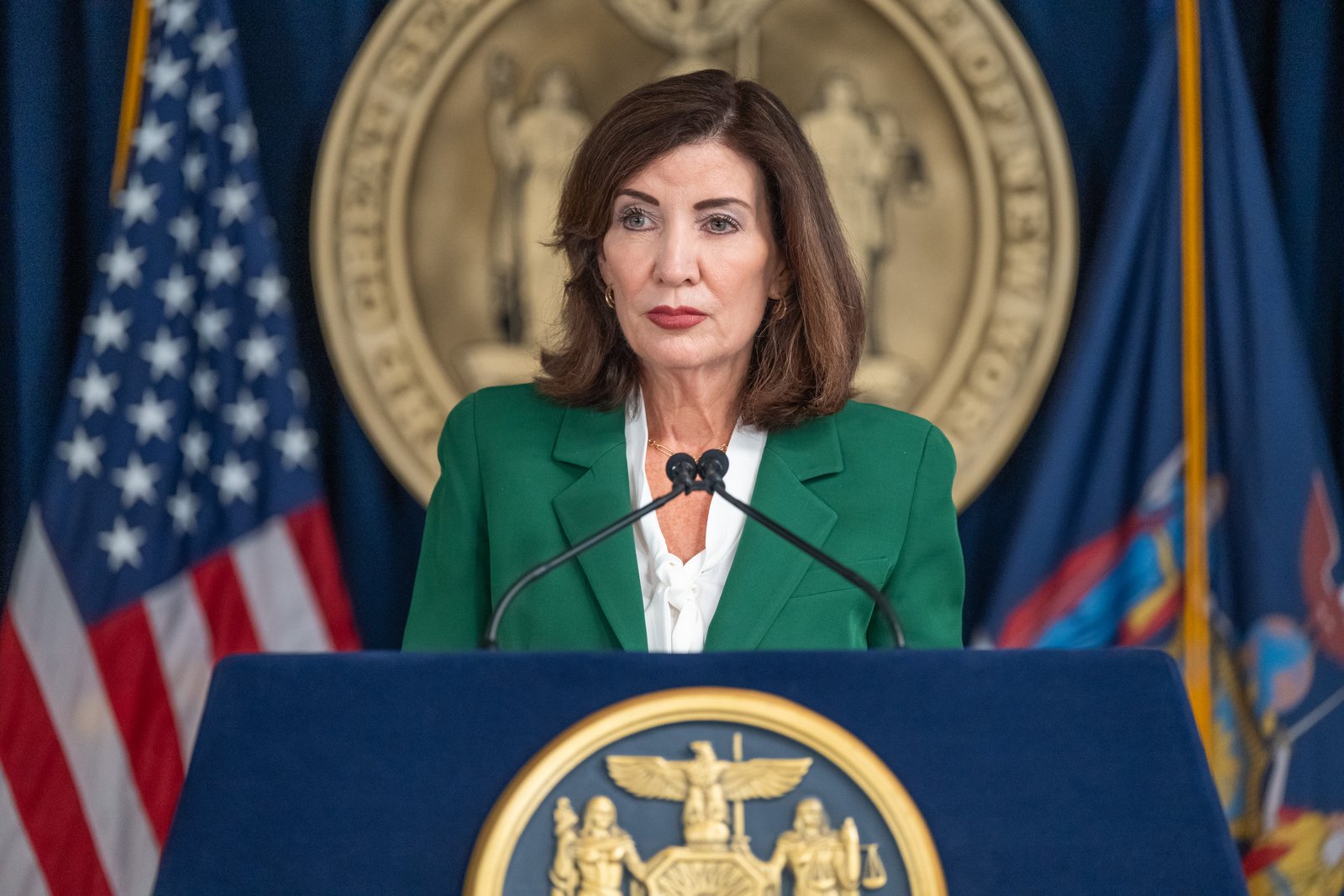
Q THE LANDSLIDE: Quinnipiac University released a poll today that found Gov. Kathy Hochul leading Republican Bruce Blakeman 58-39 — putting her on track for the fourth-largest landslide by a New York gubernatorial candidate in the past 200 years.
It’s by far the best poll for Hochul this year and certainly better than a Siena University survey out this morning that found her with a modest 9 point lead over the Nassau County executive.
So which one’s closer to reality?
The last time both pollsters released New York numbers on the same day was a few weeks before Hochul’s last election in 2022. Siena found at the time that her lead over then-Rep. Lee Zeldin was quickly shrinking, having dropped from 17 to 11 points.
The Q Poll painted a more dire picture for the governor.
“We released a poll in mid-October showing that Hochul had a 4 point lead over Lee Zeldin,” Quinnipiac spokesperson Mary Snow said. “And it went against the grain of other polls out there at the time.”
Hochul wound up winning that race by about 6 points.
Pollster vs. pollster results in prior elections have been mixed. Both Q and Siena nailed Andrew Cuomo’s eventual 23 point margin of victory in October 2018 polls, though Siena’s early November numbers that year found Cuomo’s lead had shrunk to 13. An infamous Q Poll from September 2010 found Cuomo with a stunningly small 6 point lead over Buffalo firebrand Carl Paladino, while a Siena poll the next day found a much more predictive 57-24 Cuomo advantage.
The biggest difference this time around is that Quinnipiac assumed a higher share of November’s turnout will be in deep blue New York City.
The five boroughs accounted for 31 percent of the statewide turnout in 2022 and 34 percent in 2018. Siena’s sample assumed 30 percent of this year’s voters will come from there, while 38 percent of Quinnipiac’s sample was from the city.
Quinnipiac also does more to avoid undecided voters. “One tweak that we made after 2020 was an adjustment to the questions that we ask, so that we try to cut down on the number of people who say they don’t know,” Snow said.
Only 3 percent of the Q Poll’s sample declined to weigh in on the Hochul-Blakeman race, while the comparable number was 9 percent in Siena’s poll. And it appears as if a lot of the Quinnipiac respondents who might not have answered Siena’s questions broke toward the incumbent: Siena has Hochul winning New York City 61-27 while Quinnipiac has her up 70-27; Siena had her up 57-34 among women while Quinnipiac found her lead at 63-34.
Another notable difference between the methodologies that may account for the divergent results is that Quinnipiac’s sample was based on asking respondents what party they affiliate with. Siena uses voter registration files.
“For a couple of years running, the New York Times/Siena Poll was ranked as the most accurate poll in America,” Siena spokesperson Steve Greenberg said. “Siena has been polling New York state for nearly a quarter of a century, and we have shown that we get it right almost all of the time.”
Republicans, for their part, believe both sets of numbers are far overstating Hochul’s advantage.
“Blakeman is closer in the polls I’ve seen than Lee Zeldin was at this moment in time four years ago,” state Senate Republican Campaign Committee Chair George Borrello said. “As I travel around New York state, I have seen literally thousands of Bruce Blakeman signs. Yet I can count on one hand the number of Kathy Hochul signs I’ve seen, unless you count the ones that say ‘Fire Hochul.’” — Bill Mahoney
From the Capitol

MEGAWATT DEAL: New York has made its first awards for large-scale batteries under a new program and secured contracts for new renewables that are close to getting built.
The state’s energy authority contracted for 719 megawatts from 13 solar, wind and hydroelectric projects and 950 megawatts of battery storage from eight projects.
NYSERDA President and CEO Doreen Harris announced the awards Wednesday during a Climate Week event hosted by the state’s renewable developers association.
“Everything that we do with respect to our energy system costs money,” Harris said. “When we invest in clean energy, not only are we talking about low single-digit percentage increases in cost, we are talking about benefits that far exceed those costs.”
Hochul warned that federal headwinds and rising expenses made a more ambitious pace of transitioning to clean energy too costly as she successfully fought to weaken New York’s ambitious climate law earlier this year. But she has highlighted her continued support for progress on offshore wind, renewables, storage and nuclear this week.
New York and developers are racing the expiration of federal tax credits. Renewables that didn’t start construction by July 4 — or don’t finish work by the end of the year if they start after that deadline — won’t be eligible for those key incentives that lower the cost of contracts for the state.
Read more from Blue Light News Pro’s Marie J. French here.
FROM CITY HALL
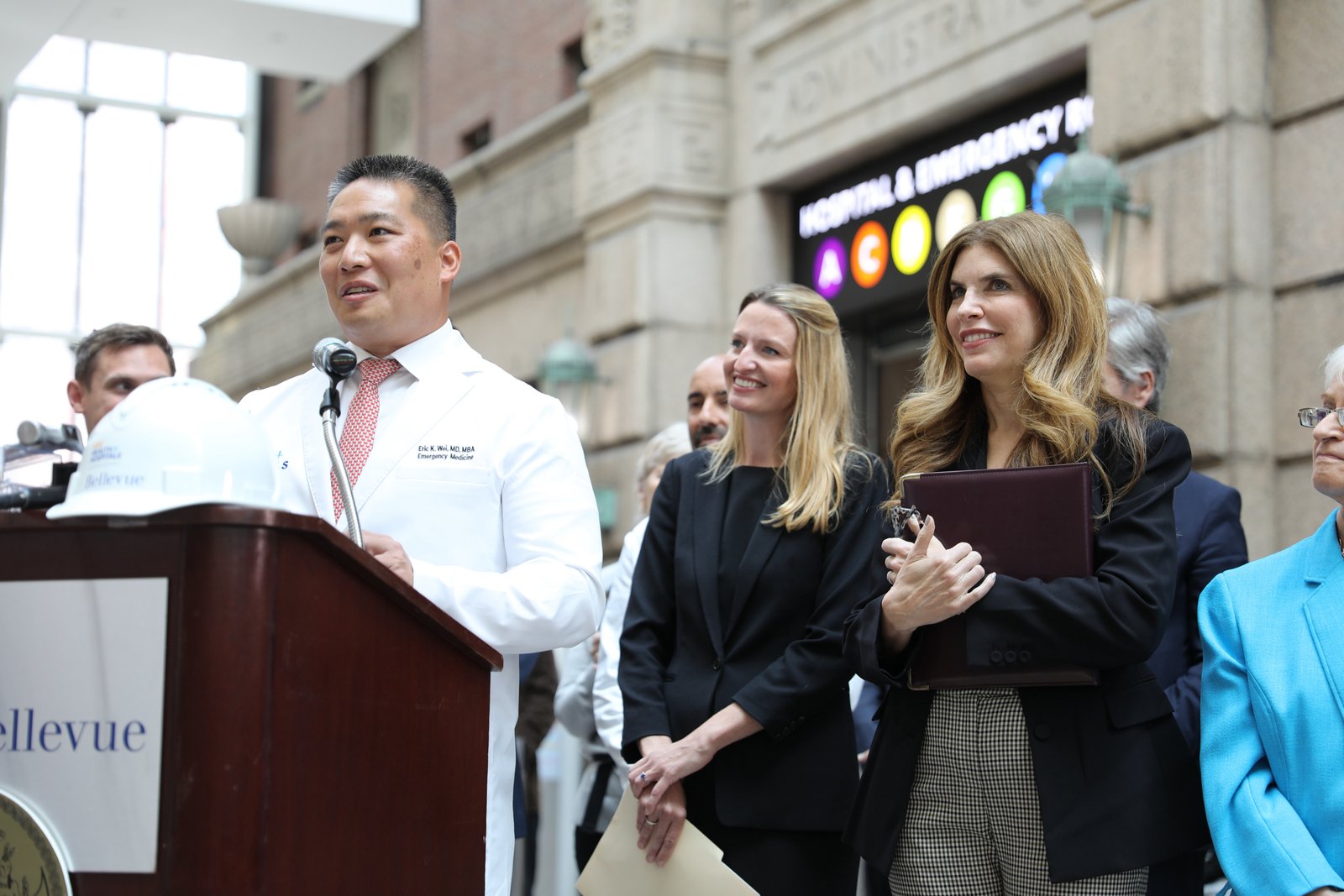
MAKING ROOM: Bellevue Hospital announced a major renovation and expansion of its inpatient psychiatric wing, fueled by an infusion of $26.5 million from the City Council.
Bellevue, which is part of the NYC Health + Hospitals system, will use the new capital funding to add 40 beds for adult psychiatric patients over the next few years — bringing the division’s total capacity to 204 beds.
Hospital officials said the expansion will ease the bottleneck of patients with severe mental illnesses who need to be admitted for continued observation and treatment; those inpatient psychiatric units have been operating consistently at 98% capacity.
“The need here demanded an investment of this scale,” Council member Virginia Maloney, who spearheaded the funding, said during a news conference in the hospital’s atrium.
Bellevue Hospital CEO Eric Wei said the facility has seen a bump in psychiatric patients since the April 2025 closure of Mount Sinai Beth Israel several blocks away. Bellevue’s dedicated ER for psychiatric patients, which Wei said sees about 30 patients daily, is undergoing its own $40 million expansion.
“We are unfortunately needing to transfer out about 90 patients a month to other inpatient units because there’s no room in our inpatient psychiatric units,” Wei said in an interview. “We’re always feeling like I’m toeing the line. We’re very busy.”
Bellevue was so overwhelmed as of late that hospital officials asked FDNY to stop bringing them patients with psychiatric emergencies, according to EMS union Local 2507. Those diversion requests continued for at least a couple weeks in late August and early September, a union spokesperson said. — Maya Kaufman
IN OTHER NEWS
— INSTITUTIONAL FAILURE: A NYC high school which once enrolled 3,000 students now has only 90. (The City Reporter)
— FIRST IN THE NATION: In a new TV ad, Hochul is touting her first-in-the-nation data center moratorium. (City & State)
— HITTING THE BRAKES: The rollout of electric school buses in New York state has been rocky. (The New York Times)
Missed this morning’s New York Playbook? We forgive you. Read it here.
A small group of White House officials are exploring whether to cut back President Donald Trump’s decision to increase foreign beef imports, as GOP panic rises ahead of the midterms.
The proposal to reduce the amount of imports is being discussed within the Domestic Policy Council headed by Vince Haley, a longtime Trump speechwriter and former campaign official, and a few other officials at the White House, according to two people with direct knowledge of the conversations, who were granted anonymity to share private details.
Trump officials are unsure if anything will come of the talks. The two people said the Office of the U.S. Trade Representative disagrees with cutting back the imports, since it aims to lower high consumer beef prices in the short term and since USTR helped implement the move.
But their conversations about partly rolling back the beef policy — which Trump instituted in August — is a clear sign the White House is trying to stem the alarm from battleground and farm-state Republicans as high prices and Trump’s tariffs roil their election campaigns. The White House is also preparing a plan on diesel exports, likely with exemptions, amid sky-high prices from the Iran war.
The White House, USTR and Department of Agriculture did not respond to requests for comment.
Iowa Rep. Ashley Hinson, the GOP Senate nominee, took the extraordinary step this week of publicly breaking with Trump, saying gas prices were too high because of the Iran war and that farmers in her state are suffering. Michigan Senate GOP nominee Mike Rogers and other vulnerable House and Senate Republicans have made similar breaks.
Farm-state lawmakers in Iowa and beyond have publicly called for the White House to provide some relief from the beef import executive action in particular, because of its impact on farmers and ranchers.
Sen. Chuck Grassley, the rest of the Iowa delegation and other senior farm-state lawmakers have all pressed the administration to change course — to no avail.
Trump did sign an executive order of rancher-friendly policies as a way to address the initial backlash. But U.S. Trade Representative Jamieson Greer made clear to a group of House Republicans in a closed-door briefing earlier this month that Trump’s executive action to import 300,000 metric tons of beef without certain tariffs and at discounted prices would go forward as planned, as Blue Light News first reported.
- NRSC Chair Tim Scott leaves Georgia, North Carolina off his list of top Senate targets
- States jockey to land Trump’s new Space Academy
- The NY governor race pollster scrum
- Senators weigh staying in town to vote on data center bill
- Collins: White House drops effort to politicize health research grants
- Trump officials weigh rolling back beef import plan as GOP midterm panic spreads
- Mike Collins memo identifies 1 in 10 Georgia voters who should be voting for him — but are ‘up for grabs’
- Mike Collins For Senate Memorandum
- ‘Dammit, something has to happen’: White House preparing plan for 90-day diesel exports ban
- Sanders, Casar introduce ‘superintelligence’ ban
-

 Politics2 years ago
Former ‘Squad’ members launching ‘Bowman and Bush’ YouTube show
-
Uncategorized2 years ago
Bob Good to step down as Freedom Caucus chair this week
-

 The Josh Fourrier Show2 years ago
DOOMSDAY: Trump won, now what?
-

 Politics2 years ago
Former Kentucky AG Daniel Cameron launches Senate bid
-

 The Dictatorship2 years ago
Luigi Mangione acknowledges public support in first official statement since arrest
-

 The Dictatorship2 years ago
Pete Hegseth’s tenure at the Pentagon goes from bad to worse
-

 Politics2 years ago
Blue Light News’s Editorial Director Ryan Hutchins speaks at Blue Light News’s 2025 Governors Summit
-

 The Dictatorship1 year ago
Mike Johnson sums up the GOP’s arrogant position on military occupation with two words