
Politics
When they go low, we go viral

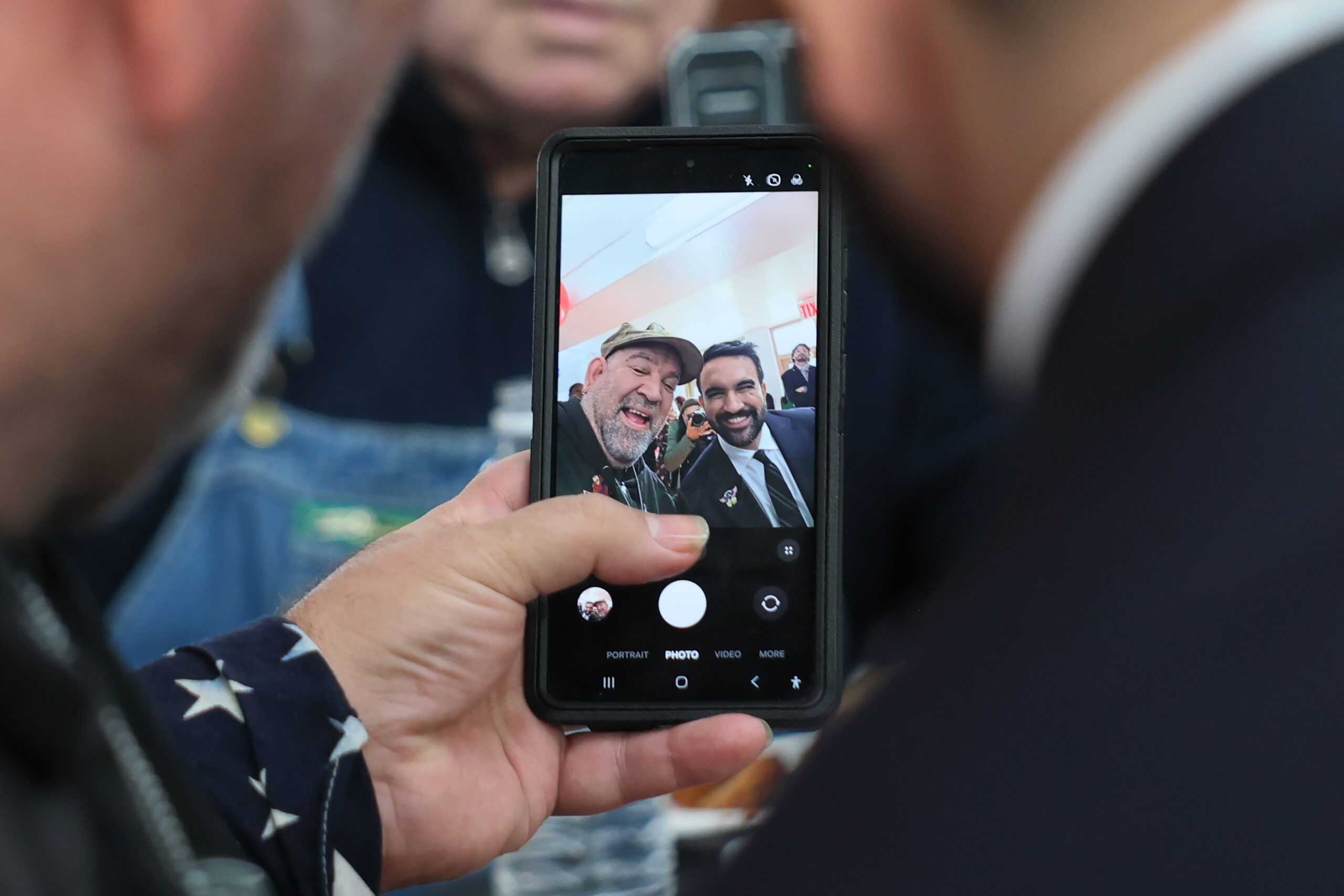
NEW YORK — Zohran Mamdani rode the digital slipstream to success in New York. Now millennials and Gen Zers are banking on a similar wave to boost their political dreams.
The mayor-elect energized New York City’s youth vote, earning the support of nearly 70 percent of voters aged 18 to 44 in the general election. His publicity strategy — complete with shareable graphics, collaborations with content creators and local artists’ animations — appealed to a new trove of young voters, people who primarily get their information in short-form TikTok videos and social media posts rather than legacy media.
A wave of millennial and Gen Z Democratic hopefuls across the country are looking to follow that lead in shaking up an aging party — from a 25-year-old political influencer in Arizona, to a 35-year-old congressional candidate in Idaho, to a 24-year-old mayoral candidate in Georgia.
“The theme that we have seen this year, different from years past, is ‘I’m done waiting around. I’m sick of being told it’s not my turn,’” said Amanda Litman, CEO of Run for Something, a candidate recruitment company focused on electing progressives under 40.
The surge has rippled far beyond New York, touching races in red and purple states alike as younger Democrats test whether digital-first campaigns can compensate for limited funding, party support and name recognition.
It also has reopened a debate inside the Democratic Party over what it takes to build a viable campaign — and whether traditional gatekeepers are misreading how younger voters engage with politics. While Gen Z and millennials span different age groups, both are entering politics with similar digital fluency — and similar distance from the party’s traditional power structures.
The effects are already visible in candidate recruitment. Run for Something reported a surge of 10,000 young Democrats across the country expressing interest in launching a campaign immediately after Mamdani’s primary win. Another 1,616 potential candidates signed up within one day of the shutdown-ending deal to reopen the government, the group said.
“We’re building a party of fighters, not folders,” Litman posted on X in November along with a graph of the sign-up splurge.
The push for younger candidates comes as Democratic leadership skews older than the electorate it represents. The average age in the House and the Senate is roughly 58 and 65, respectively, and the median school board member is 59, according to Pew Research Center. The median age in the United States is 39.
More than 20 progressives under the age of 40 have announced a congressional campaign for this election cycle, nearly half of whom are looking to unseat a member of their own party. And with the Democratic Party having no clear leader, the younger generation is looking to add new faces into the mix.
For inexperienced candidates who don’t have the money or institutional support to run a competitive campaign, social media offers a cost-free solution. The ease of building an online following has lowered the perceived barrier to running for office, even as the fundamentals of winning — fundraising, turnout and organization — remain unchanged.
Take Sam Foster, a 24-year-old from Marietta, Georgia. He rode his bike to the first video shoot for his mayoral campaign against incumbent Steve Tumlin, who is 78. Social media, he said, isn’t as much a strategy for Gen Z and millennial candidates as it is a native mode of communication.
“I hate when people call it a social media campaign,” Foster said. “I went into [making content] with the intention of just showing people who I was. We built a strategy off of that, but it wasn’t essentially the intention.”
Mamdani, a democratic socialist who polled at under 1 percent in February, soft-launched his campaign in July with videos asking New Yorkers why they voted for Trump. His later videos on “halalflation,” a fully suited polar plunge to “freeze” the rent and a Valentine’s Day voter registration proposal kept him prevalent on social feeds.
And the more he posted, the more users — even those well outside of New York City — responded.
“If done well, [social media] allows you to raise lots of small dollars from lots of different places,” said Chris Coffey, a longtime political consultant and CEO of Tusk Strategies.
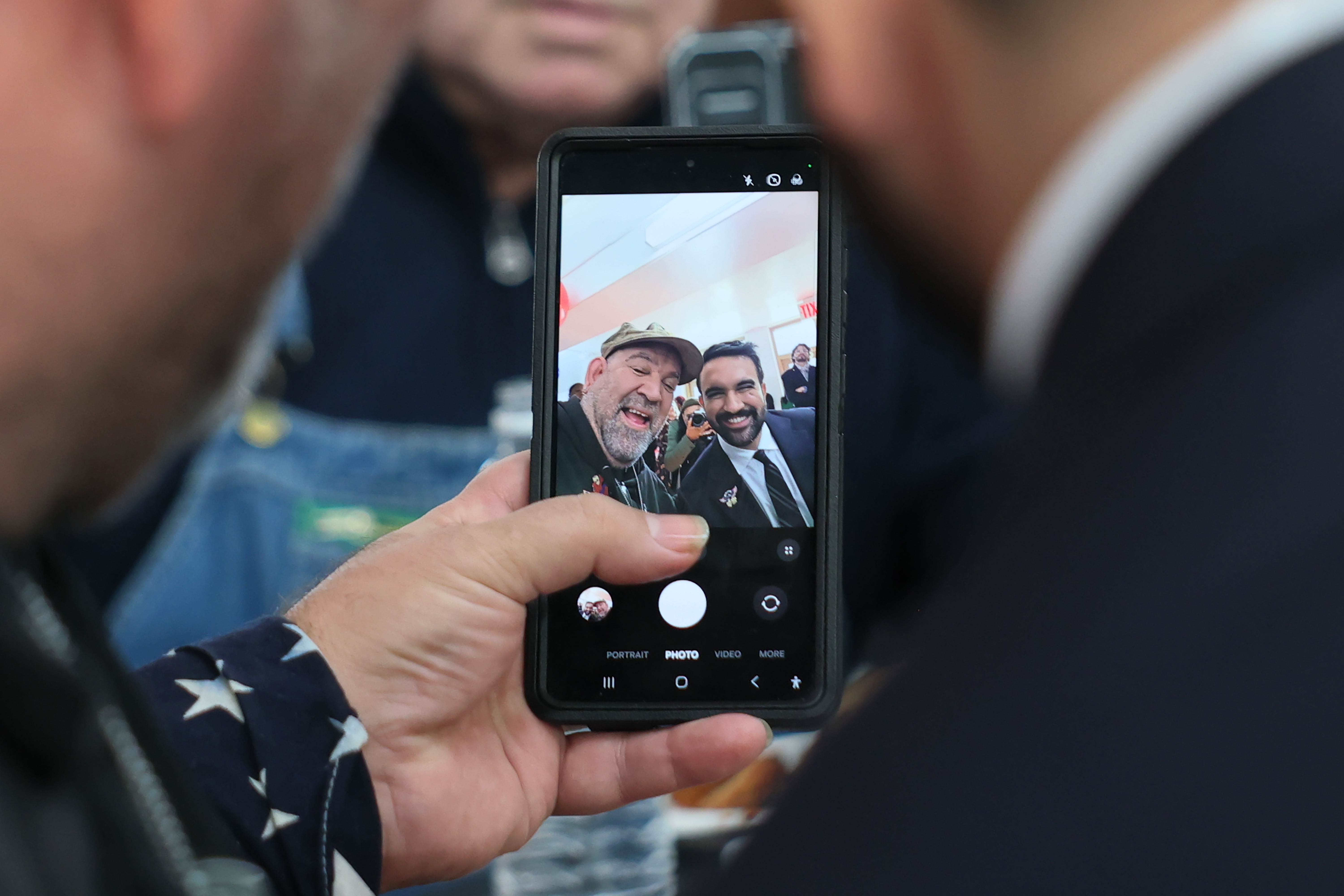
One Mamdani video asked supporters to donate to his transition team. The comment section was flooded with promises of donations from people as far away as Europe — with in-country support from Texas, California and Florida as well. From July to the election in November, Mamdani raised over $750,000 from over 8,500 contributors outside of New York City, according to data from the Campaign Finance Board.
Coffey drew a comparison to Andrew Yang, who also had a strong social media presence and made history by raising $750,000 in just one day for his 2020 presidential campaign, with an average donation of $41.
“Both Yang and Mamdani were able to use their social media and digital media platforms to get lots and lots and lots of small donors, which then powered their campaign, de-emphasized big dollars and allowed them to play on a level playing field with all these other candidates that were going after bigger dollars,” said Coffey, who helped manage Yang’s 2021 bid for New York City mayor.
Mamdani’s messaging inspired more than 100,000 volunteers to be visible daily on New York streets throughout the mayoral race.
His messaging also maintained an appearance of authenticity, focusing on issues that disproportionately affect young and working class New Yorkers, like housing, childcare, and affordability.
For young voters, authenticity is a major problem in the Democratic Party. And younger candidates are proving adept at conveying a message “from the heart,” according to Deja Foxx, a grassroots organizer and digital strategist who previously ran for Arizona’s 7th Congressional District.
“People have a different expectation of how they should be engaging with public figures [than they did 10 years ago],” Foxx said. “We are consuming so much on platforms like Instagram and TikTok, where videos from our Congress person are mixed in with life updates from our best friend from middle school. It demands a different level of vulnerability that frankly a lot of our older electives aren’t comfortable with.”
The embrace of online-first campaigning has also blurred the line between political organizing and performance. Jack Schlossberg, the 32-year-old grandson of John F. Kennedy who’s running for Rep. Jerry Nadler’s congressional seat, is a provocative social media personality, sometimes offering raunchy and offensive political commentary to his 860,000 followers.
Schlossberg shares random, quotidian tidbits, like being called an “incel Frankenstein looking mother—” by a random passerby. He impersonated Melania Trump — wig and all — as he read a letter of support to Vladimir Putin, trolled his uncle Robert F. Kennedy Jr. ‘s health policies — insinuating his uncle’s claims of autism being linked to circumcision came from personal experience — and gave crass explanations of political news like the release of the Epstein files, New York Attorney General Letitia James’ indictment (since tossed) and the government shutdown.
While his videos drive an audience, and have certainly got voters talking, they lack what other candidates are hinging on — promises and policies.
For those who aren’t Kennedys — like Kaylee Peterson, a 35-year-old Idaho candidate in the historically Republican 1st District — social media is their pathway into the otherwise pay-to-play world of campaigning.
“Social media is the only real affordable tool we have to reach disenfranchised Gen Z and millennial voters,” said Peterson. “Seeing [Mamdani] be successful and the massive national support he received gave us hope.”
Like many other progressive candidates in rural republican areas, Peterson said, she did not receive support — or even a call back — from the Democratic National Committee. Instead, she found her support, strategists and community on social media groups where other young candidates virtually congregated — like TikTok Live, Instagram and messaging apps.
Peterson ran a losing campaign against Republican incumbent Rep. Russell Mark Fulcher in 2022 with only $70,000. She focused on getting her message out and mobilizing progressives in her district. In her third campaign cycle, though still unsuccessful at claiming the seat, she raised just under $250,000.
Mamdani may ultimately prove to be the exception rather than the rule. His online success amplified preexisting strengths and allowed his reach to go beyond the five boroughs.
“Social media is an important part of [the campaign],” Coffey said. “But so is the messaging, and so is the staff, and so was their press apparatus, and so was their candidate’s ability to do really hard and tedious work.”


Gina Hinojosa wants to make Texas a test case for Democrats’ future
lead image
President Donald Trump is tentatively set to visit Alabama for a political rally next week, a curious move in a deep-red state as his party fights for control of Congress in several battlegrounds.
The event is penciled in for Oct. 2 in Mobile, but the plans have not yet been finalized and are subject to change, according to two people with direct knowledge of the preparations who were granted anonymity to disclose private planning.
An October rally in Alabama would be a somewhat confounding decision for the president. The GOP has found itself having to play defense in their own territory recently, with Democratic candidates are seriously competing for Senate seats in normally red states like Alaska and Texas. But Alabama has not been considered a state where Democrats have any real shot at winning any statewide office.
Spokespeople for the White House and Republican National Committee did not immediately respond to requests for comment.
The rally could help shore up support for state Rep. Rhett Marques, who is locked in a somewhat competitive race with Democratic Rep. Shomari Figures. Marques is still seen to have the advantage after the Supreme Court allowed the state to use a House map that reconfigured Figures’ majority-Black district earlier this year. Mobile, though, is outside of that district.
Marques’ campaign and Figures’ campaign did not respond to requests for comment.
A foray into Alabama would not be the first time that the president has tried to shore up support in a solidly Republican state this cycle — he rallied last month in South Carolina for Sen. Darline Graham during her primary runoff — but as the general election season has begun he has also started to visit battleground states. Last week, he rallied alongside GOP Senate nominee Michael Whatley in North Carolina.
Trump’s potential campaign visit would follow Secretary of Transportation Sean Duffy’s announcement last week that the Trump administration has granted a $2.5 billion loan to the Alabama Toll Road, Bridge, and Tunnel Authority. That money will fund the construction of the Mobile River Bridge — the largest infrastructure project in the state’s history. The president is also fond of GOP Rep. Barry Moore, who is running for Senate in the state. Another close ally, Sen. Tommy Tuberville, is the Republican nominee for governor. He’s running against Democratic former Sen. Doug Jones, who he unseated in 2020.
Politics
Young men are swinging away hard from Republicans, pessimistic about economy, new poll finds
Republicans’ 2024 gains among young men have evaporated — and that could have instant ramifications this November, according to a new Cygnal poll.
President Donald Trump narrowly carried young men in 2024, according to exit polls, a big swing toward the GOP from past elections. But Democrats’ generic ballot lead among male likely voters ages 18-30 now sits at 57%-40%, according to the new survey.
Trump’s favorability is underwater at just 38%-55%, and Republicans’ net favorability among the demographic now sits at -9 points, with 40% viewing the party favorably and 49% unfavorably.
One silver lining for the GOP: Among all registered voters sampled, including those least likely to turn out in November, the Democratic generic ballot lead is much smaller, 44% to 41%.
“It is not a very good electorate, if you’re the Republican Party, among the people who are the most determined to vote,” said Alex Tarascio, pollster and principal at Cygnal, in an interview with Blue Light News ahead of the poll’s release during Thursday’s Symposium on Young American Men.
Young men alone likely won’t determine control of Congress; they make up a fraction of the electorate, and they are less likely to vote than women of the same age or their older counterparts. But that lack of enthusiasm itself is a warning sign for Republicans, who will need to motivate their base ahead of November if they wish to maintain control of Congress.
The young men sampled are overwhelmingly concerned about cost-of-living issues — the same reason that many swung toward the GOP two years ago.
When given a list of options and asked which will matter most in determining their vote in November, a wide plurality — 29% — selected “inflation and the cost of living,” and another 14% chose “housing costs and being able to afford a place to live.” When asked what policies would make the biggest difference in their lives, the top answers again deal with the economy: The most-selected options were lowering the cost of goods, lowering housing costs and cutting taxes.
Many young men feel pessimistic about their ability to achieve success. When asked if they feel the rules in this country are set up to work for or against young men, 43% said they feel the rules are set up against them to 47% who said the rules are set up in their favor.
That pessimism bleeds into how they view other institutions. Both the Democratic Party (-1) and Republican Party (-9) have net-negative favorability among the demographic, and the White House’s current occupants are even more unpopular: Vice President JD Vance sits at 37% favorability with -10 net favorability, while Trump is at 38% favorability with -17 net.
“Young men are pretty down on institutions and political figures, and this one isn’t any exception to that,” Tarascio said.
Republicans successfully targeted young men and low-propensity voters in 2024 to help propel them to victory largely in part by having Trump sit for interviews with podcast hosts and influencers popular with young men. Trump has yet to return to those forums en masse ahead of the midterms, but he’s repeatedly told voters to pretend as if he’s on the ballot in November.
But Trump may no longer be the motivator he once was for turning out young, male, low-propensity voters. Among those surveyed who were least likely to vote, Trump’s net favorability is -22, lower than the respondents most likely to vote, where his net favorability is -19.
“If Trump gets in front of them, I don’t think it’s a bad bet, but for some of these people it could backfire,” Tarascio said.
The poll was conducted Sept. 15-18 with a sample of 800 registered male voters ages 18-30. The margin of error is plus or minus 3.46 percentage points.
- Democrats weigh how to handle data center vote that could benefit a GOP foe
- Gina Hinojosa wants to make Texas a test case for Democrats’ future

- Johnson, Trump set meeting with AI executives
- RFK Jr.’s future aides say they disagree with his vaccine views
- Trump eyes an October campaign rally — in Alabama
- AOC, nine other House Dems sign on to AI superintelligence ban
- ‘Let’s push prices down’: Wright asks oil industry to curb exports
- GOP holds the line on Iran despite growing midterm rift with Trump
- US and Poland near deal for American base with 10,000 troops
- Trump officials sideline local historians in arch review
-

 Politics2 years ago
Former ‘Squad’ members launching ‘Bowman and Bush’ YouTube show
-
Uncategorized2 years ago
Bob Good to step down as Freedom Caucus chair this week
-

 The Josh Fourrier Show2 years ago
DOOMSDAY: Trump won, now what?
-

 Politics2 years ago
Former Kentucky AG Daniel Cameron launches Senate bid
-

 The Dictatorship2 years ago
Luigi Mangione acknowledges public support in first official statement since arrest
-

 The Dictatorship2 years ago
Pete Hegseth’s tenure at the Pentagon goes from bad to worse
-

 Politics2 years ago
Blue Light News’s Editorial Director Ryan Hutchins speaks at Blue Light News’s 2025 Governors Summit
-

 The Dictatorship1 year ago
Mike Johnson sums up the GOP’s arrogant position on military occupation with two words