
Politics
The racist origins of the law at the center of Sean ‘Diddy’ Combs’ prosecution

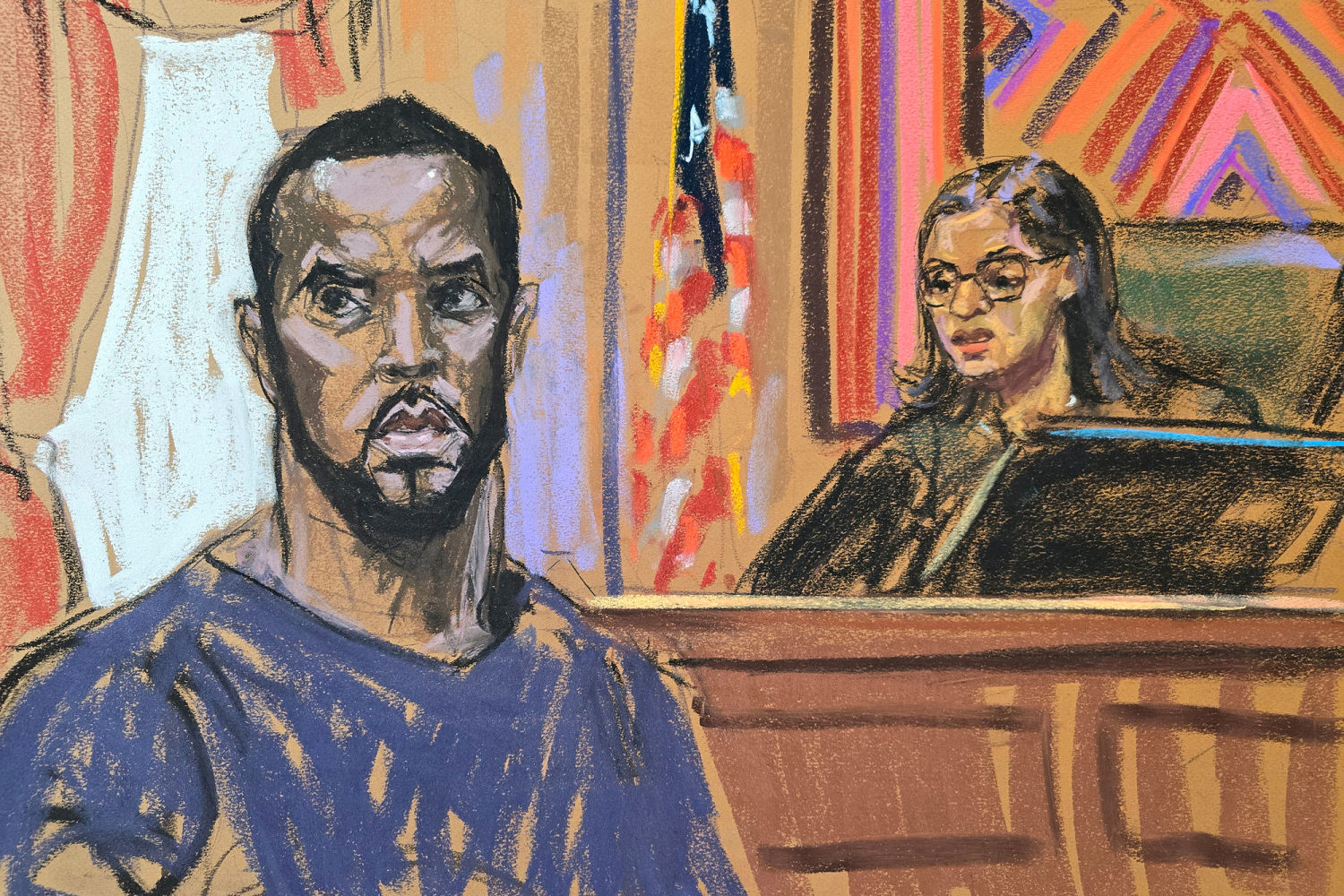
Sean “Diddy” Combs was arrestedon Monday and charged with racketeering, sex trafficking and transportation to engage in prostitution. Each is a serious federal crime, and the powerful hip-hop mogul is facing very serious prison time if convicted. (Combs has denied the allegations and pleaded not guilty.) Notably, the third count in Combs’ indictment comes from a federal law dating back to 1910. It’s known today as the Mann Act. Federal prosecutors don’t often use the law’s other name, and for good reason. The Mann Act is also known as the “White Slave Traffic Act.”
Many laws have been passed because of outdated — or simply racist — societal attitudes. Sometimes, those laws stick around for a surprisingly long time. It wasn’t until 1967 that the Supreme Court struck down anti-miscegenation laws outlawing interracial marriage. (And Alabama kept its law on the state books until 2000, even though it was no longer constitutional.) Similarly, laws mandating segregation were struck down across the country when modern sensibilities recognized them as unjust.
The statute was “born out of a hysteria” in the early 1900s.
But not the Mann Act. Originally motivated by xenophobia, racism and politicians looking for ways to punish consensual “immoral” sex, the law remains a federal tool used to prosecute Combs and many others, including rapper R. Kelly.
While the text of the White Slave Traffic Act doesn’t exclusively protect white women, the statute was “born out of a hysteria” in the early 1900s “that ‘white slavers’ were preying upon young women — coercing them into prostitution through threats, intimidation, and force.” Writing in the Columbia Human Rights Law Reviewsex worker activist Lorelei Lee argues the “prototypical ‘white slave’ of early 1900s discourse was a young white girl from a rural area who was lured into prostitution after moving to an urban center and thus being separated from the supervision of her family.”
The sponsors of the Mann Act definedthe white slave trade as “the business of securing white women and girls and of selling them outright, or of exploiting them for immoral purposes.” Although the text of the law doesn’t single out white women for protection, the legislative history demonstrates a retrograde motive to protect white women from “interracial sex.”
The text of the law as originally passed in 1910 criminalized knowingly transporting a woman in interstate commerce “for the purpose of prostitution,” but also for the purpose of “debauchery, or any other immoral purpose.” As one can imagine, a lot more purposes were considered “immoral” in 1910, and potentially included — according to the Supreme Court in 1917 — an “interstate trip for the purpose of a sexual affair between two consenting adults.”
Several scandalous prosecutions followed. Arguably the most infamous was the prosecution of the first African American heavyweight boxing champion, Jack Johnson. The federal government prosecuted Johnson under the White Slave Traffic Act for transporting a white woman named Belle Schreiber across state lines. This, despite the fact that Schreiber was an adult and testified that she had consented to the trip.
Johnson was convicted, only to be pardonedposthumously over a century later in 2018 by then-President Donald Trump. (Johnson wasn’t the only high-profile man, Black or white, targeted by federal prosecutors, though. Another famous prosecution was that of Frank Lloyd Wright, accused of transporting a mistress from Wisconsin to Minnesota.)
The “immoral purposes” clause remained in the Mann Act for 75 years, until 1986.
The “immoral purposes” clause remained in the Mann Act for 75 years, until 1986, when Congress amended the statute to remove it, and also to make the statute gender neutral. In its modern incarnation, it applies only when the transportation of the person was for illegal sexual activity — in Combs’ case, prostitution.
Johnson likely could not be prosecuted under the Mann Act today. However, as in 1910, the victim’sconsentis still not a defense. Diddy’s defense will likely try to demonstrate that everyone at the alleged “freak offs” and sex parties prosecutors have described in sometimes intense detail were there willingly. But even if that assertion is proven true, it might not be enough to save him.
Two things are probably true: First, seasoned federal prosecutors are likely quite aware of the checkered history of the Mann Act, including its alternate name. Second, you’ll never hear any of them call it that. And that’s a good thing. The revised version of the Mann Act has utility in the modern era. Human trafficking is a legitimate concern in 2024, as opposed to the manufactured “white girl slavery” panic of the early 1900s that inspired the original act. Perhaps this is a law that truly can be repurposed, despite its questionable origins.
Danny Cevallos is an BLN legal analyst who practices in the areas of personal injury, wrongful conviction and criminal defense in Pennsylvania, New York and the U.S. Virgin Islands at the law firms of Cevallos & Wong in Pennsylvania and Edelman & Edelmanin New York, where he is of counsel.


Virginia Democrats are moving forward with plans to gerrymander their way to four more congressional seats — but they need help from the state’s top court.
After a lower court blocked Democrats’ efforts to amend the state Constitution and redraw federal congressional lines ahead of this fall’s midterm elections, the Virginia Court of Appeals requested the Virginia Supreme Court weigh in.
That puts the fate of the map — and potentially congressional control after the 2026 midterms — in the hands of a group of justices that observers say can be hard to predict.
Political and legal experts in Virginia agree the state Supreme Court is not overtly ideological, with many describing it as “small-c conservative,” leaning heavily on tradition and precedent rather than handing down ideologically right-wing rulings. And many observers say the court is wary of wading too heavily into political fights. But this time, it’s unavoidable.
“It’s kind of a state Supreme Court tradition to stay away from political matters whenever they can. They like to leave the legislating to the legislature. So this is going to be a really interesting test of that tradition,” said Carolyn Fiddler of the Democratic Attorneys General Association, who attended William & Mary Law School in Virginia and worked in state politics.
Virginia is one of only two states where the legislature elects Supreme Court justices. Because the state has had divided control for much of the past quarter century, the balance of the court’s justices were appointed by bipartisan compromise. The court’s current seven members include one justice who was elected when Democrats had sole control of the General Assembly, three when Republicans controlled both chambers and three when control of the legislature was split.
“I voted for all these people – every one of them — and I don’t think any of them are overly political. And they shouldn’t be,” said Virginia House of Delegates Minority Leader Del. Terry Kilgore (R), who said he thinks the court will rule in his side’s favor. “They just should follow the law. If they do, we win.”
The question before the Virginia Supreme Court is not if, but when, new maps are allowed to go into effect — and whether they’ll be in place for this year’s midterms.
Gov. Abigail Spanberger (D) signed legislation scheduling a statewide referendum for April 21 last week, asking voters to grant state lawmakers the power to redraw federal Congressional lines immediately. It came a day after Democratic state lawmakers unveiled proposed maps that aim to tilt the congressional map 10-1, potentially handing Democrats four more House seats and leaving just one Republican in the federal delegation.
But a wrench was thrown in their plans when a circuit court judge in conservative Tazewell County ruled late last month that Virginia Democrats did not follow proper procedure when initiating the constitutional amendment.
To change the Virginia Constitution is a multi-step process, requiring approval by two separate sessions of the General Assembly with a statewide general election for the House of Delegates taking place in between those sessions.
Judge Jack Hurley ruled that because early voting was already underway when the General Assembly first passed the amendment last October, it should not count as the first step. If the Virginia Supreme Court agrees, the earliest the state could enact new maps is after the next legislative election in 2027 — a blow to Democrats’ hopes of winning back the House this fall.
It’s a question both sides hope the top court weighs in on – and quickly.
“If they answer the question that there was not an intervening election, which, that’s the big one … then the redistricting is dead,” said former Del. Tim Anderson (R), and who is a practicing attorney. “If they say that there was an intervening election, then the redistricting amendment will go forward.”
The next opening on the court’s docket for a new case is March 2, a tight timeline since that’s the same week early voting is scheduled to begin.
Jay O’Keeffe is a left-leaning appellate attorney based in Roanoke who has argued before the top court. He said it is not uncommon for the justices’ opinions to reference Sir William Blackstone’s “Commentaries on the Laws of England,” the 18th century treatise often cited by those who interpret the law through an originalist, conservative-leaning reading of the law.
“The justices I’ve dealt with don’t seem to see themselves as political actors,”O’Keeffe said. “But you could imagine a more progressive court … approaching the whole job of judging in a different way.”
The question both Democrats and Republicans hope the Virginia Supreme Court will answer is whether the April referendum vote can proceed.
“In matters like this, the Supreme Court is going to try to call it right down the middle, and not on a political basis,” said Steve Emmert, a retired appellate lawyer. “What the parties need now is certainty, and they need it soon.”
Voters are already asking artificial intelligence chatbots about candidates, but campaigns don’t yet know what those large language models might say about them or how to shape those answers — one of many AI-fueled campaign challenges a new Democratic-aligned tech group is hoping to solve.
Tech for Campaigns, a political nonprofit focused on helping Democrats adopt better data and digital marketing techniques, is launching a new initiative called The Lab, aiming to conduct experiments on how Democrats can use AI to win. The group says it is prepared to spend millions partnering with Democratic outside groups in key states and battleground races, with the hopes of helping the party make progress in an area they say it has so far neglected.
“Democrats have shown … they’re not willing to try new things. They wait too long and often are at a disadvantage,” said Jessica Alter, board chair at Tech for Campaigns. “With how fast AI is moving, that disadvantage will compound and be very dangerous.”
Campaigns across the political spectrum are grappling with how to take advantage of the rapidly evolving technology. Major Republican groups have embraced AI-generated content for ads more than their Democratic counterparts in the past year, although some Democratic campaigns have used AI imagery. AI-generated ads tend to be less expensive for campaigns, but strategists are still figuring out how voters feel about them — Rep. Jasmine Crockett’s Senate campaign came under fire this week amid online accusations that her latest ad featured an AI-generated crowd image, although her campaign said it “was created through hundreds of hours of real craft and collaboration between creatives and union labor” without commenting on whether AI was also used.
And ads are just one piece of the AI campaign blitz. Groups have rolled out AI initiatives on everything from writing fundraising emails to searching for opposition research.
Tech for Campaigns wants to go beyond those uses. Its plan is to partner with outside groups in key races to fund experiments on different uses of AI. Modeled after a Silicon Valley-style startup accelerator, the group plans to pair campaign groups with tech executives and commercial experts from companies including Netflix and Y Combinator..
Each experiment is expected to take between two weeks and two months and cost between $50,000 and $150,000. Tech for Campaigns is inviting organizations to apply, and is hoping to conduct around 20 experiments this year. The results will be shared among Democrats widely, with the goal of more campaigns replicating tactics that work and avoiding those that don’t.
Among the challenges the group hopes to tackle: Shaping how candidates show up in output from large language models such as ChatGPT, a practice known as answer engine optimization. Outside researchers have found that AI chatbots can be effective at political persuasion, with voters shifting their opinions on candidates or issues after a short conversation.
Alter said campaigns need to ensure they are well-represented in chatbot results about them, lest the chatbot basing their response more on an opponent’s research and messaging. While major companies are prioritizing shaping chatbots’ response, she said, campaigns so far have been more hesitant to work on it.
The group also hopes to study whether AI tools can help with personalized communication and how Democrats can make better use of platforms, such as Reddit, where the party has generally had less of a presence.
Alter said Republicans have shown an advantage in recent years when it comes to adopting new technologies, from year-round digital advertising to podcasts. The new initiative aims to make sure that GOP advantage does not extend to AI too.
“It’s the most powerful technological advancement of our time,” Alter said. “So I don’t think they’re gonna eschew it.”
A version of this article first appeared in Blue Light News Pro’s Morning Score. Want to receive the newsletter every weekday? Subscribe to Blue Light News Pro. You’ll also receive daily policy news and other intelligence you need to act on the day’s biggest stories.
Speaker Mike Johnson says he has asked retiring Rep. Neal Dunn to serve out his term amid concerns the Florida Republican might resign early. An early exit from Dunn, 72, would deal Johnson another massive blow as he tries to maintain his narrow majority. Currently, Republicans can afford to lose no more than one GOP vote on party-line measures…
Read More
-

 The Dictatorship12 months ago
Luigi Mangione acknowledges public support in first official statement since arrest
-

 Politics12 months ago
Former ‘Squad’ members launching ‘Bowman and Bush’ YouTube show
-

 The Dictatorship5 months ago
Mike Johnson sums up the GOP’s arrogant position on military occupation with two words
-

 Politics12 months ago
Blue Light News’s Editorial Director Ryan Hutchins speaks at Blue Light News’s 2025 Governors Summit
-

 The Dictatorship12 months ago
Pete Hegseth’s tenure at the Pentagon goes from bad to worse
-

 Politics12 months ago
Former Kentucky AG Daniel Cameron launches Senate bid
-
Uncategorized1 year ago
Bob Good to step down as Freedom Caucus chair this week
-

 Politics10 months ago
Democrat challenging Joni Ernst: I want to ‘tear down’ party, ‘build it back up’