
Congress
Bellwether suburban county’s red shift is now at the center of both parties’ future identities in New York

ALBANY, New York — The statewide blue wave in which New York Democrats made big gains in nearly every corner of the state this November had one glaring exception: Nassau County.
While Empire State Democrats scored one of their best election nights on record, Republicans held down America’s archetypal suburb, with GOP candidates notching an 11-0 record in contested executive branch races in Nassau. In the marquee race, County Executive Bruce Blakeman improved on his 2021 performance after four years of wholeheartedly embracing President Donald Trump.
Blakeman is hoping to ride that success into next year: He launched a 2026 gubernatorial bid Tuesday touting his electability.
“While Democrats made gains nationwide on election night, the Republican party shined bright on Long Island,” the narrator of his launch video said. “Nassau County Executive Bruce Blakeman won a Democrat County by 12 percent.”
Whether Blakeman’s GOP primary opponent Rep. Elise Stefanik can replicate those numbers will be a key question facing Republican voters next June. Blakeman told Blue Light News his recent win came down to holding fast to pocketbook issues, hiring more cops and connecting with groups Republicans have ignored in the past. Others say his decisive victory might simply stem from a strong local party organization.
Whatever the secret of his success, the importance of Nassau extends far beyond next year’s gubernatorial race. It will also be crucial to determining control of the House.
And it is not just Republicans whose future stands to be shaped by Nassau’s political trends. Democrats have spent years bickering over whether party members in the county have focused too much on distancing themselves from the far left. Moderate Nassau Democrats say progressives like New York City mayor-elect Zohran Mamdani have made their jobs tougher.
“Most of the television commercials that they put up were all about ‘Mamdani, Mamdani, democratic socialists,’” Nassau Democratic Chair Jay Jacobs said. “Their tagline was, in effect, ‘Vote Republican and save Nassau County from becoming a socialist county.’ That plays well with a moderate audience.”
Democratic struggles in Nassau County have become a regular through line, revisited with each election cycle. While it was at the heart of the national blue wave in 2017 and 2018, the GOP won big there in 2021 local races. Four years after a 16-point Democratic win in Nassau in the 2018 gubernatorial election, the party suffered an 11-point loss in 2022. Then in 2024, Trump became the first Republican presidential candidate to win Nassau County since 1988.
How that pattern plays out next year remains an open question.
Rep. Laura Gillen, a Democrat in a battleground Nassau swing district, “is the number one target in the country for Republicans,” said Larry Levy, executive dean of the National Center for Suburban Studies at Hofstra University. “They really think they can win in that district and they’re going to put an unlimited amount of money in.”
An effective GOP candidate at the top of the ticket would help considerably toward that end.
Stefanik’s team disputed the idea that Blakeman has a magic formula for electoral success, pointing to his unsuccessful bids for state comptroller, New York City mayor and U.S. Senate. He last ran for higher office when he lost a congressional bid in 2014 — the same year Stefanik flipped a House seat with a 21-point victory.
Yet Blakeman believes he has a solid case to make.
He attributed his success this election cycle to holding true to past promises to not raise taxes and hire more police officers, while also building connections to groups Republicans haven’t focused on in the past. He rattled off a long list of outreach efforts undertaken by the county in recent years, such as a Feliz Navidad celebration and a Lunar New Year festival.
“We also reached out to the Muslim community and talked to them about things that were important to them,” Blakeman said. “I appointed the first Muslim police chaplain in Nassau County history, and shortly I will be appointing the first Sikh police chaplain.”
Trump, who has become politically toxic in many New York suburbs, will undoubtedly be a factor in next year’s race. On Monday, he described both Blakeman and Stefanik as “great,” and while he has not yet expressed a preference for either, that could change. And arguably no local official in the northeast has done more to associate themselves with Trumpism than Blakeman.
Under his leadership, Nassau County spent more than $1 million on police overtime hosting Trump for a campaign rally last fall. Blakeman has been New York’s most visible opponent of letting transgender girls participate in female sports and has had the county partner with ICE on immigration enforcement efforts. In late November, he announced a wall of surveillance on the Queens border to conduct facial recognition on visitors from Mamdani’s New York.
“I never ran away from President Trump,” Blakeman told Blue Light News. “I supported President Trump, and I was very vocal about my support for President Trump”
The approach is a far cry from how Nassau County Democrats have handled Mamdani.
Jacobs, who also serves as chair of the state Democratic Party, famously distanced himself from the mayor-elect in the fall, declining to offer an endorsement after Mamdani became the Democratic nominee. And he’s hardly the only local Democrat who falls into that category: “Mamdani’s reckless agenda filled with unachievable promises and contempt for certain groups threatens NY’s economy and safety,”Gillen said this fall.
Democrats based in New York City contend this is exactly what their counterparts on Long Island should not be doing.
“When the leading Democrats in the county are telling everyone that the Democratic Party sucks, it’s hard to convince voters to vote for your party,” said state Sen. Deputy Leader Mike Gianaris, who heads the Senate Democrats’ campaign arm. “They should start looking inside themselves and start trying to make a positive case for Democrats, or I think they can expect this to continue.”
Unlike in Nassau, Long Island’s neighboring Suffolk County showed significant signs of the pendulum swinging back to the left this November. Democrats grew their share of the vote by 10 or more points in four of the five top town races, and they flipped seats in places like Shelter Island and Riverhead.
Democrats haven’t been completely without hopeful signs in Nassau either.
They won a victory last month in a newly-drawn county legislative district, denying Blakeman’s allies a supermajority and giving them the ability to put their foot in the door during budget talks. In 2024, Tom Suozzi broke the Republicans’ hold on four congressional seats by winning a special election. Gillen won another seat later that year, thanks to a two-point victory in a district that favored Democrats by 11 points as recently as 2020.
But even the good Democratic vibes in the 2024 congressional races underscored a long-standing issue in the county — winning back the seat in Suozzi’s special election would not have been necessary if local Democrats had done opposition research into the now-disgraced former Rep. George Santos before the 2022 election.
The failure to do so illustrates another reality in the area. After decades of controlling Nassau, Republicans built a well-oiled machine.
“The relative strength of the organizations — it’s just not even close,” said Levy, who likened the GOP’s political operation to that of former Chicago Mayor Richard Daley. “At a time when all over the country, political organizations are shrinking in influence for a variety of reasons, Nassau still has an old-fashioned Daley machine-like operation that can get a vote out in ways that the Democrats can’t.”
Democrats didn’t do much to end that structural disadvantage when they won power in 2017.
“Arguably the Democrats could have, should have done more to leverage the patronage opportunities to raise money and create more foot soldiers to work politically,” Levy said. But any steps they made in that direction were halted when the political winds started to shift: “Anything that happened before the pandemic almost doesn’t count.”
Jacobs, who said his party was outspent by a more than four-to-one margin in the county executive’s race, didn’t disagree with the characterization.
“They raised and spent $15 million. That’s an extraordinary amount of money,” he said. “That was supplemented by both county mailings and town mailings that, in my judgement and other peoples’ judgement, were campaign-like pieces paid for by the taxpayer.”
That onslaught of ads built off years of tying local Democrats to policies like bail reform or high-density housing or candidates like Mamdani, former New York City Mayor Bill de Blasio and Gov. Kathy Hochul. The Democratic brand “is really doing poorly” in the area, Jacobs said.
“People — even at the doors when you’re collecting petitions, even when they’re Democrats — are upset with our party,” he said. “That’s been driven by a really well-funded consistent campaign by Republicans to set the narrative that all Democrats are either wild extremists themselves or so afraid of them that they bend to whatever the far left in our party wants. Neither of which is true, but too many people believe it.”
Nassau Republicans, meanwhile, aren’t shying away from a president whom the opposition characterizes as an extremist.
“In a county with 110,000 more Democrats, to win by 35,000 votes is something that is very special,” Blakeman said. “You have to be true to your values, and not a phony.”


Democrats are readying a long list of investigations they want to launch into Donald Trump.
Reps. Robert Garcia and Jamie Raskin, who would lead the Oversight and Judiciary committees, respectively, if the party takes back the House, said they’re wasting no time in preparing an all-out oversight campaign targeting Trump, his family, and his administration.
Both know that House Dems’ efforts now could provide a backbone for the accountability message the party intends to continue into the 2028 presidential election season.
“We are going to be looking at systems of bribery, kickback and financial corruption and opportunities for disgorgement and restitution to the American people,” Raskin said. “That would be No. 1.”
Topping their long list of controversies they want to probe: Trump’s acceptance of a Qatari jet for use as his new Air Force One, and his family’s massively profitable cryptocurrency investments.
Raskin also said he intends to probe what he deems “fraudulent and vindictive prosecutions,” including those of former FBI Director James Comey and New York Attorney General Leticia James. Garcia, meanwhile, said he is determined to fill in gaps he sees in the GOP-led investigation into the late convicted sex offender Jeffrey Epstein.
White House spokesperson Olivia Wales responded to Democrats’ plans by stating the president “will continue to draw a sharp contrast with his commonsense agenda and radical Democrats who want to massively raise taxes, defund the police, and are soft on crime.”
Garcia and Raskin’s preparations in some ways resemble how their predecessors planned ahead of the 2018 midterms. But that year, Democrats tiptoed around the prospect of impeachment for fear of alienating voters, then launched a flurry of investigations aimed at Trump once they were in power.
Now, after two impeachments that failed to remove Trump from office and with a party base intent on pulling no punches, House Democrats are reluctant to take anything off the table — while also recognizing the limitations of impeachment as a check on Trump’s power.
“Nobody on the Democratic side is afraid of impeachment,” Raskin said this week, adding that he considers it a “tool in the toolbox.”
What else we’re watching:
— SCANDAL-PLAGUED CANDIDATES TEST PARTIES’ LIMITS: Democrats and Republicans this election cycle keep playing whack-a-mole as candidate after candidate becomes embroiled in controversies ranging from domestic violence to sexual misconduct. Neither party has developed a clear playbook yet for when to step in or what counts as disqualifying. But identifying that line could become a key effort in determining who controls the next Congress, as several races with problematic candidates have been or could become battlegrounds.
— LAWMAKERS BRISTLE OVER POCKET RECISSION SEASON: With less than 45 days left in the fiscal year, the time is right for pocket rescissions — the controversial tactic Trump used last year to cancel billions of dollars in foreign aid without Congress’ consent. If the White House takes that tack again, it will not be well received on Capitol Hill, where lawmakers in both parties continue to bristle over Trump’s ongoing assault on their funding power.
Chris Marquette, Riley Rogerson, Erin Doherty, Andrew Howard, Alec Hernandez and Jennifer Scholtes contributed to this report.
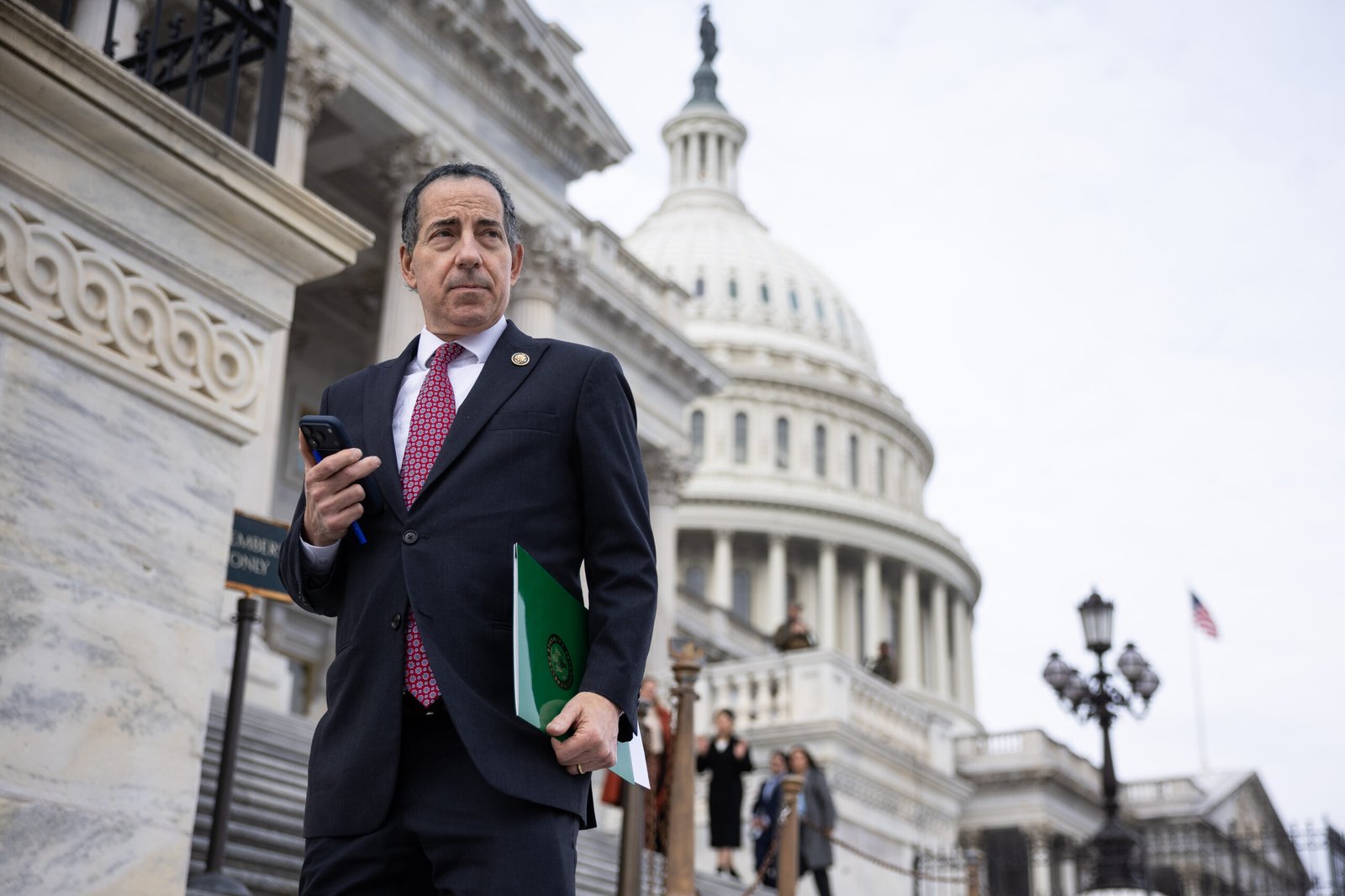
Democrats haven’t yet won the House majority. But top party leaders are wasting no time in preparing an all-out oversight campaign targeting President Donald Trump, his family and administration should they flip the chamber in November.
At the center of the effort are California Rep. Robert Garcia, who is poised to lead the Oversight Committee under a Democratic takeover, and Maryland Rep. Jamie Raskin, who is in line to lead the Judiciary Committee. They are each already planning to use their potential gavels to investigate key Trump controversies — such as his acceptance of a Qatari jet for use as his new Air Force One and his family’s massively profitable cryptocurrency investments.
Garcia and Raskin both said in interviews they have a long list of administration officials that they plan to probe and possibly bring before their committees. But each said they intend to focus intently on Trump himself.
“Ideally, it’s the president’s sons and the president and the family,” Garcia said, adding a litany of other members of the Trump inner sanctum he wants to hear from. They include chief of staff Susie Wiles, deputy chief of staff Stephen Miller and son-in-law and foreign envoy Jared Kushner, as well as former Homeland Security Secretary Kristi Noem and Cory Lewandowski, who served as her chief of staff.
In addition to the crypto profits and the much-criticized Qatari 747, Garcia said he planned to probe federal contracts awarded to members of Trump’s family and the series of pardons Trump has granted early in his second term.
Raskin, a veteran of the investigative onslaught that took place in the second half of Trump’s first term, said he planned to focus on allegations of self-enrichment by Trump and his family — as well as illicit foreign influence on American institutions and rising authoritarianism in government.
“We are going to be looking at systems of bribery, kickback and financial corruption and opportunities for disgorgement and restitution to the American people,” Raskin said. “That would be No. 1.”
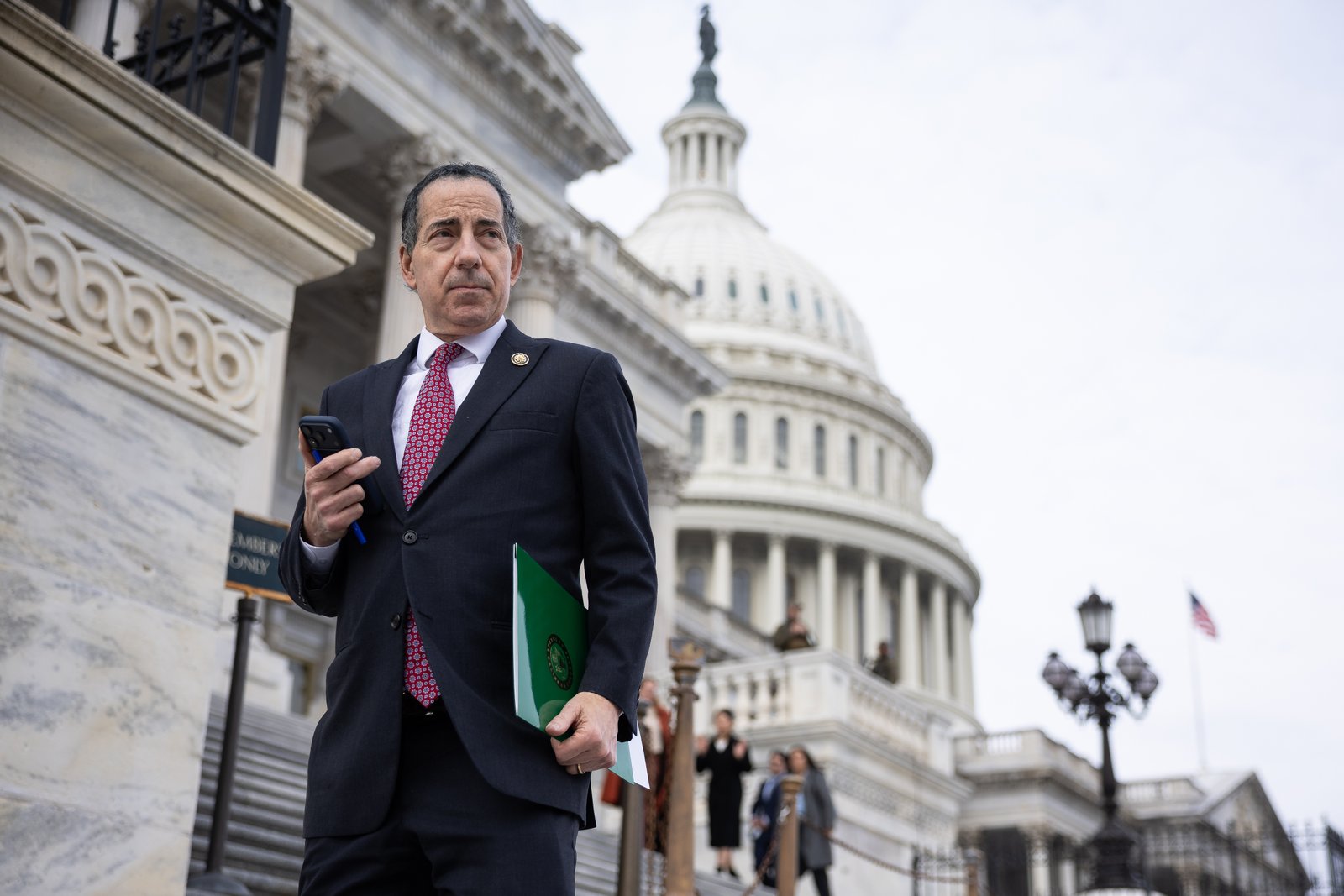
Asked to comment on Democrats’ oversight plans, White House spokesperson Olivia Wales responded with a statement outlining Trump’s legislative achievements.
“The President will continue to draw a sharp contrast with his commonsense agenda and radical Democrats who want to massively raise taxes, defund the police, and are soft on crime,” she said. “The choice has never been more clear: doubling down on President Trump’s winning agenda or far-left liberal policies and partisan gridlock.”
Raskin and Garcia are forging ahead even as voters reject some Democrats who were at the forefront of the Trump accountability effort that unfolded eight years ago. And while the preparations Garcia, Raskin and others are making now in many ways resemble how their predecessors planned ahead of the 2018 midterms, there are differences.
Democrats in the leadup to the elections that year warily tiptoed around the prospect of impeachment in fear of alienating voters, and they laid out some investigative targets that did not implicate Trump personally.
Once in power, though, they launched a flurry of investigations aimed at Trump — including the president’s tax returns, his acceptance of foreign “emoluments” and later his effort to leverage aid to Ukraine for political favors. In virtually every case, the administration stonewalled Democratic investigators.
Now, after two impeachments that failed to remove Trump from office and with a party base intent on pulling no punches, House Democrats are reluctant to take anything off the table — while also recognizing the limitations of impeachment as a check on Trump’s power.
“Nobody on the Democratic side is afraid of impeachment,” Raskin said this week, adding that he considers it a “tool in the toolbox.”

The larger project for Democrats if they win power in November is to use subpoena power and public hearings to provide a backbone for the accountability message they intend to continue into the 2028 presidential election season.
Minority Leader Hakeem Jeffries emphasized the wide-reaching scope of oversight inquiries during his campaign kickoff speech last month, in which he unveiled House Democratic midterm messaging that included a pledge to “hold the crooks accountable.”
“Anyone,” Jeffries said, “who is stealing from the American people, screwing over the American people, or shortchanging the American people is going to be held accountable beginning on Day 1.”
While the Oversight and Judiciary panels would be the leaders of the investigatory push in a Democratic House, other committees are set to target Trump as well in a bid to deliver the bold action Democratic primary votes have demanded.
Rep. Don Beyer (D-Va.), a member of the Ways and Means Committee, said he expected the oversight subpanel would be a highly sought-after assignment should Democrats win gavels — with a potential “big” emphasis, he said, on probing Trump family corruption.
He added he was “very concerned” about how the Trump administration has managed the IRS and Social Security, particularly after the Department of Government Efficiency upended federal agencies last year.
“We certainly will exercise our oversight responsibility,” said Rep. Richard Neal of Massachusetts, who is expected to return as Ways and Means chair in a Democratic majority.
Garcia and Raskin, meanwhile, have other pet priorities beyond the personal benefits Trump and his family have allegedly garnered in office.
Raskin said he intends to probe what he deems “fraudulent and vindictive prosecutions” including those of former FBI Director James Comey and New York Attorney General Leticia James.
“The prosecution function has been utterly tainted and the Judiciary Committee obviously can’t let that go,” he said.

He has also set his sights on Paramount Skydance’s proposed $110 billion buyout of Warner Bros. Discovery, a deal Democrats have blasted not only as an antitrust violation but also a threat to national security and free speech.
Previewing his intentions for the majority, Raskin requested a transcribed interview with Paramount Skydance CEO David Ellison in a letter last week. While he cannot haul Ellison, a close Trump ally, before the committee now as a member of the minority party, Raskin said his inquiry into Paramount would be a “priority” if Democrats win subpoena power.
Garcia, meanwhile, said he is determined to fill in gaps he sees in the GOP-led investigation into the late convicted sex offender Jeffrey Epstein. He said he wants to bring key witnesses back to testify under oath, potentially in public hearings “because most of them were not called under oath and most of them were not called under subpoena.”
That could include big names in the world of finance, such as Leon Black, the co-founder of Apollo Global Management, and Jes Staley, a former top executive at JPMorgan Chase — both of whom had substantial communications with Epstein and met with the committee privately.
“I think we’re going to have, in the majority, public Epstein hearings,” Garcia said.
The Epstein investigation is similar to the Trump corruption probe in that it would potentially span multiple committees, and Garcia and Raskin both praised each other and said they are planning to work in concert on both issues.
Raskin said he doesn’t envision any issues with coordination between two panels
“There’s enough Trump family corruption to go around,” he said. “I don’t think we have to worry about that. We will just be dividing it up.”
Kelsey Brugger contributed to this report.
Republican lawmakers are still locked in a power struggle with the White House over control of federal cash, long since President Donald Trump swept back into office with unprecedented orders undermining Congress’ power of the purse.
Earlier this month, GOP senators overwhelmingly agreed to a bipartisan government funding bill that would temporarily block the Trump administration from finalizing a federal rule to let political appointees steer money toward grants “aligned with the president’s agenda.” The House could clear that bill next month, and Trump is expected to sign it to avert a shutdown before the midterms.
And while the days of widespread funding freezes might be over, the Trump administration continues to create new rules for federal grants and then deny funding based on them — only to be repeatedly shot down in court this summer.
Lawmakers in both parties have also blasted White House budget director Russ Vought this year for delaying the release of cash for congressionally backed programs for antipoverty services, foreign assistance, banking in underserved areas and more.
“Congress has appropriated money, and you don’t have the authority to impound it,” Sen. Chuck Grassley (R-Iowa) chastised Vought this spring over the withholding of hundreds of millions of dollars the Trump administration is supposed to send quarterly to states.
Now Republicans are watching for clues about whether Vought, between now and Sept. 30, will claim the authority to nix appropriations in the final weeks of the fiscal year through what’s known as a pocket recession. He used the move last year to unilaterally cancel $4.9 billion in foreign aid through the legally dubious maneuver.
“Pocket rescissions would be a very interesting way to curry favor with the legislative branch — especially the one part of the legislative branch which has delivered on all of the administration’s shit,” Rep. Mark Amodei of Nevada, a senior Republican appropriator, said in a recent interview.
Indeed, the White House needs the support of GOP appropriators in both chambers to advance Trump administration priorities.
Those top lawmakers have already taken some modest steps to stop the White House from shirking Congress’ intent on spending by inserting stricter language into bipartisan funding bills Trump signed into law for the current fiscal year. That included new rules for shifting money between accounts and more explicit instructions for how dollars should be spent.
Some Republican lawmakers have also been resisting the administration’s push this summer to enact billions of dollars for the military and agriculture programs through another party-line budget reconciliation package. Top House Republican appropriators slammed the White House in June for pursuing a “risky and uncoordinated” strategy to enact funding for the Iran war through a party-line bill that’s not guaranteed to pass.
Relying on the reconciliation process to skirt the Senate filibuster is a key step to achieve the “paradigm shift” Vought has touted throughout Trump’s second term, designed to make funding negotiations “less bipartisan” so Republicans don’t have to agree to nondefense increases in order to get enough votes to boost military budgets.
“At what point did we stop legislating?” Sen. Lisa Murkowski (R-Alaska), another senior appropriator, said last month after Vought privately pitched Senate Republicans on the latest party-line plan, which would inherently take funding power away from the appropriations committees.
Murkowski was also among the Senate Republicans who chided the White House for not seeking input from lawmakers before forging ahead with its plan to put political appointees in charge of approving federal grants and minimize the role of the objective peer-review process for selecting recipients of those dollars.
“There was no consultation at all,” she said. “When you start issuing grants based on political connections, that’s not good for the system here.”
Senate Appropriations Chair Susan Collins (R-Maine) publicly called on Vought to extend the public comment period for the plan last month, to no avail.
She also continues to pan the pocket rescission gambit, saying in a recent interview that the administration should “go through the proper process with the Appropriations Committee” if it wants to rescind money intended for a specific program.
Under a decades-old law, the White House is allowed to send Congress a request to revoke funding, then withhold the cash for 45 days while lawmakers consider whether to approve, reject or ignore the proposal. Republicans last summer voted to approve Trump’s request to rescind $9 billion for public media and foreign assistance.
Then Trump used that same law weeks later to send Congress a request to rescind $4.9 billion in foreign aid — this time with less than 45 days left before the end of the fiscal year. Vought immediately declared the funding canceled, arguing that the administration had to withhold the funding until it expired at the end of September, regardless of congressional action.
The Office of Management and Budget did not respond to requests for comment on whether the White House plans to execute new pocket rescissions in the coming weeks. But Trump’s new pick for deputy director at the agency, Hal Duncan, told lawmakers this summer that the agency isn’t ruling out any “fiscal tools.”
House Appropriations Chair Tom Cole said White House officials have given him no assurances that they won’t deploy the tactic again this year and that his reaction would hinge on the type of funding eliminated.
“It would depend on what it is — it really would,” the Oklahoma Republican said last month.
In courtrooms throughout the country, federal judges continue to weigh in on whether Trump is illegally encroaching on Congress’ funding power.
Last month a federal judge declared that the administration can’t cancel grants based on new rules or goals established after the fact. The Trump administration later admitted in a different case that it canceled $7.6 billion “based solely on the political identity of the grant recipient’s state.” Then a federal judge halted changes to teen-pregnancy prevention grants, concluding that it’s unlawful “to impose conditions … that Congress did not intend or that are unreasonable or unexplained.”
The Supreme Court has yet to conclusively rule on the president’s spending tactics, and many Democrats on Capitol Hill argue Republicans shouldn’t rely on the courts to defend Congress’ authority. GOP leaders have repeatedly bucked Democratic calls for action, including to reverse the cancellation of specific grants, nullify Trump’s pocket rescission last fall and head off a future end-run around Congress by barring rescissions requests in the last months of the fiscal year.
“When are our Republican colleagues going to assert our legislative authority?” Rep. Debbie Wasserman Schultz of Florida, a top appropriator, said in an interview. “I mean, why in the hell did they run for Congress?”
Sen. Brian Schatz of Hawaii, a senior appropriator in line to be the No. 2 Democrat in the next Congress, was more charitable.
“I just think there’s a bipartisan desire to get back to the way the Constitution is supposed to operate,” he said in an interview, “where we decide how the money is spent.”
- ‘The MMR vaccine is not a lethal vaccine,’ Mehmet Oz says
- Trump offered state Medicaid programs lower prices on weight-loss drugs. Most are rejecting the deal.
- Democrats see political gain in Ohio’s health care pain
- Democrats found their border message. ICE is another story.
- ‘I’m on the ballot’: Trump lends a hand to struggling Darline Graham
- RFK Jr.’s barnstorming the country for the GOP
- Capitol agenda: All the Democrats’ probes
- Democrats want to probe Donald Trump, his family and his administration. But mostly Trump.
- A White House official helped an oil company advance its projects. Now she’ll lead its DC office
- Trump’s biggest political event so far isn’t in a battleground state
-

 The Josh Fourrier Show2 years ago
DOOMSDAY: Trump won, now what?
-

 Politics2 years ago
Former ‘Squad’ members launching ‘Bowman and Bush’ YouTube show
-

 The Dictatorship2 years ago
Luigi Mangione acknowledges public support in first official statement since arrest
-
Uncategorized2 years ago
Bob Good to step down as Freedom Caucus chair this week
-

 Politics2 years ago
Former Kentucky AG Daniel Cameron launches Senate bid
-

 The Dictatorship2 years ago
Pete Hegseth’s tenure at the Pentagon goes from bad to worse
-

 Politics2 years ago
Blue Light News’s Editorial Director Ryan Hutchins speaks at Blue Light News’s 2025 Governors Summit
-

 The Dictatorship12 months ago
Mike Johnson sums up the GOP’s arrogant position on military occupation with two words