
Politics
Indiana Republicans threaten to thwart Trump’s redistricting onslaught

President Donald Trump’s maximalist, command-and-control approach to the GOP faces one of its most significant tests yet, as a band of stubborn Indiana state Senate Republicans threatens his mid-cycle redistricting scheme when it is expected to come to a vote this week.
The Hoosier Republicans will gavel in Monday to decide on a map, passed Friday by the Indiana House, that supporters say would all but guarantee a 9-0 Republican congressional delegation and would be in effect for next year’s pivotal midterm elections. Present maps give the GOP a 7-2 advantage.
Senate President Pro Tempore Rodric Bray, who — along with roughly half his 40-member Republican majority — has resisted a four-month White House pressure campaign to redraw the congressional lines. Indiana Conservation Voters, Club for Growth and Building a Better Economy are among the groups that have spent nearly half-a-million dollars in ads trying to sway public opinion — the first group against redistricting and the second two for — in recent weeks, according to AdImpact. Trump campaign veterans like Chris LaCivita have joined the dark money group Fair Maps Indiana to advance the cause, too.
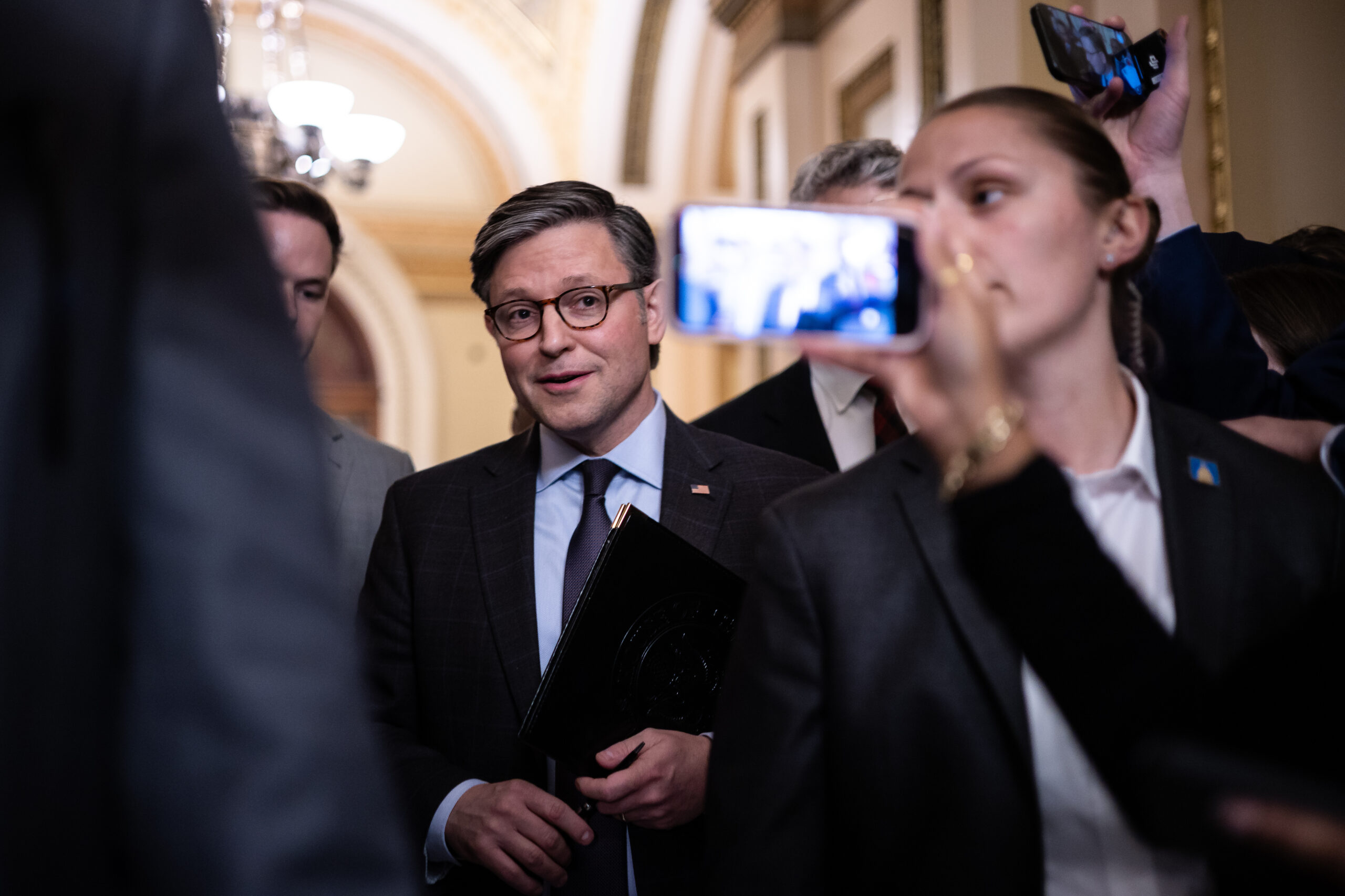
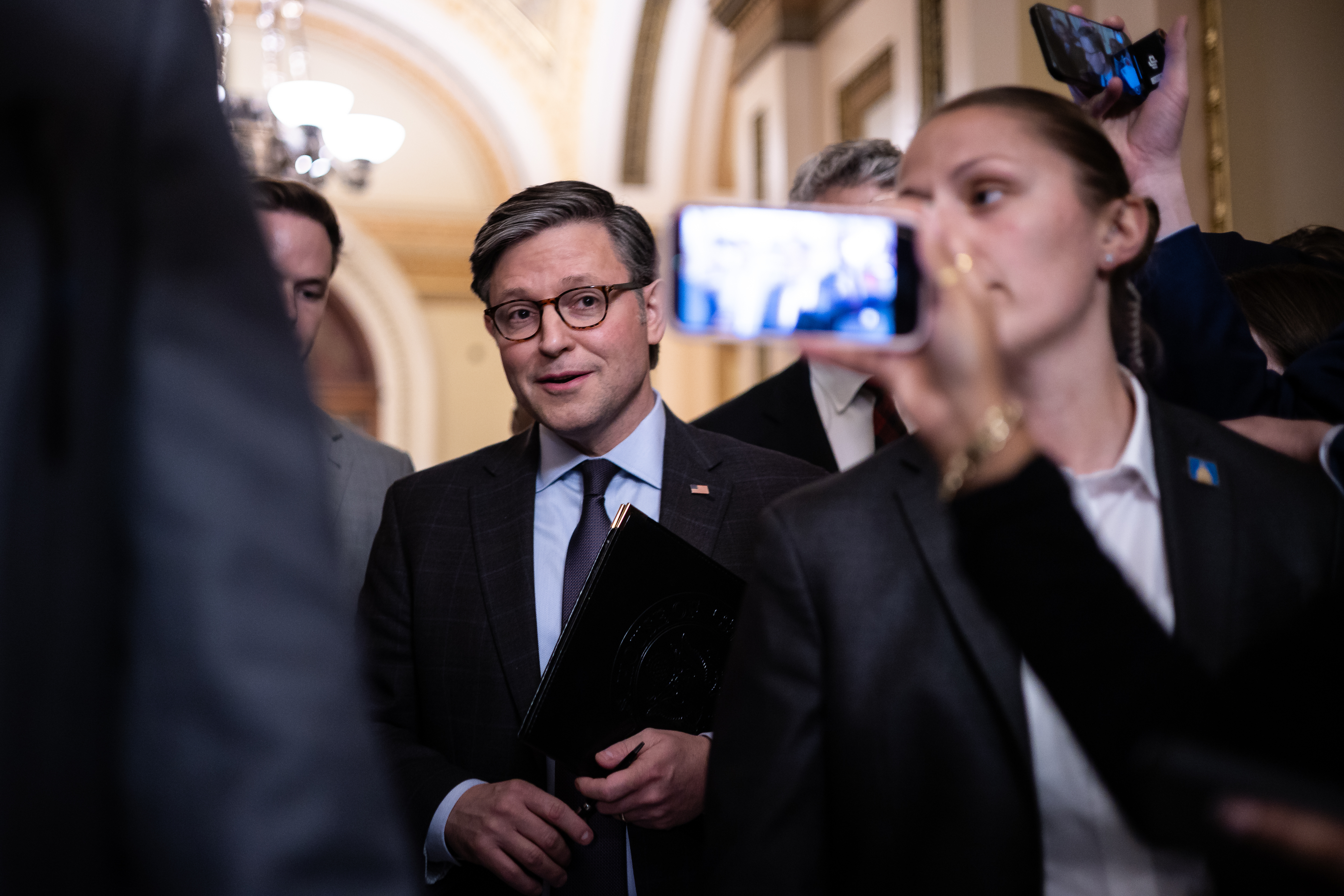
Speaker Mike Johnson has been calling reluctant Republican state senators in recent days — reported here for the first time, based on accounts from two people granted anonymity to freely discuss sensitive private conversations. One Indiana Republican elected official briefed on the calls said Johnson’s “soft touch” with lawmakers may be moving the needle.
“Anybody who tells you they know how this is going to play out doesn’t know,” this person said.
A Johnson spokesperson did not respond to a request for comment.
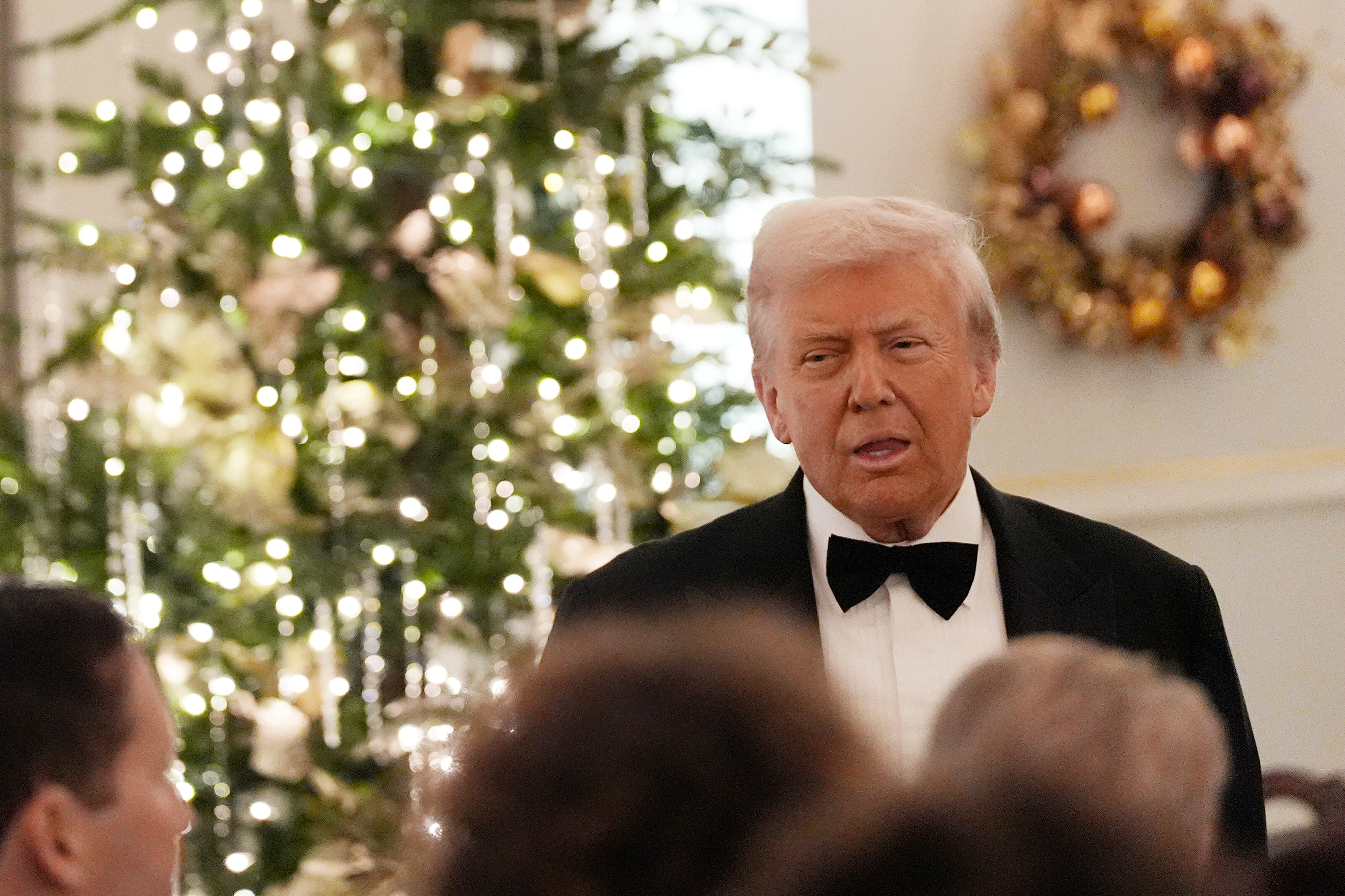
The matter is top of mind for the president, who brought up Indiana redistricting to visitors at a White House Christmas party Sunday attended by Gov. Mike Braun, according to a person present and granted anonymity to disclose the conversation. Trump asked Braun in front of other guests if redistricting would pass, and Braun responded it would.
The White House did not respond to a request for comment. Trump “thinks we should fight democrats every legal way we can to win the majority and keep accomplishing things for the people,” according to a Republican close to the White House granted anonymity to discuss the president’s motivations.
And on Friday, Turning Point Action announced that it was partnering with several Trump-aligned super PACs to target Indiana Republicans who are blocking the president’s redistricting effort, including threatening to spend millions of dollars to primary resistant members of the Indiana GOP.
Trump needs the backup: The state Senate’s reservations threaten to derail his plans to push new maps across the country to shore up his party’s slim House majority, which Democrats would seize by netting just three seats in an election that is expected to be a repudiation of the party in power.
“These guys and ladies are under intense, 24-hour-a-day pressure and I don’t know if they can withstand it, ultimately — we will see,” said Mike Murphy, a former Republican member of the Indiana House of Representatives. “I feel badly for them and their families, primarily. They came to be public servants, and instead they are pawns in really what I consider to be Trump’s strategy to avoid a third impeachment and potentially set himself up a third term.”
The Trump-backed pressure campaign in Indiana has included two visits from Vice President JD Vance to Indianapolis on Air Force Two, and repeated calls and invitations to Oval Office meetings — including with Trump, Bray and Speaker of the House Todd Huston in August.
Now, lawmakers will convene amid threats of violence following Trump’s series of social media posts ramping up pressure. At least a dozen elected Indiana Republicans have faced swattings — false reports of danger that bring an aggressive law enforcement response designed to intimidate the target — and pipe bomb threats. Few though have publicly reversed their positions against redistricting since they stalemated 19-19last month on a vote that was a close proxy for gerrymandering. That means Trump and the White House would need to flip at least half a dozen GOP senators to secure a simple majority to pass the new maps.
“How does (Trump) have the time to mess with a nobody like me with all of the important matters that are to take his attention as the leader of the executive branch in this nation?” Republican state Sen. Greg Walker told a local newspaper in November.
Three Indiana Republicans close to the process — and granted anonymity to appraise support — said they do not believe there are currently enough votes in the Senate for the map to pass.
Asked whether he felt pressured by the White House to redistrict, Huston would only say, “We had conversations. There was no secret.”
Trump posted twice on Truth Social this weekend about his demand for redistricting in Indiana, the barn-red state he once called “Importantville” and that helped him clinch the GOP nomination in its May 2016 primary, saying, “this new Map would give the incredible people of Indiana the opportunity to elect TWO additional Republicans in the 2026 Midterm Elections.” He also posted the names of nine senators who “need encouragement to make the right decision” as they have not yet declared their position on the new map.
Turning Point last week deployed members of their “strike force” to meet with and whip many of those same senators, but the results of that effort remain unclear. “It’s so hard to judge at this point, because it’s such a fluid situation,” said Brett Galaszewski, Turning Point Action’s national enterprise director.
Meanwhile the Supreme Court reinstated Texas’ newly drawn congressional map last week, staving off a major setback to Trump’s redistricting campaign. Now, the GOP has nine more favorable seats across four states — Texas, Ohio, Missouri and North Carolina. Those will likely be offset by the five Democratic seats California Gov. Gavin Newsom scored in his counterpunch last month.
Redistricting battles are brewing around the country, with Democrat-led Virginia and Maryland headed in opposite directions of one another.
Virginia Democrats expanded their grip on power in the General Assembly by picking up 13 House seats while flipping three Republican-held statewide offices, including governor, in last month’s elections. Top Democrats in the state legislature appear unfazed by Indiana’s push to redraw its maps. The state’s top Democrat said it was “full steam ahead” – a reference to the state lawmakers clearing a procedural hurdle in October to put a constitutional amendment before voters to allow the Democratic-led legislature to redraw its maps ahead of the 2026 midterms.
“We have a plan and process in place that will facilitate delivery of our maps on time,” state Sen. L. Louise Lucas said via text Saturday. “Virginia is a good place to be.” Don Scott, the Virginia House speaker, opined that a new map could drastically change the delegation makeup in Virginia, which is near parity with six Democrats and five Republicans.
Scott said “10-1 is not out of the realm to be able to draw the maps in a succinct and community-based way,” at a public forum last week.
And in Maryland, Gov. Wes Moore continues to pressure his state lawmakers to take up new maps, but has run into opposition from state Senate President Bill Ferguson, who has refused to entertain bringing up a vote on the matter.
Maryland’s lower chamber appears poised to take up the issue, but House Speaker Adrienne Jones, who earlier this year publicly supported the governor’s redistricting push, stunned many in Annapolis by announcing Thursday she was immediately stepping down.It’s unclear what impact this will have on negotiations to redraw the state’s lines.
Moore’s Redistricting Advisory Commission, set up last month to solicit residents’ feedback on whether to craft new maps, is slated to hold its final public meeting Friday before it issues recommendations to the governor and Maryland General Assembly.
Trump set the latest redistricting arms race in motion when he leaned on Texas to redraw its maps earlier this summer.
“We don’t operate in a vacuum and states are doing this all across the country, red and blue states,” Huston told reporters Friday. “We felt like it was important for us to be a part of that, and to make sure that we used every tool we could to support a strong Republican majority.”
Asked whether he felt “proud” of the maps, Huston, who said in 2021 that he would “defend these maps all day long, six days to Sunday,” did not use that word, saying he felt “very blessed to lead the Indiana House of Representative.”
“I support this, and I support what we’re doing,” he said.
The state Senate committee on elections will meet in the Senate chamber to hear the congressional map Monday afternoon, with a final vote from the whole chamber expected Thursday.
Trump’s demands on Indiana lawmakers though have exposed some of the limits of his power.
“The MAGA movement hasn’t permeated down to the state legislative level,” said an Indiana Republican allied with Trump’s redistricting cause.
But this person, granted anonymity to discuss the tense debate, referenced primaries of resistant Indiana Republicans, saying, “we’re either going to get new maps, or we’re going to get a new Senate.”
“Some people think Trumpworld is bluffing or doesn’t have any juice left and this will just go away if the state Senate rejects the maps,” this person said. “The reality is that will only be the start of a long and brutal campaign to purge the state of anyone who opposed Trump on this issue. And there will likely be collateral damage that hurts even those who supported Trump.”


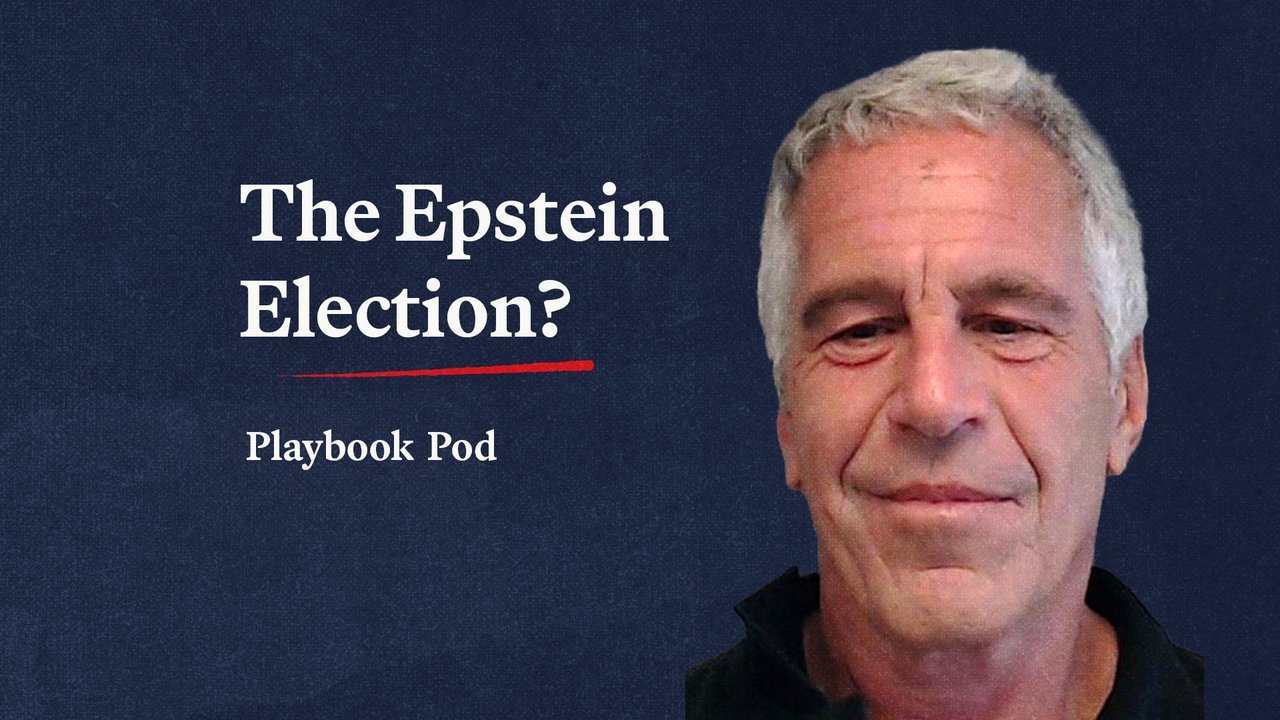
The Epstein election?
lead image
Republicans spurned by President Donald Trump aren’t interested in rescuing their would-be replacements.
Instead, a growing number of retiring or ousted GOP incumbents from Nevada to North Carolina are sitting those races out, and in some cases, openly bucking their own party.
Outgoing Sen. John Cornyn has raised money for various Republican Senate candidates — just not for Texas Attorney General Ken Paxton, who ousted him in the primary with support from Trump. He’s been vocal for months about what he sees as Paxton’s vulnerabilities and how Democrats could flip Texas blue for the first time in decades.
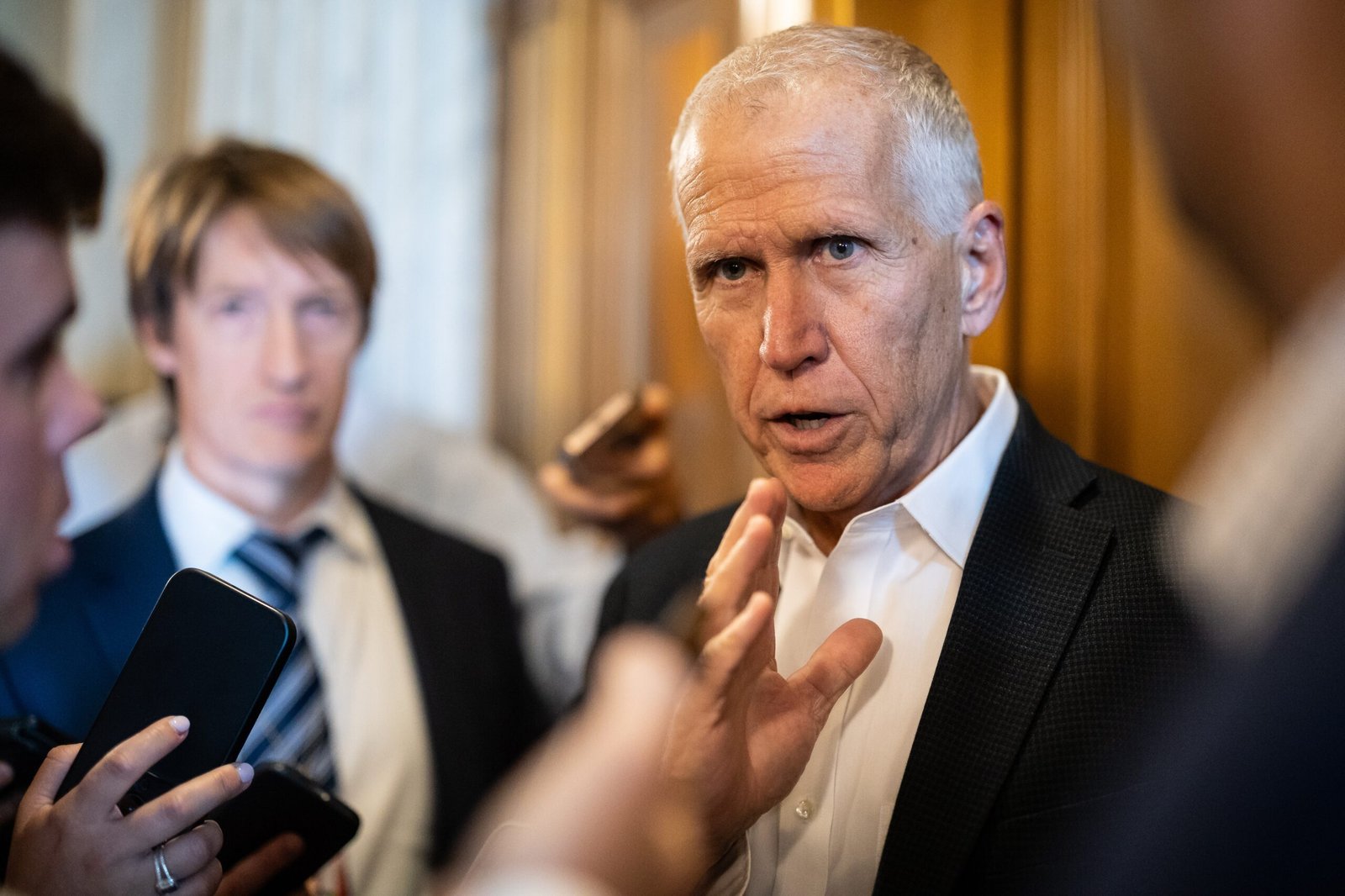
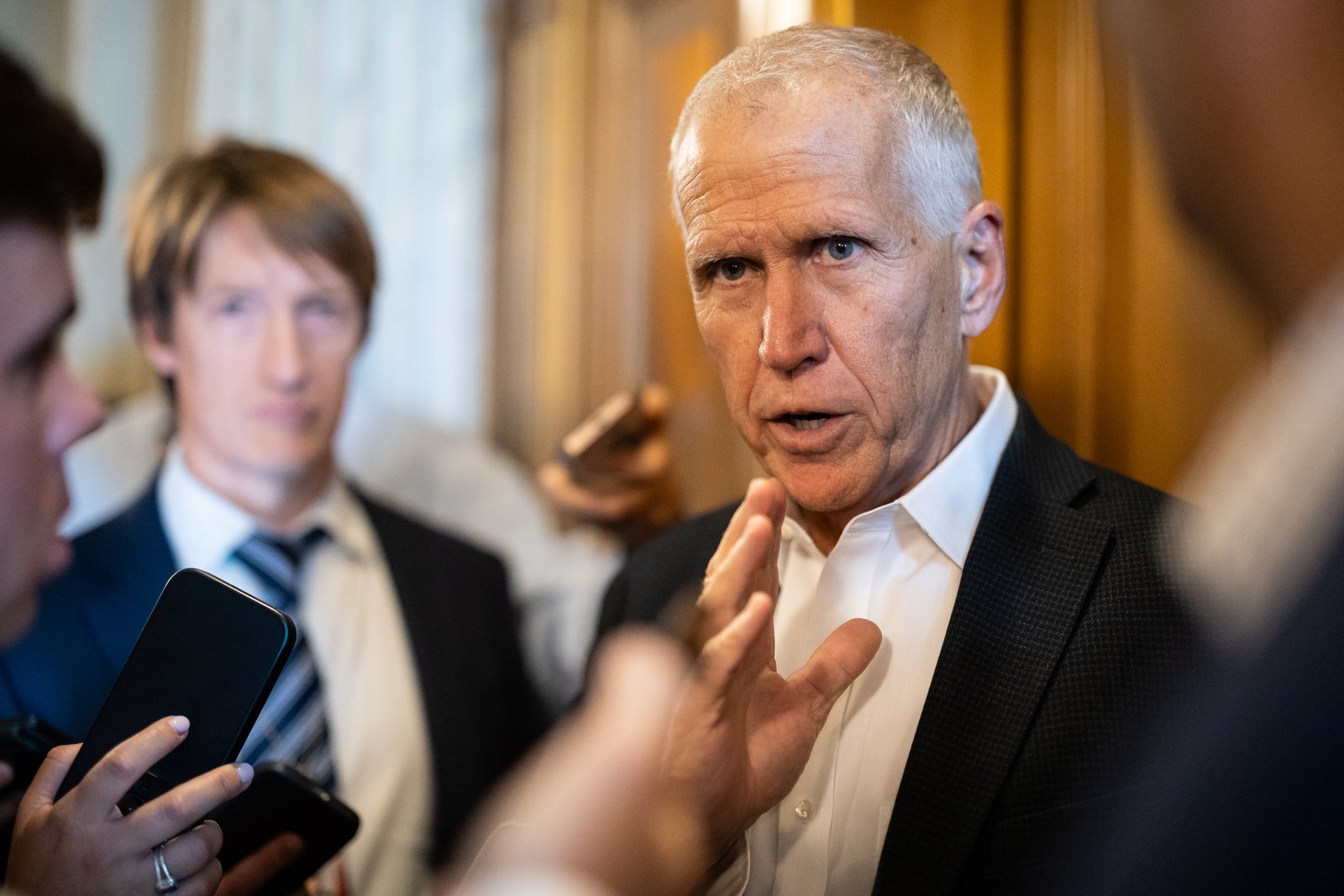
North Carolina Sen. Thom Tillis — who has frequently criticized some of Trump’s Cabinet and broken with the White House on policy — has played little role in the campaign of former RNC Chair Michael Whatley, Trump’s hand-picked Senate candidate. The distance between the two Republicans is particularly notable as Whatley struggles to close the gap against Democrat Roy Cooper.
Rep. Mark Amodei has repeatedly criticized, and now openly rejected voting for, the GOP nominee to replace him, David Flippo.
“The bedwetting from outgoing moderate Republicans will define their legacy and only help socialists get elected,” said David McIntosh, president of the Trump-aligned Club for Growth, which has endorsed Flippo and Paxton. “People like John Cornyn and Mark Amodei need to get on board and support Republican nominees and stop posturing for an MSNOW contract.”
But other Republicans defended their colleagues: “I never would question the loyalty to the party of Thom Tillis or John Cornyn. Both of them have contributed immensely to our party and our party’s successes in the past and I suspect will be going forward,” said North Dakota GOP Sen. Kevin Cramer. “But I also don’t begrudge them for their opinions and their right to be open about them.”
These outgoing Republicans, several of whom were explicitly pushed out by Trump or persuaded to retire given his hold on the GOP, are using the midterms as a test: whether the party will demand loyalty to the president or can return to a pre-Trump era.
“What [Trump’s] done is created a coalition that, in my opinion, will not stay with Republicans once we go back to traditional Republican platform priorities,” Tillis said in a recent interview with POLITICO. “A lot of the elements of the populism that Trump created to expand a base that made him successful running for president, I don’t think that stays with the party long-term.”
Some of those intraparty frustrations are starting to boil over, with Trump loyalist candidates and outgoing Republicans swiping at one another as Election Day barrels closer and the party’s overall fortunes look dire. The blame game is especially prominent in some of the Senate battlegrounds where Republicans have begun to quietly retreat in the final stretch of the midterms.
Tillis never followed through on his offers to help Whatley by reaching out to holdout donors in the North Carolina Senate race, said one person familiar with the campaign who was granted anonymity to speak candidly about internal matters.
“He was never part of our strategy because … I mean, if he could have been helpful to us, then he could have ran,” the person said, referring to Tillis’ decision not to seek reelection last year. “The Tillis of the past year ain’t the same guy who worked overtime to help elect Republican majorities here in NC back in 2010.”
One person with knowledge of Tillis and North Carolina politics, also granted anonymity to speak candidly, countered that the outgoing GOP senator “doesn’t help sure winners or sure losers” and “Whatley has been a sure loser throughout 2026, running as Donald Trump’s ‘guy,’ and making zero effort to build his own brand.”
“All Whatley had to do was to keep this race competitive, but instead the party is facing a potential wipeout. This is an embarrassing effort by a former RNC chairman who only has himself and his consultants to blame for the completely avoidable beat down coming on Nov. 3,” the person added.
Spokespeople for Tillis did not respond to a request for comment. Whatley’s campaign declined to comment.
Natalie Baldassarre, a spokesperson for the Republican National Committee, touted the president’s endorsement record in a statement. More pointedly, she said that “Republicans who chose not to help elect other Republicans may as well be helping Democrats.”
The White House did not respond to a request for comment.
While the dynamic is less pronounced on the House side — Reps. Don Bacon and Elise Stefanik have been helpful to the Republicans running to replace them — there’s a clear exception: Amodei.
Flippo, who’s trying to replace him, has dealt with a host of scandals, from stolen valor accusations to carpetbagging to campaign finance issues, but Trump’s endorsement helped boost him through the Republican primary in June. Top Republican outside groups, including Club for Growth, have poured millions into his race in Nevada’s 2nd District to rescue a seat the president won by 14 points in 2024.
Amodei said in an interview that whoever was advising Trump to jump in and endorse Flippo gave “awful advice.”
“The only criteria shouldn’t be, ‘Well, they’re the Republican,’” said Amodei, who cast his ballot for a third-party candidate this week. “I mean, politics is a team sport. But when a member of the team turns out to be this way, clearly this is not a bright and shining moment for the vetting process.”
Asked about Club for Growth president McIntosh’s criticism of moderate “bedwetting,” Amodei scoffed: “At least this crowd is absolutely consistent. Forget fundamental factual and character messes that campaigns won’t and can’t respond to; and attempt to change the focus to party loyalty,” the retiring representative said. “Let me know when Club For Growth does a statement on campaign finance compliance, stolen Valor, and individual background transparency.”

Even as figures like Cornyn and Amodei catch the fury of more Trump-aligned Republican forces for not falling behind the party line, that doesn’t mean they’re abandoning fellow Republicans overall.
Cornyn has raised more than $1.1 million at events in Dallas and Houston last month for the campaigns of Sens. Susan Collins of Maine, Jon Husted of Ohio and Dan Sullivan of Alaska — as well as for the National Republican Senatorial Committee and other Senate candidates: Iowa Rep. Ashley Hinson, former Michigan Rep. Mike Rogers and former New Hampshire Sen. John Sununu, according to a person familiar with the senator’s political operation who was granted anonymity to discuss private events.
He still clearly and explicitly draws a line against helping Paxton, telling reporters earlier this year, “Everything I said about him in the primary is true.”
A spokesperson for Paxton did not respond to a request for comment.
In Georgia, popular GOP Gov. Brian Kemp has been all-in on the governor’s race for Republican Rick Jackson — but he’s been comparatively quieter when it comes to Rep. Mike Collins’ Senate campaign to oust Democrat Jon Ossoff.
The governor had initially recruited, backed and supported a different candidate in the GOP primary, though he’s since helped the Collins campaign with a public endorsement and by headlining a major fundraiser in Atlanta and others. Still, some Collins allies want the governor to be more involved.
“Brian Kemp is someone who needs to be on the trail and someone who needs to help if Republicans are going to win,” said one GOP strategist working on races in Georgia who supports Collins and was granted anonymity to discuss internal dynamics. “But he did create some of this mess with the primary he ran against Mike who we all knew would be the nominee.”
Meyer Sigfried, a Collins spokesperson, in a statement dismissed any suggestion that Kemp isn’t fully supporting Collins: “He’s been on the trail rallying Georgians to get out and vote early for Mike and Republicans up and down the ballot, and his help behind the scenes has been just as important.”
A representative for Kemp referred Blue Light News to Collins’ statement of support.
Across the map, other frustrated Republicans have more directly pointed the finger at Trump for his interference, lambasting the president’s tendency to prop up candidates whom they deem too weak for the role.

In South Carolina, Rep. Ralph Norman said this week he has refused to campaign with Sen. Darline Graham, who defeated him in the primary with Trump’s help. Graham has been under scrutiny for her lack of experience in elected office. Republicans still expect her to win in deep-red South Carolina, but they’ve also made late investments to shore up her campaign as Democrat Annie Andrews dominates in fundraising.
Norman blamed the president, saying, “What he did to South Carolina … it’s just not right,” but added he will still vote for Graham.
T.W. Arrighi, a spokesperson for Graham, thanked the representative for his support in a statement, before hammering other Republicans — like Norman’s son, Warren Norman — who will not be voting for the GOP nominee: “It is unconscionable for anyone who claims to be a conservative in South Carolina to not vote straight ticket Republican and therefore endorse a Chuck Schumer-led Senate.”
In many cases, GOP lawmakers are defending their disgruntled colleagues who have decided not to help Trump-picked candidates.
“Folks have to follow their conscience. If a guy ‘smells bad’ then I wouldn’t,” said Bacon, who is supporting Brinker Harding, an Omaha city councilmember, in the race to replace him in his blue-leaning Nebraska district. “I like Brinker. He’s a good person.”A
“I believe we all ought to do all we can to help the good guys win the election,” Cramer added. “But I also understand people that … feel aggrieved and want to maybe not be as enthusiastic about that as I am.”
Mia McCarthy, Meredith Lee Hill and Aaron Pellish contributed to this report.
Republican Ashley Hinson wants Iowans to know she’ll pick a fight with President Donald Trump. Democrat Josh Turek wants them to know he’ll work with him.
The rivals in Iowa’s closely contested Senate race each sought to establish their independence in separate interviews aired Sunday on ABC’s “This Week,” pitching themselves as willing to put their state ahead of their respective party loyalty.
Asked about her campaign pledge to be Trump’s “strongest ally” in the Senate, Hinson added a condition: “If it’s for Iowa.”
“I will be someone’s ally when they’re with me on the issues that are important to Iowa,” the Republican lawmaker said. “And if they’re wrong, I’m going to pick a fight with them, no matter who that is.”
The conflicting comments come in a state Trump won by 13 points in the 2024 presidential election, but where Democrats now see an opportunity to win their first Senate election since 2008. The president campaigned in Iowa this past week as high fuel costs and frustration with his tariffs complicate Republicans’ efforts to maintain the seat.
Republicans close to Hinson told POLITICO last month that she needed to put some distance between herself and Trump, warning that his tariff agenda and the Iran war were undermining her chances.
On Sunday, Hinson rejected Trump’s positive assessment of the economy. “Well, sure doesn’t feel like it right now,” she said, later criticizing the administration’s dealings with Moscow.
“I don’t think we should be making any deals with Russia,” she said, pointing to her vote for sanctions. Her campaign told POLITICO on Friday that she opposed sanctions relief for Russia while supporting Trump’s use of the Defense Production Act to bolster domestic energy production.
But there were limits to her criticism. While calling for the Iran war to end quickly, Hinson declined to oppose a potential new offensive after the midterms, saying she trusted Trump and the military to determine what needed to be done.
Turek, meanwhile, called himself a “proud moderate” and sidestepped a question about whether Democrats had moved too far left.
“I don’t think a lot about the party as a whole. I think about myself, and I think about Iowa,” the Democratic state representative said.
That pitch follows a primary victory aided by national Democratic support, including from Senate Minority Leader Chuck Schumer’s leadership PAC — which contributed the maximum to Turek’s campaign, though Schumer did not formally endorse. VoteVets spent more than $10 million advertising on Turek’s behalf. He’s also secured the formal endorsement of former President Barack Obama, who appeared in an ad alongside Turek as the two played basketball.
Asked what Trump had done right, Turek said Trump had done “a better job on the border than Biden, for sure.” He also cited agreement on keeping private equity out of housing and eliminating taxes on tips, overtime and Social Security, while arguing that Trump’s economic policies had concentrated wealth and power.
Also asked whether endorsements mattered, Turek offered a blunt assessment: “Probably not.”
- The Epstein election?
- ‘We don’t need 50 more data centers.’ Arizona AG declares war on AI.
- Capitol agenda: Sanders could soon get a Senate bully pulpit
- Electric vehicle tax credits losing their luster for Democrats
- House Judiciary Democrats want a special counsel to investigate Trump’s ties to Epstein
- Bernie Sanders could soon get a powerful perch to help shape 2028
- Spurned by Trump, these outgoing Republicans aren’t helping their potential successors
- Iowa’s Senate rivals pitch independence from their parties
- AI has a language gap. That could be a problem for some voters.
- Australian defense land selloff runs into multiparty opposition
-

 Politics2 years ago
Former ‘Squad’ members launching ‘Bowman and Bush’ YouTube show
-
Uncategorized2 years ago
Bob Good to step down as Freedom Caucus chair this week
-

 The Josh Fourrier Show2 years ago
DOOMSDAY: Trump won, now what?
-

 The Dictatorship2 years ago
Pete Hegseth’s tenure at the Pentagon goes from bad to worse
-

 Politics2 years ago
Former Kentucky AG Daniel Cameron launches Senate bid
-
 Politics1 year ago
John Legend advises Trump to drop the ‘dictator s‑‑‑’ if he wants Nobel Peace Prize
-

 The Dictatorship2 years ago
Luigi Mangione acknowledges public support in first official statement since arrest
-

 Politics2 years ago
Blue Light News’s Editorial Director Ryan Hutchins speaks at Blue Light News’s 2025 Governors Summit