
Politics
Both Nevada senators spurned their party. They were reading the room.

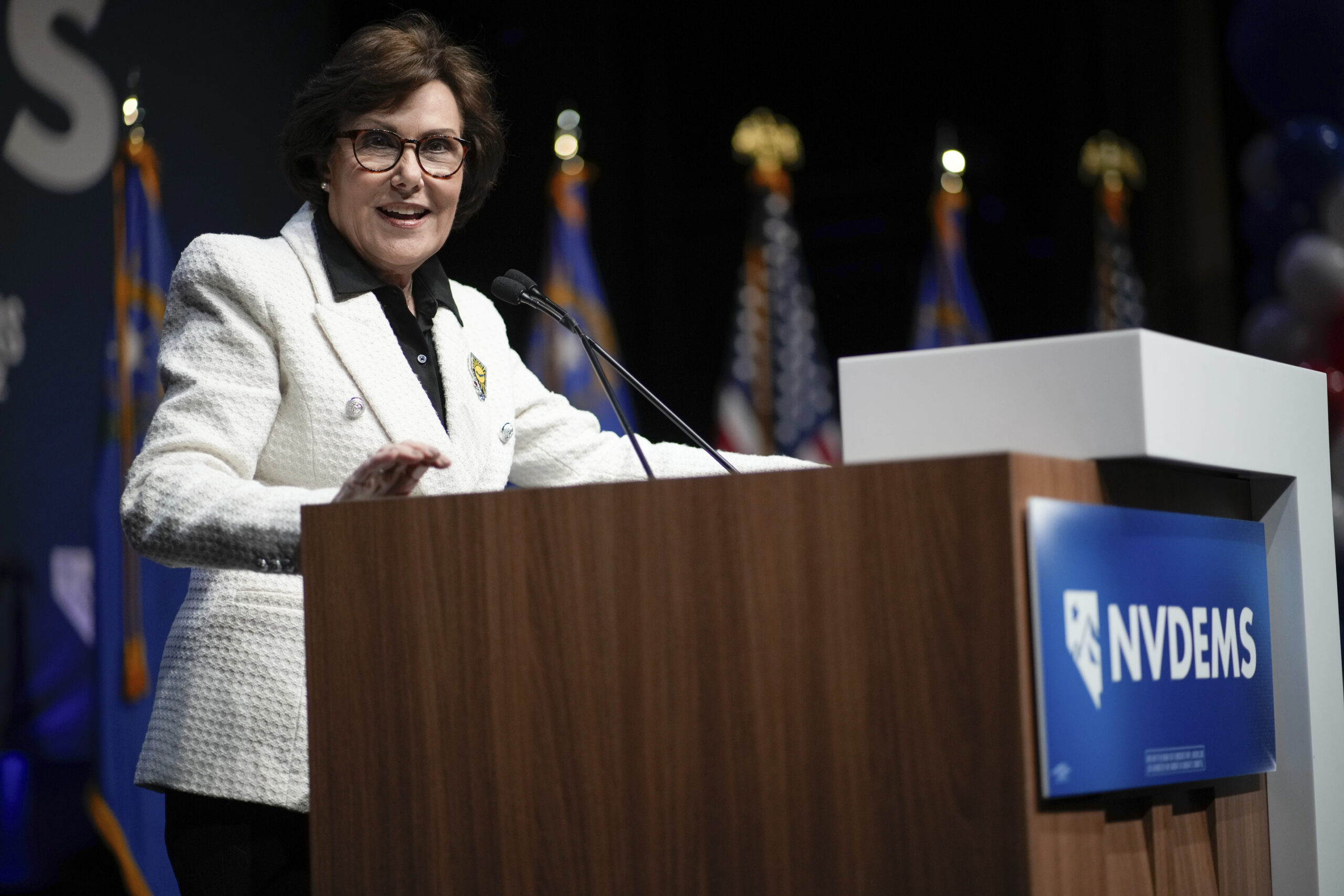
In breaking ranks to end the federal government shutdown this week, Nevada’s two Democratic senators showcased the shifting politics of the once solidly blue state, home to a diverse, working-class population that relies heavily on tourism.
In the national battle for party expansion, Republicans have the edge in the Silver State.
Catherine Cortez Masto and Jacky Rosen joined an octet of members in the Senate Democratic Caucus who backed ending the shutdown. Their home state politics made their gambit an electoral calculation and an economic necessity, even as it angered some Nevada Democrats, according to interviews with more than a dozen political strategists, staffers and elected officials in the state.
“Nevada isn’t a blue state — it’s a swing state with a Democratic lean and a Republican trend line,” said Mike Noble, a pollster who focuses on the Southwest. “Both senators are reading the room, and brinksmanship doesn’t play well with the middle.”
The GOP advantage in Nevada has been building for several years. Republicans overtook Democrats in voter registration for the first time in nearly two decades this year, the result of a dedicated campaign from the Nevada Republican Party. Polls show GOP Gov. Joe Lombardo with a slight lead in his reelection bid, which will be one of the most competitive gubernatorial races next year. And Republicans are trying to flip Democrats’ three House seats in Nevada next year. In 2024, Donald Trump became the first Republican to win the state in 20 years, beating Kamala Harris by 3.1 points, while Rosen won reelection by just 1 point.
“Nevada has really tightened up,” said Robert Uithoven, a GOP strategist from the state .
Republicans and Democrats are fiercely courting Nevada’s working class. In 2024, Trump appealed to the state’s service, hospitality and construction industries with promises to end taxes on tips and overtime — both policies that were passed in the GOP’s “Big Beautiful Bill.” And his campaign also made significant investment in reaching Latinos, who make up one in five registered voters.
Democrats, meanwhile, are hoping that the sluggish economy, GOP-backed healthcare cuts and aggressive deportations under Trump will help them win back anxious Nevadans.
“If you hear someone who is saying we are not going to tax your tips, that’s compelling,” said Washoe County Commission Chair Alexis Hill, who is running in the Democratic gubernatorial primary. “That economic message is consistently what we need to drive home as Democrats and get away from that corporate message.”
Nevada’s economy is tethered to the tourism industry, fueled by hourly-wage hospitality workers. The state has seen a massive downturn in travel this year after major post-pandemic increases, which — coupled with a sharp dropoff in construction jobs — sparked concern among economists and local officials, who largely gauge the health of the local economy on its tourism industry.
The state’s heavy reliance on federal aid also makes it more susceptible to partisan swings. The freeze on the Supplemental Nutrition Assistance Program resulting from the government shutdown hurt the 15 percent of Nevadans who receive SNAP benefits, among the highest shares of any state. And recent disruptions around air travel significantly affected flights coming and going from Harry Reid International Airport in Las Vegas. On Saturday, the airport recorded 198 flight delays.
Ted Pappageorge, the secretary-treasurer of the politically influential Culinary Union, praised the two senators for “clearly fighting for working-class folks,” but noted now is the time to “get the government going and get the benefits moving.”
“At the end of the day, it’s about who is going to be in the corner of working-class folks,” he said. “The Democrats’ ship has been wandering the last few years, and the voters have been very clear about that.”
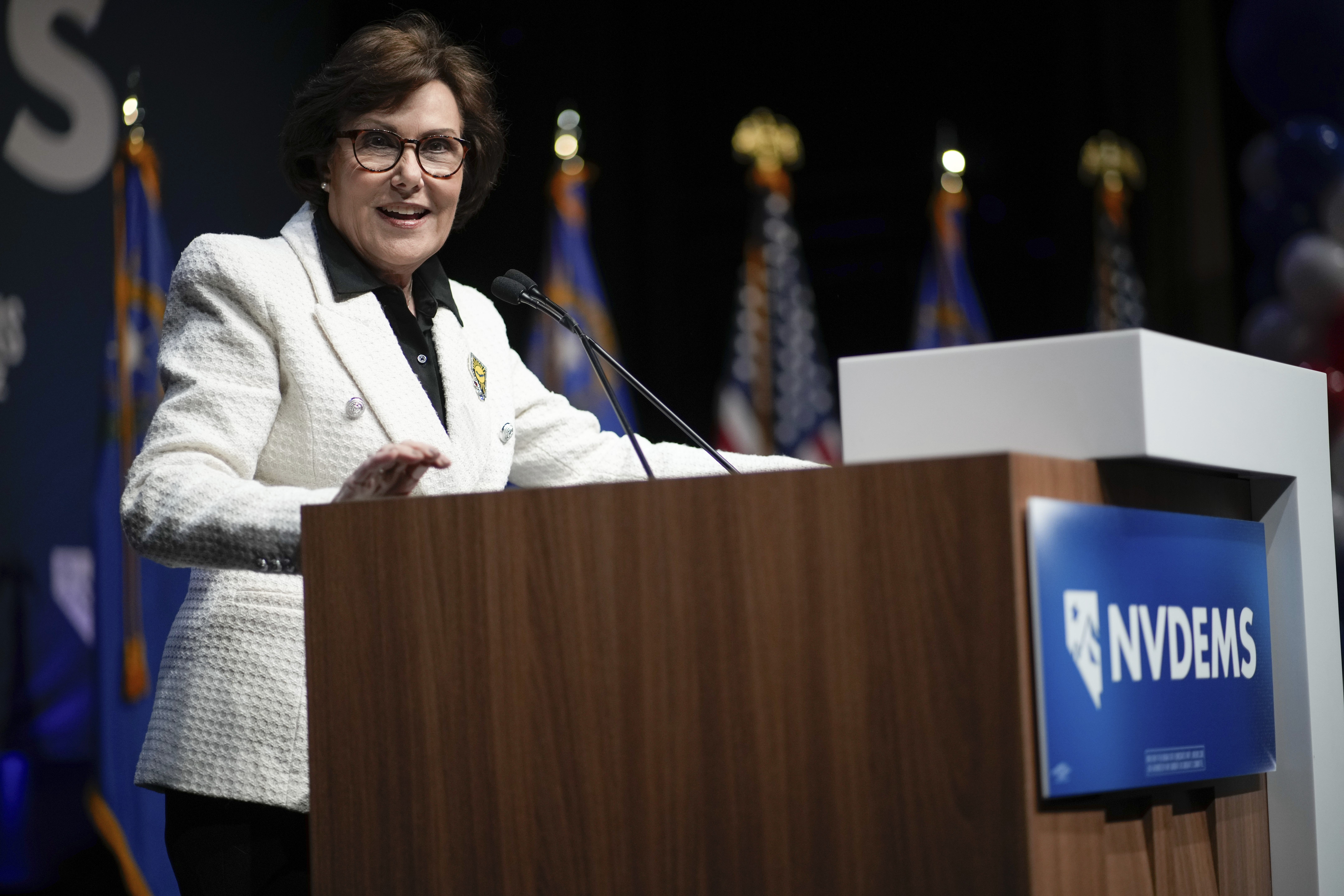
Both Cortez Masto and Rosen signaled they sided with Republicans on ending the shutdown because of its severe effects on workers. Cortez Masto, who also voted to end the shutdown over a month ago, defended her recent vote by citing the pinch felt by small businesses and other workers. Rosen, meanwhile, said she hit a breaking point in recent days as she saw the effect of “fully withholding SNAP benefits and gutting our tourism industry by grinding air travel to a halt.”
“How do you stay the course when people are rummaging through the trash for food because Donald Trump took away their SNAP benefits?” said one Rosen aide, granted anonymity to speak openly. “At some point, you’re hurting the people you’re trying to help by not putting an end to the Trump cruelty.”
Rosen is up for reelection in 2030; Cortez Masto in 2028.
Scott Gavorsky, the GOP Elko County chair, predicted the senators would have dealt with blowback from voters had they prolonged the shutdown, especially in areas that have trended to the right, like in the rural region he represents that helped Lombardo flip the governorship in 2022. “Memories are long out here,” he said.
But the pair is already facing backlash. Some Nevada Democrats voiced frustration with their decision to break from the caucus after Democrats stuck together for over a month.
Democratic State Assemblymember Selena La Rue Hatch said she’s heard from many constituents in her swing district in Washoe County, which encompasses Reno, over their “concern about whether we are actually putting the brakes on a reckless authoritarian administration.”
“I have heard overwhelming shock and dismay and concern that we have now given up the fight, and what are we getting out of it?” she said.
A Democratic state party strategist, granted anonymity to speak freely, called the agreement with Republicans to vote on extending the Affordable Care Act tax credits at the heart of Democrats’ shutdown negotiations a bonus.
“At the end of the day it isn’t focused on political tactics, it’s focused on ending this pain,” the strategist said.
The tourism-dependent state experienced the nation’s highest unemployment rates during the 2008 recession and 2020 pandemic shutdown, after it had become one of the fastest-growing economies in the nation from 1970 to 2008.
Trump’s 2015 ascent came just in time to exploit Nevadans’ lingering pessimism, said Andrew Woods, the director of the University of Nevada, Las Vegas’ Center for Business and Economic Research. Then, when Democratic Gov. Steve Sisolak shut down Nevada’s casinos for 78 days during the 2020 pandemic, the state’s unemployment rate ballooned again, reaching 28 percent in April 2020.
“That sense of security was taken away,” Woods said. “It made the state purple.”
Republicans are making a big play in Nevada in next year’s midterms, hoping to flip three seats including the one held by Democrat Susie Lee, who represents many workers on the Las Vegas strip.
But Trump’s Nevada victory was fueled by economic dissatisfaction, and recent polling suggests Nevadans aren’t much more satisfied now. In an October poll from Noble Predictive Insights, 50 percent of respondents said the state is worse now than it was four years ago, and just 24 percent said it is better. Their top issues were affordable housing and inflation.
“The electorate is definitely more driven by economic anxiety than ideology these days,” said Mike Noble, the pollster.


Democrats have figured out how to talk about the border. They still haven’t reached a consensus on ICE.
In battlegrounds across the country, moderate and progressive Democrats alike are calling for a secure border and admitting the Biden administration’s policy there led to political backlash in 2024. But with less than three months until Election Day, they still aren’t on the same page in how far to go in reining in Immigration and Customs Enforcement — with some high-profile candidates pushing reforms, and others calling to dissolve the agency altogether.
Many in the party see an opening: Half of Americans view President Donald Trump’s deportation push as too aggressive. But some Democrats are starting to worry that going too far on ICE could again kneecap their electoral chances in key battlegrounds now and in the future.
“The party is still struggling to get its footing on this issue and talk to voters about this,” said Daniel Delgado, a senior career Department of Homeland Security official who left the department after Trump took office in 2025 and now works as a senior fellow at the center-left Searchlight Institute think tank in Washington. “Trump’s actions are pushing people to adopt a more extreme position, but reform is what’s sticking with voters in the middle.”
Democratic candidates are pulled between a fired-up base that wants to see ICE abolished or dramatically reined in, and an undecided voter bloc that’s much less likely to support drastic measures — all while continuing to distance themselves from the Biden administration’s border policies that become political kryptonite for Vice President Kamala Harris in the 2024 race.
A new Blue Light News Poll — conducted by Public First between Aug. 8 to 12 — found that just 21 percent of undecided midterm voters say they support abolishing ICE, while 51 percent of self-described moderate Democrats and 67 percent of progressive Democrats say they do.
Those findings track with other polling this year from Navigator Research and NBC News/SurveyMonkey that found Democrats are much more likely than independents to support abolishing ICE, though support for full abolition falls across all groups when respondents are given the option to “reform” the agency.
“A Democratic primary electorate represents less than 25 percent of general election voters,” said Democratic strategist Chuck Rocha, a former Bernie Sanders campaign veteran now advising Texas state Rep. James Talarico’s Senate campaign and numerous other candidates this cycle. “The electorate is really pissed, and the Democratic electorate has been very energized, but also these are different electorates from state-to-state.”
Battleground candidates running in border states like Arizona and Texas are calling for ICE officers to be held accountable and guardrails to be installed for the agency — like Talarico, who wants ICE to focus on violent criminals and be banned from using face coverings. Meanwhile, progressive nominees in key Senate contests in Maine and Michigan say the agency is beyond saving, and have used the potent catchphrase “abolish ICE.”
The intraparty divide was on display in Austin last weekend, where Democratic National Committee members could not reach a consensus on whether ICE should be abolished or reformed, eventually approving dueling resolutions that called for both.
That disunity comes as Democrats’ 2028 path to the White House will run straight through two early primary states with significant Hispanic populations — Nevada and border-state New Mexico — all but guaranteeing that immigration enforcement will be a central point of contention.
Immigration enforcement is an issue where Democrats in 2024 “really missed the opportunity to be who we are: smart, fair, and can deliver aggressively through Congress the things that really make a difference. And we couldn’t say it. We didn’t deal with it,” said New Mexico Gov. Michelle Lujan Grisham, who has called for more accountability regarding ICE but argues abolishing it is not a winning message. “Shame on us then. We better not make these mistakes again — now, in ’26, in the midterms, and certainly not in 28.”
Some of the party’s battleground Senate nominees, even as they support securing the border, see a path to victory with an abolish-ICE message.
Troy Jackson, Democrats’ nominee in Maine, called to eliminate the agency in response to a federal immigration agent killing a man in the state in July and has used the incident to hammer his opponent, GOP Sen. Susan Collins, for voting to further fund ICE.
And Michigan Democratic Senate nominee Abdul El-Sayed has called to abolish ICE and likened the agency’s hardline tactics to “normalizing paramilitary force.”
“There’s no question we need a safe, secure southern border. And there’s also no question that we have a responsibility to enforce immigration policy, but to do that in a way that does not supersede the Constitution itself,” El-Sayed said in an interview.
But he also acknowledged “different communities” around the country “are going to think differently about these things.”
Minnesota Lt. Gov. Peggy Flanagan, the Democratic nominee for Senate, has avoided explicitly calling to abolish ICE, but has tiptoed up to the line: “We need to rip ICE apart,” she said in her primary-night victory speech. She won a hard-fought primary in Minnesota’s Senate race by castigating her Democratic rival’s votes with Republicans on a pair of immigration-related measures. She opened her general-election clash against Michele Tafoya by accusing the Republican of supporting the Trump administration’s violent tactics in her state.
Border-state Democrats sound different.
Moderate Rep. Henry Cuellar (D-Texas), who currently sits as ranking member on the Homeland Security Appropriations subcommittee, frequently tells voters during stump speeches that he will chair the subcommittee should Democrats retake control of the House — and he’ll use that position to push reforms in the next DHS funding bill, like mandatory use of body cameras, requiring judicial warrants before entering a home or worksite, and reinstalling guidance on avoiding enforcement in sensitive areas like churches and hospitals.
“Let me just say this: I don’t believe in abolishing ICE. I don’t believe in defunding the police. There’s a role for them,” he told reporters last month after meeting with Sister Leticia “Letty” Ugboaja, a nun detained by ICE while walking to Sunday Mass. “But they have to have the right safeguards. What ICE is doing right now is not right. It is not correct.”
The South Texas Democrats pay little heed to the loudest voices in the party calling to abolish ICE. “I personally don’t follow what national Democrats are saying on this,” said Abel Prado, the campaign manager for Bobby Pulido, the Democratic nominee in Texas’ 15th District.
Some other candidates are altering their message now, too. William Lawrence, the Sunshine Movement co-founder who won the Democratic primary in Michigan’s swingy 7th District, called in January to abolish ICE. But he sidestepped when Blue Light News asked this week if that was still his position.
“I don’t care what our immigration enforcement agency is called,” Lawrence said in a statement. “What I care about is immigration policy that adheres to the Constitution and lives up to our country’s highest values.”
Frank Sharry, a longtime Democratic immigration activist, said Democrats would be wise to avoid the phrase.
“I don’t think that ‘abolish ICE’ gets you much more than a little bit of play in a primary and a round of applause in the blue bubble,” said Sharry, a senior fellow at Third Way who advised both Biden and Vice President Kamala Harris during their 2024 campaigns on immigration policy. “Democratic candidates who want to win the seats that are going to deliver a majority of the House and the Senate, and then the White House in 2028, would be wise to steer clear of a rally slogan.”
President Donald Trump returned to the campaign trail Friday to help save the candidacy of Sen. Darline Graham after a major debate gaffe raised questions about her readiness to replace her late brother and the wisdom of his endorsement.
Speaking at a rally in Myrtle Beach, South Carolina, days before a Senate runoff featuring Graham and Rep. Ralph Norman, Trump urged voters to support the sister of his ally Lindsay Graham, the longtime foreign policy hawk who died last month.
“We’re going to elect Senator Darline Graham to fight, fight, fight for South Carolina and to always put America first,” he said. “You vote for her, you’re going to be very proud of that vote.”
Trump also reflected on his close friendship with Lindsey Graham, invoking the memory of the stalwart of the South Carolina GOP who represented the state in Congress for 31 years.
“I think Lindsey respected Darline more than any other person he knows, including me,” he said.
Trump pushed for Darline Graham’s appointment to fill out the remainder of her brother’s term, offering his endorsement before she even formally launched her campaign.
But the value of Trump’s endorsement has arguably never been weaker. He has seen some notable favorites fall in recent primaries — including in South Carolina, where Lt. Gov. Pamela Evette lost the state’s gubernatorial primary to state Attorney General Alan Wilson.
Trump’s choice for governor in Wyoming lost on Tuesday, along with two Florida Republicans who scored his endorsement in House primaries. Also among the recent losers: Mike Lindell, the former MyPillow CEO and close ally who fell short in the Minnesota gubernatorial primary.
Those came after losses of Trump-endorsed candidates in Georgia, Michigan and Iowa earlier this year.
The president touted Graham’s focus on affordability and her support for traditional conservative social issues like the Second Amendment. But his primary pitch to Republicans in South Carolina was to treat Graham as an extension of himself.
“What I really want you to do is pretend, please, that I’m on the ballot. Just come and vote. It’s so important,” he said. “Just say that I’m on the ballot one more time.”
Graham sailed into the runoff, topping second-place Norman by eight percentage points. But an alarming debate hiccup over a question on the U.S.-Taiwan relationship in which she admitted she’s “not that informed on national security” and that “national security is not my thing,” triggered a pile-on from Republicans in South Carolina and elsewhere expressing concerns about her qualifications.
Former South Carolina Gov. Nikki Haley, a Norman supporter, slammed Graham for her debate answer. And former South Carolina Gov. Mark Sanford endorsed Norman hours ahead of the rally on Friday, noting that “the stakes are too high” to back Graham.
Trump appeared unbothered by Graham’s admission, telling reporters ahead of the rally that her loyalty to the president’s agenda was all that mattered.
“She was just being honest,” Trump said. “It hasn’t been her thing, but she’s surrounded by very good people, and she said that she’s totally for the military.”
“She’s going to do what the military wants, and really what the president wants,” he continued. “She understands that national security is my thing.”
Speaking ahead of the president, Graham attempted to sidestep the concerns about her resume by recalling Trump’s lack of political experience before his 2016 victory.
“The critics say I shouldn’t run for the senate. They say I’m not a politician. You know what I say? Guilty as charged,” she said, prompting a wave of applause from the crowd. “By the way, President Trump had never served in an elected office before, and I think he’s done a damn good job.”
Trump’s visit prompted an endorsement ahead of the rally from Gov. Henry McMaster, who said Graham “continued Lindsey Graham’s work, and stood firmly with President Trump to advance his America First agenda” while serving out the remainder of her brother’s term.
The president’s trip to the state — a rare as-advertised campaign rally amid a sea of official White House events elevating his endorsed candidates — marks a significant expenditure of the president’s political capital. The president hasn’t held in-person rallies for Republicans Senate candidates in many battleground states, opting instead for social media posts and telerallies. And he has yet to dip into the $403 million war chest at his primary super PAC, MAGA Inc., drawing some consternation from Republicans.
Trump told reporters on Friday he’ll spend “a lot of that money” to boost “Republican candidates that I think are good,” without being specific.
Trump warned of the stakes of losing control of Congress in the midterms, saying that Democrats will follow through on reported plans to investigate and impeach him.
“You’re going to lose everything,” he said. “I’m going to have to go through impeachment.”
Alec Hernandez contributed to this report.
President Donald Trump is going the extra mile for Sen. Darline Graham in deep-red South Carolina.
That’s left battleground Republicans wondering when it’ll be their turn, even while they acknowledge Trump’s campaign trip is in part owing to his strong ties with the candidate’s late brother, former Sen. Lindsey Graham. It’s also caused several supporters of Graham’s primary opponent to scratch their heads at the sudden attention he’s giving a state that is far from critical for ensuring GOP control in Washington. Trump is bringing back his hallmark campaign rally for Graham on Friday in Myrtle Beach, South Carolina, just days ahead of her runoff against Republican Rep. Ralph Norman.
It’s a far cry from the quieter strategy the president has used for candidates in battleground races in Georgia, Michigan and Texas: a couple supportive social media posts and, in some cases, a telerally on the eve of Election Day.
“It’s going to be a red seat,” said Randy Page, a longtime Republican operative in South Carolina who is supporting Norman in the race. “If I were the president, if I were giving him political advice, I’d say: ‘We’re right next to Georgia, we’re right next to North Carolina. Texas ain’t that far away.’ There are some real places that are going to affect the party keeping control of either the House or the Senate, and it’s like he’s just flying over them and ignoring them.”
Strategists involved with GOP candidates who could use Trump’s base-boosting help elsewhere are eagerly waiting to see whether he’ll put the same effort into their own races later this year.
“He’s coming in person for Darline Graham. He really hasn’t done much else,” said one GOP operative involved in several battleground races, including in Georgia, who was granted anonymity to speak candidly. “He probably has the ability to move the needle in Republicans’ favor better than anyone else in the country. The question is just: Will he? Is he willing to? Does he want to? Does he care enough?”
Trump’s appearance in Myrtle Beach is a significant and explicit foray back to the campaign trail in a year in which his previous appearances with his endorsed candidates were mainly on official White House business, focused on issues like affordability and domestic energy production. It also comes at a crucial moment for Graham, who is looking for a momentum boost after an embarrassing debate stage fumble on foreign policy.
He appeared with Nevada Gov. Joe Lombardo in Las Vegas for an official event earlier this month billed to tout tax cuts in a state where the governor is facing a tough reelection battle. In late July, he traveled to suburban Atlanta to deliver remarks where he touted GOP Rep. Mike Collins’ Senate bid against Democratic Sen. Jon Ossoff (Collins himself was absent because of votes in Washington). And a month earlier, he took part in a roundtable discussion with frontline GOP Rep. Derrick Van Orden in Chippewa Falls, Wisconsin.
But it’s been far less than in years past. Trump was ever-present on the campaign trail during the 2018 midterms, and blitzed across the country for rallies during his 2024 election bid, but his travel has been somewhat curtailed since he has faced two attempts on his life that same year.
The Friday rally is the kind of support that some Republican candidates wished had come for them in their own contentious primaries — and operatives in states with competitive general election matchups hope it signals more presidential help is on the horizon before November.
Trump’s heavy hand and his grip over the Republican Party has continued to shape the outcome of several primaries this year, but the degree to which he will help ensure control of Congress this fall — both through campaign appearances and spending his $400 million MAGA Inc. war chest — remains an open question.
For some Republicans in battleground states watching from afar, Trump’s Friday appearance with Graham is a reminder of how little time the president spent on the campaign trail during the primary season.
“Him posting on True Social and doing a tele-town hall has kind of, from what I can tell, been kind of the limit of what he’s done for most endorsed candidates. So this is a little different that he’s going down there,” said Matt Mackowiak, a Republican strategist based in Texas who worked with Sen. John Cornyn on his unsuccessful reelection primary earlier this year and said he will support the Republican ticket this fall.
The White House dismissed concerns over Trump’s attention on South Carolina over other states in a statement.
“President Trump is the unequivocal leader of the Republican party who is committed to maintaining Republicans’ majority in Congress,” said White House spokesperson Olivia Wales. “President Trump will continue to draw a sharp contrast with his commonsense agenda and the radical Democrats in Congress who allowed millions of illegal aliens to flow through the border, unanimously opposed the Working Families Tax Cuts, and are soft-on-crime.”
Several Republicans said that Trump’s Friday rally is likely borne from his long and mostly close relationship with Sen. Lindsey Graham, who Graham’s sister Darline and Norman are running to replace.
“It’s partly that this one is unique,” Mackowiak said. “It’s partly about Lindsey and about I think he’s doing what he thinks Lindsey would have wanted him to do, and so he wants to see that through and see that succeed.”
Regardless of the impetus behind the decision to travel to the Palmetto State, the president’s in-person appearance is a major boon for Graham’s campaign, and her team is eager to capitalize on the rare in-person campaign moment as the recently appointed senator has weathered criticism over her political inexperience. Trump “knows Senator Darline is a true MAGA ally who will help him implement his agenda and fight against the Woke mob better than any other Senate candidate in the country,” Graham spokesperson Abby Zilch said in a statement.
Graham made a significant gaffe on the debate stage earlier this week, when she said “I’m not that informed on national security” in response to a question on U.S. interests in Taiwan. Norman’s allies were quick to seize on the moment to drive home their message that she’s “underprepared” for the office.
A person with direct knowledge of Graham’s campaign’s strategy acknowledged the misstep, but insisted that she had sufficiently cleaned up the flub during a Fox News appearance with Sean Hannity. Now, their focus is on the president’s visit: “This rally allows the campaign to own statewide earned media for a couple days,” said the person, who was granted anonymity to discuss private conversations. “The Trump endorsement is big, but him coming in state is bigger. President Trump is all in.”
If Graham falls short on Tuesday, it will be one of Trump’s most embarrassing in a recent string of losses this primary season. He pushed for her appointment to the Senate to complete her late brother’s term and openly encouraged her to run for a full six years, with his backing.
Plus, he’s already stumbled in South Carolina before: His first pick in this year’s governor’s race, Lt. Gov. Pamela Evette, lost momentum to Attorney General Alan Wilson in the primary, leading to a rare double endorsement from Trump at the last minute.
Several Norman supporters think that Trump should put his focus elsewhere — even if they agree with the president on virtually every other issue.
“Michigan and Ohio and Alaska, Maine and Texas are all at risk of losing to the Democrats,” said state Rep. Jordan Pace, who has endorsed Norman’s bid. “That’s where the money and the attention should be, shoring up those states.”
- ‘The MMR vaccine is not a lethal vaccine,’ Mehmet Oz says
- Trump offered state Medicaid programs lower prices on weight-loss drugs. Most are rejecting the deal.
- Democrats see political gain in Ohio’s health care pain
- Democrats found their border message. ICE is another story.
- ‘I’m on the ballot’: Trump lends a hand to struggling Darline Graham
- RFK Jr.’s barnstorming the country for the GOP
- Capitol agenda: All the Democrats’ probes
- Democrats want to probe Donald Trump, his family and his administration. But mostly Trump.
- A White House official helped an oil company advance its projects. Now she’ll lead its DC office
- Trump’s biggest political event so far isn’t in a battleground state
-

 The Josh Fourrier Show2 years ago
DOOMSDAY: Trump won, now what?
-

 Politics2 years ago
Former ‘Squad’ members launching ‘Bowman and Bush’ YouTube show
-

 The Dictatorship2 years ago
Luigi Mangione acknowledges public support in first official statement since arrest
-
Uncategorized2 years ago
Bob Good to step down as Freedom Caucus chair this week
-

 Politics2 years ago
Former Kentucky AG Daniel Cameron launches Senate bid
-

 The Dictatorship2 years ago
Pete Hegseth’s tenure at the Pentagon goes from bad to worse
-

 Politics2 years ago
Blue Light News’s Editorial Director Ryan Hutchins speaks at Blue Light News’s 2025 Governors Summit
-

 The Dictatorship12 months ago
Mike Johnson sums up the GOP’s arrogant position on military occupation with two words