
Politics
Trump nearly won Latino voters last year. Democrats just won many of them back.

Latino voters, who swung toward President Donald Trump in 2024, boomeranged back to Democrats last week, signaling the fraying of his coalition less than one year into his second term.
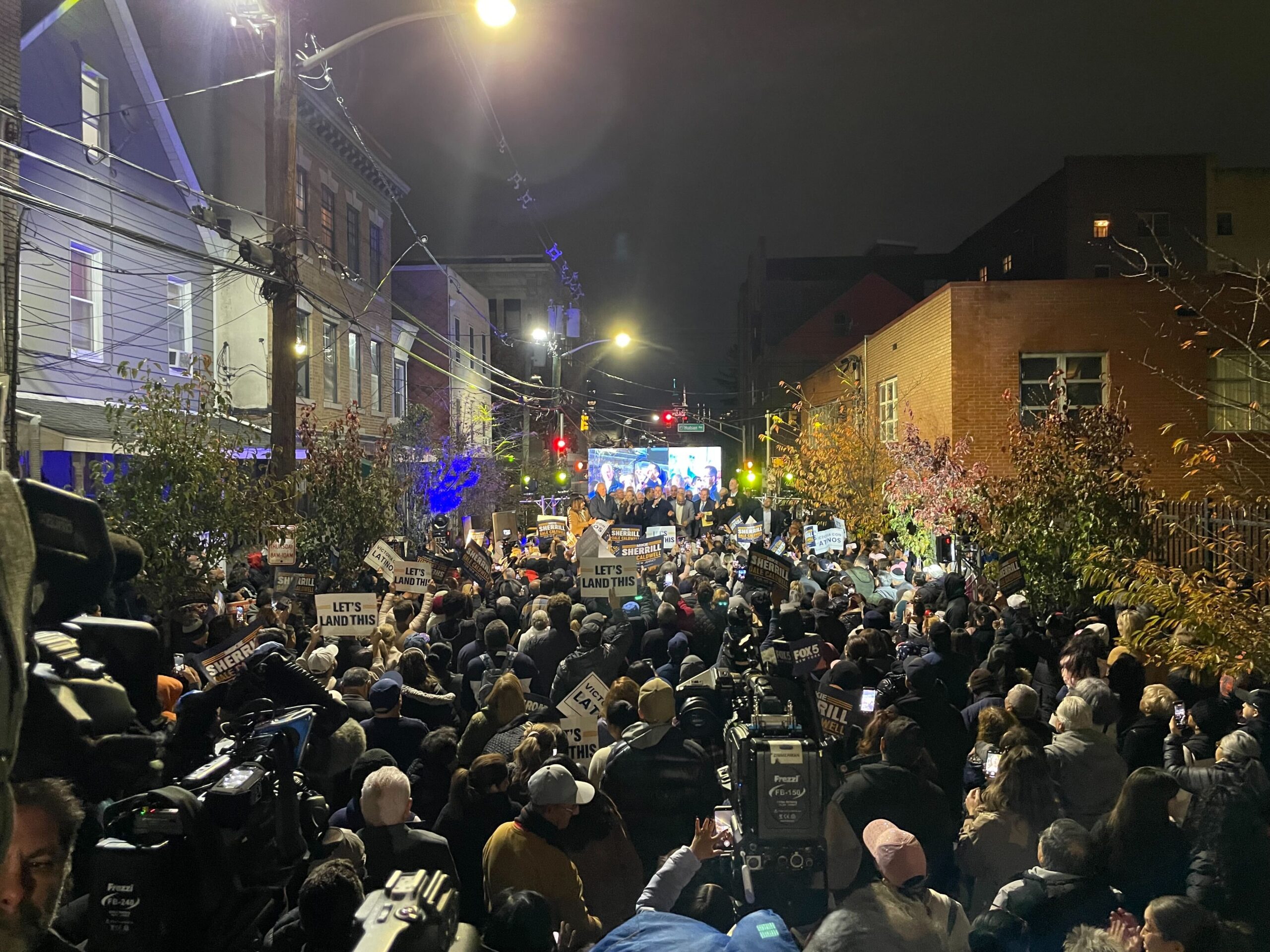
Few places across the country epitomize that swing like New Jersey’s Passaic County, a densely populated, geographically diverse region where Latinos comprise a plurality. Voters there supported Trump by a narrow margin in 2024, only to back Democratic Gov.-elect Mikie Sherrill by double-digits last week. Union City, which is the most Latino city in the state, swung 47 points toward Democrats. And Sherrill seized the Trump-supporting 9th Congressional District, home to a large Latino population, by around 19 points.
In Virginia, the other state with a gubernatorial contest last week, the two most heavily Latino cities swung toward Democratic Gov.-elect Abigail Spanberger by more than 15 points each.
And in California, support for a Democratic-backed ballot measure exceeded Kamala Harris’ share by roughly 12 points in Imperial County, where Latino residents make up 77 percent of the population. That marks the biggest swing of any county in the state.
Just one year after Trump soared to victory with 48 percent of the Latino vote nationally, these results demonstrate that Republicans have yet to cement them into their coalition. Democrats, feeling emboldened after an epic shellacking last year, have been predicting Latinos would turn on the GOP out of dissatisfaction with Trump’s handling of the economy.
Not unlike Trump in 2024, Democrats were able to capitalize on those cost-of-living concerns to lure voters this year, proving correct a series of polls that portended this trend. It is giving the beleaguered party new optimism about their chances of taking back the House in next year’s midterms, as many of the districts up for grabs have substantial Latino populations.
“There was a lot of conversation heading out of the last election about a monolithic realignment, and I think it missed the fact that Trump is a unique beast who was able to persuade Latinos that he has their interests at heart,” said Tory Gavito, president of progressive donor network Way to Win. “In the last 11 months, he’s done everything but think about Latinos’ interests.”
Democrats’ success with Latinos during this off-cycle election may not necessarily translate to races across the country in 2026, when the minority party will fight to retake control of Congress. And Latino voters in Florida and South Texas are likely to vote differently from those in New Jersey or California.
Further muddling the midterm picture is the Trump question. The president successfully turned out low-propensity Latino voters, some of whom may be more likely to participate in a midterm race than an odd-year election, especially if Trump decides to play a role in next year’s showdown.
So Republicans, who have made a big bet on majority-Latino districts in order to keep their majority next year, have some cause for hope amid an otherwise brutal Election Day for them. While GOP candidates underperformed Trump with Latinos last week, they still put up better numbers than the Republicans of a decade ago (in New Jersey in 2017 for example, Republicans won just 17 percent of the Latino vote, compared to roughly a third this time). And Tuesday’s elections also gave the GOP a new foil in New York City Mayor-elect Zohran Mamdani, whom they think can further tarnish Democrats’ standing with Latino voters across the country who oppose socialism. (Mamdani won 58 percent of the vote in election districts where Latinos made up the largest share of the population, according to data compiled by The City.)
The day after the election, the National Republican Congressional Committee launched Spanish-language ads in 11 swingy congressional districts decrying the “socialist” soon-to-be New York City mayor as “the future that Democrats want” and warning voters their city could be next.
“Democrats have ignored Hispanic communities over the past nine years while millions of working families rejected their radical, socialist agenda,” Christian Martinez, the NRCC’s national Hispanic press secretary, said in a statement. “Republicans will continue to earn the support of Hispanic voters because we are working to deliver opportunity, security, and a better life.”
Democrats largely credited their messaging on affordability and blaming Trump for not following through on his economic campaign promises for their rebound with Latino voters.
“Latinos are rejecting Republicans’ broken promises of lower costs and a strong economy,” Democratic Congressional Campaign Committee spokesperson Bridget Gonzalez said in a statement last week. “Groceries, utilities, and health care are unaffordable and that’s why Latinos will help Democrats take back control of the House next November.”
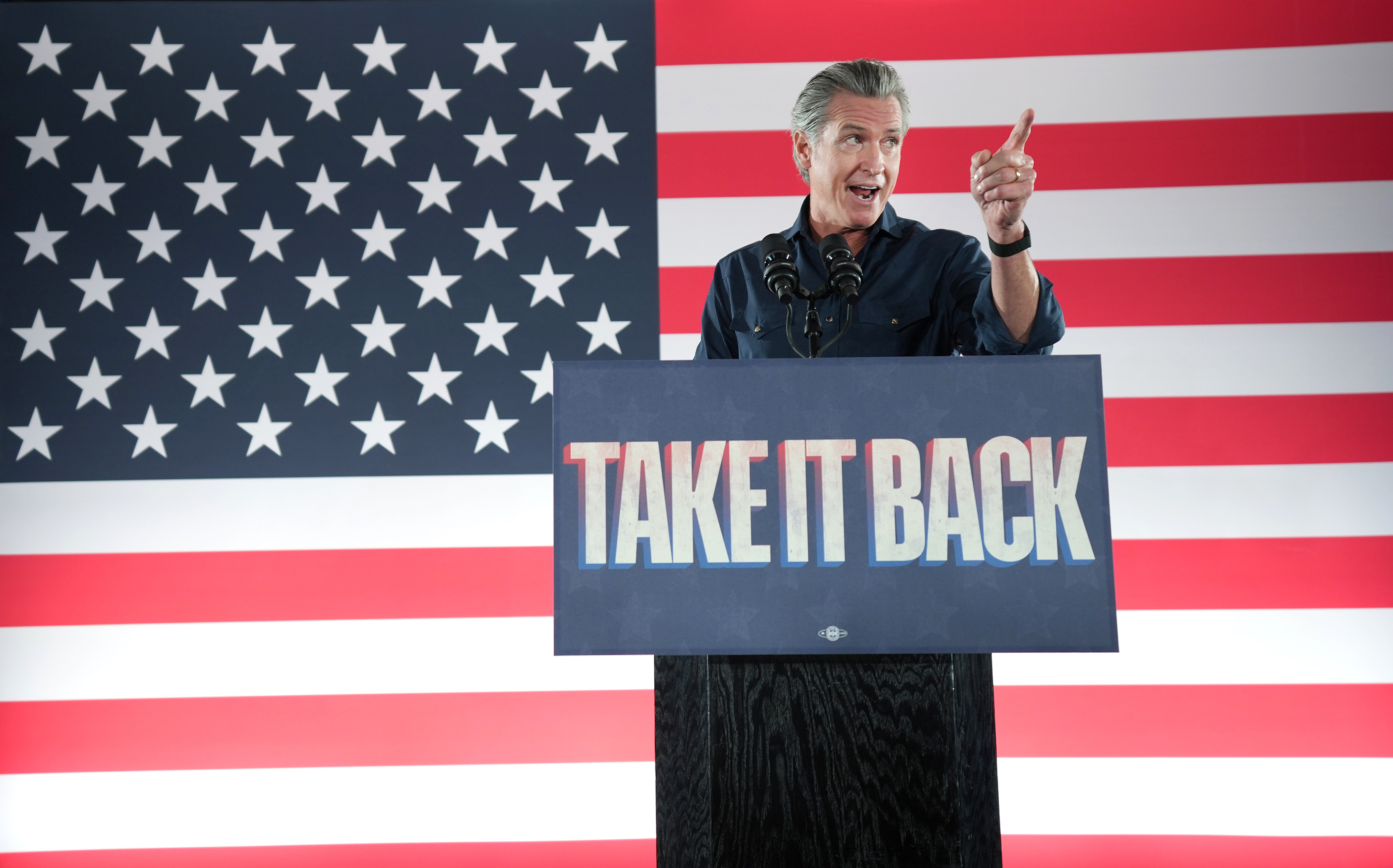
In California, the Prop 50 campaign to bolster Gov. Gavin Newsom’s redistricting push leaned heavily on immigration in its messaging, using imagery of ICE and Border Patrol raids to argue Trump’s power must be checked. The campaign’s Spanish-language ads focused predominantly on the immigration crackdown, with cursory mention of Trump’s tariffs.
“The Latino revolt was economic and personal — Trump hit their wallets with tariffs and our communities with raids,” said Juan Rodriguez, a senior strategist for Newsom. “From California to races across the country, the message for 2026 couldn’t be clearer.”
A lot could change with the state of the economy that could either bolster or weaken their message. And some are cautioning Democrats not to get too comfortable with last week’s results — and not to rely strictly on affordability messaging.
“This doesn’t mean that Democrats have it in the bag,” said Vanessa Cárdenas, executive director of America’s Voice, an immigration reform group, who added that she hopes to see Democrats message more on immigration in addition to the economy during the midterms. “We’ve seen it before — there’s a lot of distrust of Democrats on immigration issues because of promises that have been made.”
“They have a lot to vote against,” she continued. “The challenge for Democrats is giving them something to vote for.”
In New Jersey, Sherrill’s victory looms large over the state’s 9th congressional district, a plurality-Latino seat that encompasses parts of Bergen and Passaic counties. Sherrill won both by double digits, a major swing after Trump flipped Passaic and lost Bergen by just 3 points in 2024. Republicans are targeting the district’s first-term representative, Democrat Nellie Pou, largely because Trump won the seat in 2024.
But ticket-splitting in the district’s further down-ballot races may demonstrate that Democrats’ work isn’t done there. In Hawthorne, a borough where Latinos make up around one-quarter of the population, preliminary results show Sherrill won but incumbent Republicans prevailed in mayoral and council races.
Carlos Cruz, a Republican strategist who worked on a super PAC backing Sherrill’s opponent, Jack Ciattarelli, said that last year’s election was a “referendum” on leadership in Washington and the economy, and people cast a ballot this year for the same reasons.
“There were people who voted for the president who wanted to see more,” Cruz said. “For Democrats to overreact and say ‘Nellie is safe now’ is fundamentally misreading this year’s elections.”
Morghan Cyr, Pou’s campaign manager, said that the results “solidified one thing for Democrats above all: Latino communities are key to success across the board.”
“Early, intentional investment in and engagement with these communities is essential to Democrats taking back the House in 2026,” Cyr said in a statement last week. “The progress that was made this week is good, but we have to keep building on it.”


Alaska GOP Sen. Dan S. Sullivan can’t shake his same-name challenger.
Retired teacher Dan J. Sullivan punched a ticket out of the state’s top-four, all-party primary early Wednesday morning. He could now play spoiler in a high-stakes Senate clash between the Republican senator and former Democratic Rep. Mary Peltola that could help swing control of the upper chamber.
Republicans fought and failed to keep Dan J. Sullivan off the primary ballot, arguing he was a Democratic plant designed to boost Peltola. Both Dan J. Sullivan and Peltola’s campaign have denied any coordination.
The senator’s allies have already taken steps to mitigate the second Sullivan’s potential vote siphoning, in some cases running ads using the senator’s middle initial to help differentiate between the same-named candidates.
Supporters of the state’s ranked-choice voting system, which kicks in for the general election, argue the process helps curtail the spoiler effect. But the presence of other candidates could still skew the results of the battleground race. Outside groups flooded the primary with more than $2 million to boost myriad fringe candidates — and could do so again ahead of November.
It’s not smooth sailing for Peltola, either, as she wages an uphill battle to flip a red seat in a state President Donald Trump won by 13 percentage points in 2024. She recently replaced her campaign manager in a staffing shakeup ahead of the primary, among other internal moves.
President Donald Trump notched a major win on Tuesday night. Republicans in battlegrounds wonder if it was the best use of his time and money.
Sen. Darline Graham defeated Rep. Ralph Norman in South Carolina’s snap Senate GOP runoff, handing Trump a revitalizing win after several of his endorsed candidates fell in recent primaries.
It was a victory that Graham, a complete political unknown six weeks ago, could not have pulled off without Trump’s steadfast support, underscoring just how much his influence still matters among the Republican electorate in the deeply conservative state.
But South Carolina’s Senate seat will not dictate the balance of power in Washington, and GOP strategists working on critical swing state campaigns are eager for Trump to finally direct his attention to them.
“The message coming out of this is that obviously the president’s support is still super powerful. The president’s operation still has the ability to move the needle in a lot of these states,” said a Republican strategist working on several battleground races, including in Georgia, who was granted anonymity to speak candidly about Trump’s involvement. “Hopefully, this is a sign of things to come that the president is willing to get involved and really start to move the needle in some other places that obviously matter a little bit more than South Carolina.”
Trump’s persistent backing of Graham defined the race: He championed her appointment to her late brother Sen. Lindsey Graham’s seat, he coaxed her into the race with an early endorsement, stood by her as she stumbled on the debate stage, and flew down to Myrtle Beach for a rare political rally that few of his chosen candidates have enjoyed this cycle. MAGA Inc., Trump’s behemoth super PAC, even spent a slice of highly sought after cash from its $400 million stockpile in the closing days of the race.
And yet, the president hasn’t taken a meaningful step into the states that will matter in a few short months — even as battleground Republicans have been clamoring for him to spend his MAGA Inc. money.
“It’s now or never. It’s put up or shut up time, and it’s really time to start to see if he’s going to get serious,” the GOP strategist said. “You’ve got September and October to really move the needle here, and it just doesn’t seem like there’s any sense of urgency, or like we understand that we are down big in some of these states.”
During her victory speech in Columbia, Graham acknowledged Trump’s heavy hand: “Our victory would not have been possible without you, and we are truly grateful,” Graham said of the president. “South Carolina is truly Trump country.”
Norman’s take on the president’s participation was not as rosy: “The president got involved. He has that right. That’s his prerogative,” Norman said in his concession speech Tuesday, prompting jeers from the crowd at his election night watch party. “Y’all,” he continued, “his policies are good. I never understood why he got in this race. It is what it is, and I’ll accept it.”
Norman’s bewilderment reflected several national and South Carolina Republicans’ confusion as to why the president would expend energy for the safe Republican seat when his MAGA allies like Mike Collins in Georgia, scandal-plagued Ken Paxton in Texas and Michael Whatley in North Carolina are facing tough Senate battles against Democratic opponents.
“There’s the principle,” said a North Carolina-based GOP strategist who was granted anonymity to speak candidly about the battleground picture. “If you’re not Trump and you have these people shoved down your throat, you’re like, ‘Okay, are you gonna help?’”
The White House did not immediately respond to a request for comment.
Some Republicans are worried that though Trump helped power Graham’s win, the president’s overall unpopularity may be more of a curse than a boon in any highly competitive battleground state. A series of Trump-backed candidates lost gubernatorial and congressional primaries in recent weeks, including in Georgia and Iowa.
Republicans overall are facing a tough election environment given the ongoing and unpopular war in Iran, backlash to the administration’s highly-visible deportation agenda and voters’ persistent cost of living concerns.
“You have a president and maybe even a vice president that are just so underwater politically in the polls, that they might be a help by not intervening,” said Matthew Bartlett, a GOP strategist and former State Department official in the first Trump administration.
Still, Trump swept the battlegrounds in 2024, and his ability to boost Graham despite her foreign policy debate gaffe and questions about her political inexperience serves as a reminder of his electoral prowess to campaign officials.
The question remains when — or if — he’ll throw them a presidential life raft.
“I wouldn’t count on the money if I were in these states,” said the North Carolina-based Republican strategist. “He still could. I’m just saying, I wouldn’t count on it. We’re not dealing with somebody that’s, you know, super calculated in the way they plan.”
For months, Republicans across the country have watched on as the president has continued to amass a remarkable pile of cash — and many have implored him to empty his pockets in their races. The president told reporters last week that he’ll spend “a lot of that money” to boost “Republican candidates that I think are good,” without being specific.
However, what some saw as a distraction from the greater Republican cause this year, others read as the first few drops of Trump’s cash flood.
“If they’re going to spend 800 grand in South Carolina, they’re going to spend in the midterms,” said Matt Mackowiak, a Republican strategist based in Texas who worked on Sen. John Cornyn’s failed reelection campaign and is now backing the GOP ticket. “It signals they’re going to make a substantial investment in the midterms because you don’t make an 800-grand investment in South Carolina and say, ‘Yeah, we’re going to let everybody do their own thing.’ This was in some ways a test case.”
Trump’s targeted support for Graham — the kind that some Republicans are banking on to shift the dial later this fall — paid off for her in dividends on election night. Horry County, the site of the president’s marquee rally with the candidate late last week, resoundingly broke for Graham.
Trump’s backing also helped open the door to endorsements from key South Carolina Republican figures, including fellow GOP Sen. Tim Scott, who helped Graham shore up support in his Charleston-area home base, Gov. Henry McMaster, and two members of the state’s congressional delegation, Reps. Russell Fry and William Timmons.
Outside spending also proved crucial to Graham’s success. Her campaign and its allies outspent Norman by more than $5 million in the runoff alone, according to AdImpact.
Trump’s allies took a victory lap after Graham’s victory was confirmed Tuesday evening.
“The power of the Trump endorsement is alive and well in South Carolina,” said Mike Hahn, a GOP strategist involved in the midterms. “A good opening salvo for the team at MAGA Inc. and the president ahead of the midterms.”
Former state Sen. Mike Mazzei narrowly won Oklahoma’s GOP gubernatorial primary Tuesday, boosted by President Donald Trump’s endorsement, a significant personal loan and a host of outside money.
His defeat of Oklahoma Attorney General Gentner Drummond on Tuesday is a victory for Republican leaders in the state and Trump, who had endured a recent string of uncharacteristic primary losses, particularly in gubernatorial primaries. The president’s preferred picks for governor in Wyoming, Iowa, Georgia, Minnesota and South Carolina all lost their races, and a trio of Trump-backed House candidates fell in Michigan and Florida earlier this month.
Trump endorsed Mazzei in May, ahead of the state’s open primary, but the race remained competitive. Drummond beat Mazzei by 0.3 percentage points in the first round on June 16, forcing Tuesday’s runoff. And the race was defined by massive levels of self-funding in a historically expensive primary for the state.
Mazzei loaned his campaign $11.6 million, while Drummond loaned himself $3 million, according to campaign finance records. But Mazzei was also aided by outside money: The conservative group Club For Growth spent $8 million on TV ads boosting Mazzei and attacking Drummond, per the tracking firm AdImpact.
Ahead of the runoff, the state senator earned endorsements from Gov. Kevin Stitt and Homeland Security Secretary Markwayne Mullin, who represented Oklahoma in Congress for 13 years.
Mazzei served in the state senate for 12 years before being term-limited in 2016. He joined Stitt’s administration for a year in 2019 as budget secretary. He’s the overwhelming favorite in a general election matchup against Democratic state Rep. Cyndi Munson in a state Trump won by 34 points in 2024.
-

 The Josh Fourrier Show2 years ago
DOOMSDAY: Trump won, now what?
-

 Politics2 years ago
Former ‘Squad’ members launching ‘Bowman and Bush’ YouTube show
-

 The Dictatorship2 years ago
Luigi Mangione acknowledges public support in first official statement since arrest
-
Uncategorized2 years ago
Bob Good to step down as Freedom Caucus chair this week
-

 Politics2 years ago
Former Kentucky AG Daniel Cameron launches Senate bid
-

 The Dictatorship2 years ago
Pete Hegseth’s tenure at the Pentagon goes from bad to worse
-

 Politics2 years ago
Blue Light News’s Editorial Director Ryan Hutchins speaks at Blue Light News’s 2025 Governors Summit
-

 The Dictatorship12 months ago
Mike Johnson sums up the GOP’s arrogant position on military occupation with two words