
Politics
Democrats are wary of impeachment even as the GOP uses it to motivate voters

Republicans have a warning for their base: If you let Democrats retake the House, they’ll impeach Donald Trump again.
“Democrats would vote to impeach (Trump) on their first day,” Speaker Mike Johnson claimed in an interview with the Shreveport Times this month. Conservative columnist Bryon York warned Gov. Gavin Newsom’s plan to redistrict California was a veiled threat to “end the Trump presidency by using the constitutional procedure to end presidencies — impeachment.” And the National Republican Congressional Committee recently unleashed a digital ad framing the stakes of the midterms this way: Democrats’ “Project 2026” agenda is to “impeach President Trump.”
As the GOP is girding for potentially tough midterms battles, it sees the spectre of impeachment as a reason for conservative-leaning voters to come to the polls in a year when Trump is not on the ballot.
But so far, at least, Democrats seem wary of e
ven talking about it. In conversations with roughly a dozen Democratic strategists and elected officials, there is little consensus about the party’s strategy on impeachment. Many warned against focusing on it.
“We should never, at least in the near future, use the ‘I’ word,” said Rep. Emanuel Cleaver (D-Mo.). “One of the things we learned is that articles of impeachment are also articles of recruitment for Trump.”
Trump survived removal efforts and found his way back into power, even though Democrats said he was a threat to democracy. If anything, impeachment and his legal troubles before returning to office resulted in a fundraising boon for Trump.
House Democratic leaders appear vexed at the prospect of making a third run at removing Trump from office after previous attempts ended in acquittals in the Senate. With the party needing only a handful of seats to take back the majority in the House, it is not clear the broader electorate is clamoring for another impeachment fight.
Minority Leader Hakeem Jeffries’ office declined to comment for this story. But a person close to House leadership, granted anonymity to discuss campaign strategy, blasted Republicans for going into “full fear mode” about the midterm elections.
“There will be some emotional members who want to grab headlines with impeachment, however [House Democratic] leadership has thus far shown that it’s not a tool in our box” to hold Trump accountable, the person added, with House Democrats blocking attempts by some members to impeach him.
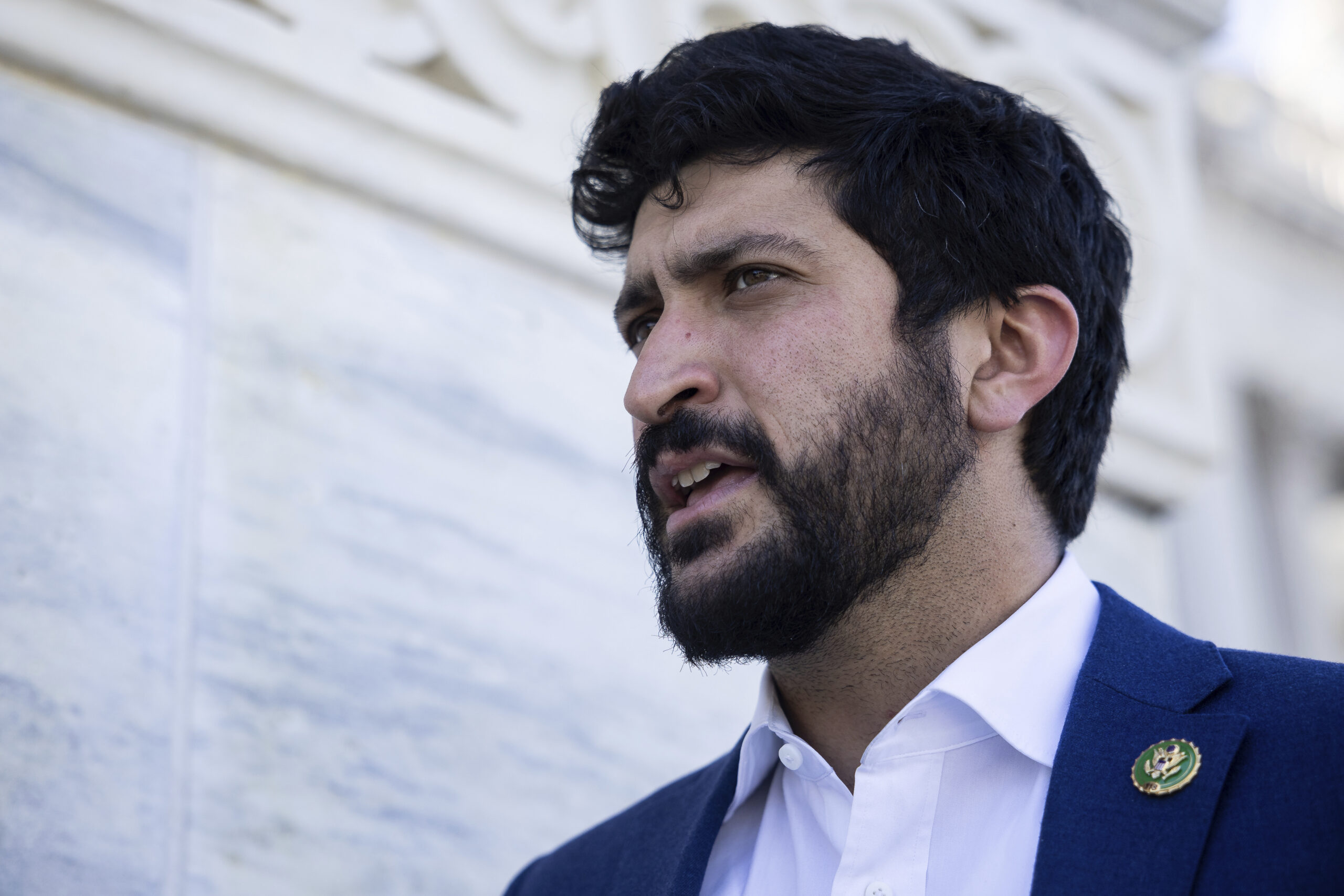
“Of course impeachment is a tool of the Congress that should always be available and appropriate,” said Rep. Greg Casar (D-Texas), who also chairs the Congressional Progressive Caucus. “But right now, I think we’re in a stage where we’re trying to try this case out in the court of public opinion before we do anything else.”
Even outside groups that were leading agitators for Democrats to launch impeachment efforts during Trump’s first term seem reluctant to deploy that same strategy again.
“Impeachment is good, but it’s a symbolic act. It’s not enough,” said Ezra Levin, co-founder of Indivisible.
So far this year, House Democrats have doomed efforts by their own caucus members to impeach Trump, including a majority of the caucus joining House Republicans to kill an impeachment push from Rep. Al Green (D-Texas) over Iran airstrikes in June. House leadership successfully dissuaded Rep. Shri Thanedar (D-Mich.) from moving forward with another article of impeachment stemming from Trump’s push to annex Greenland and on tariffs.
Green plans to keep trying.
“I will not stop and I promise you this president is going to be brought down. He’s got to be brought down,” Green said during a press conference this month in suburban Chicago. Speaking alongside several Democrats from the Texas legislature that left the state to prevent a quorum in Austin to pass the new Texas maps, Green vowed: “He will be impeached again.”
For now, Green is considered an outlier among the caucus, but he was in 2018, too.
Back then, House Democrats, led by then-Minority Leader Nancy Pelosi, were initially uneasy about leaning fully into impeachment talks heading into the midterms. But the burgeoning blue wave that helped Democrats take back the House was propelled by a broader message from the party’s base, who harnessed anti-Trump sentiment promising to hold Trump to account.
Just two weeks after Trump was inaugurated in 2017, Rep. Maxine Waters (D-Calif.) said her “greatest desire is to lead him right into impeachment,” and she continued to call for his impeachment. Four articles of impeachment were introduced in that Congress, by Reps. Brad Sherman (D-Calif.), Steve Cohen (D-Tenn.) and Green of Texas on a range of offenses ranging from obstructing investigation by firing then-FBI Director James Comey, violations of the Emoluments Clause of the Constitution and a pair of articles citing Trump’s use of “racially inflammatory statements.”
By 2019, about a week after being sworn in, Rep. Rashida Tlaib (D-Mich.) revved up an anti-Trump audience proclaiming, “We’re gonna impeach the motherfucker!”
While many of these key figures from past impeachments are still in Washington, the politics of impeachment have changed. Democrats have struggled to craft a coherent message and maintain a sustained fight against Trump and his Republican allies.
Many Democrats see it as a fool’s errand to go down that path again.
“Absolutely not. It is bananas to even think about it,” said Matt Bennett, co-founder of Third Way.
His organization has been trying to warn Democrats against engaging in maneuvers that make them look weak compared to Trump’s aggressive dismantling of federal government and political norms. Impeachment would be a “Trump dream,” he said, that plays into the president’s political strengths.
Some frontline Democrats aren’t running away from impeachment, but they caution that more energy needs to be spent convincing voters Democrats have an agenda worth supporting.
“Impeachment is simply one tool in the tool belt of opportunities to hold the other branch to account,” said Rep. Janelle Bynum, one of incumbent House members Democrats are preparing to defend in next year’s midterms.
There are other tactics Democrats should deploy, according to Levin of Indivisible: “We want hearings, investigations, subpoenas, testimonies, oversight. Trump isn’t the only or even the most important target here — collaborators, capitulators, and enablers should know what’s coming.”
For some, that includes going after those in the president’s orbit who are ramping up pressure campaigns on elected officials in red-leaning states like Texas, Indiana, and Missouri to take up off-year redistricting to create more winnable districts for Republicans to maintain control of the House.
As both parties become entrenched in redistricting battles, some GOP operatives fear it may muddle the party’s ability to elevate a third Trump impeachment as top issue in the midterms.
Republicans worry that without control of the House, Trump’s agenda will grind to a halt. Even with their slim control of both chambers of Congress, Republicans have had difficulty passing much legislation. Trump’s signature tax law was passed through a special reconciliation process requiring a simple majority of both chambers to pass.
If Democrats get power back, Republicans warn, they’ll be looking to wield it.
“If Hakeem Jeffries and Democrats get the majority, day one they’re going to pass articles of impeachment,” said Indiana Republican strategist Pete Seat, pointing to calls from the Democratic base to push back against Trump.”How could they not?”
Shia Kapos contributed to this report.


Ken Paxton is less than a month out from the conclusion of a D.C.-outsider campaign for a Texas U.S. Senate seat that he privately admitted is being run by Washington.
“I’ve never been in a race where I felt less control over the campaign and, like, what issues are going to matter because it’s all coming — you know — from D.C.,” Paxton said during a small fundraising event last month, according to an audio recording obtained by Blue Light News from a person in the room who does not support Paxton, and verified by another attendee.
“I don’t control message or what we’re doing.”
The lunch, hosted Sept. 24 in Washington by Chris Brinson and Susan Hirschmann of the D.C.-based lobbying firm Williams & Jensen, was attended by about a dozen people including Scott Kopple, VP of government relations at defense contractor BWXT.
“Texas is a big state, and some of these issues obviously resonate with real — I’ll call real people — you know, like back home,” Kopple, who did not respond to a request for comment, said to some chuckles in the room. “I know you need money to get the message out and stuff, but how does this stuff translate?”
Paxton replied saying: “I miss the days when I could go to, get around with all the people. But we have 32 million people, so let’s just say for the next 40 days I’m in front of 1,000 people a day — which I’m not — and that’s 40,000 people. Ten to 10.4 million people are gonna vote.”
“But then it comes down to your messaging,” he continued, “which in a federal race comes from other people a lot of times, which you don’t control.”
One attendee granted anonymity to discuss the private meeting said that Paxton never explicitly said he was referring to Trump’s team controlling his campaign, but “everybody knew what he was talking about.” The person said Paxton’s comments came amid a broader discussion about the national political environment.
“I don’t have ability to change anything,” Paxton went on. “So I have to live with whatever I’ve got. So it is a challenge.”
Paxton campaign adviser Nick Maddux said, “Campaigns don’t coordinate with super PACS and that’s obviously what AG Paxton was referring to,” in a statement to Blue Light News. “AG Paxton is thankful for the support and knows how important Texas is to keeping the majority which is why he’s on the ground every day talking to Texas, raising money, and taking his message directly to the people including with his statewide television buy that started over this past weekend.”
Neither Hirschmann nor Brinson responded to a request for comment.
In an audio recording of the same meeting obtained by The New York Times, Paxton told attendees the midterm convention hosted by Trump in Texas last month “dropped our numbers. Everybody’s numbers dropped. Right now, yeah, not good.” Maddux described the article as “manipulated nonsense.” Playbook hasn’t heard the contents of the rest of the hourlong meeting.
The most recent New York Times/Siena poll has Paxton running 6 points behind Democratic challenger James Talarico.
The private comments follow a bitter primary campaign waged against Republican incumbent John Cornyn, whom Paxton framed as a “Washington insider” and “RINO” while publicly aligning himself with Trump.
“His money is coming from the D.C. establishment,” Paxton said of Cornyn while campaigning in Texas before the primary, the AP reported. “That’s how they always try to convince us from Washington with their money that we should select their person. Well, I’m not their person and I’m never going to be their person.”
Paxton maintains a cash advantage heading into November and announced a $20 million ad buy last month. The Senate Leadership Fund, a top GOP super political action committee closely aligned with Senate Majority Leader John Thune, pledged millions to back Paxton earlier in September.
Like this content? Consider signing up for Blue Light News’s Playbook newsletter.
President Donald Trump made major gains among Latino voters in 2024. Now, those same voters might cost Republicans control of Congress.
Fifty-nine percent of Latino registered voters prefer a Democratic-controlled Congress, compared with 35% who favor Republican control, according to a new NBC News/Telemundo poll released Sunday. That 24-point gap for Democrats is twice the party’s lead compared to the September 2024 version of the poll.
A separate CBS News/YouGov poll released Sunday also found Democrats ahead among Hispanic likely voters, with 60% backing a Democratic House candidate and 39% supporting a Republican.
The findings threaten gains the GOP made in 2024, when Trump narrowed Democrats’ long-standing advantage among Latino voters. A POLITICO analysis of that year’s election results found that Trump improved his vote share by an average of more than 6 percentage points in majority-Hispanic counties, compared with 2020.
With the midterms approaching, Republicans have made those gains central to their push to maintain control of the House. When Texas Republicans revealed their redistricting proposal last year, four of the five potential GOP pickup opportunities were in majority-Hispanic districts.
Meanwhile, Trump’s overall approval rating among Latino registered voters stands at just 27% in the NBC/Telemundo poll, while 69% disapprove. On the economy specifically, 74% of Latino voters disapprove of Trump’s handling, while 78% disapprove of how he’s dealt with cost-of-living concerns.
Nearly two-thirds, 65%, say Trump’s policies have hurt economic conditions. Inflation and cost of living rank as the most important issues facing the country for 33% of respondents, followed by government corruption at 22%. Another 10% named jobs and the economy.
Economic frustration helped drive Latino voters toward Trump in 2024, with Democrats across the country suggesting in the aftermath of his victory that he was better able to connect with the voting bloc on financial issues.
But now, Latino voters seem to favor Democrats over Republicans on the economy, 48% to 27%, and the cost of living, 45% compared to 26%.
The war with Iran, now in its seventh month, is also weighing on voters’ perceptions of energy costs. In September, the average price of diesel hit a record $6.53, according to AAA.
In the CBS survey, 91% of Hispanic registered voters attributed rising U.S. oil and gas prices to the conflict.
Trump’s immigration crackdown is also putting vulnerable Republicans on the defensive. Rep. María Elvira Salazar (R-Fla.) released an ad in English and Spanish criticizing the administration for going “too far” on immigration and saying Hispanics who backed Trump in 2024 feel “betrayed.”
In the days immediately following her ad, Trump told reporters that he still supported Salazar. “I’m very strong on the borders — and she isn’t,” Trump said. But the president later reposted a flurry of social media messages criticizing Salazar on Truth Social, including one calling for the Florida Republican’s replacement ahead of the midterms.
In the NBC/Telemundo poll, 67% of Latino voters say Trump’s immigration enforcement has gone too far, compared with 22% who say he has taken the right approach.
The White House did not immediately respond to a request for comment.
Dissatisfaction with Trump and Republicans has not translated into broadly positive views of Democrats. According to the NBC poll, Latino voters remain nearly evenly divided on the Democratic Party, with 41% viewing it positively and 42% negatively. Negative views of the GOP, meanwhile, have climbed to 62%, up from 46% in September 2024.
The NBC/Telemundo survey of 800 Latino registered voters was conducted Sept. 21-28 and has a margin of error of ±3.46%. The CBS/YouGov survey of 2,166 adults was conducted Sept. 30-Oct. 2, with a margin of error of ±2.5 points.
CONCORD, New Hampshire— Pete Buttigieg is barnstorming the nation in the final weeks before the midterms, boosting candidates in battlegrounds and even areas traditionally hostile to Democrats. And it’s helping him look beyond November.
Down the homestretch, Buttigieg is set to campaign in at least six states: North Carolina, Virginia, New Jersey, Georgia and Nevada, along with his adopted home state of Michigan, according to an itinerary shared first with Playbook by a spokesperson for Win the Era, his political group.
Buttigieg has been refining his campaign trail message as he crisscrosses the country, connecting concrete cost-of-living concerns to the more abstract need for political reform.
It’s a kind of real-world testing that helps him further define his political brand at the same time that he leverages it to “be useful,” as he so often puts it, to his party.
“I have a lot of conviction that, actually, your economic message only has credibility if you have a reform message, too,” Buttigieg said in an interview after a Rochester Opera House rally where he received a standing ovation. “Because otherwise, what you’re doing is you’re saying things that people agree with, which is great, but they might not believe that you can actually deliver it.”
He’s also building the kinds of relationships with voters and party leaders that can be useful if he runs for president in 2028, a question he was repeatedly asked. (“We’ll see,” he told one woman at the Deerfield Fair.)
“For Pete, it’s less about getting credit nationally for what he’s done for Democrats and more about building relationships in places that will be beneficial down the line,” said David Axelrod, a Buttigieg confidant.
Buttigieg’s status as an in-demand surrogate was on full display during his 48-hour swing through the Granite State, where he finished “a very, very, very close second place” to Sen. Bernie Sanders (I-Vt.) in the 2020 primary, as Buttigieg put it in Saturday evening remarks at the New Hampshire Democratic Party’s Eleanor Roosevelt Dinner in Concord.
“I couldn’t ask for a better wingman,” Rep. Chris Pappas said, introducing Buttigieg at the packed rally Friday in Rochester. “People know that he’s a trusted voice,” Stefany Shaheen, who is running for Pappas’ seat, told Blue Light News after campaigning at a book store, cafe and candy shop with Buttigieg along Elm Street in Manchester.
How Buttigieg is learning from the midterms
Buttigieg has neither a battleground governorship nor a personal fortune to wire into midterm races. What he has put on offer is himself: He’s made more than 100 endorsements this cycle, campaigning in person for roughly half of them, and stops in 37 states since he left the Transportation Department.
Buttigieg was welcomed in places where candidates shunned some of his potential rivals. He campaigned with Rob Sand and Josh Turek in Iowa as they run for governor and senator, respectively. He backed Brandon Dukes in his special election effort to flip a Pennsylvania state House seat that Trump won by 18 points. He was alone among his peers in endorsing Hartford Mayor Luke Bronin in his victory over longtime Rep. John Larson in Connecticut.
“If I can help give voice to what people are after in diverse geographies, including very conservative areas,” he said, “turns out that’s my best use of time.”
Buttigieg admitted he wasn’t certain what role he would play in the party’s midterms at the start of President Donald Trump’s second term. Now he’s processing all of the data and inputs he’s receiving along his travels.
“I’m learning a lot about our country and our party as I go, and what I’m seeing is that people have a real hunger for change,” he told Blue Light News. “First of all, in policy. Secondly, in the kind of politics that we have, and third, in the system itself.”
That’s developed into a core argument in his speeches connecting the cost of living to political reform: “If we want the kitchen table to be better off, we got to deal with the political system that is kicking the legs out from under the kitchen table,” Buttigieg said at the Rochester Opera House Friday evening.
It’s a message that can last long beyond the midterms, and Buttigieg is trying to point his party there.
“Part of what I’m really trying to push my party on is the need to have answers for ‘then what,’” he said. “There’s a big ‘then what’ for when Donald Trump leaves the political scene, but there’s an immediate ‘then what’ starting on Nov. 4.”
A Democratic Congress, he argued, needs “a compelling governing vision coming out of the gate” and should move quickly on tariffs, the minimum wage, tax fairness, health care, the Child Tax Credit and political reforms including gerrymandering.
The 2028 question
Even as he sidestepped several questions from reporters about his next moves, saying he was focused on 2026, remnants of his 2020 campaign and hints of a future one piled up. People wore “Pete for New Hampshire” buttons and T-shirts. His old playlist, including Creedence Clearwater Revival’s “Up Around the Bend,” played at the Friday night rally.
At the Roosevelt dinner the next night, in front of a sold-out crowd of over 400, Buttigieg earned a standing ovation that ended in “Pete, Pete, Pete” chants.
“Pete had a great New Hampshire organization in 2020, nearly winning,” Ray Buckley, the chair of the New Hampshire Democratic Party, told Blue Light News. “If anything, his popularity here has grown.”
Much has changed since then.
On Saturday evening, instead of walking out to Panic! At the Disco’s “High Hopes,” his ubiquitous anthem back then, or even Imagine Dragons’ “It’s Time,” which he road-tested last year, Buttigieg employed “You Get What You Give” by the New Radicals.
There have been deeper changes, too: Buttigieg is now the father of 5-year-old twins, Gus and Penelope. He is weighing whether he can run for president and remain a good and present father.
His husband, Chasten, is a “great dad” and “knows why I’m on the road.”
Back on the road, Buttigieg is winning over those who didn’t back him in 2020.
At the back of the room in Rochester on Friday night, the town’s Mayor Chuck Grassie wore a “Pete for New Hampshire” button as he took in the scene. Grassie, who backed Massachusetts Sen. Elizabeth Warren in 2020 and considers himself a “pragmatic progressive,” said Buttigieg could knit together the party’s moderate and progressive factions.
“He’s a guy I think would attract a lot of people,” Grassie said. “And a lot of people I talk to are saying, ‘You know, he’s looking better and better every day.’”
Added Grassie: “In New Hampshire, I think Pete may be the guy to beat.”
-

 Politics2 years ago
Former ‘Squad’ members launching ‘Bowman and Bush’ YouTube show
-
Uncategorized2 years ago
Bob Good to step down as Freedom Caucus chair this week
-

 The Josh Fourrier Show2 years ago
DOOMSDAY: Trump won, now what?
-

 The Dictatorship2 years ago
Pete Hegseth’s tenure at the Pentagon goes from bad to worse
-

 Politics2 years ago
Former Kentucky AG Daniel Cameron launches Senate bid
-

 The Dictatorship2 years ago
Luigi Mangione acknowledges public support in first official statement since arrest
-

 Politics2 years ago
Blue Light News’s Editorial Director Ryan Hutchins speaks at Blue Light News’s 2025 Governors Summit
-

 The Dictatorship1 year ago
Mike Johnson sums up the GOP’s arrogant position on military occupation with two words