
Politics
The 5 most vulnerable assemblymembers

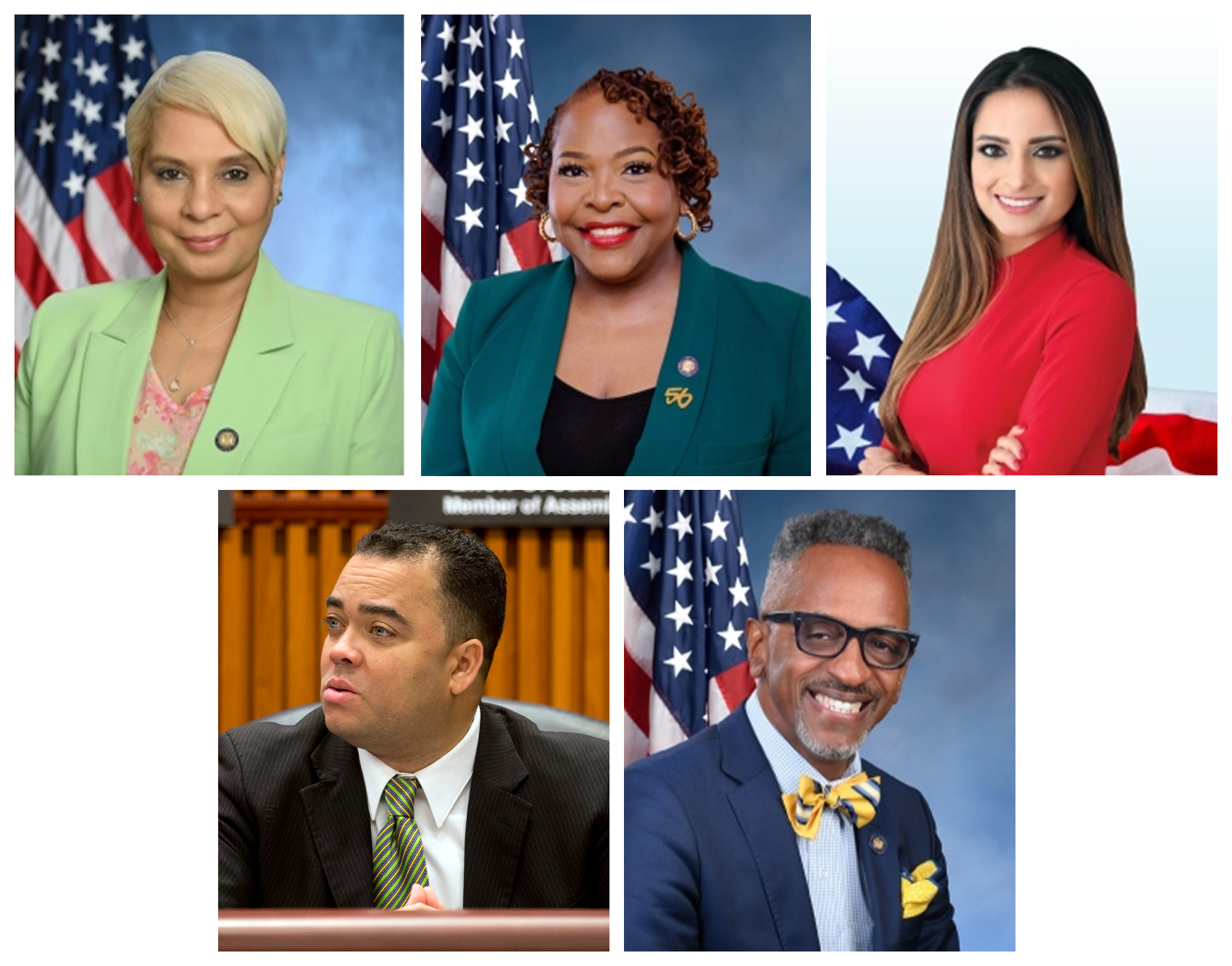
With help from Amira McKee
PRIMARILY INTERESTING: Assemblymember Zohran Mamdani’s resounding primary victory exposed how a Democratic socialist’s ability to dominate across the city, and his 56-43 win over the more moderate Andrew Cuomo has sparked a wave of energy for lefty challenges.
Pro-Cuomo lawmakers state Sen. Jessica Ramos and Assemblymember David Weprin have already drawn challengers, but a host of other low-profile electeds didn’t back Mamdani and saw their constituents vote overwhelmingly in his favor.
Thanks to data published by Sam Hudis and Competitive Advantage Research, Playbook was able to identify 23 Democratic-held legislative districts in the city where Mamdani captured more than 50 percent of the vote in the first round of ranked choice voting.
Five of those districts are occupied by lawmakers who didn’t receive the backing of the Working Families Party in its initial round of endorsements last year and stayed away from the brand of leftist politics that launched Mamdani to the nomination — and they could see the Mamdani momentum topple them next June.
These lawmakers didn’t endorse Mamdani in the Democratic primary — or they backed Cuomo. Four of them represent a cluster of neighborhoods near and along the border of Brooklyn and Queens and one comes from Northern Manhattan.
Support from WFP and the DSA will be key for any left challenger hoping to unseat an incumbent, but the groups told Playbook it’s too early to talk about next year’s primaries.
“The WFP is focused on winning in November, alongside Zohran Mamdani and our other endorsees all around New York,” party spokesperson Sydney Watnick said. “Our number one priority at this time is making sure that working families across the state know and feel that their elected officials are working together to make New York more affordable for everyone.”
Grace Mausser, the co-chair of the city’s Democratic Socialist chapter, told Playbook in a statement, “Currently, our Electoral Working Group is looking at Zohran’s historic victory to see where we can grow our movement across the city. We’ll be hosting several forums this fall to hear from interested candidates, discuss their campaigns among our members, and ultimately our membership will vote on who we should endorse.”
1. Maritza Davila. District 53.
Zohran vote share: 75%
Primary endorsement: None
First elected: 2013
Nowhere else did Mamdani do better in the first round of voting than in Assemblymember Maritza Davila’s district, which includes what some political nerds have dubbed the “Commie Corridor.”
Three quarters of all primary voters ranked him first, with Cuomo nabbing a mere 15 percent of the vote.
Davila didn’t back anyone in the mayoral primary, but she supported lefty Maya Wiley in the 2021 race after rescinding an endorsement for former comptroller Scott Stringer following allegations of sexual harassment he denies.
Her most recent primary challenge was in 2018, when she won with 82 percent of the vote and got the backing of the Working Families Party.
“The voters of Bushwick and Williamsburg have always made their voices clear when it comes to the issues that matter most — the cost of rent, the price of putting food on the table, and being able to afford to get to work or school,” Davila said in a statement. “For years, these neighborhoods have been at the forefront of demanding action on rent stabilization, food costs, and affordable, reliable public transportation. That is why the community came out so strongly for Zohran Mamdani. His message resonated because it speaks to the daily struggles my constituents face and the fights I have taken on throughout my career from delivering summer SNAP dollars, to advocating for rent freezes to working to make the B60 bus free.”
2. Stefani Zinerman. District 56.
Zohran vote share: 65%
Primary endorsement: None
First elected: 2020
Assemblymember Stefani Zinerman successfully waded off a competitive primary challenge last year, but left-leaning Democrats are already eyeing her Bedford Stuyvesant and Crown Heights district.
Zinerman — a close ally of House Minority Leader Hakeem Jeffries — became the latest front on the House leader’s war to fend off the DSA in his backyard. He got heavily involved in the race, and it ultimately paid off: Zinerman beat Eon Huntley by six points last year.
Left-leaning City Council Member Chi Ossé, who resides in Zinerman’s district, has already made clear he wants someone to unseat her next year.
“Her pro-landlord lobby, pro-homelessness, pro-displacement agenda has been allowed to ravage our neighborhoods for too long,” he wrote in a lengthy statement. “Her abhorrent policy positions invite a primary challenge.”
Zinerman told Playbook in a statement that she commends Mamdani for his “impressive and inspiring grassroots campaign.”
“In each election, I have earned the trust of voters through hard work, accessibility, and by advancing a legislative and community agenda rooted in equity, accountability, and action,” she said. “Speculating about my political future without acknowledging the depth of my service or the diversity of thought within progressive circles is a disservice to the constituents of the 56th Assembly District and your readers.”
3. Jenifer Rajkumar. District 38.
Zohran vote share: 64%
Primary endorsement: None
First elected: 2020
To political insiders, Assemblymember Jenifer Rajkumar needs no introduction. She was once famous for her remarkable stanning of our Mayor Eric Adams, but when his political capital nosedived she all but halted her cascade of appearances with the mayor.
This year, she was the moderate challenger hoping to unseat lefty Jumaane Williams for public advocate, and she levied attacks (which some criticized as racist) that he was lazy and absent from his job. Rajkumar — who is also a strong supporter of Israel — lost to Williams by over 50 points but was able to keep her district, which includes parts of Ridgewood, Glendale and Woodhaven.
“In 2020, Assemblywoman Jenifer Rajkumar made history, defeating an 11-year incumbent by the largest margin of any challenger in New York State and tripling voter turnout to a record high,” her spokesperson Jacob Gross said in a statement. “Since then, she has brought that same unmatched energy and results to her district every day, backed by a broad, diverse coalition — and she’s just getting started.”
4. Erik Dilan. District 54.
Zohran vote share: 65%
Primary endorsement: Cuomo
First elected: 2014
Erik Dilan represents parts of Bushwick and Cypress Hills — and he has experience watching incumbents lose their seats to young, lefty challengers. His father, former state Sen. Marty Dilan, notably became the first sitting state legislator to lose a primary to a DSA member when he was ousted by Julia Salazar in 2018.
The Assemblymember’s most recent primary challenge came from DSA member Samy Olivares in 2022; he squeaked by with 52 percent of the vote. He did not respond to a request for comment.
5. Al Taylor. District 71.
Zohran vote share: 51%
Primary endorsement: None
First elected: 2017
Harlem saw a swing toward Mamdani, and Assemblymember Al Taylor’s district was no exception.
While he didn’t endorse in the primary, Mamdani announced Thursday that Taylor is supporting him in the general election.
Earlier this year, the Harlem lawmaker stood with other Black electeds to support Eric Adams during the brief period when Gov. Kathy Hochul was considering removing him from office.
“As a longtime colleague in the NYS Assembly, I’ve had the privilege of working alongside Zohran Mamdani on issues that matter most to our communities,” Taylor said in a statement. “I look forward to continuing our work together, including making New York more affordable and our city safer. I am proud to support our Democratic nominee for Mayor and am eager to campaign with him leading up to the November election, doing my part to help create a brighter future for our city.” — Jason Beeferman and Bill Mahoney
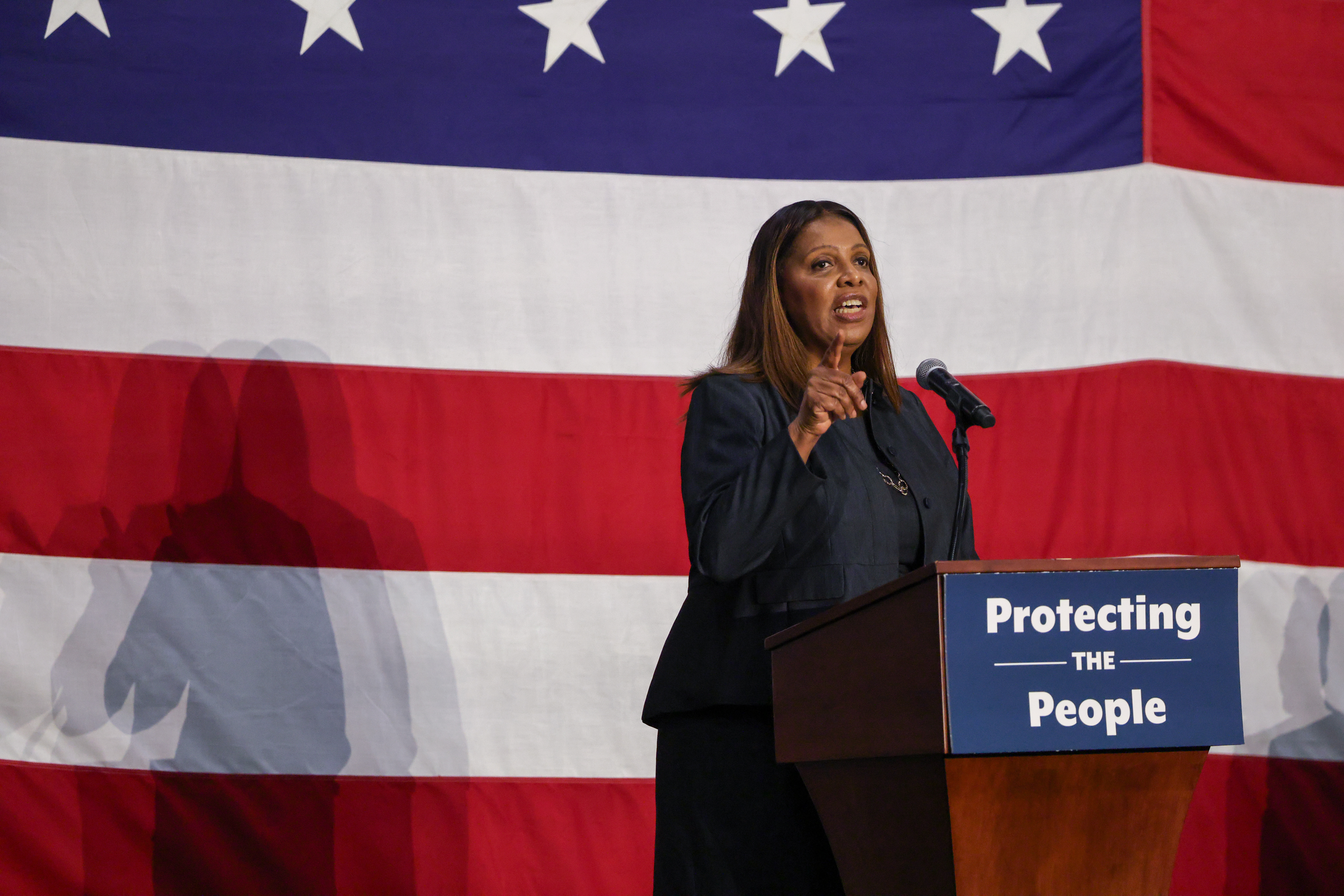
SUBPOENA SITUATION: The U.S. attorney’s office in Albany has issued two subpoenas to New York Attorney General Letitia James stemming from a pair of politically charged civil cases against President Donald Trump and the National Rifle Association, according to a person familiar with the matter.
The subpoenas are an escalation of the Trump administration’s scrutiny of James, who has positioned herself as a ferocious opponent of the president. The Department of Justice earlier this year opened a separate investigation into mortgage fraud allegations against James, which she has denied.
The New York Times first reported the subpoenas.
“Any weaponization of the justice system should disturb every American,” James spokesperson Geoff Burgan said in a statement. “We stand strongly behind our successful litigation against the Trump Organization and the National Rifle Association, and we will continue to stand up for New Yorkers’ rights.”
James’ civil fraud case against Trump led to a Manhattan trial judge last year determining the president and other defendants — including his adult sons — inflated his net worth and the value of his real estate properties. The judge ordered Trump to pay a massive financial penalty that, with interest, has ballooned to more than half a billion dollars. Trump is appealing that verdict.
James’ office last year successfully won a fraud case against the NRA, the pro-gun rights advocacy group, with a jury determining its longtime CEO misspent the organization’s funds on expensive perks.
“Investigating the fraud case Attorney General James won against President Trump and his businesses has to be the most blatant and desperate example of this administration carrying out the president’s political retribution campaign,” James’ personal attorney Abbe Lowell said. — Nick Reisman, Josh Gerstein and Erica Orden
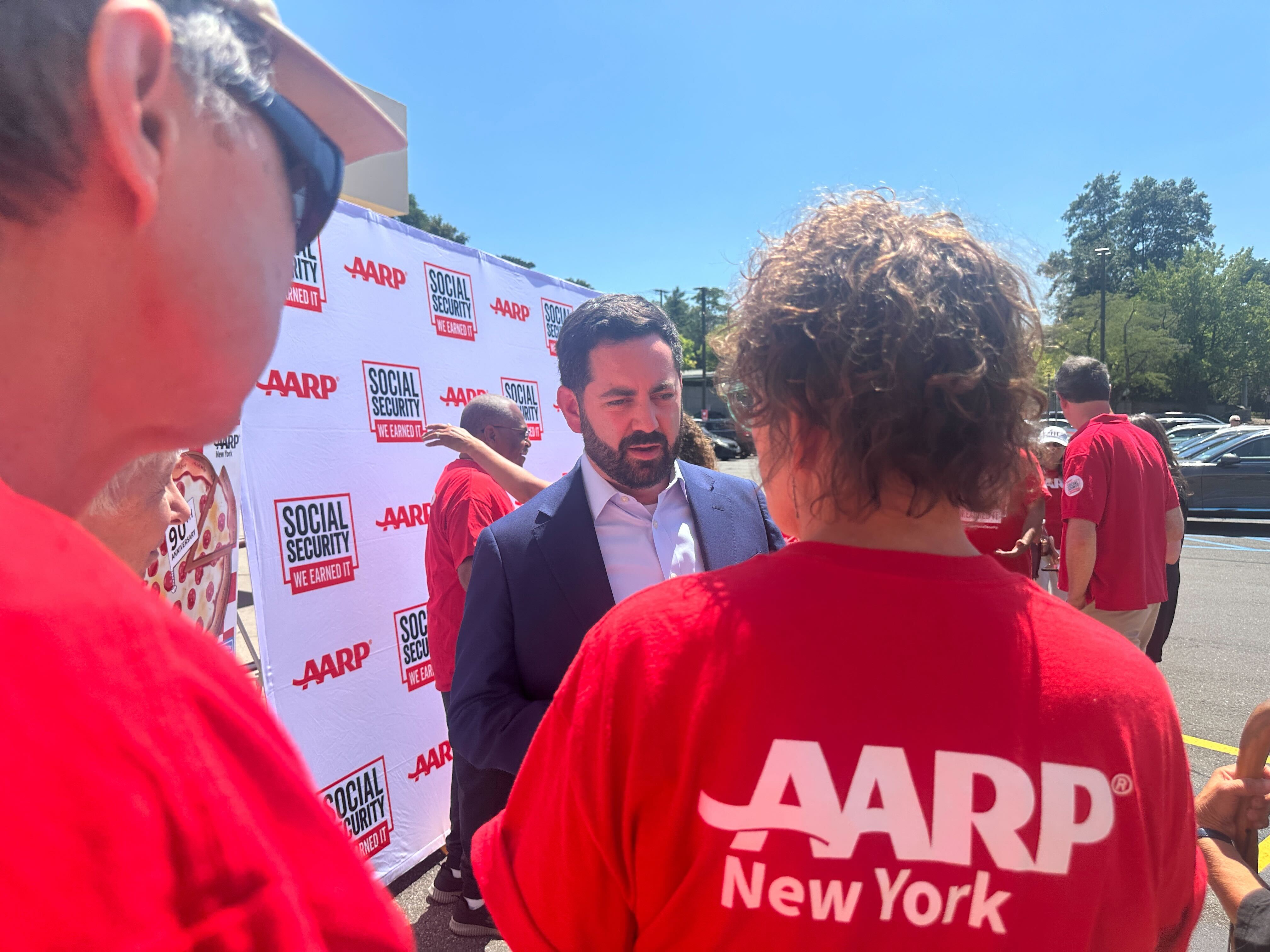
‘HAPPY 90TH’: New York lawmakers joined the AARP to celebrate Social Security’s 90th anniversary today. The milestone comes at a perilous moment for the state’s social safety net, as the Empire State’s social service agencies brace for deep federal funding cuts in the Republican-led “One Big Beautiful Bill.”
Vulnerable GOP Rep. Mike Lawler attended one AARP event today in the Hudson Valley’s Tarrytown. Lawler is a high-priority target for Democrats seeking to retake the House majority next year and he’s faced protests in his district over cuts to social service programs in the Republican megabill.
But Lawler was greeted diplomatically today and focused his brief remarks on efforts to bolster area Social Security offices and how the megabill benefits seniors.
“I am proud of the fact that as part of the tax bill, we were able to pass a $6,000 senior deduction, which will help offset Social Security taxes that is vital for our seniors who are living on a fixed income,” he said.
It was a far cry from the combative “Morning Joe” interview he had earlier in the day, where host Joe Scarborough pressed him on the law’s impact on Medicaid and district hospitals. Lawler accused hospital representatives of “parroting” talking points.
Democratic Rep. Ritchie Torres joined a related AARP event in the Bronx today, telling the small crowd that he is “a lifelong ally in the fight for social security.”
“For me, there is no greater responsibility for the federal government and for America than to protect Social Security for the present and future generation of older Americans,” Torres said.
Torres didn’t directly criticize the megabill or his Republican colleagues in his address, but said “the top one percent does not pay their fair share into Social Security” — a pointed nod to the partisan debate. — Amira McKee and Emily Ngo
— QUEENS BOYS: Trump and Cuomo’s have crossed paths in their personal and professional lives several times before. (The New York Times)
— ONE WAY STREET: Mamdani has voiced support for Democratic Rep. Mikie Sherrill in her bid for governor of New Jersey, but the moderate is keeping her distance. (POLITICO Pro)
— GET OUT: The new Brooklyn headquarters for Adams’ reelection campaign has an outstanding vacate order. (THE CITY)
Missed this morning’s New York Playbook? We forgive you. Read it here.


Alaska GOP Sen. Dan S. Sullivan can’t shake his same-name challenger.
Retired teacher Dan J. Sullivan punched a ticket out of the state’s top-four, all-party primary early Wednesday morning. He could now play spoiler in a high-stakes Senate clash between the Republican senator and former Democratic Rep. Mary Peltola that could help swing control of the upper chamber.
Republicans fought and failed to keep Dan J. Sullivan off the primary ballot, arguing he was a Democratic plant designed to boost Peltola. Both Dan J. Sullivan and Peltola’s campaign have denied any coordination.
The senator’s allies have already taken steps to mitigate the second Sullivan’s potential vote siphoning, in some cases running ads using the senator’s middle initial to help differentiate between the same-named candidates.
Supporters of the state’s ranked-choice voting system, which kicks in for the general election, argue the process helps curtail the spoiler effect. But the presence of other candidates could still skew the results of the battleground race. Outside groups flooded the primary with more than $2 million to boost myriad fringe candidates — and could do so again ahead of November.
It’s not smooth sailing for Peltola, either, as she wages an uphill battle to flip a red seat in a state President Donald Trump won by 13 percentage points in 2024. She recently replaced her campaign manager in a staffing shakeup ahead of the primary, among other internal moves.
President Donald Trump notched a major win on Tuesday night. Republicans in battlegrounds wonder if it was the best use of his time and money.
Sen. Darline Graham defeated Rep. Ralph Norman in South Carolina’s snap Senate GOP runoff, handing Trump a revitalizing win after several of his endorsed candidates fell in recent primaries.
It was a victory that Graham, a complete political unknown six weeks ago, could not have pulled off without Trump’s steadfast support, underscoring just how much his influence still matters among the Republican electorate in the deeply conservative state.
But South Carolina’s Senate seat will not dictate the balance of power in Washington, and GOP strategists working on critical swing state campaigns are eager for Trump to finally direct his attention to them.
“The message coming out of this is that obviously the president’s support is still super powerful. The president’s operation still has the ability to move the needle in a lot of these states,” said a Republican strategist working on several battleground races, including in Georgia, who was granted anonymity to speak candidly about Trump’s involvement. “Hopefully, this is a sign of things to come that the president is willing to get involved and really start to move the needle in some other places that obviously matter a little bit more than South Carolina.”
Trump’s persistent backing of Graham defined the race: He championed her appointment to her late brother Sen. Lindsey Graham’s seat, he coaxed her into the race with an early endorsement, stood by her as she stumbled on the debate stage, and flew down to Myrtle Beach for a rare political rally that few of his chosen candidates have enjoyed this cycle. MAGA Inc., Trump’s behemoth super PAC, even spent a slice of highly sought after cash from its $400 million stockpile in the closing days of the race.
And yet, the president hasn’t taken a meaningful step into the states that will matter in a few short months — even as battleground Republicans have been clamoring for him to spend his MAGA Inc. money.
“It’s now or never. It’s put up or shut up time, and it’s really time to start to see if he’s going to get serious,” the GOP strategist said. “You’ve got September and October to really move the needle here, and it just doesn’t seem like there’s any sense of urgency, or like we understand that we are down big in some of these states.”
During her victory speech in Columbia, Graham acknowledged Trump’s heavy hand: “Our victory would not have been possible without you, and we are truly grateful,” Graham said of the president. “South Carolina is truly Trump country.”
Norman’s take on the president’s participation was not as rosy: “The president got involved. He has that right. That’s his prerogative,” Norman said in his concession speech Tuesday, prompting jeers from the crowd at his election night watch party. “Y’all,” he continued, “his policies are good. I never understood why he got in this race. It is what it is, and I’ll accept it.”
Norman’s bewilderment reflected several national and South Carolina Republicans’ confusion as to why the president would expend energy for the safe Republican seat when his MAGA allies like Mike Collins in Georgia, scandal-plagued Ken Paxton in Texas and Michael Whatley in North Carolina are facing tough Senate battles against Democratic opponents.
“There’s the principle,” said a North Carolina-based GOP strategist who was granted anonymity to speak candidly about the battleground picture. “If you’re not Trump and you have these people shoved down your throat, you’re like, ‘Okay, are you gonna help?’”
The White House did not immediately respond to a request for comment.
Some Republicans are worried that though Trump helped power Graham’s win, the president’s overall unpopularity may be more of a curse than a boon in any highly competitive battleground state. A series of Trump-backed candidates lost gubernatorial and congressional primaries in recent weeks, including in Georgia and Iowa.
Republicans overall are facing a tough election environment given the ongoing and unpopular war in Iran, backlash to the administration’s highly-visible deportation agenda and voters’ persistent cost of living concerns.
“You have a president and maybe even a vice president that are just so underwater politically in the polls, that they might be a help by not intervening,” said Matthew Bartlett, a GOP strategist and former State Department official in the first Trump administration.
Still, Trump swept the battlegrounds in 2024, and his ability to boost Graham despite her foreign policy debate gaffe and questions about her political inexperience serves as a reminder of his electoral prowess to campaign officials.
The question remains when — or if — he’ll throw them a presidential life raft.
“I wouldn’t count on the money if I were in these states,” said the North Carolina-based Republican strategist. “He still could. I’m just saying, I wouldn’t count on it. We’re not dealing with somebody that’s, you know, super calculated in the way they plan.”
For months, Republicans across the country have watched on as the president has continued to amass a remarkable pile of cash — and many have implored him to empty his pockets in their races. The president told reporters last week that he’ll spend “a lot of that money” to boost “Republican candidates that I think are good,” without being specific.
However, what some saw as a distraction from the greater Republican cause this year, others read as the first few drops of Trump’s cash flood.
“If they’re going to spend 800 grand in South Carolina, they’re going to spend in the midterms,” said Matt Mackowiak, a Republican strategist based in Texas who worked on Sen. John Cornyn’s failed reelection campaign and is now backing the GOP ticket. “It signals they’re going to make a substantial investment in the midterms because you don’t make an 800-grand investment in South Carolina and say, ‘Yeah, we’re going to let everybody do their own thing.’ This was in some ways a test case.”
Trump’s targeted support for Graham — the kind that some Republicans are banking on to shift the dial later this fall — paid off for her in dividends on election night. Horry County, the site of the president’s marquee rally with the candidate late last week, resoundingly broke for Graham.
Trump’s backing also helped open the door to endorsements from key South Carolina Republican figures, including fellow GOP Sen. Tim Scott, who helped Graham shore up support in his Charleston-area home base, Gov. Henry McMaster, and two members of the state’s congressional delegation, Reps. Russell Fry and William Timmons.
Outside spending also proved crucial to Graham’s success. Her campaign and its allies outspent Norman by more than $5 million in the runoff alone, according to AdImpact.
Trump’s allies took a victory lap after Graham’s victory was confirmed Tuesday evening.
“The power of the Trump endorsement is alive and well in South Carolina,” said Mike Hahn, a GOP strategist involved in the midterms. “A good opening salvo for the team at MAGA Inc. and the president ahead of the midterms.”
Former state Sen. Mike Mazzei narrowly won Oklahoma’s GOP gubernatorial primary Tuesday, boosted by President Donald Trump’s endorsement, a significant personal loan and a host of outside money.
His defeat of Oklahoma Attorney General Gentner Drummond on Tuesday is a victory for Republican leaders in the state and Trump, who had endured a recent string of uncharacteristic primary losses, particularly in gubernatorial primaries. The president’s preferred picks for governor in Wyoming, Iowa, Georgia, Minnesota and South Carolina all lost their races, and a trio of Trump-backed House candidates fell in Michigan and Florida earlier this month.
Trump endorsed Mazzei in May, ahead of the state’s open primary, but the race remained competitive. Drummond beat Mazzei by 0.3 percentage points in the first round on June 16, forcing Tuesday’s runoff. And the race was defined by massive levels of self-funding in a historically expensive primary for the state.
Mazzei loaned his campaign $11.6 million, while Drummond loaned himself $3 million, according to campaign finance records. But Mazzei was also aided by outside money: The conservative group Club For Growth spent $8 million on TV ads boosting Mazzei and attacking Drummond, per the tracking firm AdImpact.
Ahead of the runoff, the state senator earned endorsements from Gov. Kevin Stitt and Homeland Security Secretary Markwayne Mullin, who represented Oklahoma in Congress for 13 years.
Mazzei served in the state senate for 12 years before being term-limited in 2016. He joined Stitt’s administration for a year in 2019 as budget secretary. He’s the overwhelming favorite in a general election matchup against Democratic state Rep. Cyndi Munson in a state Trump won by 34 points in 2024.
-

 The Josh Fourrier Show2 years ago
DOOMSDAY: Trump won, now what?
-

 Politics2 years ago
Former ‘Squad’ members launching ‘Bowman and Bush’ YouTube show
-

 The Dictatorship2 years ago
Luigi Mangione acknowledges public support in first official statement since arrest
-
Uncategorized2 years ago
Bob Good to step down as Freedom Caucus chair this week
-

 Politics2 years ago
Former Kentucky AG Daniel Cameron launches Senate bid
-

 Politics2 years ago
Blue Light News’s Editorial Director Ryan Hutchins speaks at Blue Light News’s 2025 Governors Summit
-

 The Dictatorship2 years ago
Pete Hegseth’s tenure at the Pentagon goes from bad to worse
-

 The Dictatorship12 months ago
Mike Johnson sums up the GOP’s arrogant position on military occupation with two words